
Fichas
Inheritance (3.4 & 10.2)
Fichas del conjunto (32)
- 1Study of heredity= passing on characteristics from one generation to the next
- 2Gene= a segment of DNA that controls a specific characteristic / trait
-> there are 2 copies of each gene in diploid cells (paternal + maternal) - 3Allele= specific form of a gene
-> Homozygous: when 2 alleles
are the same
-> Heterozygous: when 2 alleles
are different - 4Locus= particular position of gene on homologous chromosomes
-> homologous chromosomes carry the same genes on the same loci - 5Genotype= the combination of alleles of an organism, usually represented by 2 letters (e.g. BB, Pp, tt)
- 6Phenotype: observable characteristics of an organism (e.g. blue eyes, type O blood)
- 7Types of Alleles1. Dominant allele
= an allele that has the same effect on the phenotype whether it is present in the homozygous or heterozygous state
2. Recessive allele
= an allele that only has an effect on the phenotype when present in the homozygous state
3. Co-dominant alleles
= pairs of alleles that both affect the phenotype when present in a heterozygote
-> combined phenotype - 8Mendel and the Principles of Inheritance- discovered the Principles of Inheritance through experiments in which large number of pea plants were crossed
-> transfer male pollen from one variety to female parts in flowers of another variety
-> grew the pea seeds that were resulted to test for characteristics
-> Repeated trials shows reliability in Mendel's experiments (large # of replicates in quantitative results) - 9Results of Mendel's Experiments- All of the offspring showed the characteristic of one of their parents, not the other
-> the common characteristic has the dominant allele (e.g. TT) which masks the effect of the recessive allele (e.g. tt)
- Example of co-dominant alleles:
-> if a red-coloured flower (C^R) crosses with a white-coloured flower (C^W), the offspring have pink flowers (C^RC^W) - 10Gametes- Parents pass genes onto their offspring in gametes
- Contains one chromosome of each type
-> gamete is haploid, which contains only one allele of each gene
-> each parent makes an equal genetic contribution to their offspring - 11Law of Segregation (first rule of Mendel's Principle)- when pairs of alleles of a gene segregates during gamete formation
- the haploid nucleus only receives one of the alleles of the diploid cell
-> two copies of the allele are present (e.g. PP), the haploid nucleus will receive P
-> two different alleles are present (e.g. Pp), there is a 50-50% chance of receiving either alleles P or p - 12Law of Independent Assortment (Second rule of Mendel's principle)- Occurs at metaphase I
- Orientation of chromosomes (paternal / maternal) on either side of the equator is random and independent of other chromosomes
- refers to 2 or more unlinked genes - 13Monohybrid cross= crossing two organisms that differ in one characteristic
(single gene -> single characteristic) - 14Test cross= testing a suspected heterozygote
- to find out the genotype of an organism with a dominant character (homozygous dominant / heterozygous?)
- How? Cross it with a homozygous recessive individual - 15Inheritance with Multiple Alleles- Some genes have more than 2 alleles
EXAMPLE: HUMAN BLOOD GROUP
= determined by the type of cell surface protein of RBCs
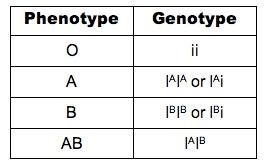
- has 3 alleles in human blood group
-> Co-dominant alleles: I^A, I^B
-> recessive allele: i - 16Human Blood Group (Genotypes & Phenotypes)
- 17Many genetic diseases in humans are due to recessive alleles of autosomal genes- when an individual has 2 copies of the recessive allele
- when an individual has one dominant allele and one recessive allele = CARRIER
-> has a recessive allele of a gene that does not have an effect on their phenotype
-> allele can be passed onto offspring
EXAMPLE: CYSTIC FIBROSIS
-> causes lung infections and limits the ability to breathe over time
-> C allele: normal
-> c allele: affected - 18Some genetic diseases are due to dominant alleles of autosomal genesEXAMPLE: HUNTINGTON'S DISEASE
-> H allele = affected
-> h allele = normal
-> only takes one allele to cause the condition - 19Sex Determination in Human- X and Y chromosomes control gender
-> XY = boy; XX= girl
- Sex-linkage = genes that are located on sex chromosomes -> expression and inheritance patterns differ between females and males
- Sex-linked inheritance of genetic diseases are usually due to the genes on the X chromosome (because the Y chromosome is smaller, there are fewer genes / loci)
- Females have two genes for a trait (2 chromosomes); males have one gene for a trait and one X chromosome passed on from the mother (less likely to be affected by sex-linked diseases) - 20Some genetic diseases are sex-linkedEXAMPLE: RED-GREEN COLOUR BLINDNESS
-> X-linked recessive
-> Alleles: X^C (normal), X^c (affected)
EXAMPLE: HEMOPHILIA
-> results from a recessive sex-linked allele on X chromosome
-> Alleles: X^H (normal), X^h (affected)
** Only females can be carriers / heterozygous for x-linked recessive traits (e.g. X^C X^c) - 21Some genetic diseases are due to co-dominant allelesEXAMPLE: SICKLE CELL ANEMIA
-> normal allele for hemoglobin: HB^A
-> allele for sickle-cell: HB^S
Phenotypes of different genotypes:
-> HB^A HB^A: susceptible to malaria, not anemic
-> HB^S HB^S: susceptible to malaria, severely anemic
-> HB^A HB^S: increased resistance to malaria, mildly anemic
(due to the altered shape of RBC) - 22Dihybrid Cross- examines 2 genes (2 different characteristics) together
- 23Linked V.S. Unlinked Genes- Mendel's Law of Independent Assortment and Law of Segregation only applies to UNLINKED GENES (genes located on different chromosomes)
-> segregate independently during meiosis
- LINKED GENES (genes on the same chromosome) do not segregate independently -> travel together during meiosis - 24Linked GenesLinkage group = a group of genes who loci are on the same chromosome -> their alleles can't be separated independently during anaphase I
- linked genes tend to be inherited together
- A dihybrid cross between two hybrids usually produces a phenotypic ratio of 9:3:3:1 (MENDELIAN RATIO)
-> applies to unlinked genes
- A dihybrid cross that do not produce 9:3:3:1 ratio = NON-MENDELIAN RATIO
-> applies to linked genes - 25RecombinationRecombination can occur in chromosomes with linked genes via. crossing-over
Example: Parental gametes = PL and pl
After crossing-over occurs, 4 different types of gametes are formed (PL, Pl, pL, pl)
-> Pl and pL = recombinants (that vary from parental gametes) -> relatively few in #
Recombination = offspring whose genotype and phenotype are different from their parents - 26Example of Crossing-Over of Linked Genes
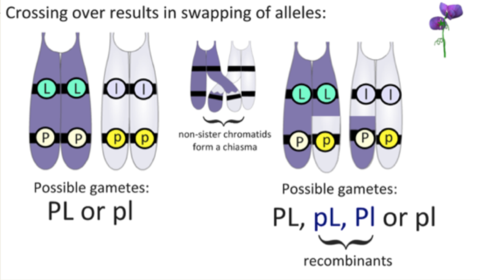
- 27How to represent recombinants in terms of notation?
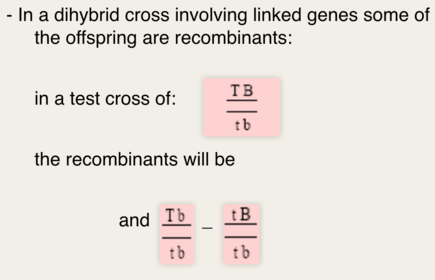
- 28Chi-Squared Test= a statistical test to compare observed results with expected results and determine whether or not the difference is significant or not
- 29Equation of Chi-Square
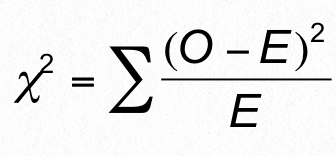
- 30Types of Variations1. Discontinuous / Discrete variations
-> no intermediates
-> determined by genes only
-> e.g. eye colour, blood type
2. Continuous variations
-> continuous range of intermediates between 2 extremes
-> affected by both genes + environment
-> follows bell-shape curve (normal dist.)
-> e.g. weight, height - 31Polygenic Inheritance= a characteristic affected by multiple genes (2 or more)
-> produces many possible combination of alleles -> producing a broad range of phenotypes
-> cumulative effect: as # of genes increase, phenotypic variation increases
-> resulting in continuous variation - 32Example of Polygenic VariationEXAMPLE: HUMAN SKIN COLOUR
-> multiple genes influence skin colour
-> skin colour depends on the amount of MELANIN (pigment) being produced
-> Each gene codes for melanin production -> more dominant alleles = the darker the skin (for every dominant allele in genotype, one "unit" of melanin is added to skin)
-> results in a great variety of skin colour
Información
- Descripción
- Form 6 (Unit 4: Genetics) Biology Fichas sobre Inheritance (3.4 & 10.2), creado por Licole Woo el 02/04/2017.
- Creado por
- Licole Woo
- Visitas
- 19
- Valoración