
Fichas
WYNTK last one
Fichas del conjunto (101)
- 1AmendmentTo alter an official paper.
- 2AssimilateTo grasp an idea
- 3BiasTo be prejudice against someone or something
- 4BicameralTwo different areas of a legislative body
- 5BlockadeTo put a stop to allowing produce or people into a certain area
- 6BoomtownA town that has endured because of accelerating in financial loss
- 7Capitalismcompetition is encouraged within a country
- 8Captain of IndustryA manufacturer who wants good things for the people, and gets wealthy in a positive way
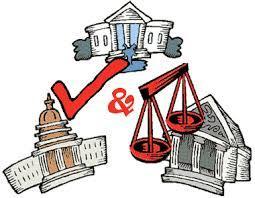
- 9Checks and BalancesA system in which each branch of the government looks after one another to keep them in check
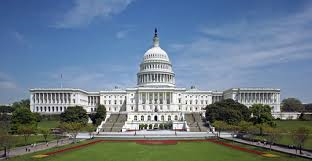
- 10CongressThe states lawmaking branch
- 11Due Process of Lawequitable juridical
- 12Economicsanything to do with money in the goverment
- 13Emancipatedto be free from forceful nature
- 14Enfranchiseallowed to vote
- 15Enumeratedto initiate
- 16Federalisma federal structue
- 17Forty-ninersA miner in the California Gold Rush
- 18Free EnterpriseGovernment doesn't put restrictions on companies activities
- 19Habeas Corpusbreaking the 6th amendment, you were stuck in jail without a trial until proved not guilty
- 20Industrythe manufacture of produce
- 21Ku Klux KlanA group of whites made to terrorize blacks and strongly believed in white supremacy
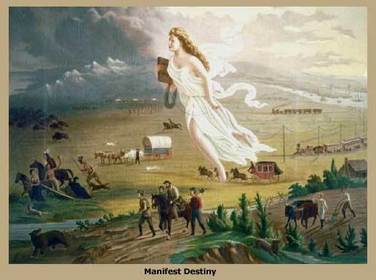
- 22Manifest Destinythe belief of America to expand West
- 23Martyrsomeone who uses violence for there religious belief
- 24Monopolycompanies come together and make there products the same price so there is no competition
- 25Nomadicwhen one moves around a lot, typically hunters will follow animals and live in one place after another
- 26Overridecongress can override the presidents vote meaning, that even when the president says no they can still pass it with enough amount of votes
- 27Popular Sovereigntythe people have the power through voting
- 28Ratifyto approve an official document
- 29Radicalsomething out of the ordinary or extreme
- 30Republicanismhead of state represents the people instead of the people representing the people
- 31Robber Barona business owner who's greedy and usually treats his workers unfairly to get more money
- 32Ruralkind of old area compared to the cities or a more nicer area
- 33Separation of Powerseach branch gets so much power over the states, to make sure they don't go crazy with the power they have
- 34Social Darwinismrelating to survival of the fittest, the more successful you are the better you are going to be, the idea of the weaker ones will not survive
- 35Suffragesomeone who believes in the right for anyone to vote
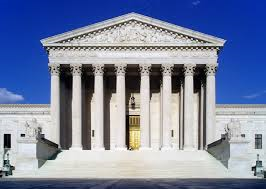
- 36Supreme Courthighest judicial court
- 37Tariffa fee to be paid for goods
- 38Taxation without Representationthe colonist weren't allowed to pick the representatives that passed the taxing laws and they were tired of it
- 39Trade Unionlaborers formed to protect their rights and opinions
- 40Urbana downtown suburban part of a city
- 41vetothe president has the power to say no to the congresses vote
- 42judicialthe branch involving judges, they explain the laws
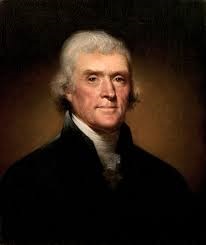
- 43Thomas JeffersonJefferson was the third president of the United States and helped create the Declaration of Independence. He also sent out the Lewis and Clark expedition to the Louisiana Territory.
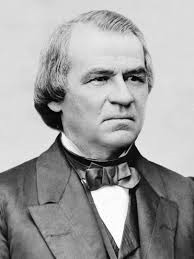
- 44Andrew JohnsonWhen Lincoln was assassinated, vice president Johnson took over as president. He was impeached, but not moved from office because he only had 2 months of his presidency left.
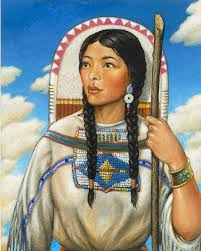
- 45Sacagaweashe was an Shoshone women who helped guide Lewis and Clark on their expedition through the Louisiana territory. She helped a lot with making peace with other Indian tribes. All while carrying a baby on her back.
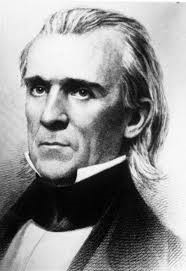
- 46James PolkPolk was the 11th president of the United States. While he was in presidency, he made Americas territory grow by one-third and he led us into the Mexican American War.
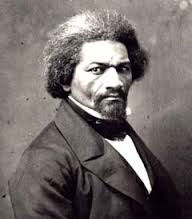
- 47Frederick DouglassDouglass was a slave, who escaped and wrote a book about his life experiencing slavery. He became an abolitionist with his writing and a civil rights leader.
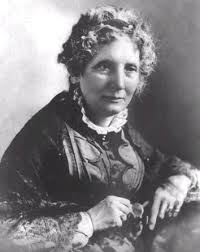
- 48Harriet Beecher StoweStowe was a northerner who witnessed slavery, because she lived so close to the south. She saw how terrible some of the things were, and decided to write a book about it. The book influenced many of the northerners opinion.
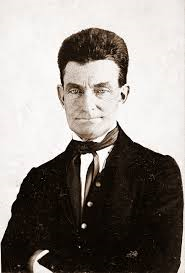
- 49John BrownBrown was an abolitionist who believed violence was the right thing to do to stop slavery. He led Harpers Ferry Raid with his small army of abolitionist he formed. The plan was to capture weapons and give them to the slaves to form a rebellion.
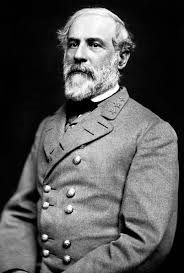
- 50Robert E. LeeLee served as a military officer in the U.S. Army and a general of the Confederate army during the Civil War. In 1836 Lee invaded the north, but was defeated at Gettysburg by Ulysses S. Grant. In 1865 he surrendered his army.
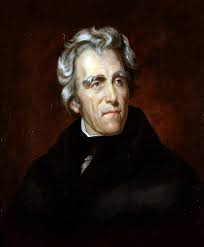
- 51Andrew JacksonHe was a military hero during the war between the U.S. and Britain. Jackson was the 7th president. He was also in charge of the Indian Removal Act.
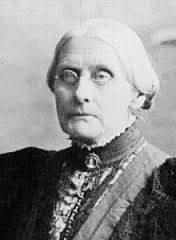
- 52Susan B. AnthonyShe was one of the women in charge of the women's suffrage movement in the U.S. She helped make the 19th amendment ( allowing women to vote) possible.
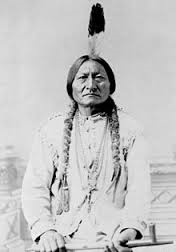
- 53Sitting BullSitting Bull was a native American chief who fought against U.S. soldiers. He and some of his tribe refused to move to a reservation. Eventually the soldiers killed him, because they thought he was a ghost dancer.
- 54George CusterCuster is most known for leading a 200 or more of his men to their death in the battle of Little Big Horn.
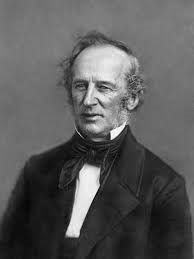
- 55Cornelius VanderbiltVanderbilt was the wealthiest man of the 19th century. In the 1820s he was the country's largest steamship operator. In 1850 he became more interested in railroads.
- 56John RockefellerRockefeller became one of the worlds richest men, by starting an oil company. He was accused of monopoly in the 1880s. Also in the 1880s, he established standard oil.
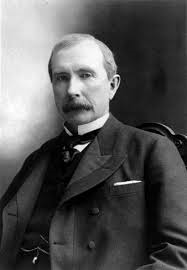
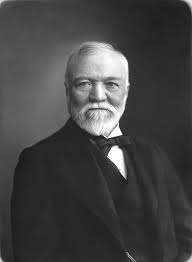
- 57Andrew CarnegieCarnegie was most known for being rich from steel. He entered the steel business in 1870. In 1901 he sold the business to Banker John Pierpont Morgan and devoted his life to philanthropy.
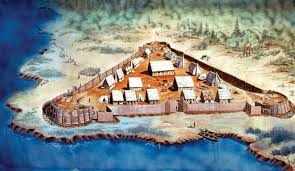
- 58JamestownOn May 14, 1607 about 100 men found the first permanent English settlement in North America on the banks of James River. In the beginning disease and conflict made Jamestown a failure. In 1610, new colonist came over and brought tobacco plants. It was the capital of Virginia till 1699.
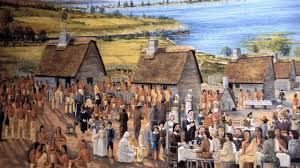
- 59PlymouthAfter Jamestown, Plymouth was one of the first English Colonies in America. Settlers came to Plymouth for religious freedom and a place to worship God. This is also were the first Thanksgiving was held.
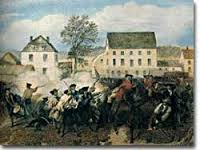
- 60Lexington and ConcordThe battles of Lexington and Concord on April 19, 1775 was the start of the Revolutionary war. On April 18, 1775, Paul Revere and others sounded the alarms that the British were coming. There were many other battles, but in 1783 the colonist own their independence.
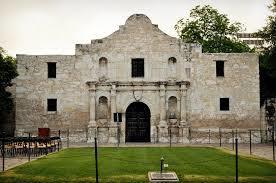
- 61The AlamoDuring the Mexican American War, the Alamo was a group of volunteered Texas soldiers. On February 23, 1836 a Mexican force numbering in the thousands began a siege in the fort. Even though they were outnumbered, Alamos 200 defenders held out for 13 days before the Mexican soldiers overpowered them.
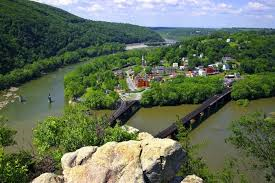
- 62Harper's FerryJohn Brown led a small group through Harper's Ferry, Virginia. The point of the raid, was to steal weapons and give them to slaves to start a revolt. Him and his men were caught and later hung.
- 63Fort SumterThe first shots of the Civil War were fired at Fort Sumter. Abraham Lincoln made plans to resupply the fort on April 12, 186, Confederate general P.G.T. Beauregard bombarded Fort Sumter. After 34 hours of artillery fire, they surrendered the fort on April 13.
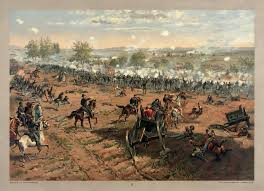
- 64GettysburgThe battle of Gettysburg lasted July 1st to the 3rd of 1863. It is considered one of the most important battles of the Civil War. On July 1st, Confederates ran into the unions army in the town of Gettysburg. On July 3rd, Lee ordered on the enemy's center at cemetery ridge. Lee was forced to pull away his army.
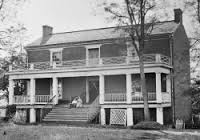
- 65Appomattox CourthouseOn April 9th, 1865 Lee surrendered his army to Ulysses S. Grant at Appomattox courthouse. This was considered the end of the Civil War. Union forces cut off his final retreat and he was forced to surrender.
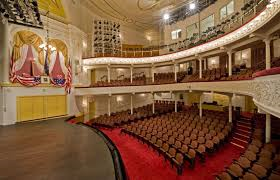
- 66Ford's TheaterOn April 14th, 1865, John Wilkes Booth shot Abraham Lincoln in the back of the head and killed him. The assassination happened only five days after the Civil War was declared over. Booth was from the confederate side and was angry with Lincolns decisions.
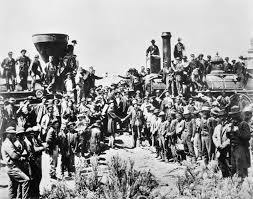
- 67Promontory Point, UtahOn May 10, 1869, the first Transcontinental Railroad was completed. Connecting the Union Pacific on the east and Central Pacific on the west.
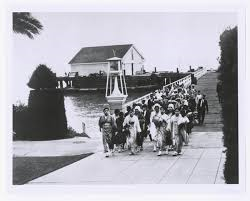
- 68Ellis Island and Angel IslandAngel island is often called the Ellis island of the West. More than 300,000 immigrants from other countries have passed through the small immigration station. Ellis island opened an immigration station in 1892. 4o% of all Americans can trace at least one of their ancestors back to Ellis island.
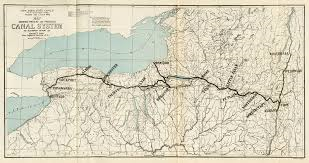
- 69Erie CanalThe Erie Canal connects the Great Lakes with the Atlantic Ocean. Its main purpose was to shorten the distance ships had to travel. Goods could be shipped a lot faster now.
- 70Declaration of IndependenceOn July 4th, 1776, the states signed the Declaration of Independence. This formed congress. The American Colonist declared themselves an independent station. The colonist were also able to conclude an alliance with the government of France.
- 71Revolutionary WarThe Revolutionary war lasted from 1775 to 1783. It was fought between the King of Great Britain and the American colonist. The colonist were fighting for freedom and their rights. The colonist fought for 8 years and finally beat them at the battle of Yorktown.
- 72Articles of ConfederationThe articles of confederation were
- 73Articles of ConfederationThe articles of Confederation were the first written constitution of the United States. It was ratified on March 1st, 1789. The states were now independent. Congress was now in charge.
- 74Great CompromiseIn the House of Representatives, each state would be assigned a number of representatives by the number of their population. And the senate, all the states would have the same number of representatives.
- 75Passing the constitutionThe constitution established America's national government. It also granted rights for citizens. The constitution was signed on September 17th, 1787. It was made because the articles of confederation were weak and did not last. They wanted a stronger government so they made the three branches, executive, legislative, and judicial.
- 76Adding the Bill of rightsSome states supported the constitution with the expectation that protections for individual rights to be added to the highest law of the land. The first congress amended the constitution by adding what became known as the bill of rights. 10 amendments were ratified in 1791.
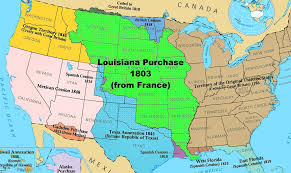
- 77Louisiana PurchaseThomas Jefferson purchased the Louisiana Purchase in 1803, 828,000,000 miles of territory from France. It's stretched from the Mississippi River in the east to the Rocky Mountains in the west and from the Gulf of Mexico in the south to the Canadian border in the north.
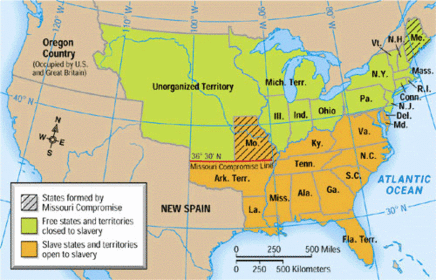
- 78Missouri CompromiseProslavery and anti-slavery people were not getting along in the years leading up to the Missouri compromise of 1820. Missouri requested to the union that they wanted to be a slave state, but this would threaten to upset the delicate balance between slave states and free states. To keep the peace, Congress allowed Missouri to be a slave state while Maine was now a free state.
- 79Indian Removal ActAndrew Jackson was in charge of the Indian Removal Act of 1830. Indian Tribes were in the way of westward expansion. The white people were angry and wanted them removed. In 1814, Andrew Jackson led an expedition against the Creek Indians in the Battle of Horseshoe Bend. Jackson won and made the Indians sign a treaty. Over the next decade, Jackson lead the way in the Indian Removal Act campaign. Jackson tricked them into thinking they were going to a better place.
- 80Mexican American WarThe Mexican American War lasted from 1846 t0 1848. James K Polk led the war, believing the United States had a manifest destiny need to spread across the continent to the Pacific Ocean. When the war was over, Mexico had lost about one third of its territory.
- 81California Gold RushGolden Nuggets were found in the Sacramento Valley in early 1848. As news spread across the land thousands of prospective gold miners traveled by sea or by land to San Francisco. A total of $2 billion worth of metal was found from the area during the gold rush in 1852.
- 82Homestead ActThe law for the Homestead act was signed in 1862. This allowed any American including freed slaves to put in a claim for up to 160 free acres of federal land. 1.6 million individual claims were approved.
- 83Industrial RevolutionIndustrial Revolution took place from the 18th to the 19th century. Industrialization changed peoples tools to powered special-purpose machinery, factories and mass production. Although it was good for some people, it also resulted in grim employment and living conditions for the poor and working classes.
- 84Underground railroadThe underground railroad got its name, because it had to be a secret. Abolitionist were housing run away slaves and keeping them hidden for a night or until they could run away when the coast is clear again. Some abolitionist would have signs on their porches or doors to let slaves know they were a house they could stay at.
- 85Seneca Falls ConventionIt was the first women's rights convention held in the United States. It was established in New York by Elizabeth Cady Stanton and Lucretia Mott in 1848. The point was to increase support for women's rights.
- 86Compromise of 1850The compromise of 1850 were divisions over slavery territory gained in the Mexican American war. The compromise of 1850 was made to calm things down. California would be a free state, settling a Texas New Mexico boundary dispute. This would make it easier for southerners to recover a fugitive slaves.
- 87Kansas Nebraska ActThe Kansas Nebraska act was created in 1854. Allowed settlers of a territory to decide whether slavery would be allowed within new states borders. The conflicts between abolitionist and pro-slavery people led to the violence known as bleeding Kansas.
- 88Dred Scott verses SanfordOn March 6, 1837 Dred Scott tried to go against a white man in court. Scott lived in the free state of Illinois with his owner. He was trying to say how he should not be a slave, because slavery was prohibited in the state he was in. They agreed that congress had no power over slavery. They also declared African- Americans were not counted as American citizens and did not have citizenship.
- 89Fugitive Slave ActIt was passed as part of the compromise of 1850. It was passed by congress on September 18, 1850. This law stated no matter where the slaves are they can always be taken back to slavery, even if they are in a slave state. This caused conflict between the north and the south.
- 90Bleeding KansasBleeding Kansas is the period of violence during the settling of the Kansas territory. In 1854 the Kansas Nebraska act overturned the Missouri Compromise. The people in the state decided if the state was a free state or not. Many proslavery people flooded into Kansas to try and change our decision. Violence happened quickly as both sides fought for their decision.
- 91Civil WarArguments over the constitution turned into a brutal war. Slavery was also the main reason the war started. The war also increased Americans economic power. The two sides fighting against each other were the confederates and the union. One was fighting for no slavery and one was fighting for slavery.
- 92Emancipation ProclamationThe emancipation proclamation was issued on September 22, 1862. It was meant to free the slaves. Lincoln was hoping the slaves would fight for the union. He wanted to hurt the confederates, because now they don't have extra hands to help them.
- 93Civil war draft riotsIn 1863 congress tried to pass a law saying all men between the age of 20 and 45 had to fight in the war. If you were rich, you could pay a fee to get out of it. This caused a lot of violence.
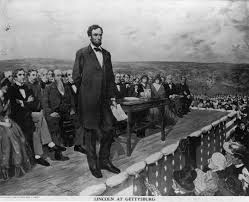
- 94Gettysburg AddressIn November of 1863, Lincoln gave a speech known as the Gettysburg address. He gave this speech on site of one of the bloodiest battles of the Civil War.
- 95ReconstructionReconstruction lasted from 1865 to 1867. Reconstruction was created to try and bring the country back together. It was also suppose to help the whites with the blacks. I personally think it failed, because we still have racism today.
- 96Civil War AmendmentsThe 13th amendment abolished slavery in the U.S. on December 6, 1865. The 14th amendment was ratified on July 9th, 1868 and it says no matter who you are, you have equal protection under the laws. The 15th amendment was ratified February 3rd, 1870 and it grants male African Americans the right to vote.
- 97Completion of Transcontinental railroadThe transcontinental railroad connected the eastern and western coast of the united states. It made it a lot easier, faster, and safer to ship goods and take people from one place to another.
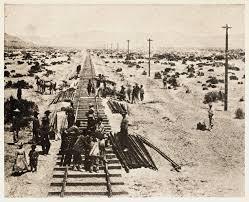
- 98gilded ageThis period was all about growth in industry and immigrants. The production of iron and steel rose dramatically. Railroads also became a big thing. A lot of business men got rich off of this age.
- 99Populist PartyFarmers were having crop failures and were losing more money than they were making. It was a political party organized in 1892 to represent the common folk- epically farmers.
- 100Indian WarsThousands of Americans moved to the Great Plains. They threatened native life and native game. The white men were angry, because they could have more land but the Indians were on it. They told the U.S. army they wanted them off and the army later listened. This caused a lot of conflict over Indians, because we wanted them to assimilate to our culture.
- 101Plessey vs. FergusonThirteen African American parents, wanted to enroll their kids in school. They were denied, and told them they had to go to a segregated school. The board of education lied about everything being equal.
Información
- Descripción
- The last WYNTK
- Creado por
- muehlbergerm · may 2015
- Actualizado
- 19 feb 2016
- Visitas
- 16
- Etiquetas
- Valoración