
Fichas
Plastics
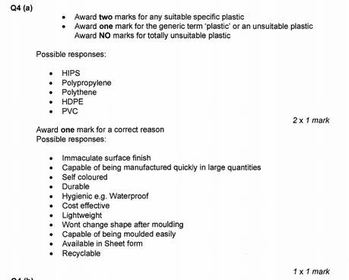
Fichas del conjunto (49)
- 1PVC (poly vinyl chloride)Thermoplastic:
Wide range of colours. stiff,hard. tough at room temperature. Can be used outdoors if suitably stabilised. Light weight. Very good acid and alkali resistance. Particularly good for fabricating.
Pipes, guttering and fittings. Bottles and containers. Curtain rails. Roofing sheets. Shoe soles. Brush bristles. - 2Polystyrene (high impact polystyrene)Thermoplastic:
Not tough. comes in a wide range of colours.
Good for vacuum forming. Join using a liquid polystyrene cement. - 3ABS (acrylonitrile butadienestyrene)Thermoplastic.:
Stiff, strong and tough. Scratches easily. Comes in a wide range of colours. - 4Nylon ( Polyamide)Thermoplastic:
Hard, tough, rigid, creep resistant.Good bearing surface. Self-lubricating. Resistant to oil,fuels and chemicals. High melting point. Very resilient. Wear and friction resistant.
Gear wheels, bearings, automotive, agricultural, general communications and telecommunications equipment parts. Power tool casings. Curtain rail fittings, packaging, film, clothing, combs. - 5Polyester resin (Unsaturated polyester resin)Thermosetting Plastic:
Good electrical insulator, good heat resistance. Stiff, hard, brittle alone but strong and resilient when laminated. Resistant to ultraviolet light for outside use. Strongly exothermic, this can lead to cracking. Contracts on curing.
GRP boats, car bodies. Chair shells. Ducting, garden furniture, e.t.c.Translucent panels for building. Encapsulating and embedding castings. - 6LDPE (Low density polyethylene)Thermoplastic:
Wide range of colours. Tough. Good chemical resistance. Good electrical insulator. Flexible, soft. Fades unless light stabilised. Attracts dust unless anti-static.
Squezee bottles and toys. Plastic sacks and sheets. Packaging film. Telecommunications cable insulation. TV aerial lead insulation. - 7HDPE ( High density polyethylene)Thermoplastic:
Wide range of colours. Fairly stiff and hard.Stiffness and softening point both increase with density. Can be sterilised. Good chemical resistance. high impact and shock resistant. Fades unless light stabilised.
Milk crates. Bottles, barrels, tanks, pipes, chemical pumps, machine parts(e.g. gear wheels). Houseware( e.g. buckets, bowls) - 8Plasticised PVC (polyvinyl chloride)Thermoplastic:
Wide range of colors. Soft, flexible. Good electrical insulator.
Leathercloth, suitcases, tabletops coverings. Sealing compounds, underseal. Dip coatings . Hosepipes. Electrical wiring insulation. Wall coverings( vinyl wallpapers). Floor coverings. - 9EPS (Expanded polyphenylethane)Thermoplastic:
Very buoyant. light weight. Absorbs shocks. Very good sound and heat resistor. Crumbles easily. Burns readily unless flame proofed.
Sound insulation. Heat resistant packaging. - 10Acrylic PMMA ( Polymethyl methacrylate)Thermoplastic:
Stiff, hard glass clear. Very durable outdoors. Easily machined, cemented and polished.Good electrical insulator. Safe with food. Ten times more impact resistance than glass.. Splinters easily. Scratches easily.
Light units and illuminated signs. Watch and clock glasses. Record player lids. Simple lenses. Aircraft canopies and windows. Car rearlight units. Skylights. Furniture. Baths. Perspex sheet. Cladding for buildings. - 11ThermoplasticA thermoplastic is a material which becomes soft when heated and hard when cooled. Thermoplastic materials can be cooled and heated several times. They can be recycled. When thermoplastics are heated, they melt to a liquid. They also freeze to a glassy state when cooled enough.
- 12Thermosetting plasticA thermosetting plastic, also known as a thermoset, is polymer material that irreversibly cures. The cure may be done through heat (generally above 200 °C (392 °F)), through a chemical reaction (two-part epoxy, for example), or irradiation such as electron beam processing.
Thermoset materials are usually liquid or malleable prior to curing and designed to be molded into their final form. Others are used as adhesives. Others are solids. Some solid theromosetting polymers are used as molding compound in semiconductors and integrated circuits (IC). Once hardened a thermoset resin cannot be reheated and melted back to a liquid form. - 13Injection moulding of ThermoplasticAdvantages:
High production rates are possible. (A typical cycle time for a 3mm thick part would about 40 seconds)
Injections moulding allows you to produce products with a good finish to a good consistent quality..
Disadvantages:
Very expensive to set up - the tools (the dies or moulds) are produced to a high degree of accuracy and surface finish. - 14—Advantages
High production rates are possible. (A typical cycle time for a 3mm thick part would about 40 seconds)
Injections moulding allows you to produce products with a good finish to a good consistent quality..
Disadvantages
Very expensive to set up - the tools (the dies or moulds) are produced to a high degree of accuracy and surface finish.
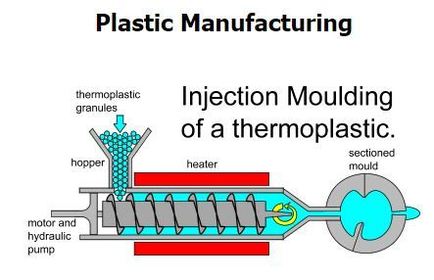
This technique is widely used for forming thermoplastic materials. It is similar to the casting technique used to form metal components. The plastic (in a powdered or granular form) is put in a hopper. A screw thread turns forcing the plastic material through a heater, melting it. When all the materials has melted the screw thread then acts as a ram and forces the plastic into mould, where it cools and solidifies.
Injection moulding is a very common process used in the manufacture of the casing of many electronic products such as TV's and radios. - 15—Advantages - High production rates.
Disadvantages - Poor quality surface finish. Can only be used for thin walled materials.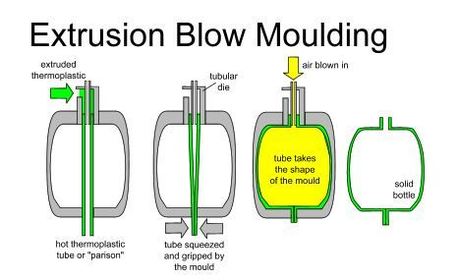
- 16—This process is widely used to form metal and plastic components that have constant cross sectional shapes such as pipes, curtain rails etc.
The extrusion process is similar to injection moulding. Plastic granules are heated in a hopper and a screw thread forces the material through a die.The material is then cooled. Extrusion can only be used for simple shapes and the end product generally has a poor quality finish.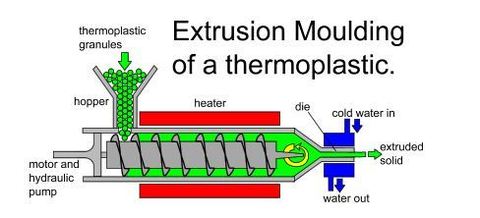
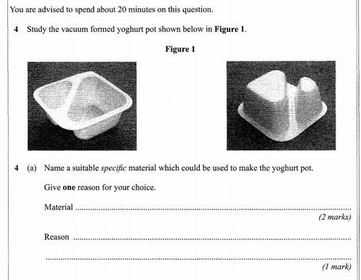
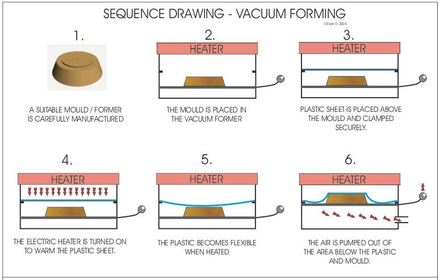
- 17—Vacuum forming is used to make simple moulds using thin sheets of thermoplastic. High impact polystyrene sheet is what is used in school (HIPS). PVC can also be used.
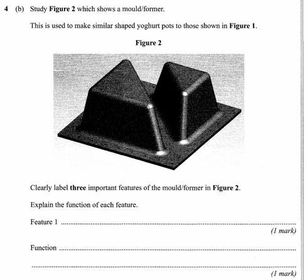
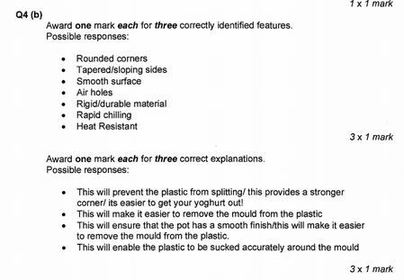
A mould is created from wood or epoxy resin and this is placed on the table (platten) of the vacuum forming machine. The sheet plastic is heated until it becomes soft.
The table with your mould on is lifted into position and a vacuum is used to draw the plastic over the mould. Vacuum forming only works with thin plastics and moulds with no undercuts.
The plastic can then be trimmed to the required shape.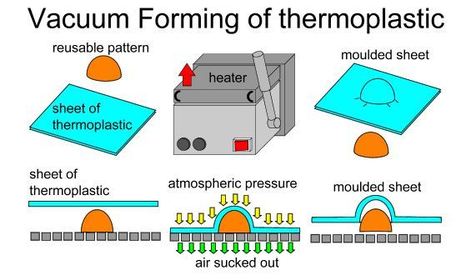
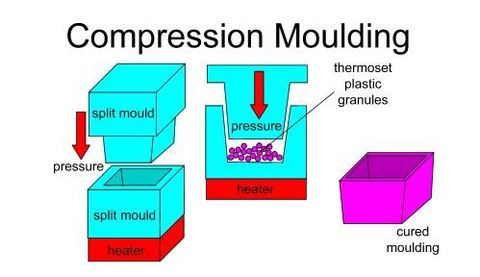
- 18—This is how thermosets are formed. The reaction occurs in the mould as the granules are heated and compressed. UF or urea formaldehyde and MF melamine formaldehyde are formed by this method.
- 19—Line Bending
Acrylic, foamex, styrene(hips) can be bent using a line bending machine. The line bender heats the plastic using a hot wire or electric fire element. Once the plastic is softened it can be bent to the required angle. The plastic must be heated across the whole width of course.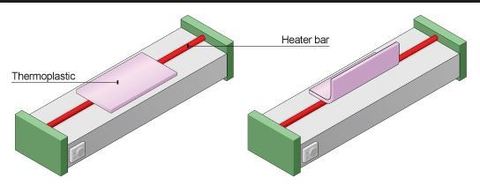
- 20Melamine FormaldehydeThermosetting plastic:
Because of its smooth surface and hygienic qualities, used for kitchen laminates surfaces. Also used for electrical plugs and sockets, because it can be cast and it is an excellent insulator. - 21PolyurethaneThermosetting Plastic:
This forms the basis of many paints and varnishes. Tough, water resistant. - 22Urea FormaldehydeThermosetting plastic:
has physical properties of high hardness and high toughness, making it suitable for strong, knock-resistant electrical fittings. It is also scratch resistant and a very good electrical insulator. Electrical fittings manufactured from this polymer are safe to use. - 23Epoxy resinThermosetting plastic:
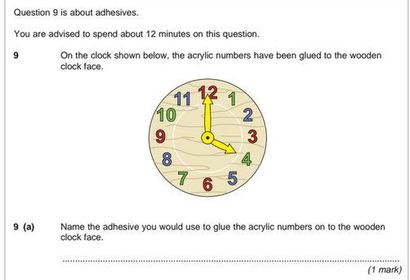
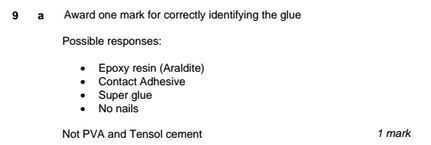
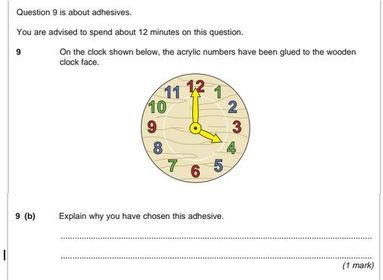
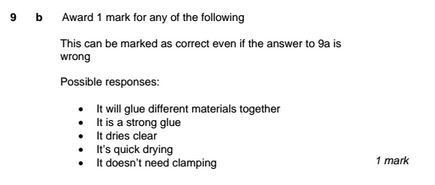
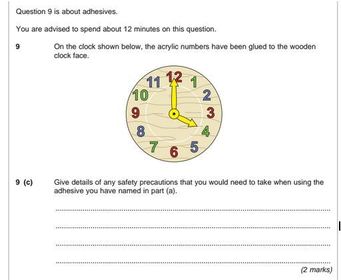
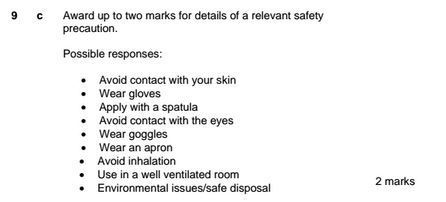
Many adhesives (glues) are thermosetting plastics. For example, Araldite. Composed of two tubes (one is resin, the other a catalyst). They are mixed to form the glue. - 24Check you knowledge and take a quiz at http://www.the-warren.org/GCSERevision/resistantmaterials/plasticsquizzes.htmhttp://www.the-warren.org/GCSERevision/resistantmaterials/plasticsquizzes.htm
- 25—Recyclable
PET: Polyethylene Terepthalate
Fizzy drinks
Mineral water bottles
Squashes
Cooking oils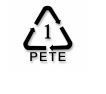
- 26—Recyclable
HDPE: High Density Polyethylene
Milk bottles
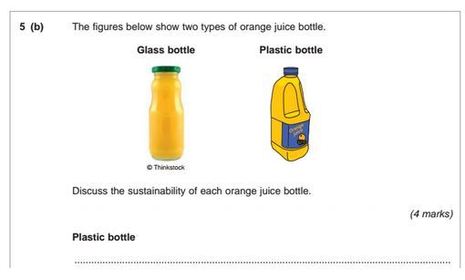
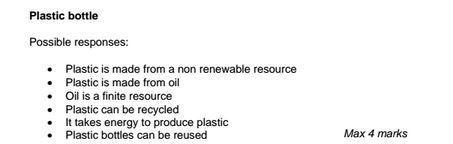
Juice bottles
Washing up liquid
Bath & shower bottles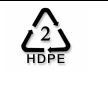
- 27—Recyclable
PVC: Polyvinyl Chloride
Usually in bottle form
however not that
common these days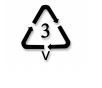
- 28—Not generally recycled
LDPE: Low Density Polyethylene
Many types of packaging are made from these materials, for example, plastic
formed around meats and vegetables.
- 29—Not generally recycled
PP: Polypropylene
Many types of packaging are made from these materials, for example, plastic
formed around meats and vegetables.
- 30—Not generally recycled
PS: Polystyrene
Many types of packaging are made from these materials, for example, plastic
formed around meats and vegetables.
- 31—Not generally recycled
OTHER: All other resins and multi-materials
Many types of packaging are made from these materials, for example, plastic
formed around meats and vegetables.
- 32—
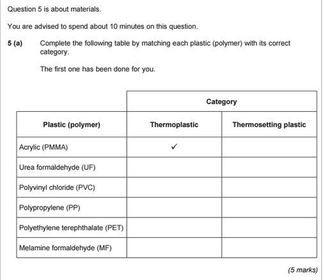
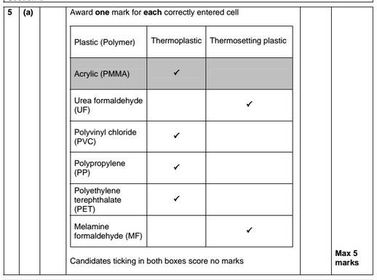
- 33—Thermoplastic
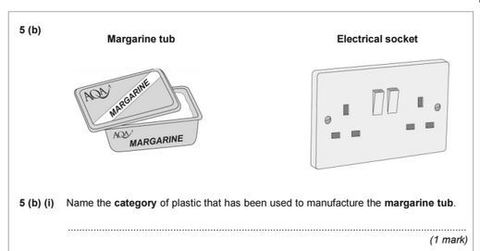
- 34—
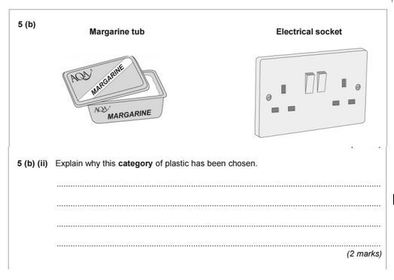
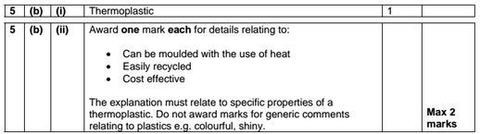
- 35—Thermosetting
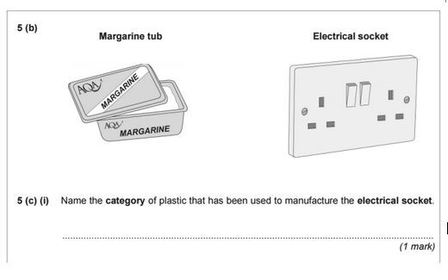
- 36—
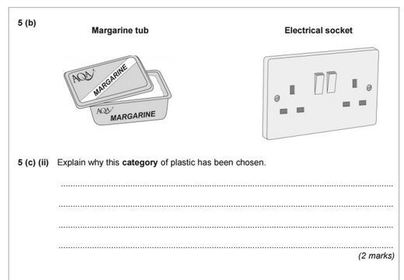

- 37—
- 38—
- 39—
- 40—
- 41—
- 42—
- 43—
- 44—
- 45Exam question 2009 4 (d) Use notes and sketches to show details of the vacuum forming process.
- 46Exam question 2009 4 (e) 'Webbing' is a problem which can sometimes occur when vacuum forming. Explain the causes of this problem.The plastic is too hot
The plastic is too cold
The angle of taper is too steep
Any gaps between mould features are too close together
There are no/not enough air holes
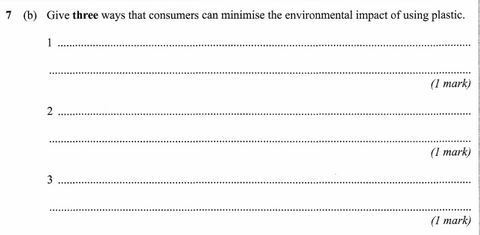
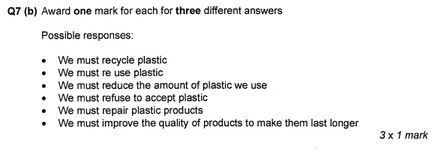
Incorrect radius on mould - 47Exam question 2009 7 (b) Give three ways that consumers can minimise the environmental impact of using plastic.•We must recycle plastic
We must re use plastic
We must reduce the amount of plastic we use
We must refuse to accept plastic
We must repair plastic products
We must improve the quality of products to make them last longer - 48—
- 49Plastic bag life cycle
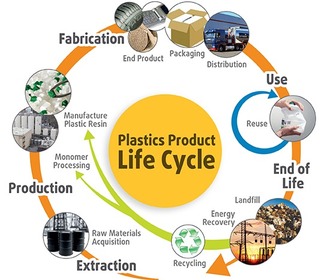
Información
- Descripción
- Plastics revision cards
- Creado por
- Mike Stokes
- Visitas
- 636
- Etiquetas
- Valoración