
Fichas
Clinical Kinesiology and Anatomy : Chapter 1 Basic Infornmation
Fichas del conjunto (60)
- 1KinesiologyThe study of movement
- 2BiomechanicsMechanical principles that relate directly to the human body
- 3KineticsForces causing movement
- 4KinematicsThe time, space, and mass aspects of a moving system
- 5Anatomical PositionThe human body standing in an upright position, eyes facing forward, feet parallel and close together, arms at the sides of the body with the palms facing forward.
- 6Fundamental PositionSame as anatomical except that the palms face the sides of the body
- 7MedialTowards the midline of the body
- 8LateralFurther from the midline
- 9AnteriorFront of the body
- 10PosteriorBack of the body
- 11VentralSynonym of Anterior
- 12DorsalSynonym of Posterior
- 13DistalAway from the trunk. This term is ONLY used in the extremities!
- 14ProximalToward the trunk. This term is ONLY used in the extremities
- 15SuperiorAbove or the upper surface of an organ or a structure
- 16InferiorBelow or the lower surface of an organ or structure
- 17Cranial OR CephaladPosition or structure close to the head
- 18CaudalPosition or structure closer to the feet.
- 19SuperficialToward the upper most layer
- 20DeepFurther from the surface
- 21SupinePosition where patient is lying on their back
- 22PronePosition where a patient is lying on their stomach
- 23BilateralTwo, or both sides
- 24ContralateralRefers to the opposite side
- 25IpsilateralRefers to the same side
- 26Linear MotionAKA translatory motion. It is a straight line from one location to another. All parts move the same distance, in the same direction, and at the same time.
- 27Rectilinear MotionMovement that occurs in a straight line
- 28Curvilinear MotionMovement that occurs in a curved path that isn't circular
- 29Angular MotionMovement of an object around a fixed point. AKA Rotary Motion
- 30Segments of the Upper BodyArm or humerus is the bone between the shoulder and the elbow joint.
The forearm, or radius and ulna is between the elbow and the wrist.
The hand is distal to the wrist.d - 31Segments of the Lower BodyThe thigh is between the hip and the knee joint.
The leg, or the tibia and fibula is between the knee and ankle joint.
The foot is distal to the ankle. - 32Segments of the Trunk and Head/NeckThe thorax or chest is made of the ribs, sternum, and thoracic vertebrae.
The abdomen is made of the pelvis, stomach, and lumbar vertebrae.
The neck or cervical vertebrae and head are separate segments. - 33OsteokinematicsThe relationship of the movement of the bones around a joint axis.
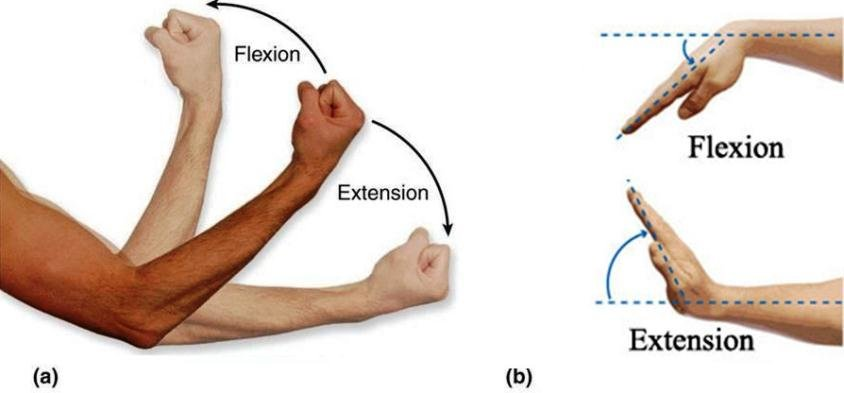
- 34FlexionThe bending movement of one bone on another, bringing the two segments together
- 35Example of Flexion
- 36ExtensionThe straightening movement of one bone away from the other, causing an increase in joint angle.
- 37Example of Extension
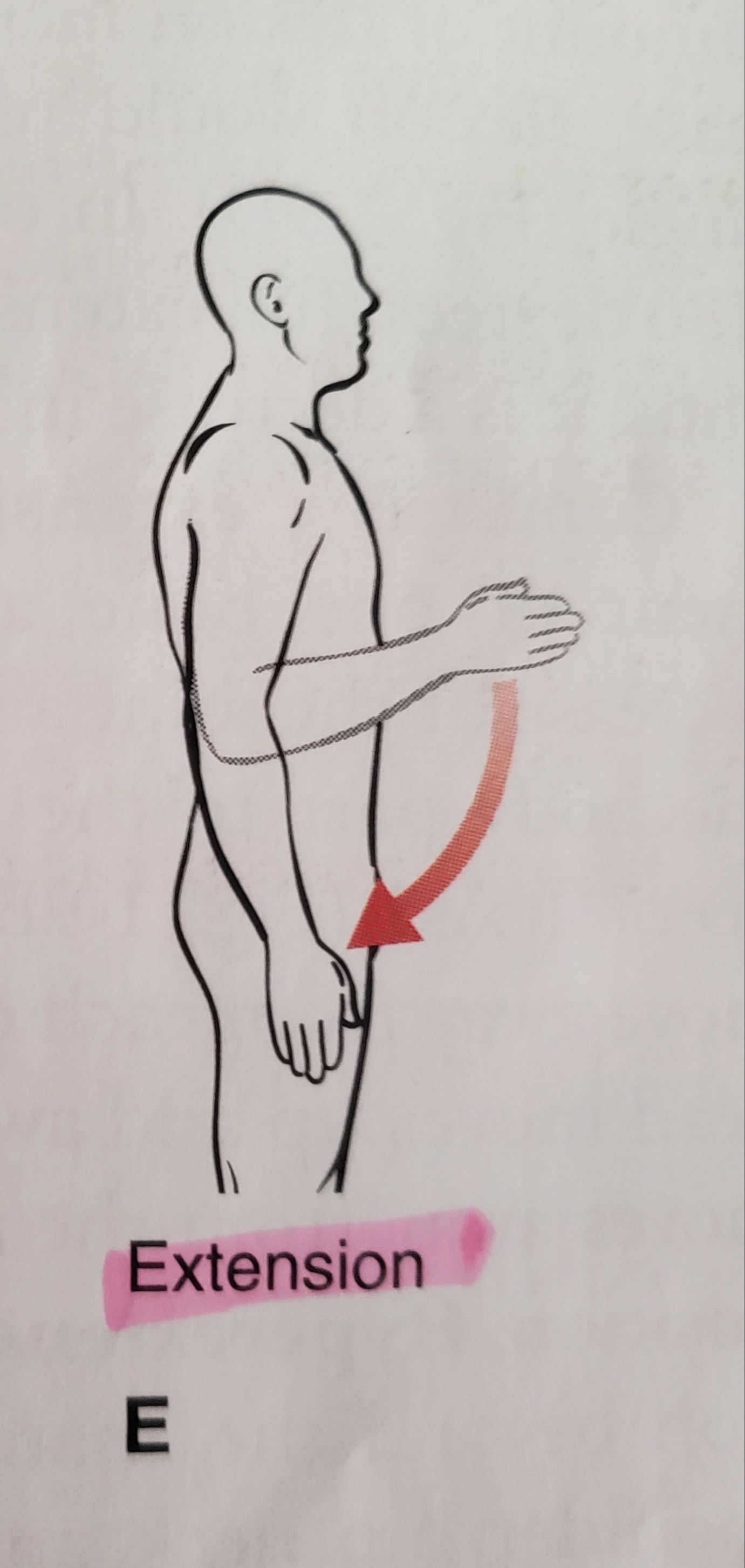
- 38HyperextensionThe continuation of extension beyond anatomical position
- 39Example of Hyperextension
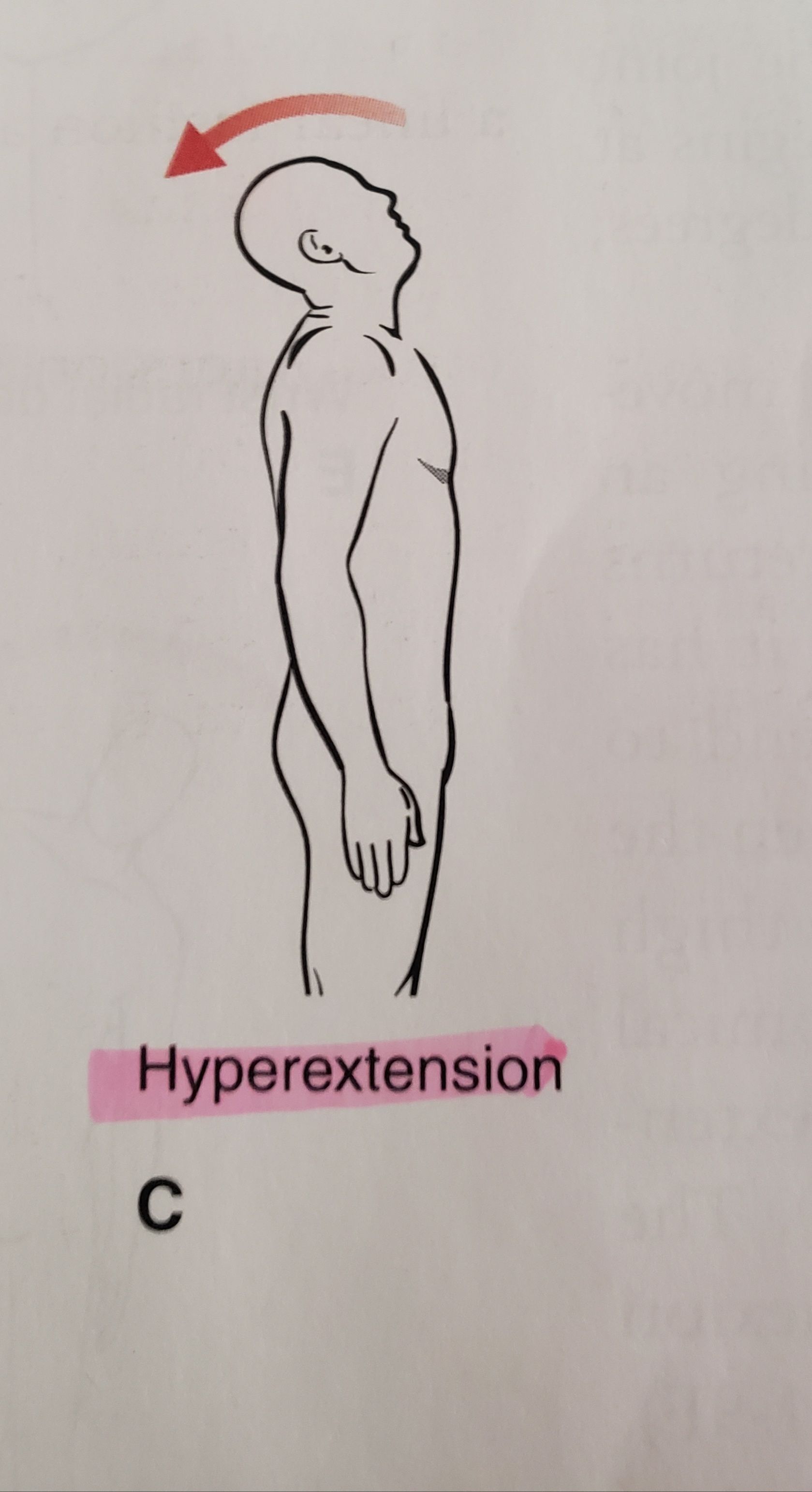
- 40Palmar Flexion and ExtensionFlexion and Extension at the wrist
- 41Example of Palmar Flexion and Extension
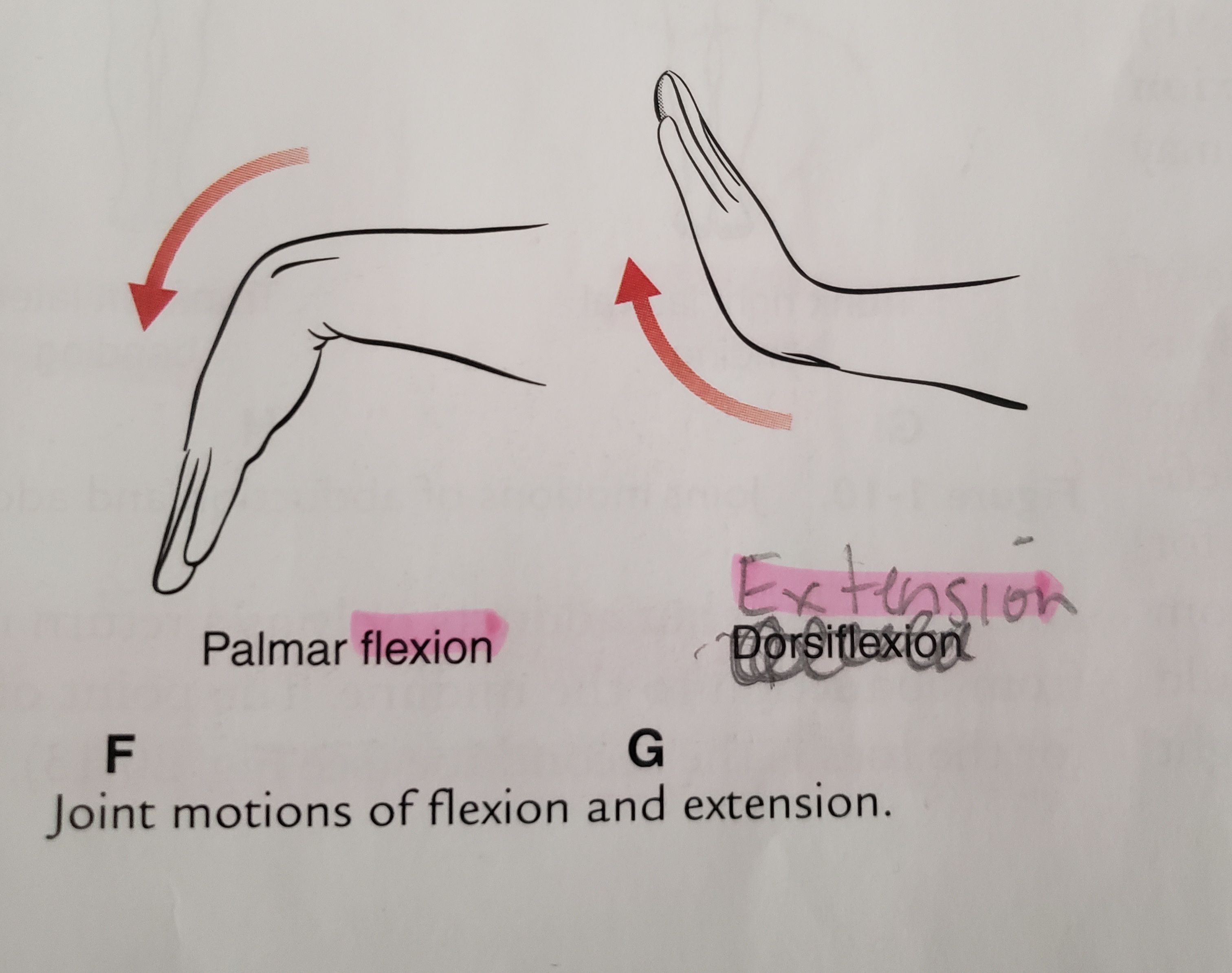
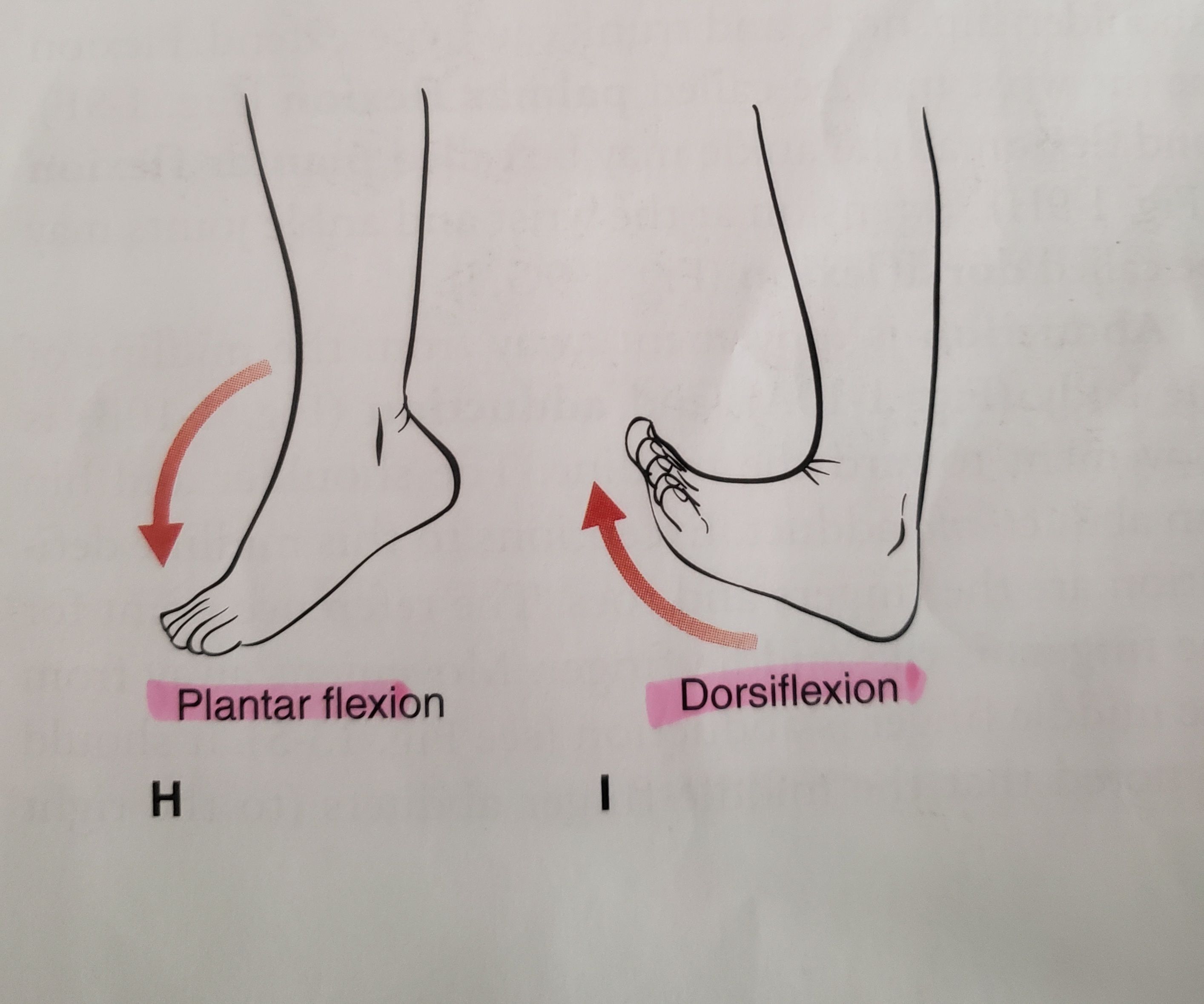
- 42Plantar Flexion and Dorsiflexion of the ankleFlexion and Extension of the ankle
- 43Example of Plantar Flexion and Dorsiflexion of the ankle
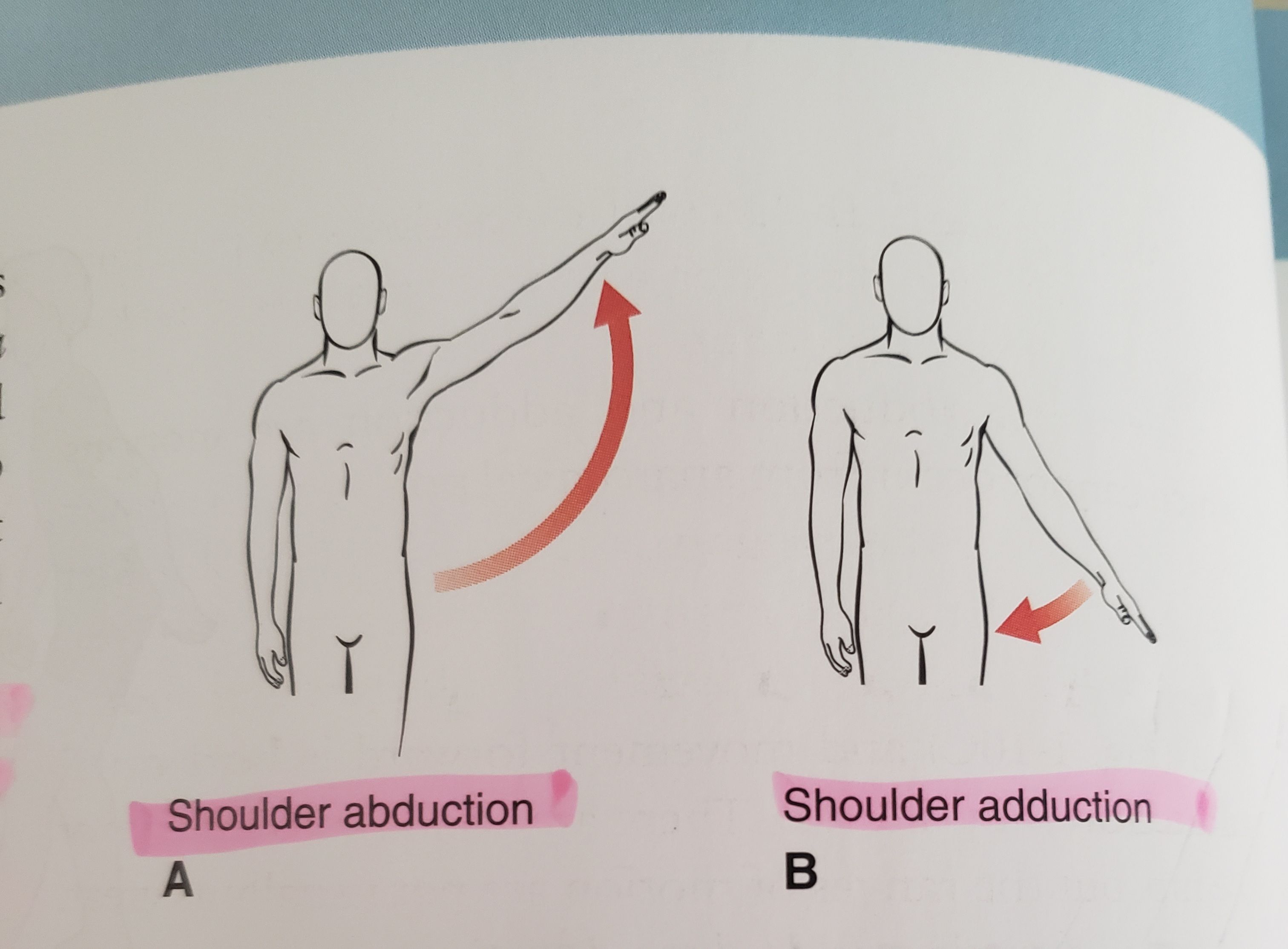
- 44ABduction and ADDuctionABduction is the movement away from the body.
ADDuction is the movement toward the midline. - 45Example of ABduction and ADDuction
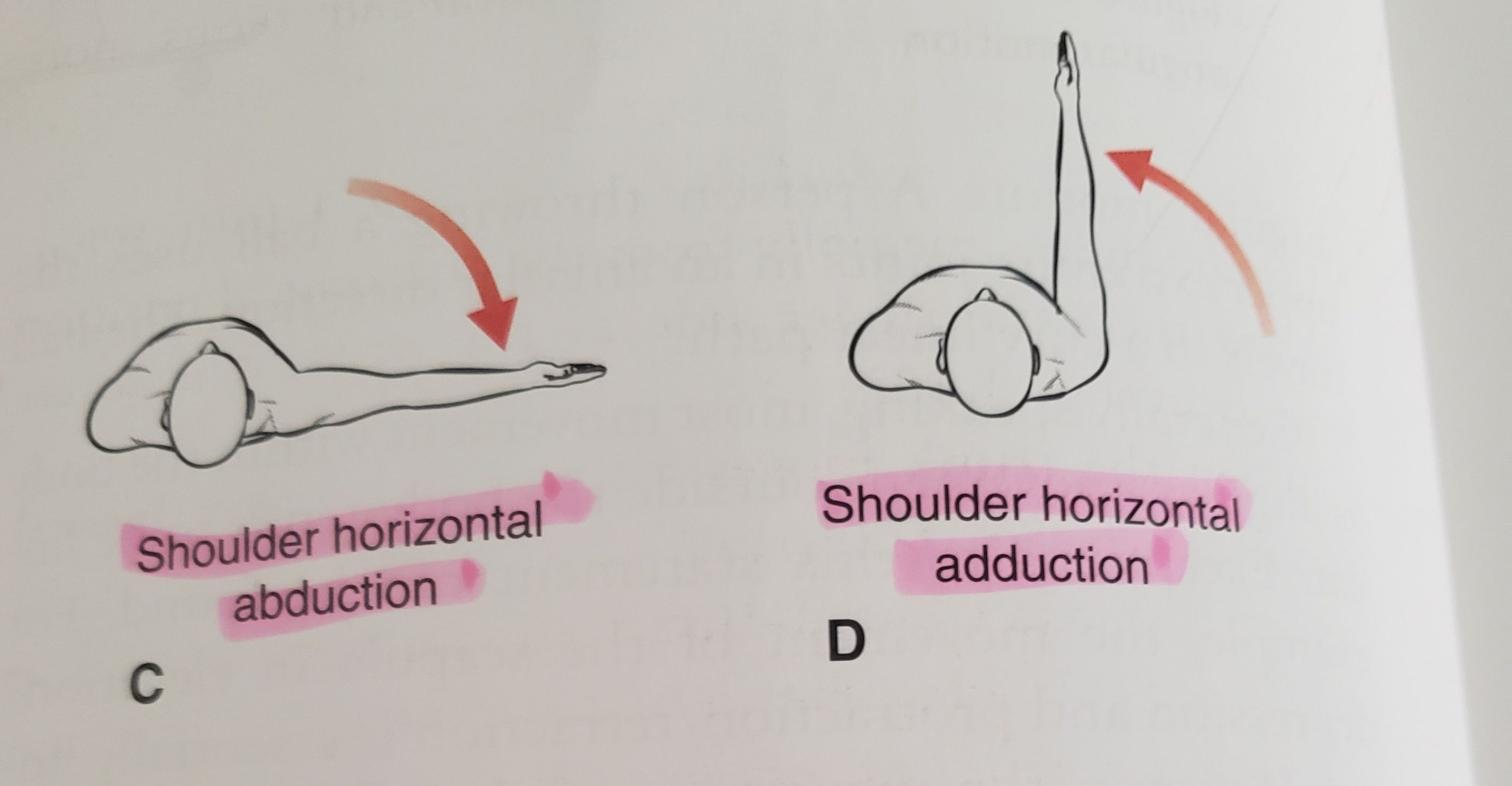
- 46Horizontal ABduction and ADDuctionMotions cannot occur from anatomical position.
Horizontal ABduction is where the shoulder movement is backward.
Horizontal ADDuction is where the shoulder movement is forward. - 47Example of Horizontal ABduction and ADDuction
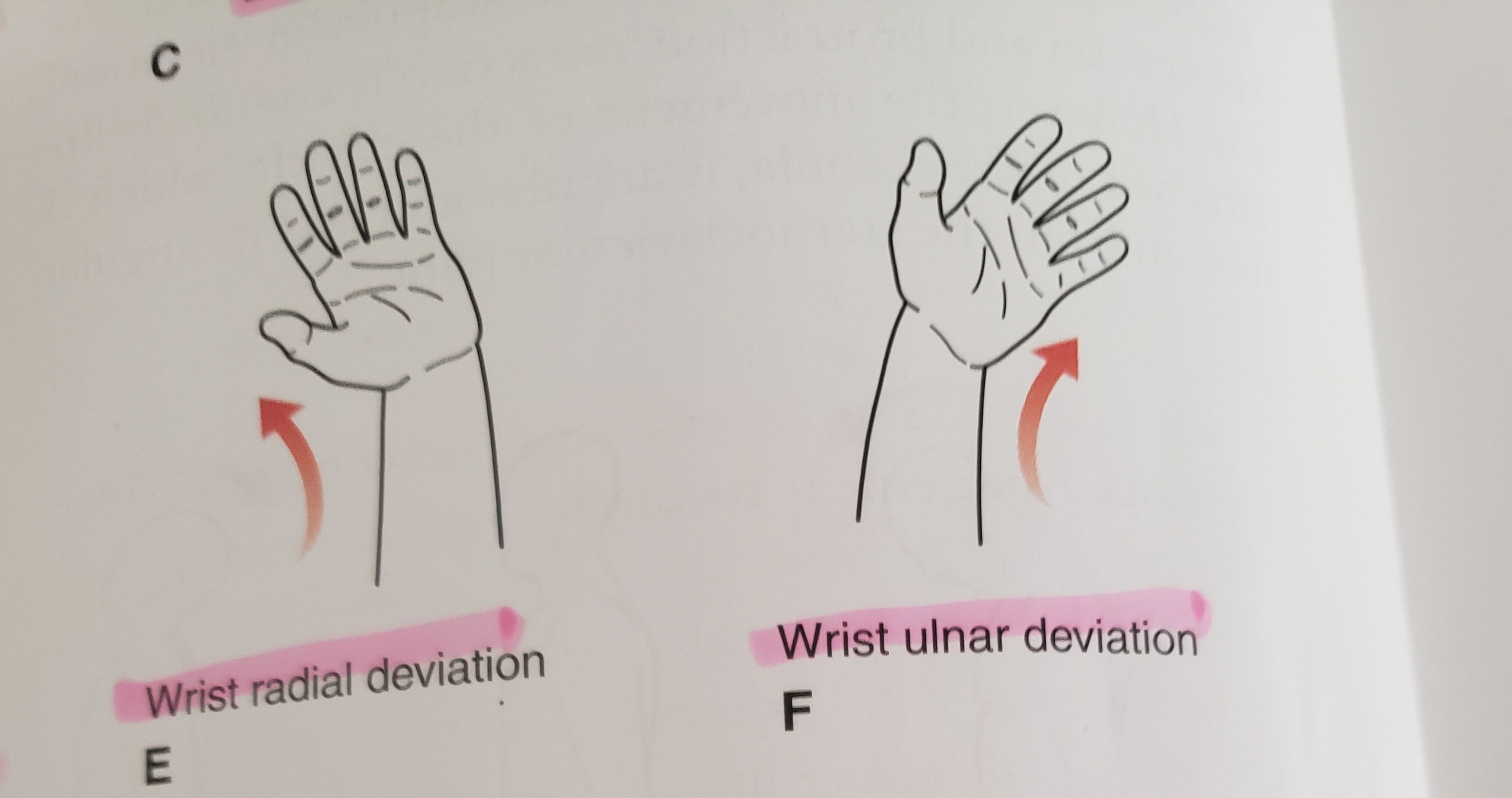
- 48Radial and Ulnar DeviationRadial Deviation is when the hand moves laterally, or toward the thumb side from anatomical position.
Ulnar Deviation is where the hand moves medially, or toward the pinky side from anatomical position. - 49Example of Radial and Ulnar Deviation
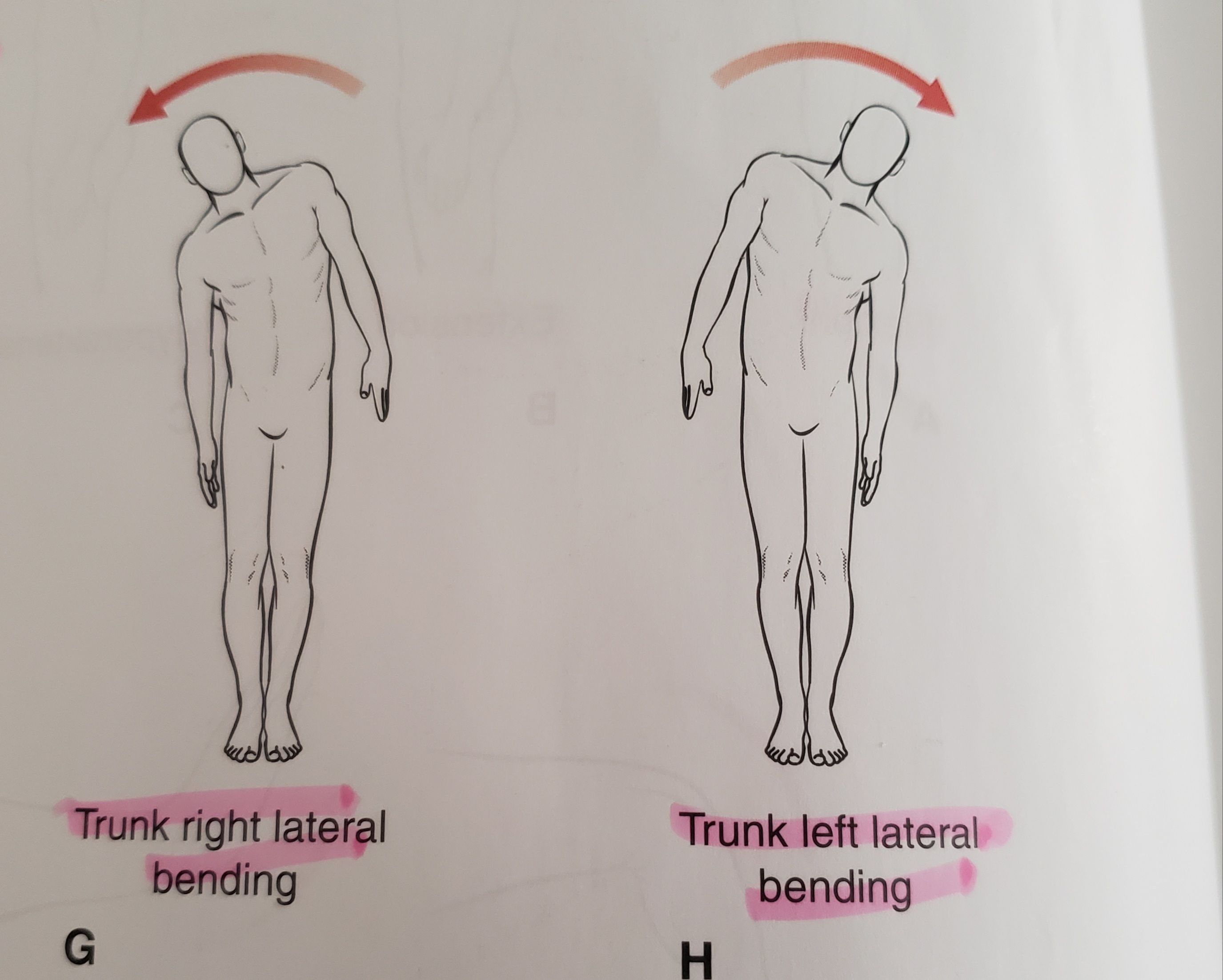
- 50Trunk Lateral Side BendWhen the truck moves sideways
- 51Example of Trunk Lateral side Bend
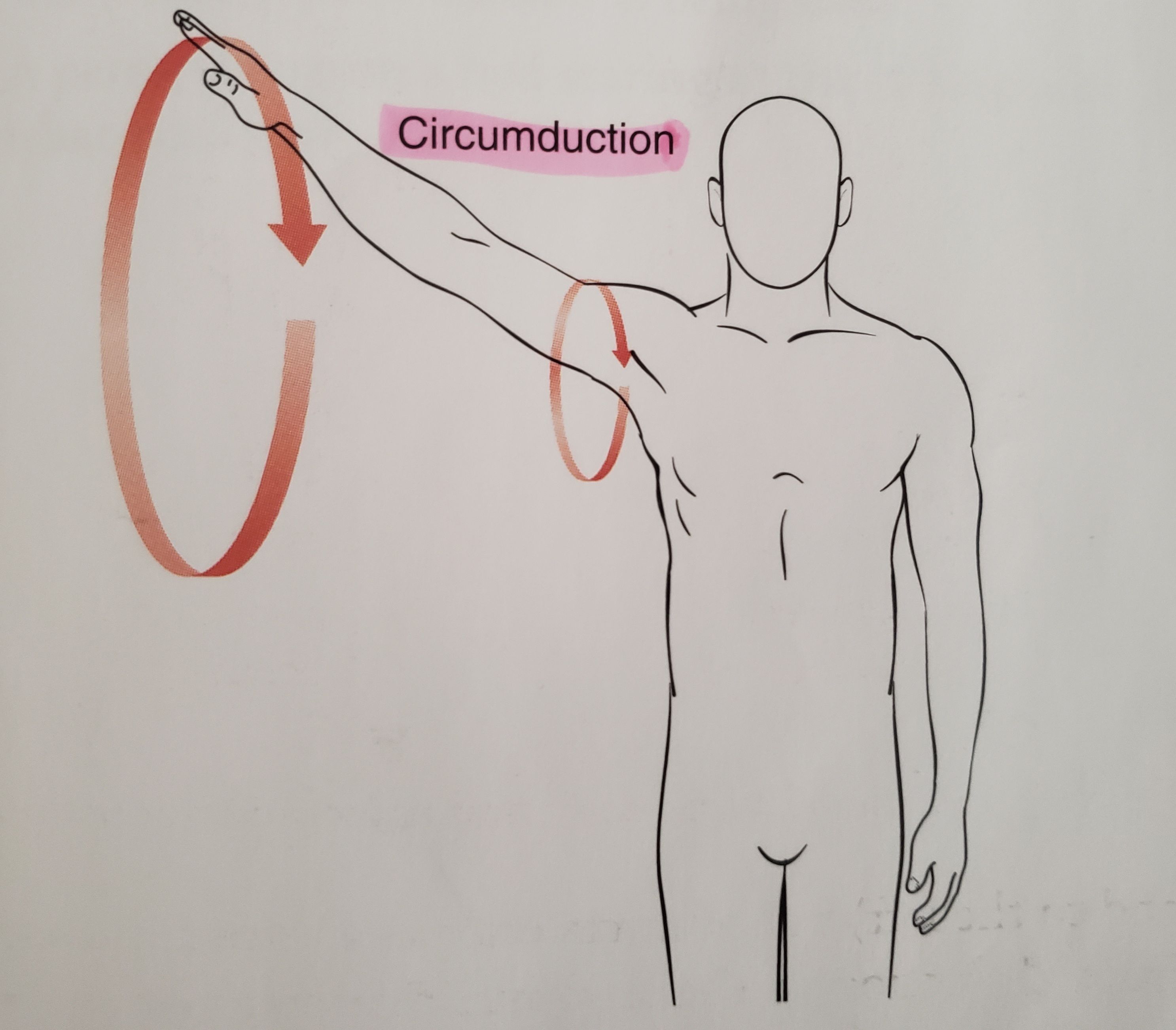
- 52CircumductionA circular, cone-shaped pattern. It involves a combination of flexion, extension, ABduction, ADDuction.
- 53Example of Circumduction
- 54Medial and Lateral RotationMedial Rotation: The anterior surface rolls inward toward the midline
Lateral Rotation: The anterior surface rolls outward away from the midline. - 55Example of Medial and Lateral Rotation
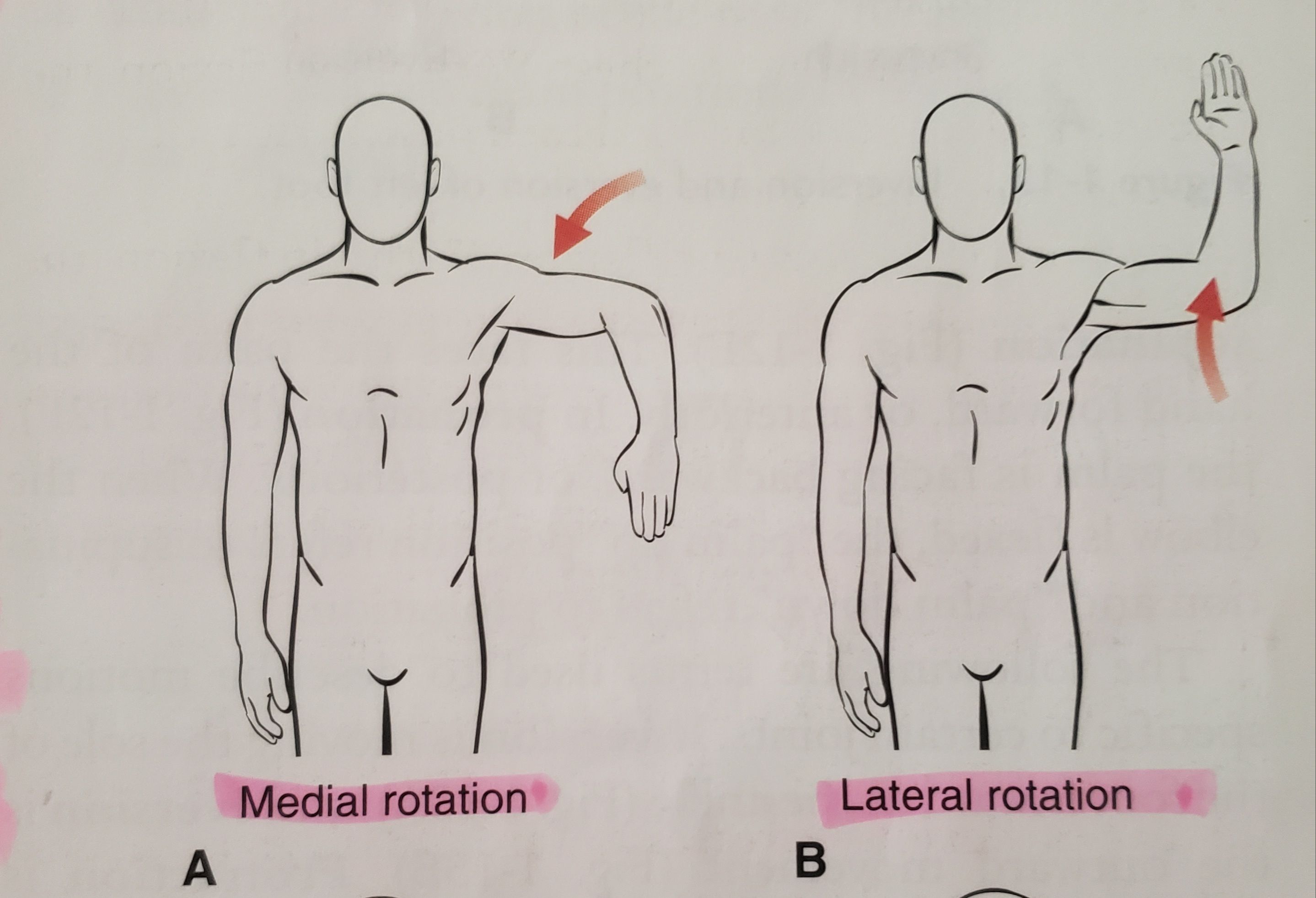
- 56Supination and PronationSupination: From anatomical position, this faces the palm of the hand forward or anteriorly
Pronation: From anatomical position, this faces the palm of the hand backward, or posteriorly. - 57Example of Supination and Pronation
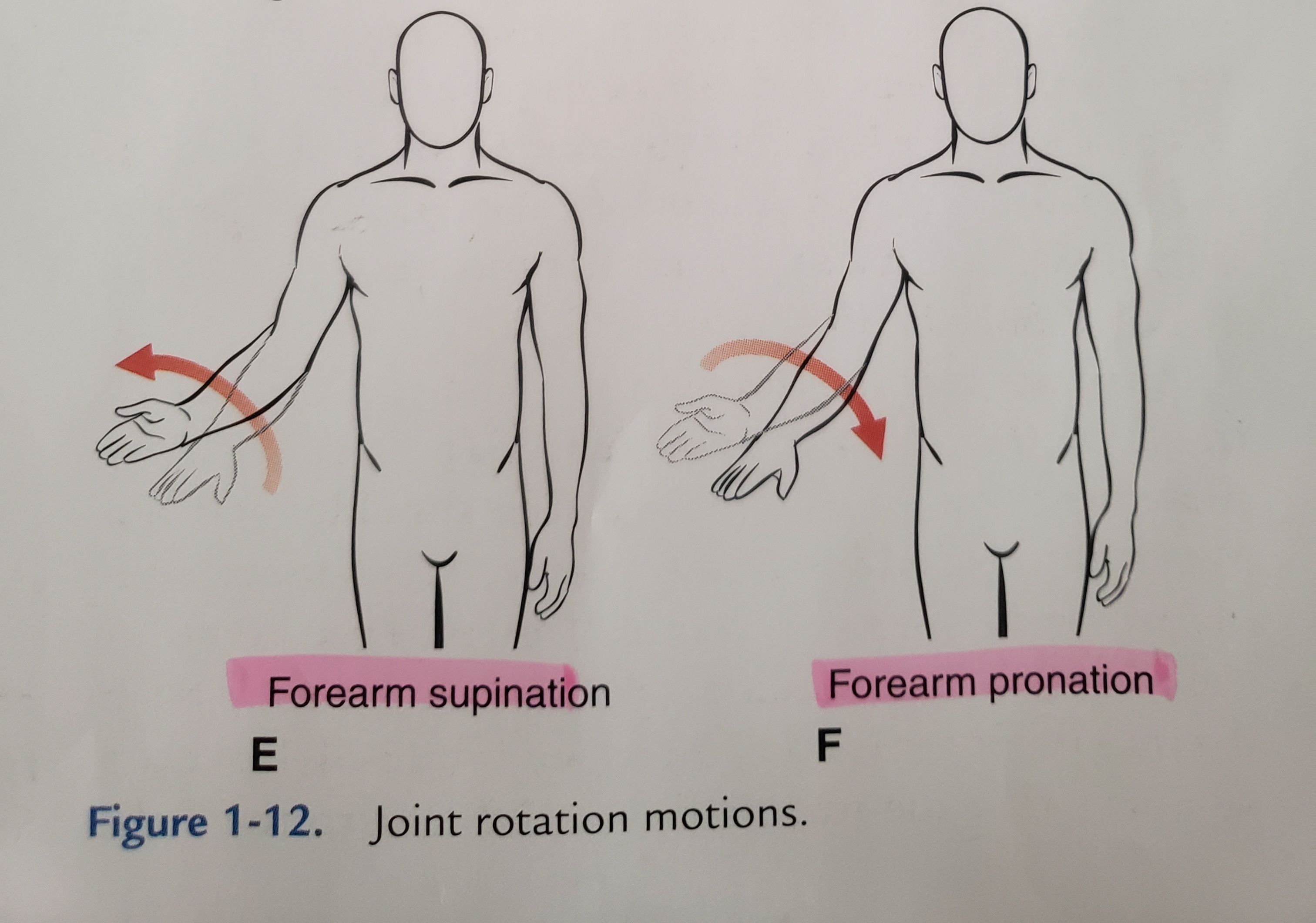
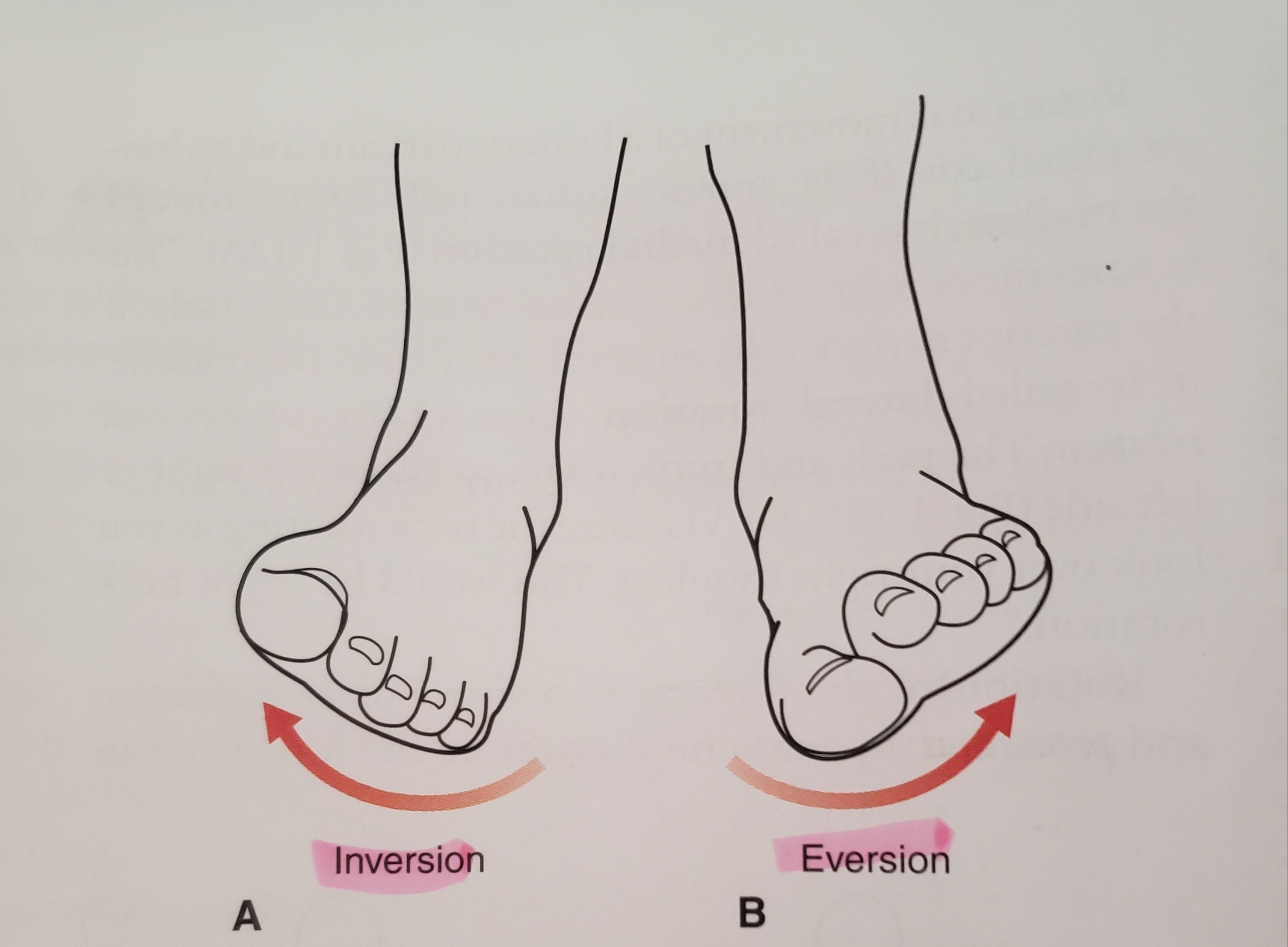
- 58Inversion and EversionInversion: Moving the sole of the foot inward at the ankle
Eversion: Moving the sole of the foot outward at the ankle - 59Example of Inversion and Eversion
- 60Protraction and RetractionProtraction: A mostly linear movement along a plane parallel to the ground and away from the midline
Retraction: A mostly linear movement in the same plane but toward the midline