Fichas
Generating Electricity
Fichas del conjunto (16)
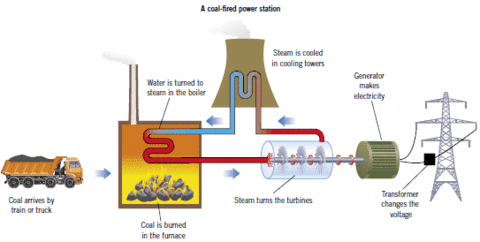
- 1Fuel for Electricity -In most power stations, water is heated to produce steam. The steam drives a turbine, which is coupled to an electrical generator that produces the electricityThe energy can come from burning fossil fuels. Fossil fuels are obtained from long-dead biological material
-In some gas-fired power stations, hot gases may drive the turbine directly. A gas-fired turbine may be switched on very quickly - 2A biofuel is any fuel obtained from living or recently living organisms. Some biofuels can be used in small-scale, gas-fired power stations. -Biofuels are renewable sources of energy-In a nuclear power station, the fuel used is uranium
-The nucleus of a uranium atom can undergo a process called nuclear fission(releases energy)
-There are lots of uranium nuclei, so lots of fission reactions take place, releasing lots of energy. This energy is used to heat water, turning it into steam - 3-More energy is released per kg in nuclear power than from burning fossil fuels -Nuclear power stations do not release any greenhouse gases, unlike fossil-fuel power stations. However, nuclear power stations do produce radioactive waste that must be safely stored for a long time
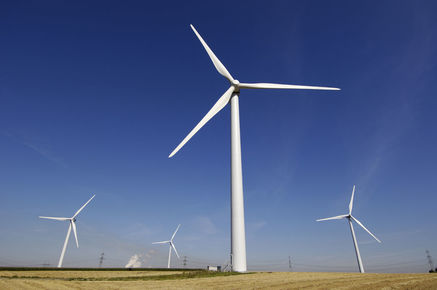
- 4Wind Power-can use wind and water to drive turbines directly -Renewable -In a wind turbine, the wind passing over the blades makes them rotate and drive a generator at the top of a narrow tower
- 5—Water-obtaining falling water, waves and tides
-Hydroelectric power- water collected in a reservoir, water allowed to flow downhill and turn turbines at the bottom of the hill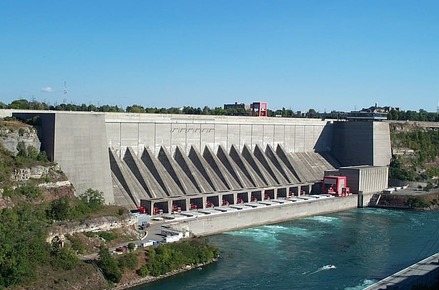
- 6In a pumped storage system, surplus electricity is used, at times of low demandnto pump the water back up the hill to the top of the reservoir(energy is stored)At times of high demand the water can be released to fall through the turbines and transfer stored energy into electricity energy
- 7Wave power-uses the movement of waves on the sea to generate electricity -The movement drives a floating turbine that turns a generator -Then the electricity is delivered to the grid system on shore by a cableTidal power- the level of the sea around the coastline rises and falls twice each day. These changes in sea level are called tides. If a barrage is built across a river estuary, the water at each high tide can be trapped behind it. When the water is released to fall down to the lower sea level, it drives the turbines
- 8Solar energy from the sun travels through space to the Earth as electromagnetic radiationA solar cell can transfer this energy into electrical energy. Each cell only produces a small amount of electricity, so they are useful to power small devices
- 9We can also join together large numbers of cells to form a solar panel. Water flowing through a solar heating panel is heated directly by energy from the sunA solar power tower uses thousands of mirrors to reflect sunlight onto a water tank to heat the water and produce steam
- 10Geothermal energy is produced inside the Earth by radioactive processes and this heats the surrounding rock. In volcanic areas, very deep holes are drilled and cold water is pumped dwon to the hot rocks-It is heated and comes back to the surface as steam. This steam is used to drive turbines that turn generators and so electricity is produced
-In a few parts of the world, hot water comes up to the surface naturally and can be used to heat buildings nearby - 11The rate at which we use fossil fuels is much faster than the rate at which they're produced- non-renewableThe National Grid
-A network of pylons and cables that connects power stations to homes, schools, factories and other buildings
-Sincce the whole country is connected to the system, power stations can be switched in or out of the grid according to demand - 12The cables are carried long distances across the countryside supported by overhead pylons. In towns and close to homes the cables are buried undergroundStep-up and step-down transformers are used before the electricity is transmitted.
-Reduce energy loss - 13The greater the voltage, the smaller the current, the smaller the energy lossThey also decrease the voltage to make it safe to use in homes and offices
- 14Base load demand- the constant amount of electricity provided by nuclear, coal-fired and oil-fired power stationsThe demand for electricity varies dduring the day and between summer and winter
- 15This variable demand is met using gas-fired power stations, pumped-storage schemes and renewable enery sourcesWhen demand is lo, energy is stored by pumping water to the top reservoir of pumped storage schemes
- 16Different types of power stations have different start-up times. Gas-fired power stations have the shortest start-up times and nuclear power stations have the longest