
Diagrama de flujo
Biology
Contenido del diagrama
DNA
DNA stands for deoxyribonucleotic acid
It is found in the nucleus of a cell within chromosomes
Chromosomes are made up of tightly wound DNA strands and proteins in a structure called a double helix
Segments of DNA are called genes and they determine different genotypes and phenotypes. They also code for proteins
The term genotype refers to genes, or alleles, that individuals carry. These can be represented by two letter differing between lower-case and upper-case.
The term phenotype refers to the visible features on an individual, for example blue eyes or blonde hair
Chromosomes are replicated which means they carry two sets of the same DNA
There are some unreplicated chromosomes, these can be found in sex cells, or gametes.
The reason for this is because, in the process of fertilisation, two gametes fuse together and consequently forming a replicated chromosome.
Gametes can be defined as haploid as they on have one set of chromosomes, which is because they intent to join with another to create a total of 2 sets
The term haploid fits under the word ploidy. This refers to the number of sets of chromosomes cells have, for example diploid
If a cell is classified as diploid, this means it has two sets of chromosomes. Cells that are diploid include all human body cells as they have 23 pairs, 46 in total
If an allele is shown with two capital letters, or one capital and one lower-case, this means it is a dominant gene
If an allele is shown with two lower-case letters this means it is a recessive gene. Recessive genes are only expressed when no dominant gene is present.
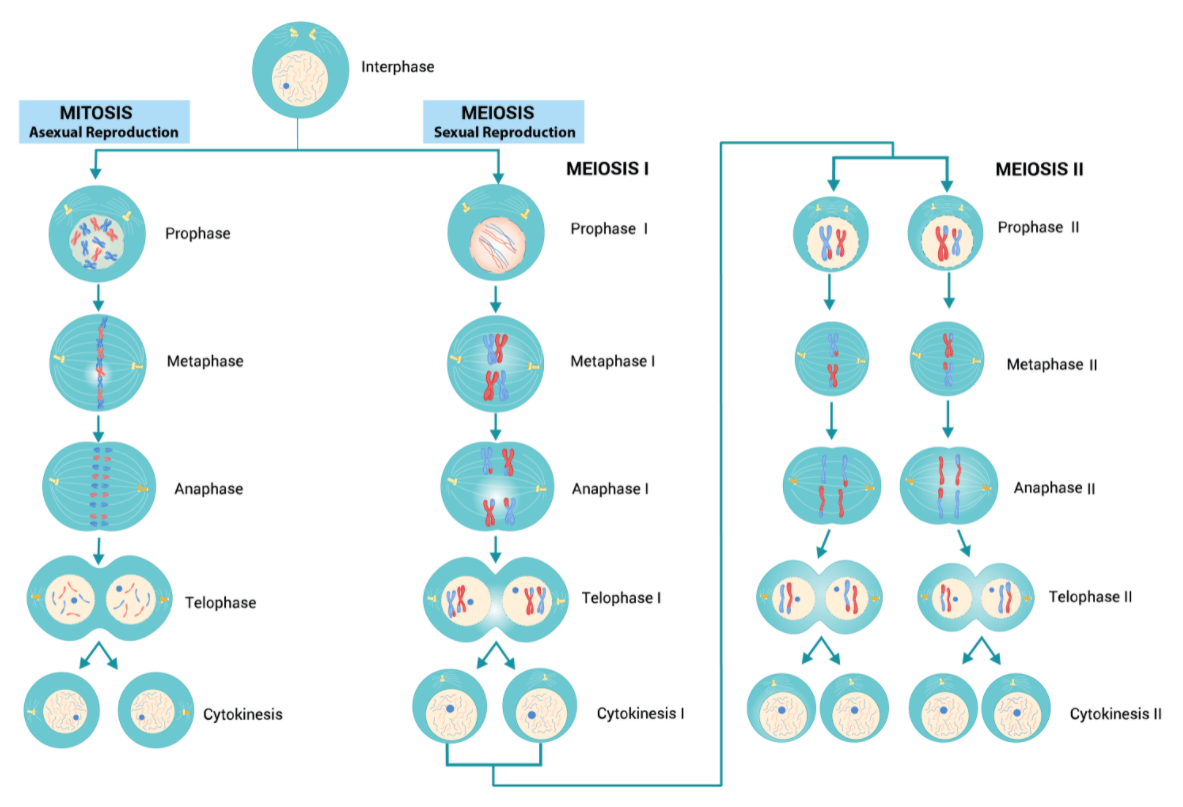
Inside chromosomes is where DNA replicates itself. This process leads to cell division which is known as mitosis
There are 5 phases of mitosis, these include prophase, metaphase, anaphase, telophase, and cytokinesis
Mitosis occurs when creating body cells, whereas, meiosis occurs when creating sex cells, or gametes
Mitosis occurs in all organisms while meiosis occurs only in plants, animals and fungi
There are multiple differences between mitosis and meiosis. Mitosis occurs in all organisms, while meiosis occurs only in plants, animals, and fungi. Mitosis creates body (or somatic) cells, while meiosis creates sex cells (or gametes). Mitosis involves 1 cell division, while meiosis involves 2. Mitosis produces 2 diploid daughter cells, while meiosis produces 4 haploid daughter cells. Mitosis's daughter cells are genetically identical, while meiosis's daughter cells aren't. Mitosis creates cells with 46 chromosomes, while meiosis creates cells with 23 chromosomes.
Meiosis is necessary for sexual reproduction, the process in which an offspring is created
There are two types of reproduction, sexual and asexual. Asexual reproduction is the creation of an offspring without the fusion of gametes
Organisms that reproduce asexually include bacteria, some plants and some animals
Mutations are able to occur spontaneously throughout DNA replication, but are also able to occur from mutagens which can include sunlight, radiation, chemicals, viruses, etc.
If a mutation is to occur in a gamete it is able to be passed on to the offspring.
Cancer is an infrequent result of a mutation, for example, a deletion mutation is able to result in some skin cancers.
Cancer is the result of an abnormal cell that inhabits the life process and grows rapidly and uncontrollably.
How mutations occur in DNA replication is through an alteration in the base sequence of a nucleotide. This results in a new amino acid being created as well as possible health conditions
The mutation substitution has a chance of causing blood diseases
There are two types of gametes, sperm and egg, and they share some features. Both have a nucleus containing their DNA and a membrane.
Both sexual and asexual reproduction result in a new single cell being formed. This is called a zygote
Body cells contain two copies of DNA in a replicated chromosome. These two chromosomes are known as a homologous pair as they contain the genes in the same location.
One chromosome is known as the maternal chromosome, from the mother, and the other is known as the paternal chromosome, from the father.
Though this does not mean they are the same gene, for example a gene on the maternal chromosome my code for something different to the gene in the same location on the paternal chromosome
These are called alleles, versions of the same gene the code for different characteristics.
The degree of similarity between these alleles, or genes, is referred to as zygosity.
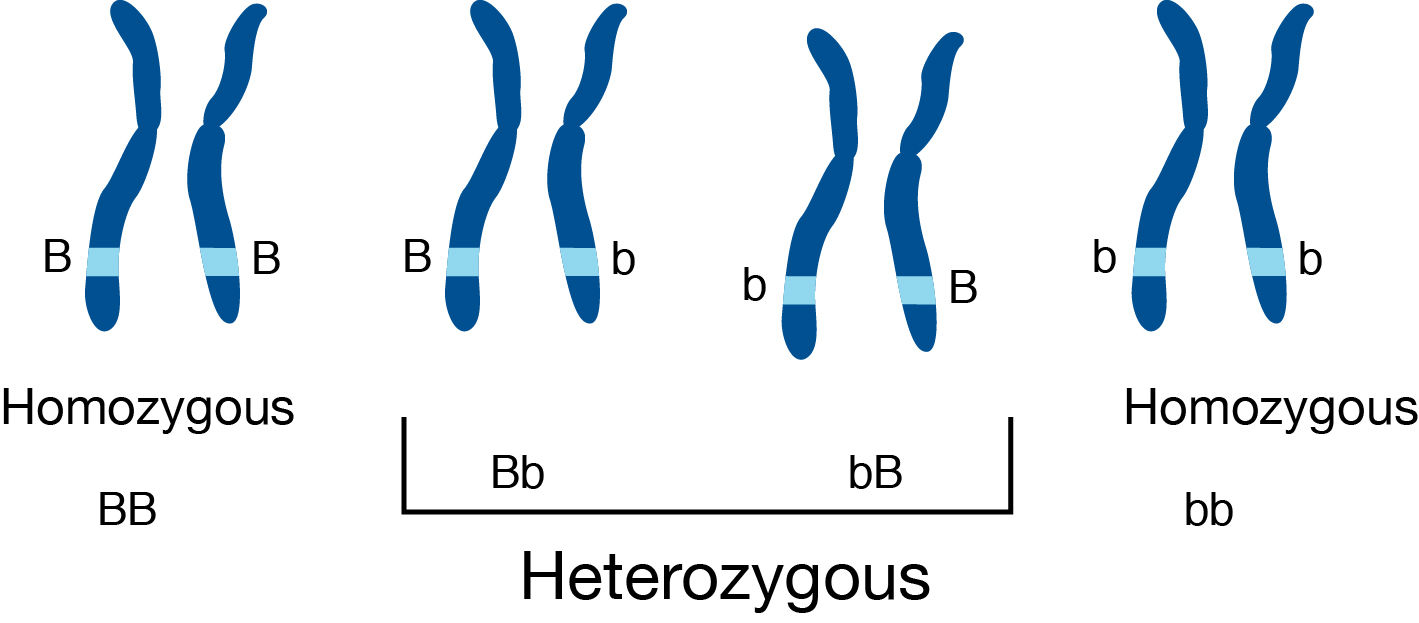
Homozygous means the maternal and paternal chromosomes have the same alleles for a characteristic
Heterozygous means the maternal and paternal chromosomes have different alleles for the same characteristic
Test cross is a technique used to predict whether an organism has heterozygous or homozygous genes/alleles.
Punnett squares are another technique, it can be used to predict the genotypes and phenotypes of an offspring
Adaptations a caused by mutations that have shown to increase an organism's chance of survival. These can be inherited, or passed on to offspring, slowly changing the features of the new generations
Evolution is changes in genotypes and phenotypes of populations over a long period of time. There are many factors that affect this, including, natural selection, adaptations, selection pressures, biological fitness, etc.
Natural selection is a process where animals with favorable traits are more likely to survive. This leads to a greater chance of passing on these characteristics and the evolution of a new species.
Selection pressures are factors the limit the growth of populations. This includes predation, competition, disease and a changing environment. Individuals with different genotypes or phenotypes may appear more successful in these conditions.
This is also an example of variation; where some individuals might portray genotypes or phenotypes better suited to the environment than others.
Biological fitness refers to an individuals ability to reproduce. The amount of offspring an organism is able to create increases their biological fitness. This is because they are able to pass on their geno/phenotypes ad enhance the characteristics of future generations.
Evidence of evolution is shown by fossil records, homology, embryology, vestigial structures, etc
Fossil records show the origin of species, and changes in populations
Homology includes homologous structures and analogous structures
Homologous structures are organs or bones derived from a common ancestor that have a different function
Analogous structures are organisms with different organs or bones that have the same function, this is a result of convergent evolution
Convergent evolution refers to populations that have been influenced by similar selection pressures and consequently formed similar features
Embryology is when organisms look similar in embryo form, despite looking nothing alike as an adult
Embryology shows a connection between organisms through a common ancestor.
Vestigial structures are remnants of features from an organism's ancestor, a bone or organ that is no longer needed/in use
Molecular homology refers to organisms that share molecular patterns due to a common ancestor
Direct observation refers to visible changes in the phenotypes within a population. These can occur from natural selection or mutation.
There are two types of organisms, unicellular and multicellular
A prokaryotic cell refers to any cell that does not have a clear nucleus, for example bacteria
A eukaryotic cell does have a visible nucleus present.
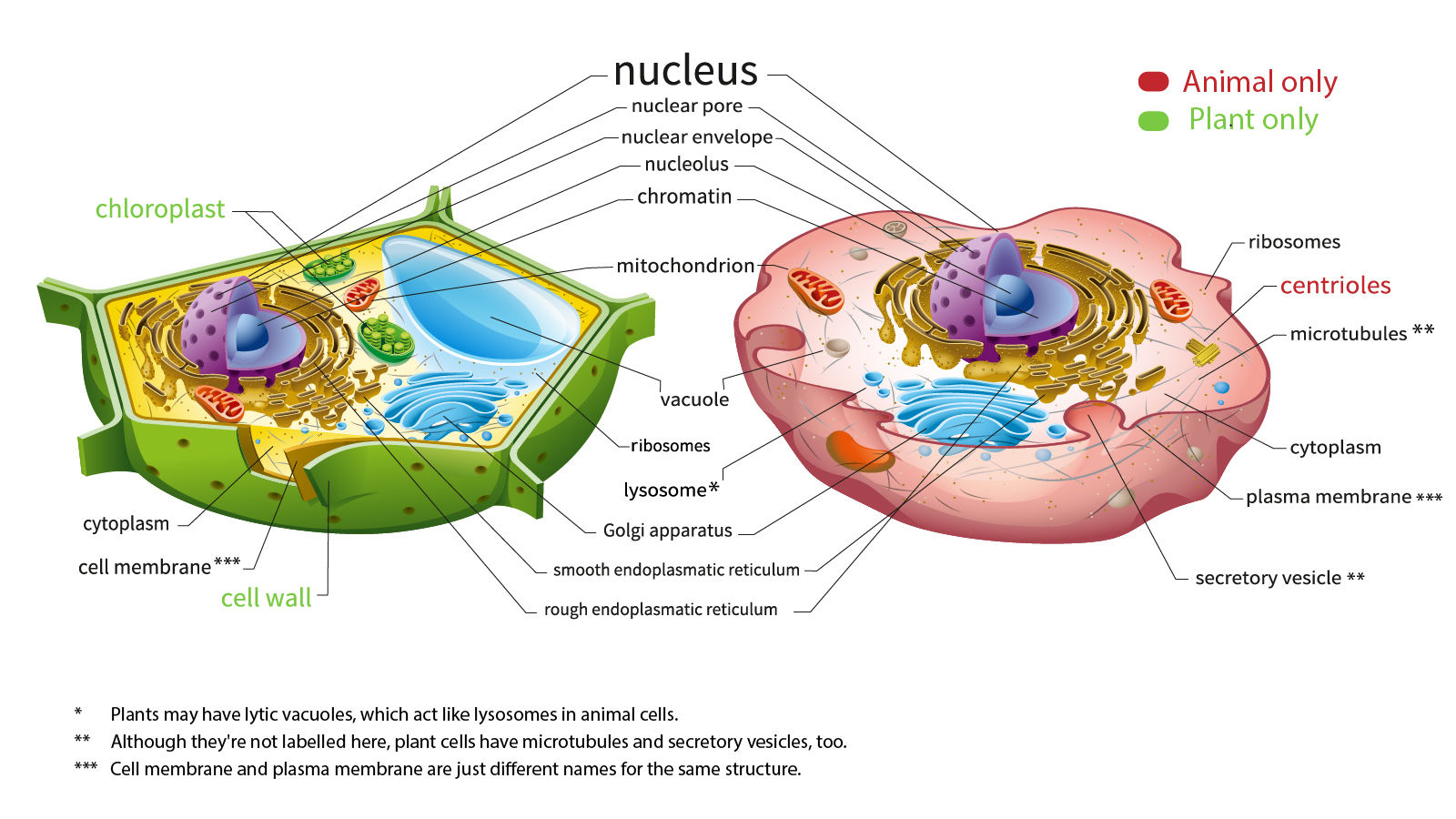
There are also differences between plant and animal cells
Información
- Descripción
- South Australian Certificate of Education Biology Diagrama sobre Biology, creado por Ashley HARDING el 12/06/2022.
- Creado por
- Ashley HARDING
- Visitas
- 0
- Valoración