
Mapa mental
B6 - Brain & Mind
Contenido del mapa
B6 - Brain & Mind
responding to a stimulus
- a stimulus is a change in environment
- animals respond to a stimulus in order to keep themselves in favourable conditions
- the stimulus is co-ordinated by the central nervous system
- CNS = brain and spinal cord
- the stimulus is co-ordinated by the central nervous system
- animals respond to a stimulus in order to keep themselves in favourable conditions
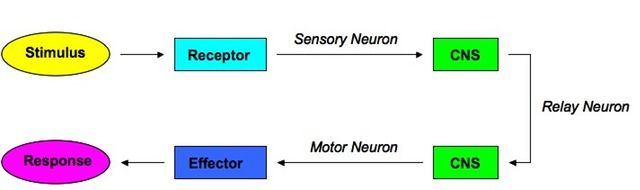
- receptors respond to the stimulus and send impulses along the sensory neuron to the CNS
- the CNS co-ordinates the information and sends impulses along motor neurons to the effectors, which bring about a response
- the peripheral nervous system consists of motor and sensory neurons that take information from the receptor to the CNS, as well as the instructions from the CNS to the effectors
- the CNS co-ordinates the information and sends impulses along motor neurons to the effectors, which bring about a response
- a stimulus is a change in environment
neurons
- neurons carry signals from one place to another
- when neurons are stimulated they transmit an electrical impulse
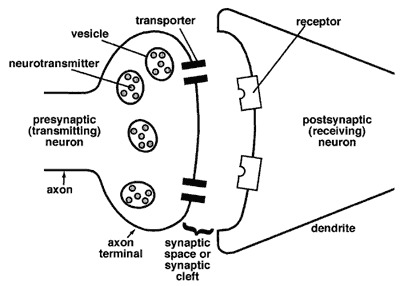
- two neurons do not make direct contact, when they meet there is a small gap between them called a synapse
- the signal needs to cross this gap, so it's turned into a chemical which diffuses across the synapse
- the receptor molecules on the second neuron only bind to specific chemicals released from the first neuron
- this stimulates the second neuron to transmit the electrical impulse
- the receptor molecules on the second neuron only bind to specific chemicals released from the first neuron
- the signal needs to cross this gap, so it's turned into a chemical which diffuses across the synapse
- two neurons do not make direct contact, when they meet there is a small gap between them called a synapse
- when neurons are stimulated they transmit an electrical impulse
- neurons carry signals from one place to another
reflexes
- a reflex is an automatic response to a stimulus
- simple reflexes
- produce rapid, involuntary responses
- this ensures that an animal responds in the way most likely to result in its survival
- examples include - moving towards and finding food, moving away from predators and finding a mate
- this ensures that an animal responds in the way most likely to result in its survival
- produce rapid, involuntary responses
- reflex arc
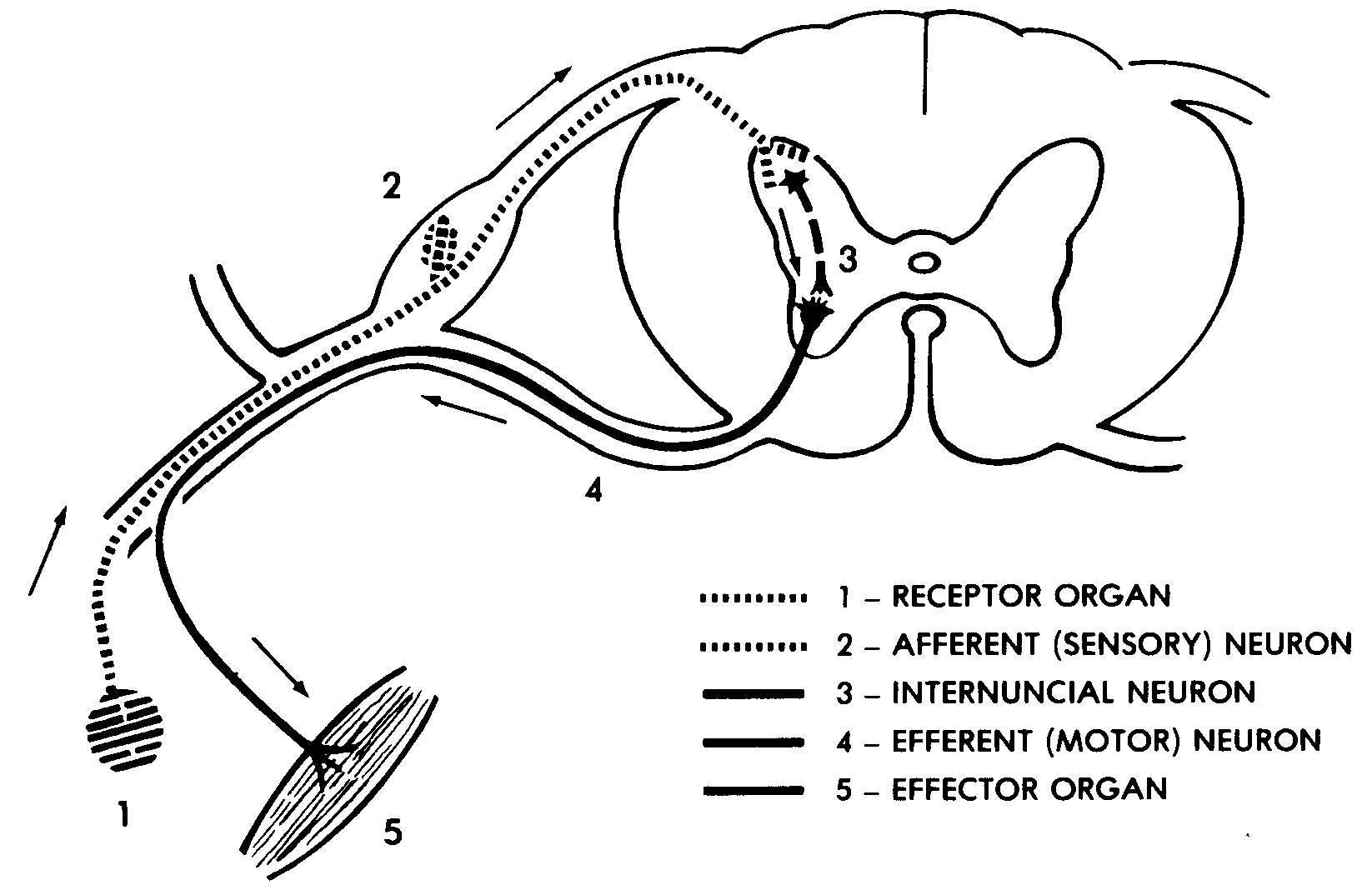
- reflex reactions in humans are controlled by the reflex arc
- a reflex arc is the nerve pathway which makes rapid automatic responses possible
- reflex reactions in humans are controlled by the reflex arc
- simple reflexes
- newborn reflexes
- grasping reflex
- startle reflex
- step reflex
- a reflex is an automatic response to a stimulus
learning
- human brain consists of millions of neurons, these neurons are connected to form billions of pathways
- whenever we experience something new, a new pathway in the brain is used
- each new experience changes out behaviour, this is learning
- if the experience is repeated, or the stimulus is strong, more nerve impulses are sent along the new pathway
- this reinforces the learning process, and shows us how repetition aids the learning process
- learning is an important part of human survival
- this reinforces the learning process, and shows us how repetition aids the learning process
- if the experience is repeated, or the stimulus is strong, more nerve impulses are sent along the new pathway
- each new experience changes out behaviour, this is learning
- whenever we experience something new, a new pathway in the brain is used
- some skills can only be learnt at a certain age
- if a child has no human contact from birth, they become feral
- feral children can't talk or walk like a human because they didn't learn the skill when they needed to
- if a child has no human contact from birth, they become feral
- human brain consists of millions of neurons, these neurons are connected to form billions of pathways
the brain and memory
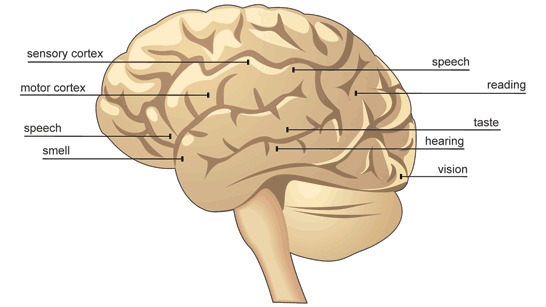
- the cerebral cortex is the part of the brain that is responsible for intelligence, language, memory and conscienceness
- scientists use different methods to find out which part of the cerebral cortex do what job
- brain damage patients
- electrical stimulation
- MRI scans
- two types of memory
- long-term and short-term
- scientists use different methods to find out which part of the cerebral cortex do what job
- the cerebral cortex is the part of the brain that is responsible for intelligence, language, memory and conscienceness
drugs
- drugs affect the impulses that pass from one neuron to another across the synapse
- some drugs stop the impulse from passing across the synapse
- others stimulate the synapse so once one impulse has crossed the gap, its repeated
- serotonin is a chemical that is released in our brains, an increase in serotonin levels makes us feel happier
- serotonin is usually absorbed by the receptor molecules on the other side
- the drug ecstasy blocks the receptor sites in the synapses in the brain, this means serotonin levels increase and the user gets a prolonged feeling of wellbeing
- serotonin is usually absorbed by the receptor molecules on the other side
- serotonin is a chemical that is released in our brains, an increase in serotonin levels makes us feel happier
- others stimulate the synapse so once one impulse has crossed the gap, its repeated
- some drugs stop the impulse from passing across the synapse
- drugs affect the impulses that pass from one neuron to another across the synapse
Imágenes y archivos del mapa
Información
- Descripción
- Mapa Mental sobre B6 - Brain & Mind, creado por ellie.baumber el 24/11/2014.
- Creado por
- ellie.baumber
- Visitas
- 219
- Etiquetas
- Valoración