
Mapa mental
Producing Robust Programs
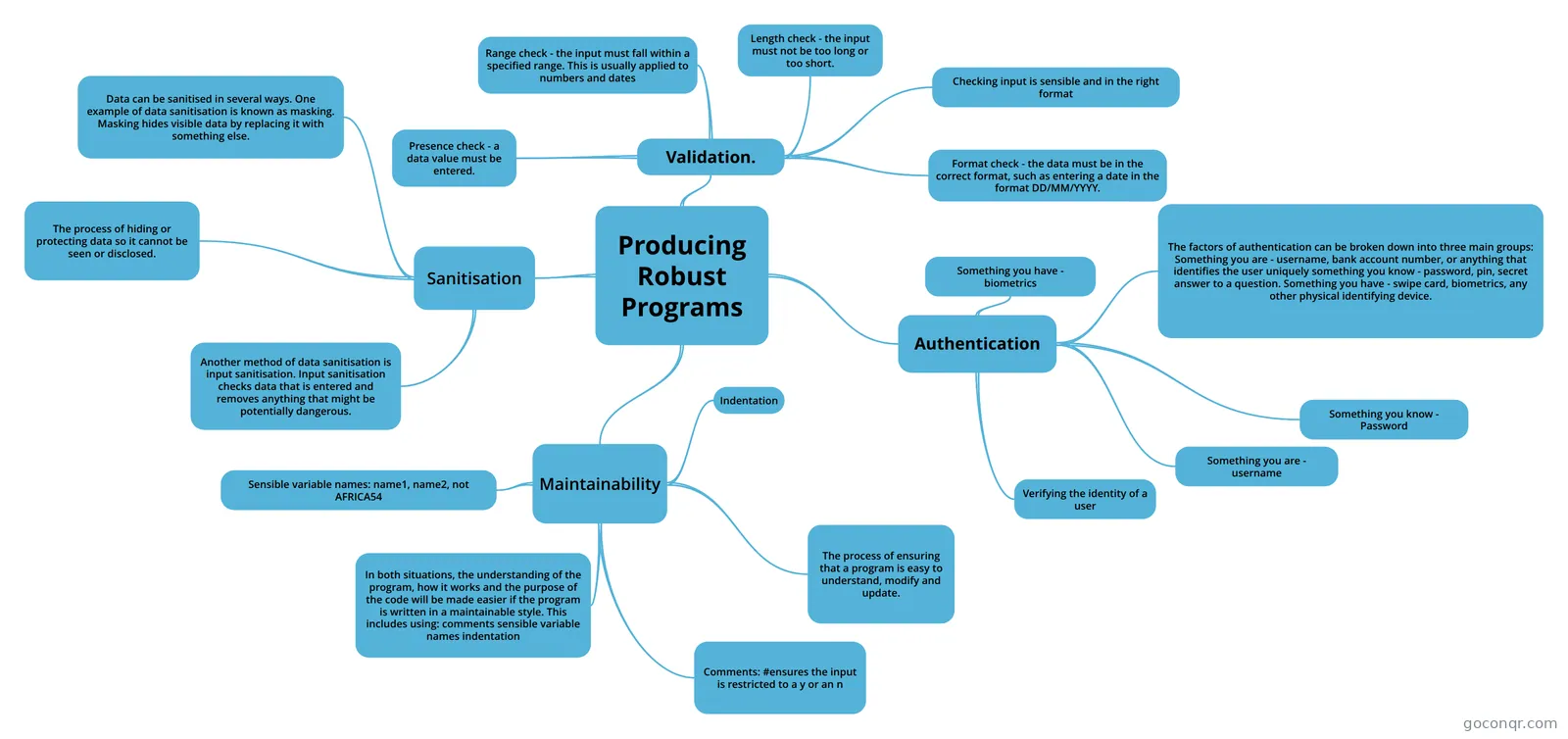
Mind map: Producing Robust Programs
Contenido del mapa
Producing Robust Programs
Sanitisation
- The process of hiding or protecting data so it cannot be seen or disclosed.
- Another method of data sanitisation is input sanitisation. Input sanitisation checks data that is entered and removes anything that might be potentially dangerous.
- Data can be sanitised in several ways. One example of data sanitisation is known as masking. Masking hides visible data by replacing it with something else.
Maintainability
- The process of ensuring that a program is easy to understand, modify and update.
- In both situations, the understanding of the program, how it works and the purpose of the code will be made easier if the program is written in a maintainable style. This includes using: comments sensible variable names indentation
- Comments: #ensures the input is restricted to a y or an n
- Sensible variable names: name1, name2, not AFRICA54
- Indentation
Authentication
- Verifying the identity of a user
- The factors of authentication can be broken down into three main groups: Something you are - username, bank account number, or anything that identifies the user uniquely something you know - password, pin, secret answer to a question. Something you have - swipe card, biometrics, any other physical identifying device.
- Something you are - username
- Something you know - Password
- Something you have - biometrics
Validation.
- Checking input is sensible and in the right format
- Range check - the input must fall within a specified range. This is usually applied to numbers and dates
- Length check - the input must not be too long or too short.
- Presence check - a data value must be entered.
- Format check - the data must be in the correct format, such as entering a date in the format DD/MM/YYYY.