
Mapa mental
Purine/Pyrimidine Synthesis
Contenido del mapa
Purine/Pyrimidine Synthesis
Nucleotides
- Functions :Production of DNA and RNA Energy storage and transfer – ATP, GTP Coenzymes – NAD, FAD, Coenzyme A Activated compounds for synthesis – UDP sugars, CDP in phospholipid synthesis Methyl transfers – SAM Second messengers – cAMP, cGMP Enzyme regulation at allosteric sites
- Not from diet, exogenous nucleotide broken down
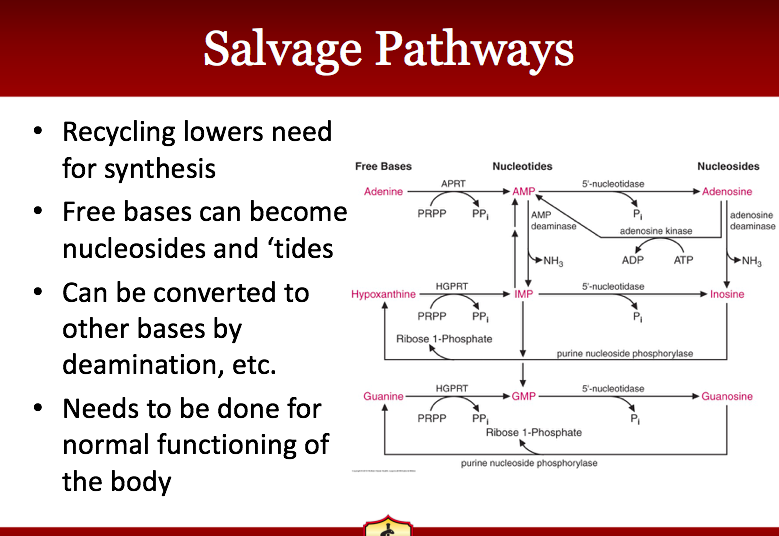
- Made De novo or Savage pathway, scrap together pieces
- Not from diet, exogenous nucleotide broken down
- Structure
- Nitrogenous base, pentose sugar, and phosphate groups
- Mostley made in lover some in brain, then transfer though blood
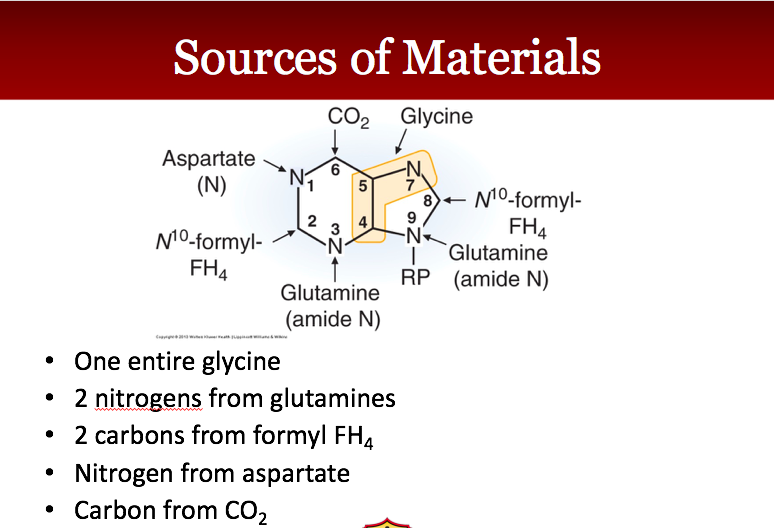
- Lots goes into making a purine ring, see below
- Mostley made in lover some in brain, then transfer though blood
- Nitrogenous base, pentose sugar, and phosphate groups
- Functions :Production of DNA and RNA Energy storage and transfer – ATP, GTP Coenzymes – NAD, FAD, Coenzyme A Activated compounds for synthesis – UDP sugars, CDP in phospholipid synthesis Methyl transfers – SAM Second messengers – cAMP, cGMP Enzyme regulation at allosteric sites
Purine synthesis
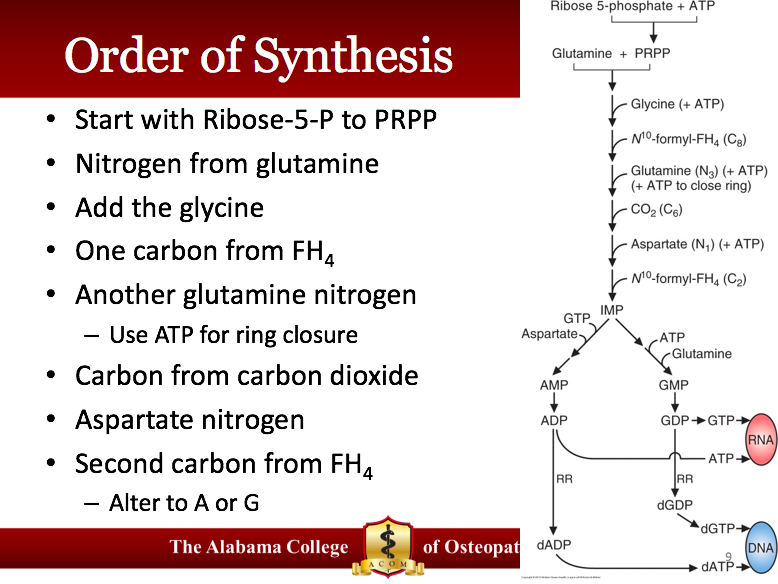
- starts with Ribose-5 P, from pentose phosphate pathway
- Add ATP to make PRPP
- Then add a bunch of Carbons and Nitrogens
- IN DETAIL
- 1.) Ribose 5P
- ATP + PRPP synthetase
- 2.) PRPP
- glutamine phosphoribosyl amidotransferase
- 3.) 5-phosphoribosyl 1 amine
- Then add a Glycine molecule to it
- + ATP
- 4.) Glycinamide Ribosyl 5- Phosphate
- ADD a Formyl carbon, a glutamine nitrogen, 2 ATP's
- 5.) This closes the linear structure into a ring
- Then you donate a carbon from CO2, a nitrogen from aspartate using ATP, then a formyl carbon
- 1st purine made IMP
- Inosine Monophosphate
- Base is Hypoxanthine
- Requires 6 ATP's per purine
- Can be made into AMP and GMP
- AMP Production
- aspartate + GTP + adenylosuccinate synthetase
- Adenylosuccinate
- Remove a Fumarate
- AMP
- (-)
- AMP
- Remove a Fumarate
- Symmetry
- Adenylosuccinate
- aspartate + GTP + adenylosuccinate synthetase
- GMP production
- IMP Dehydrogenase + NADH
- XMP
- ATP + Glutamine + GMP synthetase
- GMP
- (-)
- GMP
- ATP + Glutamine + GMP synthetase
- XMP
- IMP Dehydrogenase + NADH
- AMP Production
- Not in DNA, but is in tRNA
- Causes wobble effect
- 1st purine made IMP
- Then you donate a carbon from CO2, a nitrogen from aspartate using ATP, then a formyl carbon
- 5.) This closes the linear structure into a ring
- ADD a Formyl carbon, a glutamine nitrogen, 2 ATP's
- Then add a Glycine molecule to it
- Committed Step to becoming a purine
- Glutamine give's Nitrogen
- 3.) 5-phosphoribosyl 1 amine
- glutamine phosphoribosyl amidotransferase
- Activated by P-, GDP & ADP inhibit
- 2.) PRPP
- ATP + PRPP synthetase
- 1.) Ribose 5P
- IN DETAIL
- Then add a bunch of Carbons and Nitrogens
- Add ATP to make PRPP
- starts with Ribose-5 P, from pentose phosphate pathway
Pyrimidine Synthesis
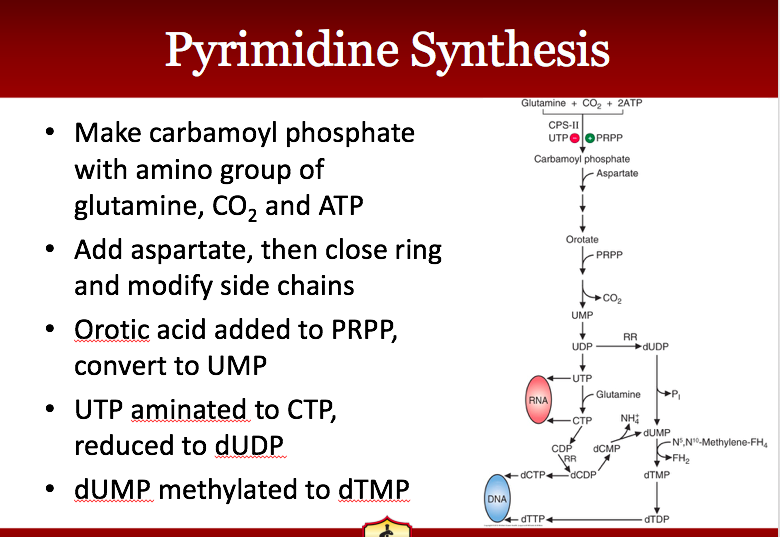
- First thing is to make the ring
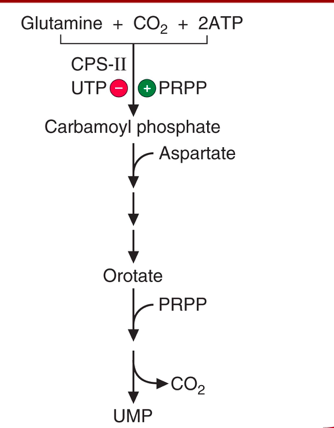
- Glutamine + CO2 + ATP
- Add aspartate, close the ring
- Add side chains
- Make Orotic Acid
- ADD PRPP
- UMP
- CTP
- dUMP
- dTMP
- dUMP
- CTP
- Orotate phosphoribosyl transferase and orotidylic acid decarboxylase on the other, get to UMP
- Make Orotic Acid
- CPS-II, aspartate transcarbamoylase and dihydroorotase all on one, produces orotate
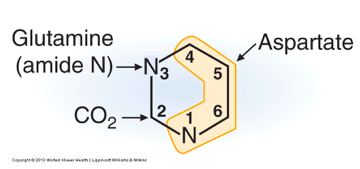
- Aspartate is the majority of the ring, 4/6 C's, the rest is from carbamoyl phosphate, N from glutamine, C from CO2
- Add side chains
- Add aspartate, close the ring
- Glutamine + CO2 + ATP
- Salvage
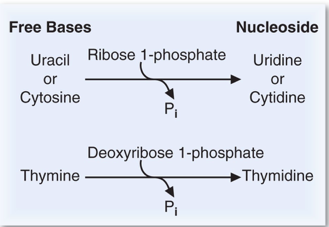
- Free bases converted to nucleosides Pyrimidine nucleoside phosphorylase uses ribose-1-phosphate Preferred reaction is synthesis, not degradation Kinases are more specific, get more specific as more phosphates are added
- First thing is to make the ring
Common Pathway
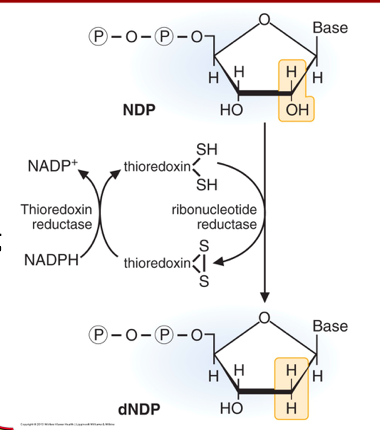
- NDP-> dNDP
- Ribonucleotide reductase + thioredoxin
- Allosteric Regulation
- One site regulates its activity
- One regulates its specificity
- One site regulates its activity
- Allosteric Regulation
- Ribonucleotide reductase + thioredoxin
- NDP-> dNDP
Purine Degradation
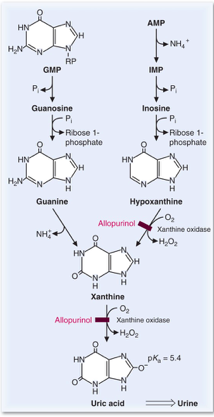
- Nucleotide -> nucleoside
- loss of amino group from adenosine
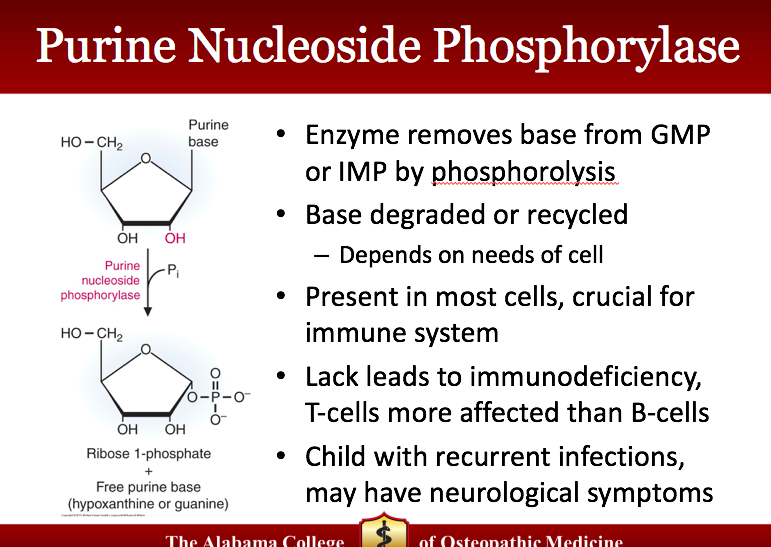
- Loss of sugar to free guanine or hypoxanthine Guanine loses amino,
- Xanthine oxidase converts hypoxanthine and xanthine to urate
- Excreted in urine, not very soluble Excess amounts can precipitate
- Xanthine oxidase converts hypoxanthine and xanthine to urate
- Loss of sugar to free guanine or hypoxanthine Guanine loses amino,
- loss of amino group from adenosine
- Nucleotide -> nucleoside
Pyrimidine Degradation
- Piece of Cake
- All products are water soluble
- B-alanine
- B-aminoisobutyrate
- ammonia, water and carbon dioxide
- All products are water soluble
- Piece of Cake
Imágenes y archivos del mapa
Información
- Descripción
- This is a mind map about purine and pyrimidine, synthesis and degradation
- Creado por
- Nader I
- Visitas
- 207
- Etiquetas
- Valoración