
Mapa mental
Biology - B3 - AQA - GCSE - Transport systems
Contenido del mapa
Biology - B3 - AQA - GCSE - Transport systems
Humans
- Heart
- Left atrium
- Left ventricle
- Aorta
- More muscle on this side
- Has to pump blood all the way around the body, whereas the right ventricle only pumps to the lungs.
- Pulmonary vein
- Left ventricle
- Right atrium
- Right ventricle
- Pulmonary artery
- Vena Cava
- Right ventricle
- Artery
- Thick walls
- Containing muscles and elastic fibres
- Stents can be used to keep the arteries open if they begin to narrow.
- Thick walls
- Veins
- Thin walls
- Valves to stop backflow
- Capillaries
- Very thin walls
- Narrow
- Blood
- Consists of a fluid called plasma
- Red blood cells
- Oxygen from lungs to organs
- No nucleus
- Haemoglobin
- Combines with oxygen in the lungs to form oxyhaemoglobin
- Oxyhaemoglobin splits in organs to form oxygen and haemoglobin
- White blood cells
- Defense against infection
- Platelets
- No nucleus
- Help blood to clot at the site of a wound
- Carbon dioxide from organs to lungs
- Soluble products of digestion from small intestine to organs
- Urea from liver to kidney
- Red blood cells
- Consists of a fluid called plasma
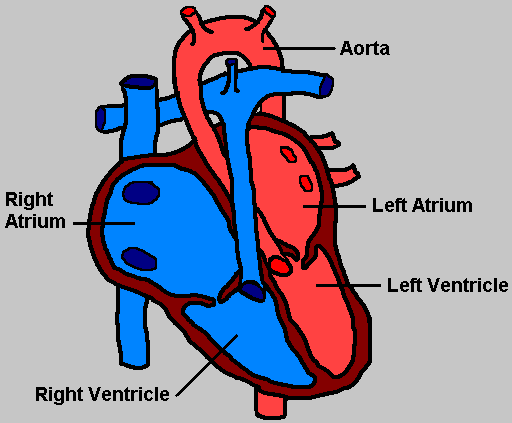
- When labelling the heart, the sides are usually flipped. See the diagram below.
- Left atrium
- Heart
Plants
- Xylem
- Water
- Transpiration stream
- Helpful way to remember it - water doesn't 'phlo' in a plant.
- Mineral ions
- From the roots
- Water
- Phloem
- Dissolved sugars
- From leaves to elsewhere
- Dissolved sugars
- Xylem
Transpiration stream
- The movement of water from the roots to the leaves and then out from there.
Imágenes y archivos del mapa
Información
- Descripción
- A mind map for the transport systems in humans and plants. Includes a diagram of the heart.
- Creado por
- Josh Anderson
- Visitas
- 122
- Etiquetas
- Valoración