
Mapa mental
Data Protection Act 1998
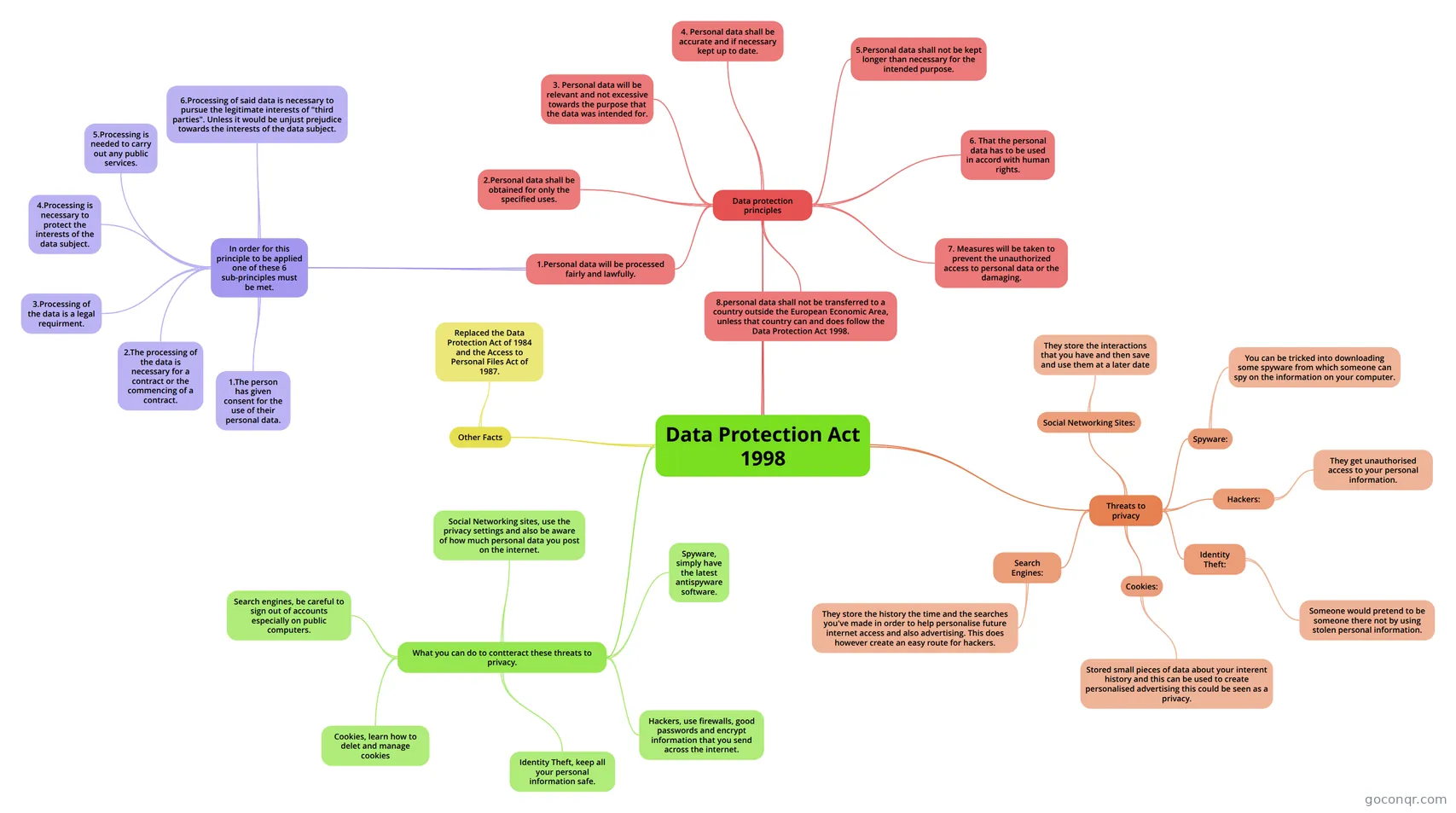
Mind map: Data Protection Act 1998
Contenido del mapa
Data Protection Act 1998
Data protection principles
- 1.Personal data will be processed fairly and lawfully.
- In order for this principle to be applied one of these 6 sub-principles must be met.
- 1.The person has given consent for the use of their personal data.
- 2.The processing of the data is necessary for a contract or the commencing of a contract.
- 3.Processing of the data is a legal requirment.
- 4.Processing is necessary to protect the interests of the data subject.
- 5.Processing is needed to carry out any public services.
- 6.Processing of said data is necessary to pursue the legitimate interests of "third parties". Unless it would be unjust prejudice towards the interests of the data subject.
- In order for this principle to be applied one of these 6 sub-principles must be met.
- 2.Personal data shall be obtained for only the specified uses.
- 3. Personal data will be relevant and not excessive towards the purpose that the data was intended for.
- 4. Personal data shall be accurate and if necessary kept up to date.
- 5.Personal data shall not be kept longer than necessary for the intended purpose.
- 6. That the personal data has to be used in accord with human rights.
- 7. Measures will be taken to prevent the unauthorized access to personal data or the damaging.
- 8.personal data shall not be transferred to a country outside the European Economic Area, unless that country can and does follow the Data Protection Act 1998.
- 1.Personal data will be processed fairly and lawfully.
Other Facts
- Replaced the Data Protection Act of 1984 and the Access to Personal Files Act of 1987.
Threats to privacy
- Social Networking Sites:
- They store the interactions that you have and then save and use them at a later date
- Spyware:
- You can be tricked into downloading some spyware from which someone can spy on the information on your computer.
- Hackers:
- They get unauthorised access to your personal information.
- Identity Theft:
- Someone would pretend to be someone there not by using stolen personal information.
- Cookies:
- Stored small pieces of data about your interent history and this can be used to create personalised advertising this could be seen as a privacy.
- Search Engines:
- They store the history the time and the searches you've made in order to help personalise future internet access and also advertising. This does however create an easy route for hackers.
- Social Networking Sites:
What you can do to contteract these threats to privacy.
- Social Networking sites, use the privacy settings and also be aware of how much personal data you post on the internet.
- Spyware, simply have the latest antispyware software.
- Hackers, use firewalls, good passwords and encrypt information that you send across the internet.
- Identity Theft, keep all your personal information safe.
- Cookies, learn how to delet and manage cookies
- Search engines, be careful to sign out of accounts especially on public computers.
Información
- Descripción
- Mapa Mental sobre Data Protection Act 1998, creado por nquermia20 el 13/01/2014.
- Creado por
- nquermia20
- Visitas
- 49
- Etiquetas
- Valoración