
Mapa mental
Toxicology
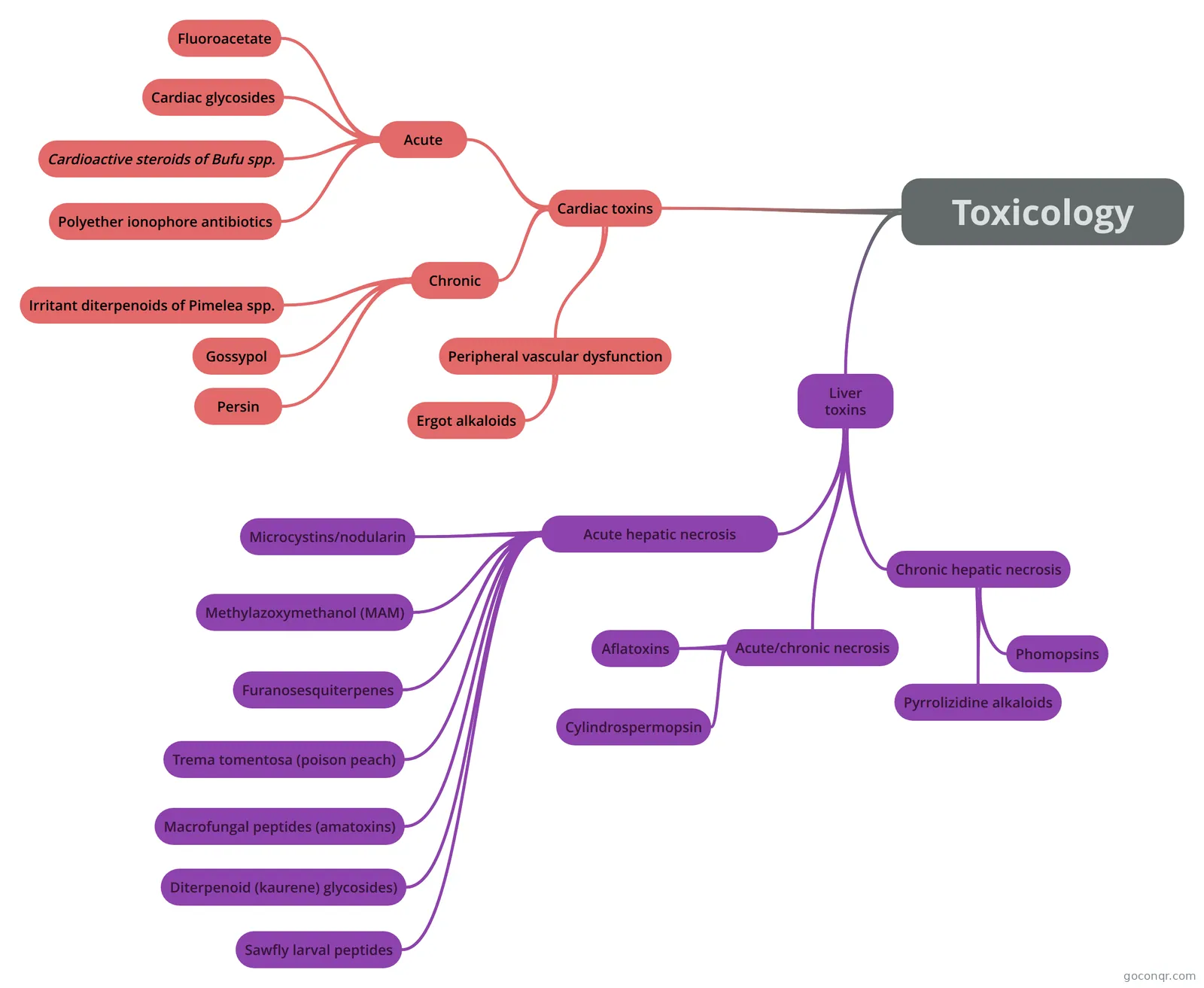
Mind map: Toxicology
Contenido del mapa
Toxicology
Cardiac toxins
- Acute
- Fluoroacetate
- Blocks citric acid cycle (converts to fluorocitrate) Sources: 1080 baits (carnivores), Gastrolobium spp. (highly palatable for herbivores) CSx: CNS disturbance and GI hyperactivity in carnivores and pigs; heart failure in herbivores. Tx: acetate ions prevent conversion to fluorocitrate (use in dogs) but prognosis grave.
- Cardiac glycosides
- Inhibits cardiac Na+/K+-ATPase pump. Additional effects on alimentary, respiratory, and nervous systems but mechanisms unclear. Sources: plants (usually not palatable), garden waste, weed contaminants in hay, seeds in feed grains. CSx: sudden death (esp. with exertion), diarrhoea (+/- haemorrhage), cardiac arrhythmia, vomiting (monogastrics), dyspnoea, ruminal atony, colic (horses). Tx: activated charcoal, antiarrhythmics, analgesics and antispasmodics (colic in horses), electrolyte replacement (ruminants).
- Cardioactive steroids of Bufu spp.
- Poison produced from skin and parotid glands of Bufu marinus. Mammals, birds, reptiles all susceptible. Canine fatal dose = 1mg/kg. CSx: buccal irritation (profuse salivation, hyperaemia of buccal mucosa); systemic signs inc. vomiting, ataxia, cardiac arrhythmia, polypnoea, diarrhoea, convulsive seizures; rapid onset. Tx: First aid (wash/scrub mouth for 10 minutes), atropine (salivation, bronchoconstriction), diazepam (sedation), antiarrhythmics, activated charcoal, support/monitor heart function.
- Polyether ionophore antibiotics
- Interfere with ion flux across membranes > hydropic swelling of striated muscle cells > damage > heart failure (horses, fowl), paresis (sheep, dogs, pigs, ostriches, turkeys), both (cattle) Source: compounded feeds (growth promotants, acidosis inhibitors, coccidiostats, antibloat agents), slow-release capsules (medicants), poultry litter. Horses most susceptible. Low safety margin. CSx: sudden death, muscular weakness, myoglobinuria (mammals), diarrhoea, tachycardia, dyspnoea, CHF, oedema of face/swelling of masseter mm (horses).
- Fluoroacetate
- Chronic
- Irritant diterpenoids of Pimelea spp.
- Potent activators of protein kinase C (contraction of vascular smooth muscle). Only cattle are affected with the full syndrome. Souces: Pimelea is very unpalatable. Consumed by very hungry animals, or inhaled/ingested as fine dry particles from dead plants. CSx: persistent constriction of pulmonary venules > chronic RCHF; irritation of alimentary tract > persistent diarrhoea; expansion of plasma volume > anaemia (mechanism unknown). Greatest incidence after above average winter rain (growth promoting) followed by drought or below average summer rain (prevents removal of particles and biodegradatiion of toxins in soil). Dilated right ventricle on pathology. Tx: Remove cattle from toxic pastures, control pimelea with herbicides, fire, reduce grazing pressures.
- Gossypol
- Causes myocardial necrosis, possible mediated through hypokalaemia. Effects from chronic intake (weeks > months). Sources: Pigment glands in (some) seeds of Gossypium spp. (cotton). Cotton seed fed to livestock in large proportions. CSx: Horses unaffected. Pigs and cattle: heart failure (weakness, dyspnoea, oedema, death). Reproductive effects in ruminants (infertility), pigs (premature birth), poultry (reduced hatchability). Tx: remove excess from diet, supplement with amino acids, and dietary iron and calcium (bind free gossypol).
- Persin
- Pathogenesis of cardiotoxic syndrome unknown. Pathogenesis of sterile mastitis and agalactia d.t. primary effect on vasculature of mammary gland. Sources: Guatemalan avocado cultivars and hydrids. Effects horses, goats, ostriches, caged birds, dogs, alpacas. All parts of the plant are toxic except mature seeds. CSx: cardiotoxic syndrome (sudden death - budgerigars and canaries, anasarca of head and neck - ostriches and horses, fluid line on chest wall, brisket oedema, dyspnoea, coughing); mammary gland syndrome (sterile mastitis > agalactia - horses, goats); swollen masseter muscles and tongue paresis (horse), colic (foals). Tx: remove access, no specific therapy. Prognosis (horses) good if not masseter or tongue involvement.
- Irritant diterpenoids of Pimelea spp.
- Peripheral vascular dysfunction
- Ergot alkaloids
- Causes peripheral vasoconstriction, leading to gangrenous ergotism, hyperthermia (cattle), and reproductive disruption (cattle, pigs, horses). Source: Claviceps purpurea infecting seedhead of Lolium rigidum (annual ryegrass) and other species. CSx: gangrenous ergotism is associated with low ambient temperatures. Cattle have lameness, recumbancy, +/- diarrhoea, gangrene of extremities, ulcers in mouth/pharynx (sheep).
- Ergot alkaloids
- Acute
Liver toxins
- Acute hepatic necrosis
- Microcystins/nodularin
- Microcystins ingested > inhibit cytoplasmic protein phosphatases I&II > hyperphosphorylation > disruption of cytoskeleton in hepatocytes and sinusoidal endothelium. Causes periacinar to massive hepatic necrosis, often with haemorrhage. Source: cyanobacteria (blue-green algae) Syndromes: Fast death: collapse, prostration, hyperaesthesia, convulsions, death. Acute: periacinar to massive lever necrosis. Subacute: fatty change with single cell necrosis, biliary proliferation, cholestasis, fibrosis in liver.
- Methylazoxymethanol (MAM)
- MAM is metabolised in the liver by xenobiotic biotransformation enzymes to a highly reactive methylating agent (zone 3 necrosis). Source: cycads (family Cycadaceae, family Zamiaceae). Toxicity mostly caused by ingestion of seeds, and leaves to a lesser extent. Causes acute toxicity in dogs and sheep; chronic in cattle. Main effects are acute periacinar (3) necrosis, necrotic gastroenteritis, and hepatic vascular damage (> fibrosis of central veins, veno-occlusive disease).
- Diterpenoid (kaurene) glycosides)
- Inhibits mitochondrial oxidative phosphorylation (shuts down cellular energy production. Source: many plants inc. gren cestrum, noogoora burr (cotyledons), and sunflower daisy. Causes acute periacinar necrosis.
- Trema tomentosa (poison peach)
- MOA unknown. Toxin is trematoxin (uncharacterised glycoside). Main effects acute periacinar hepatic necrosis.
- Furanosesquiterpenes
- Metabolites of toxin cause hepatic necrosis (same as MAM). Pattern of necrosis depended on state of biotransformation (periacinar > midzonal > periportal). Source: Ellangowan poison bush (Myoporum deserti) - eaten by travelling/hungry stock (unpalatable).
- Macrofungal peptides (amatoxins)
- Mushroom is consumed > bicyclic octapeptides > inhibit nuclear RNA polymerase II > interference with transcription and protein synthesis > cell death. Causes periacinar liver necrosis. Causes massive hepatocellular necrosis and focal haemorrhage. Affects humans and dogs (and other species if consumed) Source: Amanita (death cap), Galerina, Lepiota spp. Mostly found in southern Aus. CSx: gastroenteritis, hypoglycaemia, fulminant liver failure.
- Sawfly larval peptides
- Parasitic larvae of Lophyrotoma interruptus and L. zonalis occur on Eucalyptus melanophloia (nth east Australia). Cattle are poisoned after consuming a 'nest' of larvae. Causes periportal haemorrhagic necrosis (lophyrotomin toxin) and periacinar coagulative necrosis (pergidin toxin).
- Microcystins/nodularin
- Acute/chronic necrosis
- Cylindrospermopsin
- Inhibitor of mammalian protein synthesis, affecting liver, kidney, heart (degeneration, necrosis). Another cyanobacteria, but exists distributed throughout water (not floating on top). Cattle most affected - weakness progressing to recumbancy and death. Longer clinical course (3 days) than for microcystins and nodularin.
- Aflatoxins
- Aflatoxin metabolised by CYPs > metabolite binds adrenine in nucleic acids > inhibit cell division and hepatocellular regeneration = genotoxic and carcinogenic. Produced by fungi growing in carbohydrate-rich substrates. Aspergillus spp.. Common substrates inc. peanuts, cotton seed, grains, bread, dry dog food, etc. Aflatoxins fluoroesce under UV. Poultry more susceptible than mammals (esp. ducklings). Dogs most affected mammal. Causes periacinar (zone 3 - metabolised) necrosis in liver with marked fatty change. Toxicosis is dose and time dependent. Acute = sudden death. Subacute = haemorrhage, lethargy, anorexia, dyspnoea, anaemia, jaundice, 2-7 days. Chronic = weight loss, anaemia, jaundic, lethargy, increased susceptibility to infections.
- Cylindrospermopsin
- Chronic hepatic necrosis
- Pyrrolizidine alkaloids
- There are about 600 known plant sources. Plants are unpalatable and only consumed under starvation conditions or feed contamination. Metabolised by cytochrome P450 > pyrrolic metabolites > bind covalently to macromolecules (DNA and proteins). Also have direct effects of cell necrosis (esp. hepatocytes), halt mitosis (megalocytes), damage to blood vessels (veno-occlusive disease). Three presentations:Acute: periacinar (zone 3) necrosis - very large dose. Phasic/seasonal: hepatic atrophy with nodules, bile duct hyperplasia, megalocytosis, marked fibrosis - d.t. DNA damage and seasonal eating (liver recovers when PAs not consumed).Chronic exposure: firm fibrotic atrophic livers without nodular regeneration.Delayed onset syndrome (cumulative doses = chronic disease). Pigs most susceptible, sheep and goats most resistant. Horse hepatotoxicity > hepatoencephalopathy (walkabout disease). Emaciation, lethargy, compulsive walking, blindness, head pressing, incoordination, irritability. Cattle = mostly GI signs (emaciation, diarrhoea with tenesmus, jaundice, anorexia, lethargy.
- Phomopsins
- Fungus (diaporthe toxica) on lupin plants > phomopsins A&B produced on stubble. Syndromes = 'lupinosis', 'lupinosis-associated myopathy' Phomopsins bind to tubulin and prevent formation of microtubules > cytoplasmic microtubular dysfunction in hepatocytes > accelerated cell death (apoptosis), arrested mitosis, fatty infiltration. Causes subacute or chronic hepatotoxicity with photosensitisation, icterus, and anorexia. Sheep most affected (usually fatal), but also cattle and (rarely) horses. Toxicity is cumulative. CSx: lethargy, inappetance, weight loss, jaundice, anaemia, photosensitisation (rare). Animals present with either jaundice and a swollen pale liver, OR no jaundice and a fibrotic liver (dependent on chronicity). Histopathology shows many mitotic figures (arrested) including abnormal mitotic figures in hepatocyes.
- Pyrrolizidine alkaloids
- Acute hepatic necrosis
Información
- Descripción
- Mapa Mental sobre Toxicology, creado por Connie Lister el 09/08/2017.
- Creado por
- Connie Lister
- Visitas
- 1
- Valoración