Mapa mental
8.4-Metamorphic Rocks
Contenido del mapa
8.4-Metamorphic Rocks
Formation of Metamorphic Rocks
- Metamorphic rocks form when intense heat and/or pressure alter existing rocks.
- When intense heat and/or pressure alter existing rocks, it may cause physical changes
- The process called shearing is the folding of rocks or sliding different parts of rock sideways in a process called shearing.
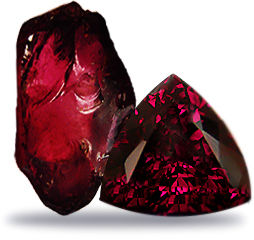
- Heat and pressure can also cause chemical changes, such as recrystallisation minerals. New minerals such as the semiprecious gemstone garnet may form during this process.
- As rocks get buried deeper, the temperature & pressure increase. Heat & Pressure can also increase the movement of the Earths Crust. The crust is broken into massive plates, called tectonic plates.
- The formation of rocks is called metamorphism.
Types Of Metamorphism
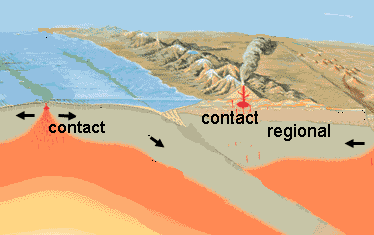
- Regional Metamorphism- this is where rock is altered by both heat & pressure. This kind of metamorphic change often occurs across large areas as a result of colliding plates or rocks being buried.
- Contact Metamorphism- this is where rock is altered mostly by heat, It often occurs over smaller areas as a result of hot magma intruding into rock.
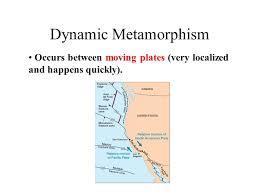
- Dynamic Metamorphism- this is where the rock is altered mostly by heat. It often occurs over a small area where the crustal rocks are scraping past each other.
Metamorphic Changes
- The texture of a rock can be changed by metamorphism. One common change for a rock placed under heat & pressure is that it becomes foliated.
- Foliation is the movement of minerals into layers or bands.Pressure can also squash & crumple layers or bands, making them wavy.
- Not all metamorphic rocks are foliated. Examples of non-foliated metamorphic rocks are marble & quartzite.
- At the temperature of over 1000, the carbon can crystallise into diamond. Diamonds can be transported to the surface millions of years later by fast moving magma