
Mapa mental
Context and Criticisms: Frankenstein
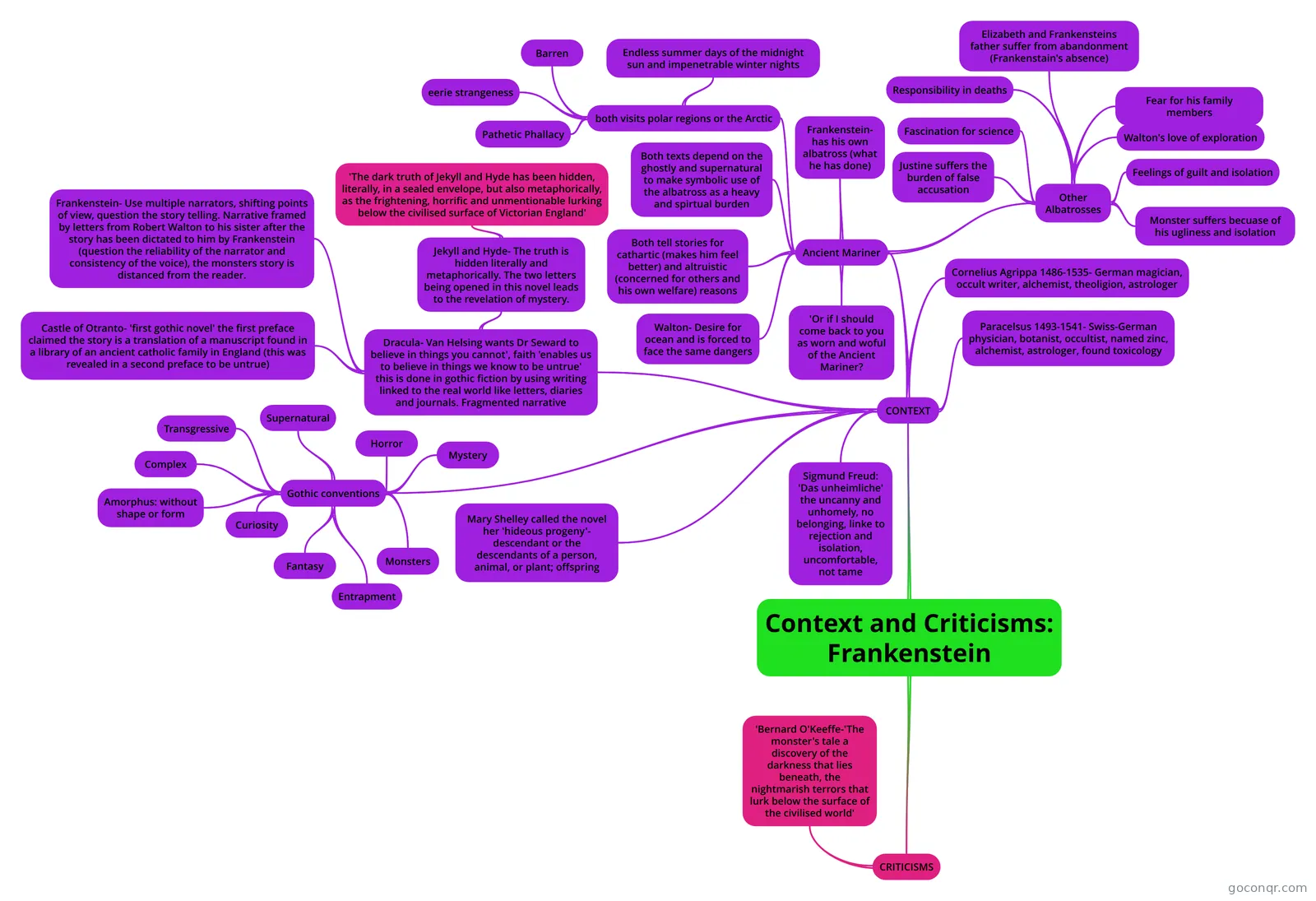
Mind map: Frankenstein context and criticisms
Contenido del mapa
Context and Criticisms: Frankenstein
CONTEXT
- Sigmund Freud: 'Das unheimliche' the uncanny and unhomely, no belonging, linke to rejection and isolation, uncomfortable, not tame
- Gothic conventions
- Monsters
- Mystery
- Fantasy
- Complex
- Amorphus: without shape or form
- Supernatural
- Horror
- Curiosity
- Entrapment
- Transgressive
- Mary Shelley called the novel her 'hideous progeny'- descendant or the descendants of a person, animal, or plant; offspring
- Dracula- Van Helsing wants Dr Seward to believe in things you cannot', faith 'enables us to believe in things we know to be untrue' this is done in gothic fiction by using writing linked to the real world like letters, diaries and journals. Fragmented narrative
- Castle of Otranto- 'first gothic novel' the first preface claimed the story is a translation of a manuscript found in a library of an ancient catholic family in England (this was revealed in a second preface to be untrue)
- Frankenstein- Use multiple narrators, shifting points of view, question the story telling. Narrative framed by letters from Robert Walton to his sister after the story has been dictated to him by Frankenstein (question the reliability of the narrator and consistency of the voice), the monsters story is distanced from the reader.
- Jekyll and Hyde- The truth is hidden literally and metaphorically. The two letters being opened in this novel leads to the revelation of mystery.
- 'The dark truth of Jekyll and Hyde has been hidden, literally, in a sealed envelope, but also metaphorically, as the frightening, horrific and unmentionable lurking below the civilised surface of Victorian England'
- Ancient Mariner
- 'Or if I should come back to you as worn and woful of the Ancient Mariner?
- Walton- Desire for ocean and is forced to face the same dangers
- Frankenstein- has his own albatross (what he has done)
- both visits polar regions or the Arctic
- Pathetic Phallacy
- eerie strangeness
- Barren
- Endless summer days of the midnight sun and impenetrable winter nights
- Both texts depend on the ghostly and supernatural to make symbolic use of the albatross as a heavy and spirtual burden
- Both tell stories for cathartic (makes him feel better) and altruistic (concerned for others and his own welfare) reasons
- Other Albatrosses
- Fascination for science
- Responsibility in deaths
- Fear for his family members
- Feelings of guilt and isolation
- Elizabeth and Frankensteins father suffer from abandonment (Frankenstain's absence)
- Justine suffers the burden of false accusation
- Monster suffers becuase of his ugliness and isolation
- Walton's love of exploration
- Cornelius Agrippa 1486-1535- German magician, occult writer, alchemist, theoligion, astrologer
- Paracelsus 1493-1541- Swiss-German physician, botanist, occultist, named zinc, alchemist, astrologer, found toxicology
CRITICISMS
- 'Bernard O'Keeffe-'The monster's tale a discovery of the darkness that lies beneath, the nightmarish terrors that lurk below the surface of the civilised world'
Información
- Descripción
- A-Level English Literature Mapa Mental sobre Context and Criticisms: Frankenstein, creado por Sophie Conisbee el 03/04/2018.
- Creado por
- Sophie Conisbee
- Visitas
- 10
- Valoración
Más sobre Frankenstein: Context and Influences