
Mapa mental
Unit 2: Atoms, elements and compounds
Contenido del mapa
Unit 2: Atoms, elements and compounds
State the relative charges and masses of protons, neutrons and electrons
- protons
- relative charge: +1 mass: 1
- neutrons
- relative charge: no charge mass: 1
- electrons
- relative charge: -1 mass: 0.00054
- protons
Define proton number and nucleon number
- proton number
- the number of protons in the nucleus of an atom
- nucleon number
- the number of protons plus the number of neutrons in the nucleus of an atom
- proton number
Describe isotopes as radioactive and non-radioactive
- Isotopes are atoms of the same element with different numbers of neutrons
- If an isotope is radioactive, its nucleus is unstable and so it breaks down over a period of time - it decays. As it decays, the nucleus gives out tiny particles/ rays.
Describe some medical and industrial uses of radioisotopes
- Medical
- cancer treatments
- overactive thyroid glands treatment
- locating tumours
- to sterilise medical equipment
- Industrial
- to check for leaks in oil and gas pipelines
- controlling the thickness of paper
- Medical
Understand the Periodic Table in terms of proton number and electronic structure
- Elements in the Periodic Table are arranged in rows (called periods) and columns (called groups). As you move across a period, 1 electron is added to the outer shell to match the number of electrons that there are for each atom. The number of electrons is the same as the number of protons for each element.
- Atoms of elements in the same group have the same number of electrons in its outer shell, e.g. Group I elements have 1 electron on its outer shell, Group II elements have 2 electrons on its outer shell etc... These electrons (on the outer shell) are called the valence electrons/ valency electrons.
Describe electronic structure in terms of shells of electrons
- The arrangement of the electrons in shells is called electronic structure/ configuration. e.g. a sodium atom has 11 protons, and therefore 11 electrons. It has 2 electrons on its first shell (because that is the maximum amount of electrons the 1st shell can have), 8 electrons on its 2nd shell (because that is the maximum amount of electrons that the 2nd shell can hold), and 1 electron on its 3rd/ outer shell. (not only so that it adds up to 11, but also because sodium is in Group I).
Understand the importance of the noble gas electronic structure
- To form compounds, the valence electrons are transferred or shared, so that the outer shell is full, like the noble gases, to ensure its stability. But, because the noble gases have a full outer shell of electrons already, they cannot transfer or share electrons. They do not combine with other elements to form compounds.
- Group 0 or 8 are called the noble gases. Because these atoms have a full outer shell of electrons, it means that they are very unreactive and the electronic structure is very stable.
Understand the difference between elements, compounds and mixtures
- Element
- a substance containing only 1 type of atom
- Compound
- a substance containing 2 or more types of atoms chemically combined
- Mixture
- 2 or more substances mixed together but not chemically combined
- Element
Describe the differences between metals and non-metals
- Non-metals
- physical properties
- low densities
- low melting and boiling points (exceptions: carbon and silicon)
- soft, can be scratched easily (exception: diamond)
- chemical properties
- non-metal oxides are acidic
- do not react with acids
- when they react, non-metals form negative ions by gaining electrons (exception: hydrogen can form positive ions)
- physical properties
- Metals
- physical properties
- high densities (exceptions: Group I metals and gallium)
- high melting and boiling points (exceptions: Group I metals and mercury)
- hard and strong (exceptions: Group I metals, mercury and gallium)
- chemical properties
- metal oxides are basic
- react with acids to give off hydrogen gas
- when they react, metals form positive ions by losing electrons
- physical properties
- Non-metals
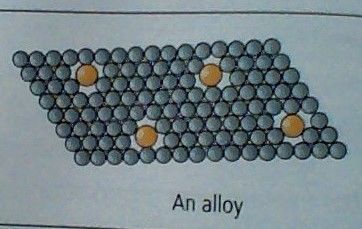
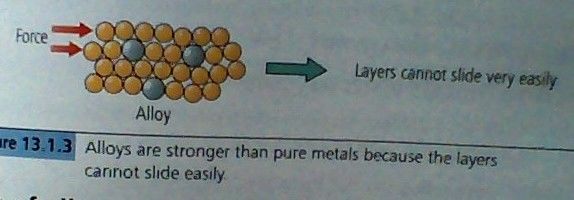
Describe the structure of alloys
- Alloys are mixtures if metals with other metals/ non-metals
Imágenes y archivos del mapa
Información
- Descripción
- GCSE (Unit 2: Atoms, elements and compounds) Chemistry Mapa Mental sobre Unit 2: Atoms, elements and compounds, creado por cmharrisuk el 29/10/2014.
- Creado por
- cmharrisuk
- Visitas
- 4
- Valoración