
Mapa mental
Chemistry
Contenido del mapa
Chemistry
Structure and Bonding
- Ionic Bonding
- Between + &- ions
- Atoms turn into Ions by gaining or losing an electron
- E.g Mg^2+ 0^2-
- High melting points
- Don't conduct electricity when solid
- Only conduct when molten or in soluion
- Covalent Bonding
- Between two non-metals
- Shared pair of electrons
- Dot cross diagrams
- Strong Intermolecular forces
- Low Boiling point
- High Melting point
- The number of covalent binds = 8 - group number
- Double and triple bonds
- Double is 2 pairs of shared electrons
- Triple is 3 pairs of shared electrons
- Structure properties and uses
- Simple Molecules
- Properties
- Low melting and boiling points
- Weak intermolecular fores
- Low melting and boiling points
- Non-conductive
- Few atoms joined together
- Properties
- Giant Covalent structures
- Macromolecules E.g
- Diamond
- Very hard high melting point each carbon atom is joined to four others.
- Graphite
- Is a form of carbon. It forms layers. Each layer is joined by only three other carbon atoms. Graphite is soft used as a lubricant conducts electricity
- Silica
- Similar to diamond but silicon and oxygen atoms instead of carbon
- Diamond
- Macromolecules E.g
- Polymers
- LDPE
- Many branches
- Weak
- 85C maximum useable temperature
- HDPE
- Few branches
- Strong
- 120C maximum useable temp.
- Thermosoftening polymers
- No cross links
- can be reshaped when heated
- Thermosetting polymers
- Once heated cannot be reshaped
- Polymer chains joined with cross links
- LDPE
- Simple Molecules
- Ionic Bonding
Acids and Bases
- Acids
- Uses
- To remove rust from acids
- As an electrolyte
- Found in:
- Stomach (hydrochloric acid)
- Lemons (citric acid)
- Vinegar (acetic acid)
- All contain hydrogen ions (H+)
- Uses
- Bases and alkalis
- All alkalis are bases but bases aren't always alkali
- Fried egg diagram
- All metal oxides and hydroxides are bases
- Hydroxides are often alkalis
- NaOH & KOH
- Hydroxides are often alkalis
- All alkalis are bases but bases aren't always alkali
- pH scale
- Acid Neutral Alkali Red Green Blue
- Universal Indicator
- State symbols and spectator ions
- HCl + NaOH -> H2O +NaCLHCl(aq) +NaOH(nq) -> H2O(l) + NaCl (aq) H+(aq) + Cl-(aq) +Na+(aq) + OH-(aq) -> H20(l) +Na(aq) + Cl (aq)
- Soluble
- Most carbonates and hydroxides
- lead sulphate & barium sulphate
- lead & silver chlorides bromides & iodides
- Insoluble
- sodium potassium & ammonium carbonates and hydroxides
- all nitrates
- Most sulphates
- most chlorides bromides and iodides
- Acids
Energy Changes
- Exothermic
- Transfer energy to the surrondings
- Normally heat energy
- Causes surroundings to get hotter
- Normally heat energy
- E.g.
- Combustion
- Oxidisation reactions
- Neutralisation
- Transfer energy to the surrondings
- Endothermic
- Taking energy from the surrondings
- E.g
- reaction between ethanoic acid and sodium carbonate
- Electrolysis
- Thermal decomposition
- Reversible reactions
- A reversible reaction is shown by a Equilibrium symbol
- ⇌
- A reversible reaction is shown by a Equilibrium symbol
- Exothermic
Electrolysis
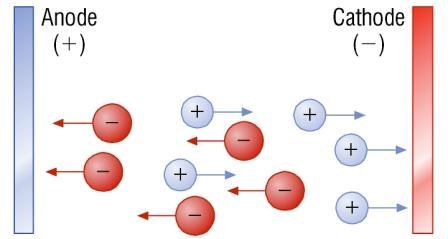
- Melt
- + pure sample -expensive -unsafe
- Dissolve
- + cheaper + safer - h20 could interfer
- Melt
Imágenes y archivos del mapa
Información
- Descripción
- Chemistry mind map in progress-2/6 done
- Creado por
- Holly Bamford
- Visitas
- 787
- Etiquetas
- Valoración