
Mapa mental
Respiratory 2
Contenido del mapa
Respiratory 2
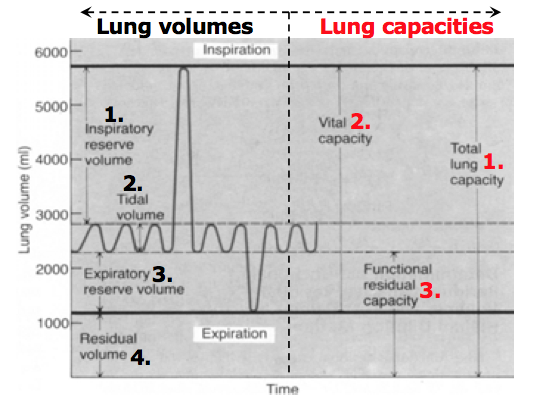
Lung Volume and Capacity
- Primary Volumes: 1. Inspiratory Reserve volume (IRV) 2. Total Volume 3. Expiratory Reserve Volume (ERV) 4. Residual Volume Capacities: 1. Total Lung Capacity (TLC) 2. Vital Capacity (VC) 3.Function Residual Capacity (FRC)
Spirometry
- Lung volumes and capacity can be measured directly with a spirometer. 2 types: Volume Displacement and Flow Sensing It also measures: Forced Vital Capacity (FVC) Total volume lower than the VC. Forced expiratory Volume in 1 second (FEV1)
- Diseases and Changes to the Graph
- FEV1 is reduced because the airway is narrow or FVC is reduced due to chest wall diseases.
Residual Volume
- Indirect measurement of the lung volume. Uses Boyle's Law RV= v1 X (c1/c2)/C2 P3/v2=P4 (V2 + change in V)
Ventilation
- Alveolar Ventilation: Fresh gas that enters 4200ml/min. Measured using Fowler's Method or Bohr's Method. Fowler's Method is measured by expired N2 as indicator. Bohr's Method is based on a measure of Carbon dioxide tensions in expired and alveolar gases. Dead Space = VT x (1- (mixed expired /mixed alveolar)) Determines dead space Dead space ventilation from normal ventilation.
Respiratory Exchange Ratio
- Amount of oxygen used is dependent on body size and activity. Respiratory exchange ratio (R) is carbondioxide output/oxygen consumption. Normal value is about 0.8 to 0.85 The higher the R value (carbohydrate). lower, fatty.
Imágenes y archivos del mapa
Información
- Descripción
- (Respiratory) Physiology 1B Mapa Mental sobre Respiratory 2, creado por Daniel Elandix G el 02/09/2013.
- Creado por
- Daniel Elandix G
- Visitas
- 97
- Etiquetas
- Valoración