
Mapa mental
Cell structure
Contenido del mapa
Cell structure
Nucleus
- Contains DNA
- DNA arranged into long thin threads known as chromosomes
- In most cells the chromosomes are arranged in homologous pairs
- Surrounded by nuclear envelope
- This has pores to allow communication between the nucleus and cytoplasm
Plasma membrane
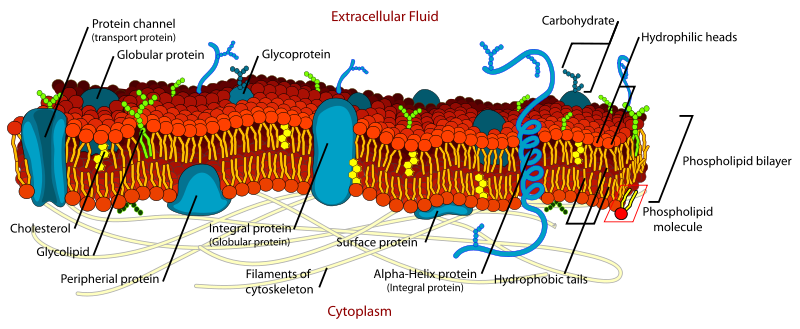
- Sea of phospholipids - arranged as a bilayer
- Intrinsic and extrinsic proteins float within the phospholipids
- Selectively permeable barrier - controls movement of substances between the internal and external environments
Lysomes
- Formed by the golgi apparatus
- Contain digestive enzymes - proteases and lipases
- Important to protect the cell from the effect of these enzymes before they are released at the cell surface membrane or into a phagocytic vesicle
Mitochondria
- Mostly protein, but also contains some lipid, DNA and RNA
- Power house of the cell
- Energy is stored in high energy phosphate bonds of ATP
- Mitochondria convert energy from the breakdown of glucose into adenosine triphosphate (ATP)
- Responsible for aerobic respiration
- Metabolic activity of a cell is related to the number of cristae (larger surface area) and mitochondria
Ribosomes
- Small organelles often attached to the ER but also found in the cytoplasm
- Large (protein) and small (rRNA) subunits form the functional ribosome
- Subunits bind with mRNA in the cytoplasm
- This starts translation of mRNA for protein synthesis (assembly of amino acids into proteins
- Subunits bind with mRNA in the cytoplasm
- Free ribosomes make proteins used in the cytoplasm. Responsible for proteins thatgo into solution in cytoplasm or form important cytoplasmic, structural elements
- Ribosomal ribonucleic acid (rRNA) are made in nucleus of cell
Endoplasmic reticulum
- Rough ER
- Have ribosomes attached to the cytosolic side of their membrane
- Found in cells that are making proteins for export (enzymes, hormones, structural proteins, antibodies) Thus, involved in protein synthesis
- Modifies proteins by the addition of carbohydrates, removal of signal sequences
- Phospholipid synthesis and assembly of polypeptides
- Smooth ER
- Have no ribosomes attached and often appear more tubular than the rough ER
- Necessary for steroid synthesis, metabolism and detoxification, lipid synthesis
- Numerous in the liver
- Rough ER
Golgi apparatus
- Stack of flattened sacs surrounded by membrane
- Receives protein-filled vesicles from the rough ER (fuse with Golgi membrane)
- Uses enzymes to modify these proteins (e.g. add a sugar chain, making glycoprotein)
- Adds directions for destination of protein package - vesicles that leave Golgi apparatus move to different locations in cell or proceed to plasma membrane for secretion
- Involved in processing, packaging, and secretion
- Other vesicles that leave Golgi apparatus are lysosomes