
Mapa mental
Aristotles Theory of Tragedy
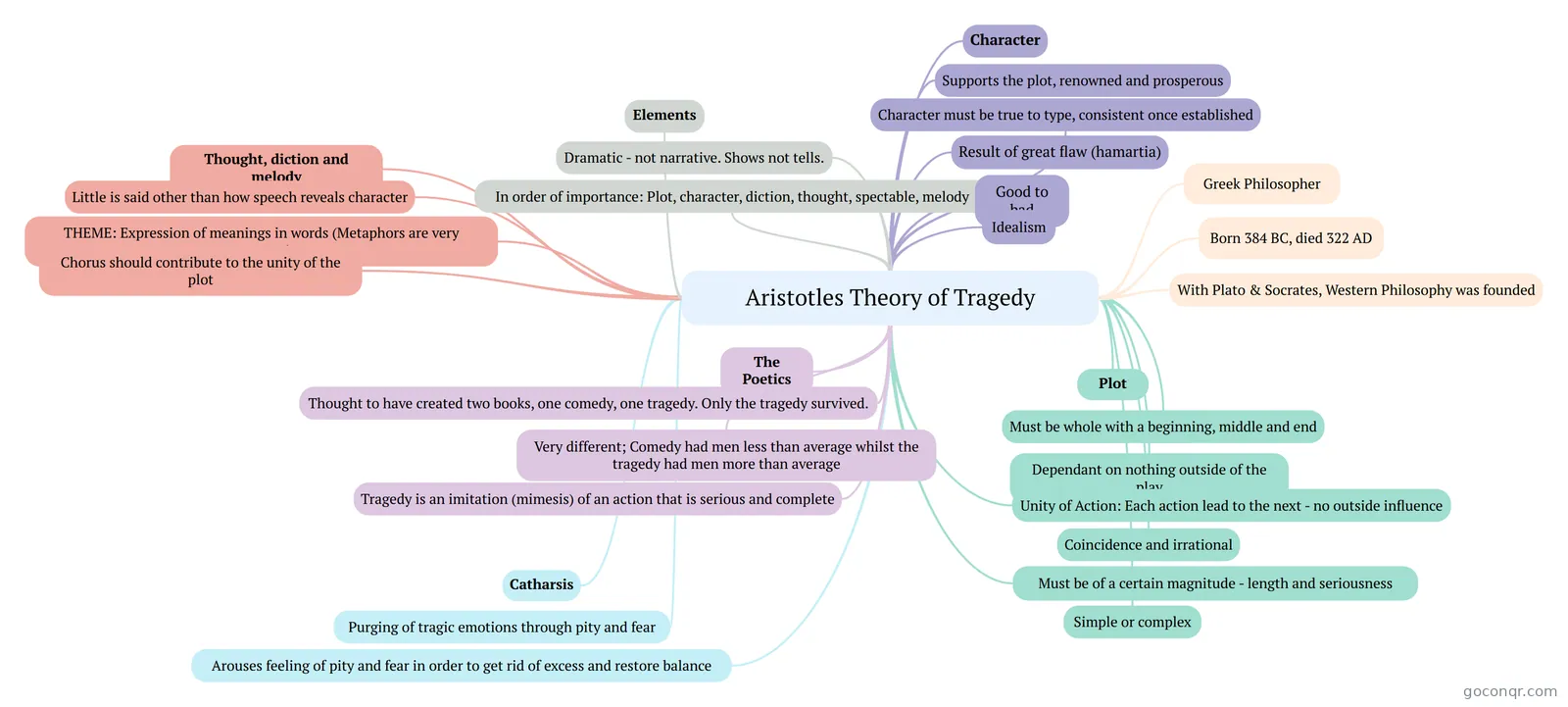
Mind map: Aristotle's theory of tragedy
Contenido del mapa
Aristotles Theory of Tragedy
Greek Philosopher
Born 384 BC, died 322 AD
With Plato & Socrates, Western Philosophy was founded
The Poetics
Thought to have created two books, one comedy, one tragedy. Only the tragedy survived.
Very different; Comedy had men less than average whilst the tragedy had men more than average
Tragedy is an imitation (mimesis) of an action that is serious and complete
Elements
Dramatic - not narrative. Shows not tells.
In order of importance: Plot, character, diction, thought, spectable, melody
Plot
Must be whole with a beginning, middle and end
Dependant on nothing outside of the play
Unity of Action: Each action lead to the next - no outside influence
Coincidence and irrational
Must be of a certain magnitude - length and seriousness
Simple or complex
Character
Supports the plot, renowned and prosperous
Good to bad
Result of great flaw (hamartia)
Character must be true to type, consistent once established
Idealism
Thought, diction and melody
Little is said other than how speech reveals character
THEME: Expression of meanings in words (Metaphors are very common)
Chorus should contribute to the unity of the plot
Catharsis
Purging of tragic emotions through pity and fear
Arouses feeling of pity and fear in order to get rid of excess and restore balance
Información
- Descripción
- Grade 10 English Mapa Mental sobre Aristotles Theory of Tragedy, creado por karaleannne el 02/06/2015.
- Creado por
- karaleannne
- Visitas
- 101
- Valoración