
Mapa mental
Carbohydrates
Contenido del mapa
Carbohydrates
Formulas
- Monosaccharide's- (CH20)n
- 1-Sweet tasting 2-soluble 3-atoms form a ring shape.
- Disaccharide's- 2(CH20)n-H2O
- Monosaccharide's- (CH20)n
Reactions
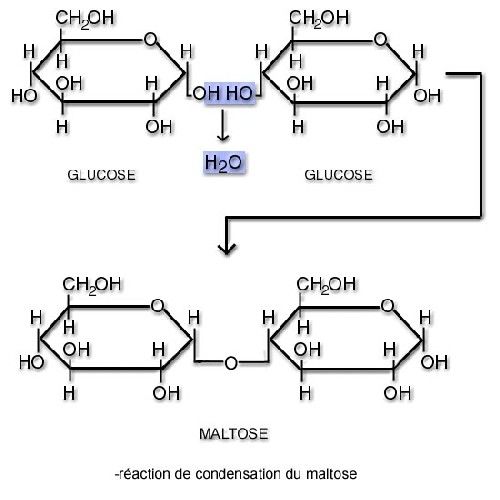
- Condensation- Joins molecules making water.
- Hydrolysis- Separates molecules using water.
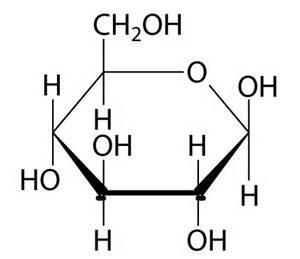
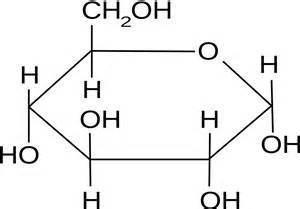
Glucose- (monosaccharide.)
- C6H12O6
- alpha-glucose.
- Two alpha-glucose monosaccharide's can join together to make a disaccharide.
- alpha-glucose + alpha-glucose: maltose + water.
- Can also go backwards in a hydrolysis reaction to form two alpha-glucose molecules from maltose and water.
- Forms a glycosidic bond when the hydroxide group and oxygen are removed to form a COC bond.
- alpha-glucose + alpha-glucose: maltose + water.
- Two alpha-glucose monosaccharide's can join together to make a disaccharide.
- beta-glucose.
Disaccharides
- Sucrose
- Made from glucose and fructose.
- Maltose
- Made from two glucose molecules.
- Lactose
- Made from galactose and glucose.
- Sucrose
Tests for sugars.
- Reducing sugars.
- All monosaccharide's and some disaccharides are reducing sugars.
- Benedict's Test
- 1- Add sample to a test tube. 2- Add ten drops of benedicts reagent. 3- Heat to 90 degrees in a water baths. 4- Observe a colour change.
- If reducing sugars are present then it will change colour to a red/brown. Depending on its concentration it may even turn green, indicating there is a very low concentration.
- Non-reducing sugars.
- This test is more complicated as the sugars, if present first have to be broken down by acid hydrolysis to produce the reducing sugars like monosaccharide's and some disaccharides.
- 1- Add sample to a test tube. 2- Add HCl and heat in a water bath (acid hydrolysis). 3- Leave to cool and add sodium hydrogencarbonate powder to make to solution neutral. 4- Add ten drops of benedicts reagent and observe a colour change.
- If non-reducing sugars are present then the colour will change as above.
- This test should only be completed once there is a negative result for reducing sugars.
- Reducing sugars.
Polysaccharides.
- Starch.
- Test for starch is to add iodine. If starch is present it will turn brown/black, depending on concentration.
- Made of alpha-glucose; they're unbranched.
- They're a good energy store and respiratory substrate found in grains in potato tubers, seeds and stoma of chloroplasts.
- Properties: Compact, too big to pass through membranes, insoluble- osmotically inactive, many glucose molecules, arranged in a helix.
- Glycogen
- Made of alpha-glucose and found in humans in the liver and muscles. Also found in fungi and bacteria.
- They're branched and act as a quick energy release stores and regulate blood glucose levels.
- Properties: branched, insoluble and tightly coiled.
- Cellulose.
- Properties: Mechanically strong, inverted arrangement of successive glucose molecules forming hydrogen bonds, tightly crossed-linked to form micro fibrils and fibres, interwoven, gaps allow permeability.
- Made of beta-glucose; they're unbranched.
- They're good at maintaining cell wall turgidity- leaves held in place and stem flexible but firm in the wind.
- Starch.
Imágenes y archivos del mapa
Información
- Descripción
- Key points of carbohydrates in Alevel biology
- Creado por
- Emily May
- Visitas
- 165
- Etiquetas
- Valoración