Mapa mental
Second Language Acquisition: Theories and Application
Contenido del mapa
Second Language Acquisition: Theories and Application
Universal Grammar Hypothesis
- Developed by Noam Chomsky
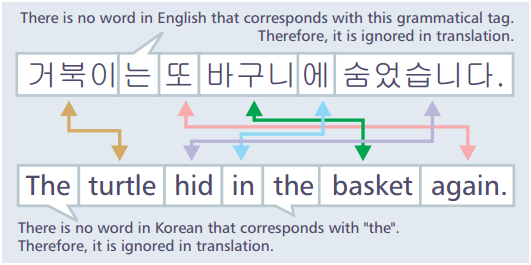
- Description: All human language rests on innate building blocks of expression. Each language has sentences with the same basic parts in common (nouns, verbs, etc), but they are just structured differently.
- Application: According to this theory, ELLs could achieve fluency by learning the basic grammar and sentence structuring rules of English. Therefore, teaching proper grammar and structure is highly important in the classroom.
Cummins's Theories of Bilingualism and Cognition
- Developed by Jim Cummins
- Description: Knowledge of an individual's first language provides a firm foundation for second language acquisition. Cummins distinguishes between basic interpersonal communicative skills (BICS) and cognitive academic language proficiency (CALP). BICS is conversational fluency picked up relatively quickly by ELL, including high frequency words and basic grammatical expressions. CALP includes the ability to interpret and produce increasingly complex aspects of the language, and may take 5-7 years for ELL to grasp, partly because many words are only used in textbooks and in the classroom (not everyday language). Cummins believes that an individual's ability to speak English fluently does not indicate that they have learned English.
- Applications: Teachers need to know that it may take 5-7 years for ELL to develop CALP, so they should not always assume ELL have learning disabilities. Teach prefixes, root words, and suffixes to help ELL figure out the meaning of academic words.
Interlanguage Theory
- Developed by Larry Selinker
- Description: Second-language learners create an "interlanguage" to try to achieve competence in the second language. They use 3 sources of information: rules of their own language, rules of the new language, and rules about how languages generally work
- Application: Teachers should use the slight errors in the way ELLs speak to assess students' misunderstandings. They should not see these errors as failures. Teachers should gradually guide ELLs towards the right language form instead of immediately counting off points.
Affective Filter Hypothesis
- Developed by Stephen Krashen
- Description: Emotional variables (anxiety, motivation, self-confidence, etc) can block input from reaching the language acquisition site, which could lower the level of the second language acquired.
- Application: Teachers should provide a non-threatening and encouraging environment that promotes learning. When teachers promote high self-esteem and other emotional variables, students are more likely to learn proficiently.
Input Hypothesis
- Developed by Stephen Krashen
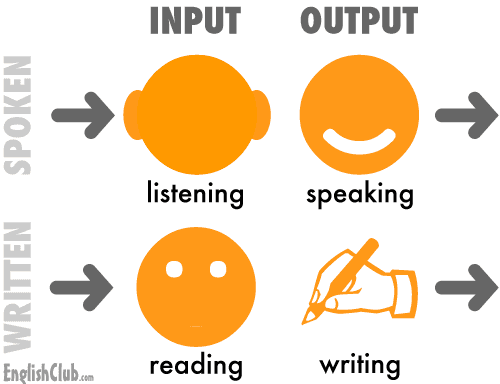
- Description: Individuals only acquire language when they understand messages (comprehensible input). Speaking in the target language does not result in language acquisition.
- Application: Students should not be forced to speak and write in the target language until they are ready. Class time should be filled with comprehensible oral input.
Acquisition-Learning Hypothesis
- Developed by Stephen Krashen
- Description: Distinguishes learning from acquisition. Learning is knowing about a language, but acquisition is an unconscious process where language is used for real communication.
- Application: Teachers should focus less on rules of a language and more on application. They should give students the basics and help them apply it to new situations.