
Mapa mental
Stroke
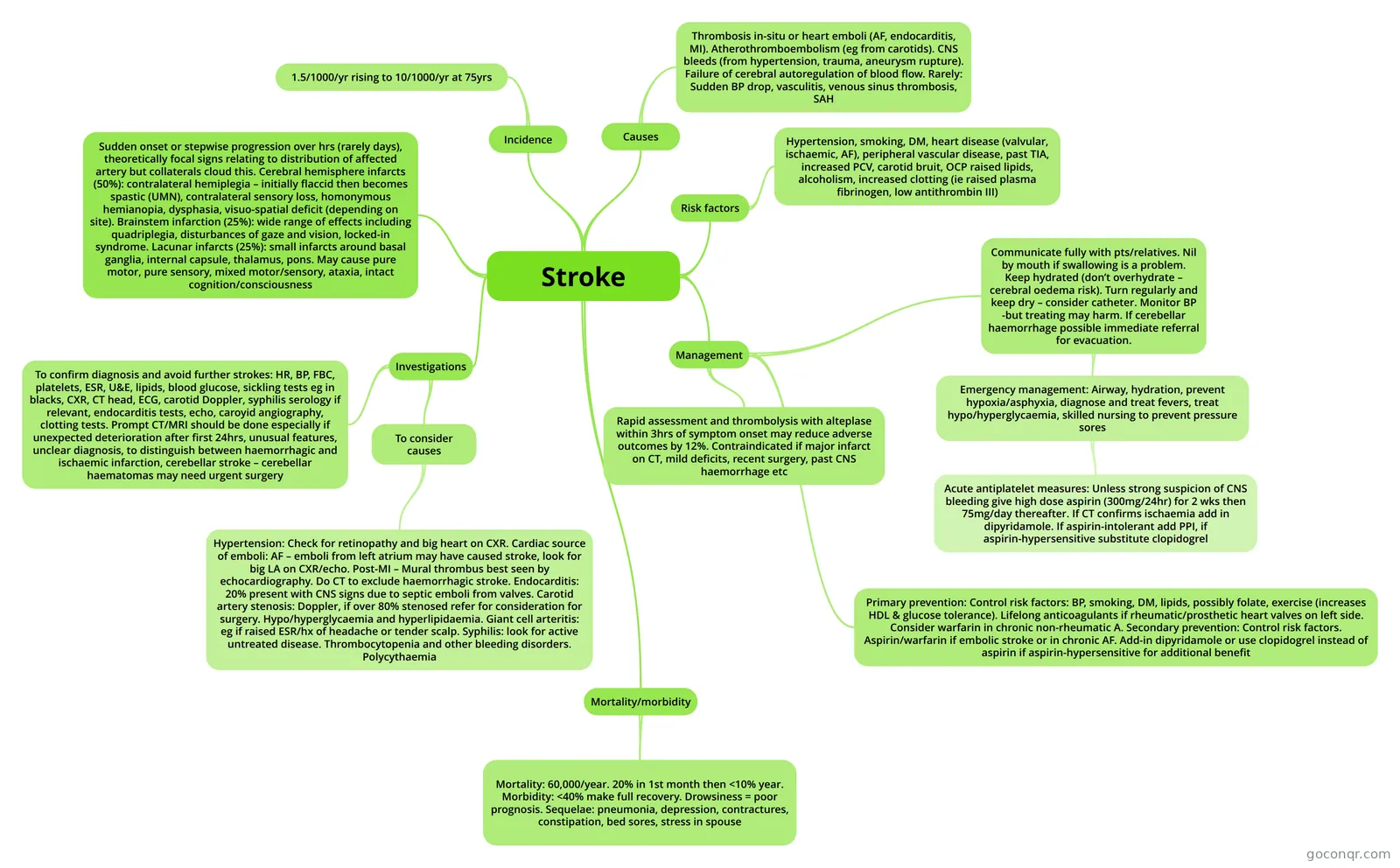
Mind map: Stroke
Contenido del mapa
Stroke
Incidence
- 1.5/1000/yr rising to 10/1000/yr at 75yrs
Causes
- Thrombosis in-situ or heart emboli (AF, endocarditis, MI). Atherothromboembolism (eg from carotids). CNS bleeds (from hypertension, trauma, aneurysm rupture). Failure of cerebral autoregulation of blood flow. Rarely: Sudden BP drop, vasculitis, venous sinus thrombosis, SAH
Risk factors
- Hypertension, smoking, DM, heart disease (valvular, ischaemic, AF), peripheral vascular disease, past TIA, increased PCV, carotid bruit, OCP raised lipids, alcoholism, increased clotting (ie raised plasma fibrinogen, low antithrombin III)
Sudden onset or stepwise progression over hrs (rarely days), theoretically focal signs relating to distribution of affected artery but collaterals cloud this. Cerebral hemisphere infarcts (50%): contralateral hemiplegia – initially flaccid then becomes spastic (UMN), contralateral sensory loss, homonymous hemianopia, dysphasia, visuo-spatial deficit (depending on site). Brainstem infarction (25%): wide range of effects including quadriplegia, disturbances of gaze and vision, locked-in syndrome. Lacunar infarcts (25%): small infarcts around basal ganglia, internal capsule, thalamus, pons. May cause pure motor, pure sensory, mixed motor/sensory, ataxia, intact cognition/consciousness
Investigations
- To confirm diagnosis and avoid further strokes: HR, BP, FBC, platelets, ESR, U&E, lipids, blood glucose, sickling tests eg in blacks, CXR, CT head, ECG, carotid Doppler, syphilis serology if relevant, endocarditis tests, echo, caroyid angiography, clotting tests. Prompt CT/MRI should be done especially if unexpected deterioration after first 24hrs, unusual features, unclear diagnosis, to distinguish between haemorrhagic and ischaemic infarction, cerebellar stroke – cerebellar haematomas may need urgent surgery
- To consider causes
- Hypertension: Check for retinopathy and big heart on CXR. Cardiac source of emboli: AF – emboli from left atrium may have caused stroke, look for big LA on CXR/echo. Post-MI – Mural thrombus best seen by echocardiography. Do CT to exclude haemorrhagic stroke. Endocarditis: 20% present with CNS signs due to septic emboli from valves. Carotid artery stenosis: Doppler, if over 80% stenosed refer for consideration for surgery. Hypo/hyperglycaemia and hyperlipidaemia. Giant cell arteritis: eg if raised ESR/hx of headache or tender scalp. Syphilis: look for active untreated disease. Thrombocytopenia and other bleeding disorders. Polycythaemia
Management
- Communicate fully with pts/relatives. Nil by mouth if swallowing is a problem. Keep hydrated (don’t overhydrate – cerebral oedema risk). Turn regularly and keep dry – consider catheter. Monitor BP -but treating may harm. If cerebellar haemorrhage possible immediate referral for evacuation.
- Emergency management: Airway, hydration, prevent hypoxia/asphyxia, diagnose and treat fevers, treat hypo/hyperglycaemia, skilled nursing to prevent pressure sores
- Acute antiplatelet measures: Unless strong suspicion of CNS bleeding give high dose aspirin (300mg/24hr) for 2 wks then 75mg/day thereafter. If CT confirms ischaemia add in dipyridamole. If aspirin-intolerant add PPI, if aspirin-hypersensitive substitute clopidogrel
- Emergency management: Airway, hydration, prevent hypoxia/asphyxia, diagnose and treat fevers, treat hypo/hyperglycaemia, skilled nursing to prevent pressure sores
- Primary prevention: Control risk factors: BP, smoking, DM, lipids, possibly folate, exercise (increases HDL & glucose tolerance). Lifelong anticoagulants if rheumatic/prosthetic heart valves on left side. Consider warfarin in chronic non-rheumatic A. Secondary prevention: Control risk factors. Aspirin/warfarin if embolic stroke or in chronic AF. Add-in dipyridamole or use clopidogrel instead of aspirin if aspirin-hypersensitive for additional benefit
- Rapid assessment and thrombolysis with alteplase within 3hrs of symptom onset may reduce adverse outcomes by 12%. Contraindicated if major infarct on CT, mild deficits, recent surgery, past CNS haemorrhage etc
- Communicate fully with pts/relatives. Nil by mouth if swallowing is a problem. Keep hydrated (don’t overhydrate – cerebral oedema risk). Turn regularly and keep dry – consider catheter. Monitor BP -but treating may harm. If cerebellar haemorrhage possible immediate referral for evacuation.
Mortality/morbidity
- Mortality: 60,000/year. 20% in 1st month then <10% year. Morbidity: <40% make full recovery. Drowsiness = poor prognosis. Sequelae: pneumonia, depression, contractures, constipation, bed sores, stress in spouse
Información
- Descripción
- Mapa Mental sobre Stroke, creado por emailk8 el 11/01/2014.
- Creado por
- emailk8
- Visitas
- 27
- Valoración