
Mapa mental
Functions of Blood
Contenido del mapa
Functions of Blood
Transport
- Digested Food Substances
- from intestines
- to other parts of the body
- from intestines
- Excretory Products
- NItrogenous Wastes
- urea, uric acid & creatinine
- Carbon Dioxide
- carried as hydrogencarbonate ions in plasma
- from all parts of the body
- to kidneys
- to lungs where hydrogencarbonate ions are converted to carbon dioxide
- excess mineral salts from intestines
- NItrogenous Wastes
- Hormones
- from glands
- to target organs
- from glands
- Heat
- from respiring body tissues
- e.g. muscles
- to all parts of body
- to maintain a uniform body temperature
- from respiring body tissues
- Oxygen
- from lungs
- to all parts of the body for cellular respiration
- from lungs
- Digested Food Substances
Protect
- Blood Clotting
- blood exposed to air will soon clot
- seals the wound
- prevent excessive loss of blood
- prevent foreign particles from entering bloodstream
- blood vessels are damaged
- damaged tissues & blood platelets release thrombokinase (enzyme)
- thrombokinase converts prothrombin (protein present in plasma) into thrombin (enzyme)
- calcium ions must be present
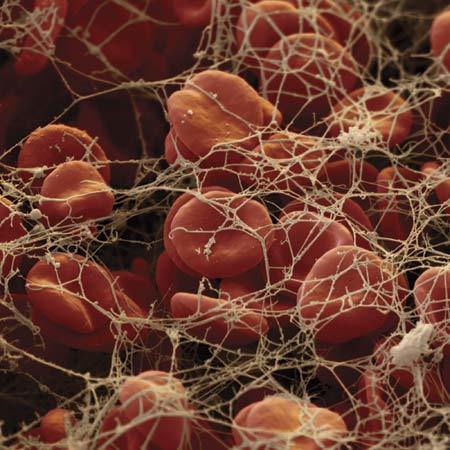
- thrombin catalyses the conversion of fibrinogen (soluble protein) to fibrin (insoluble threads)
- fibrin threads entangle blood cells & the whole mass forms a clot
- thrombokinase converts prothrombin (protein present in plasma) into thrombin (enzyme)
- damaged tissues & blood platelets release thrombokinase (enzyme)
- seals the wound
- heparin (produced in liver) is an anti-clotting substance
- blood exposed to air will soon clot
- Phagocytosis
- process of engulfing or ingesting foreign particles, such as bacteria, by the white blood cells
- can destroy foreign particles that enter the blood (e.g. bacteria that enter a wound)
- engulfs the bacteria by flowing over them & enclosing them
- ingested bacteria will be digested in the phagocyte
- dead phagocytes killed by bacteria
- dead phagocytes + dead bacteria = pus
- engulfs the bacteria by flowing over them & enclosing them
- Production of Antibodies
- disease-causing organisms (pathogens) e.g. bacteria & viruses enter bloodstream
- stimulate lymphocytes to produce antibodies
- destroy bacteria e.g. attaching to them, causing the bacterial surface membrane to rupture
- cause bacteria to clump together or agglutinate so that they can be easily ingested by phagocytes
- neutralising harmful substances (toxins) produced by bacteria
- stimulate lymphocytes to produce antibodies
- antibodies may stay in blood long after disease has been overcome
- thus, person who has recovered becomes immune/resistant to that infection
- some types of dead bacteria are sometimes injected into the bodies of certain animals
- to induce formation of antibodies in the blood
- antibodies are extracted from animal's serum & injected into humans to protect them from certain diseases
- to induce formation of antibodies in the blood
- may also be directly induced in the human body by exposing the person to dead/weakened forms of pathogen (immunisation/vaccination)
- dead/weakened form of pathogen stimulates the person's system to produce antibodies against the pathogen
- disease-causing organisms (pathogens) e.g. bacteria & viruses enter bloodstream
- Blood Clotting
Organ Transplant & Tissue Rejection
- tissue or organ transplant involves replacing damaged/diseased tissue/organ with healthy tissue/organ from the same person or donor
- recipient's lypmphocytes may produce antibodies to destroy the transplanted organ
- e.g. liver, kidney & heart
- tissues must be as genetically close as possible to reduce risk of rejection
- use of immunosuppressive drugs
- inhibit the responses of the recipient's immune system
- will cause problems
- lower resistance to many kinds of infection
- recipient has to continue taking the drugs for the rest of their lives
- tissue or organ transplant involves replacing damaged/diseased tissue/organ with healthy tissue/organ from the same person or donor
Imágenes y archivos del mapa
Información
- Descripción
- mindmap on functions of blood
- Creado por
- Caramel Kitty
- Visitas
- 40
- Etiquetas
- Valoración