
Mapa mental
Cell activity
Contenido del mapa
Cell activity
Cells
- Animal cells
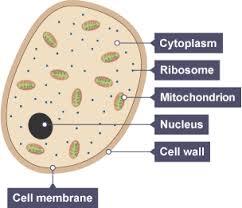
- Nucleus, to control the activities of the cell
- Contains chromosomes which carry genes that control the characteristics of the body
- Different forms of genes are called alleles
- Cytoplasm, in which most of the chemical reactions take place
- The cell membrane controls passage of substances into and out of the cell
- Mitochondria, where most of the energy is released in respiration
- Ribosomes, where protein synthesis occurs
- Nucleus, to control the activities of the cell
- Plant cells
- Chloroplasts, which absorb light energy to make food
- Contain chlorophyll
- A permanent vacuole filled with cell sap
- A cell wall made of cellulose, which strengthens and supports the cell
- Chloroplasts, which absorb light energy to make food
- Other cells
- Bacteria
- No nucleus - instead genetic material is arranged in plasmids
- Yeast
- A single celled organism
- Bacteria
- Animal cells
Movement of substances in and out of cells
- Diffusion
- Spreading of the particles of any substance in solution
- Results in a net movement of particles from a region of high concentration to a low concentration
- The greater the difference in concentration, the faster the rate of diffusion
- Osmosis
- Movement of water across a partially permeable membrane
- Moves from an area of high concentration to an area of low concentration
- Definitions
- Isotonic: if two solutions have the same concentration
- Hypertonic: the solution which is more concentrated
- Hypotonic: the solution which is more dilute
- Turgid plant cells: rigid plant cells with lots of water
- Plasmolysed plant cells: shrunken plant cells with little water
- Cells use active transport to absorb substances across partially permeable membranes against the concentration gradient.
- This requires energy from respiration
- Efficiency of exchange can be increased by
- Having a large surface area
- Having a thin surface
- Having an efficient blood supply
- Being ventilated
- Diffusion
Cell division
- Meosis
- Cell divides to form sex cells/gametes
- Cell divides twice to form four gametes, each with a single set of chromosomes
- Gametes join at fertilisation and this newly form cell divides by mitosis to form many cells, becoming an organism
- Mitosis
- The cell divides once to produce two genetically identical daughter cells
- Cell division is essential for growth and repair in an organism
- Plants can differentiate cells throughout their lives, however animals are unable to
- Meosis
Imágenes y archivos del mapa
Información
- Descripción
- GCSE Biology Mapa Mental sobre Cell activity, creado por kate.siena el 29/03/2014.
- Creado por
- kate.siena
- Visitas
- 122
- Etiquetas
- Valoración