
Mapa mental
A Level Biological Molecules
Contenido del mapa
A Level Biological Molecules
Carbohydrates
- All Carbohydrates contain the elements Carbon, Hydrogen and Oxygen, in the ratio of 2CH's to 1O.
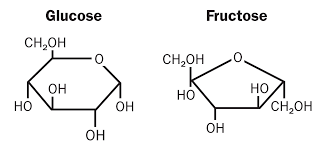
- Monosaccharides are glucose, galactose and fructose [galactose and fructose are isomers of glucose] they are single sugars.
- Isomer: Same molecular formula but different structure. For example, for monosaccharides the formula is C₆H₁₂O₆ and the structures can be shown in the diagram to the left
- They are hexose sugar as they contain 6 carbons.
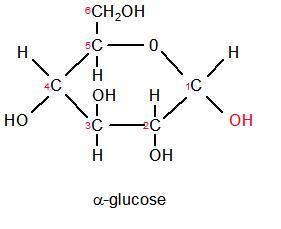
- Alpha Glucose Structure
- OH is a hydroxyl group.
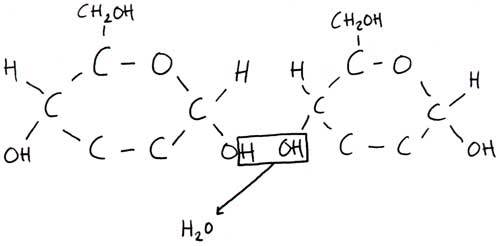
- Disaccharides are maltose [glucose+glucose], lactose [glucose and galactose] and sucrose [glucose and fructose]. They are double sugars and joined together by a condensation reaction [loss of water] and a glycosidic bond is formed.
- The H₂O is removed and a glycosidic bond is formed. [In chemistry this is called an ether bond]
- EXAMPLE: Glucose [C₆H₁₂O₆] + Fructose [C₆H₁₂O₆] = Sucrose [C₁₂H₂₂O₁₁]
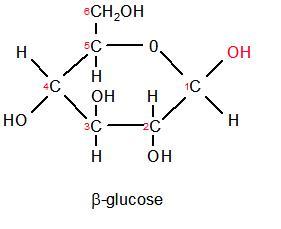
- Beta Glucose Structure
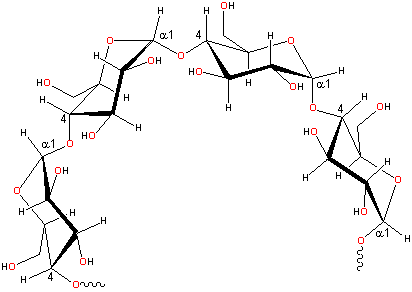
- Polysaccharides are starch [alpha glucose], glycogen [alpha glucose] and cellulose [beta glucose]. They are very long chained molecules and are insoluble, therefore they do not affect the water potential of a cell.
- Starch is large and insoluble, helical in shape so it is compact and stores energy.
- Glycogen is large and insoluble, helical and branched in shape so it is compact and stores energy.
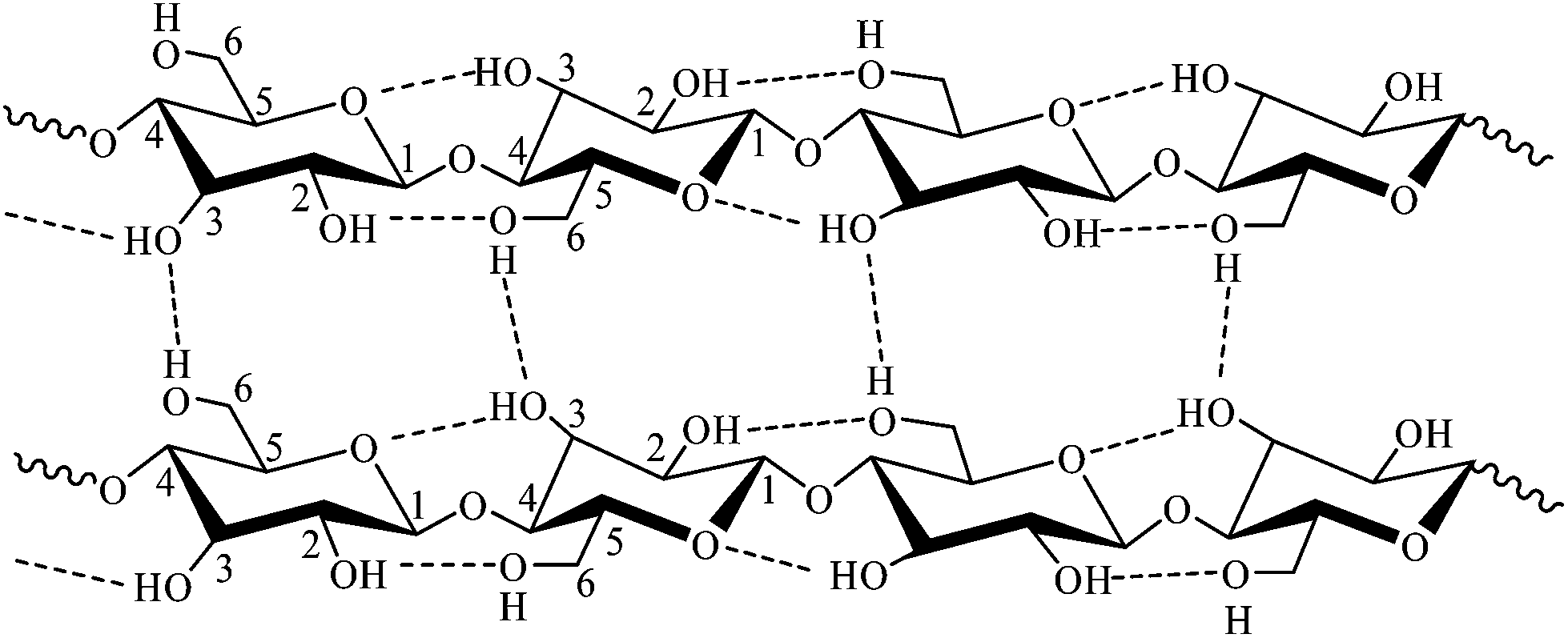
- Cellulose is made from Beta glucose [a flip in the hydroxyl group], they are form long straight chains called microfibrils. They are linked by hydrogen bonds which in mass are very strong [cross links] therefore they help provide structural support.
- Test for Carbohydrates
- Non-Reducing Sugar: Use Benedict's Solution, heat the mixture in a water bath and add HCL and a black-blue colour will be present.
- Reducing Sugar: Use Benedict's Solution, heat the mixture in a water bath and a red-brown colour will be present.
Proteins
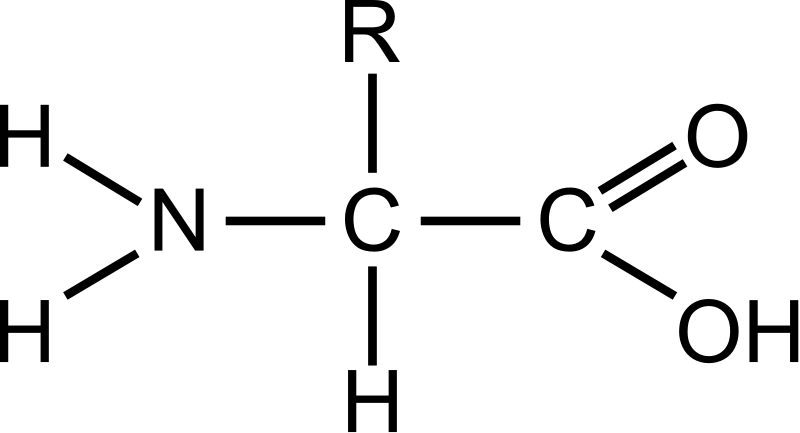
- What makes each individual amino acid different is the R Group.
- Amino Group
- Carboxylic Acid
- Variable Group [R]
- Amino Acids are joined together by a condensation reaction.
- Proteins have 4 structural levels:
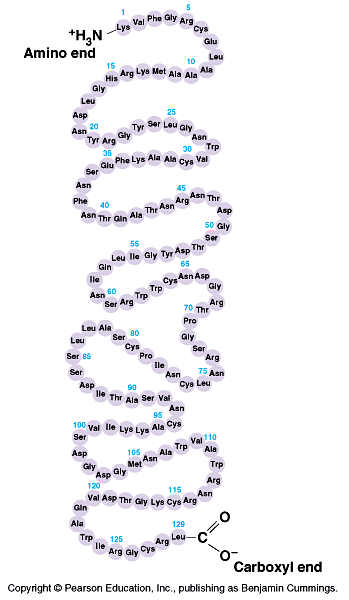
- Primary Structure is the sequence of amino acids which determines how it folds. It contains peptide bonds between amino acids. It looks like a chain essentially.
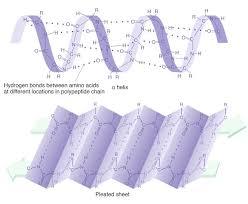
- Secondary Structure is the basic level of folding held together by hydrogen bonds, a Beta (β) pleated sheet or an alpha (α) helix is formed.
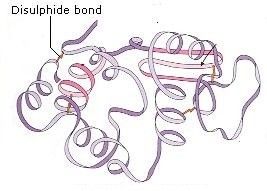
- Tertiary Structure is the overall globular structure formed from the polypeptide they contain hydrogen and disulphide bonds. E.g. Enzymes
- Quarternary structure is more than one tertiary structure attached together. They are also insoluble and have structural or storage roles. E.g. Collagen, Insulin, and Haemoglobin
- Tertiary Structure is the overall globular structure formed from the polypeptide they contain hydrogen and disulphide bonds. E.g. Enzymes
- Secondary Structure is the basic level of folding held together by hydrogen bonds, a Beta (β) pleated sheet or an alpha (α) helix is formed.
- Primary Structure is the sequence of amino acids which determines how it folds. It contains peptide bonds between amino acids. It looks like a chain essentially.
- Proteins have a variety of functions, including enzymes, antibodies, transport proteins and structural proteins.
- You conduct a Biuret Test for proteins. Add a few drops of biuret reagent to the solution, if peptide bonds [protein] the solution will turn purple or lilac.
- What makes each individual amino acid different is the R Group.
Lipids
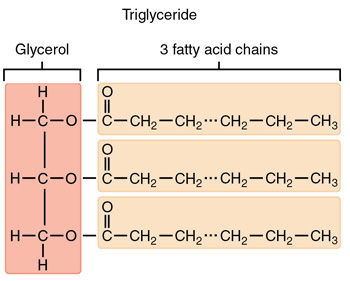
- Triglycerides have one molecule of glycerol and three fatty acids [made from hydrocarbons].
- Triglycerides are formed by condensation reactions when fatty acids bond with a glycerol molecule water [H₂O] is produced and an ester bond.
- They are mainly used as energy storage molecules and are insoluble so they don't affect water potential.
- Fatty acids can be unsaturated and saturated.
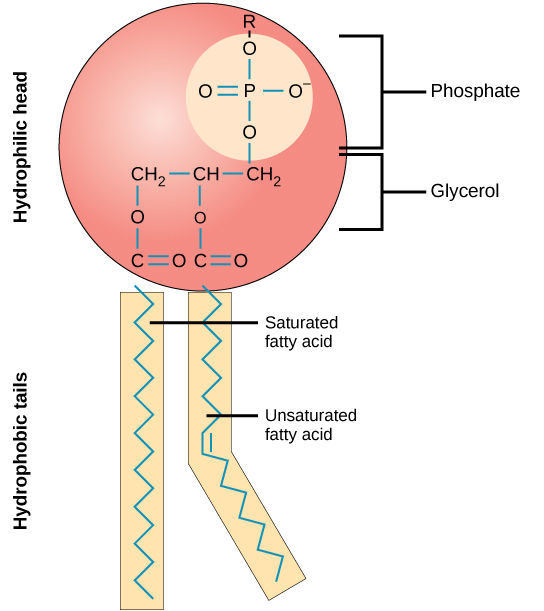
- Unsaturated have at least one double bond between carbon atoms which causes the chain to kink. They are liquid at room temperature.
- Saturated have no double bonds between carbon atoms, they are saturated with hydrogen atoms. They form straight lines and are solid at room temperature.
- Triglycerides are formed by condensation reactions when fatty acids bond with a glycerol molecule water [H₂O] is produced and an ester bond.
- Phospholipids have a phosphate head, a glycerol molecule and two fatty acids.
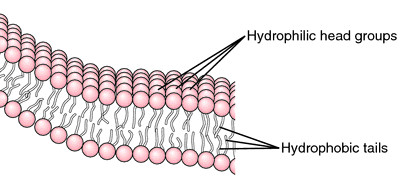
- The phosphate group is hydrophillic and the fatty acid 'tails' are hydrophobic, they make up the phospholipid bi-layer.
- The centre is hydrophobic so water-soluble substances can't easily pass through it.
- The phosphate group is hydrophillic and the fatty acid 'tails' are hydrophobic, they make up the phospholipid bi-layer.
- The emulsion test is used for lipids, grind or crush the substance, adding ethanol to the solution and shaking then adding distilled water and a cloudy white precipitate should be formed.
- Triglycerides have one molecule of glycerol and three fatty acids [made from hydrocarbons].
Introduction
- Monomer - small unit from which larger molecules are made E.g. Monosaccharides, amino acids and nucleotides.
- Polymer - are molecules made from a large number of monomers joined together.
Imágenes y archivos del mapa
Información
- Descripción
- A mind map summarising the topic biological molecules. !(•̀ᴗ•́)و ̑̑
- Creado por
- Camille Bailey
- Visitas
- 2.736
- Etiquetas
- Valoración