
Apuntes
Unit 1. Characteristics and Classification of Living Organisms
Contenido del apunte (4)
Página 1
1.1 Characteristics of Living Things
Movement: an action by an organism or part of an organism causing a change of position or place.
Respiration: the chemical reactions in cells that break down nutrient molecules and release energy for metabolism.
Sensitivity: the ability to detect or sense stimuli in the internal or external environment and to make appropriate responses.
Growth: a permanent increase in size and dry mass by an increase in cell number or cell size or both.
Excretion: removal from organisms of the waste products of metabolism, toxic materials, and substances in excess of requirements.
Nutrition: taking in of materials for energy, growth and development; plants require light, carbon dioxide, water and ions; animals need organic compounds and ions and usually need water.
Página 2
1.2 Concept and use of a classification system
Organisms can be classified into groups by the features they share.
Classification systems aim to reflect the evolutionary relationships.
Evolution: the process by which the adaptive features of a species change over time.
Classification is traditionally based on studies of:
Morphology: the study of external structures of the body
Anatomy: the study of the internal structure of the body by dissection
DNA Studies: includes the study of sequences of bases in DNA and of amino acids in proteins. It is used as more accurate means of classification
Organisms which share a more recent ancestor have base sequences in DNA that are more similar than those that share only a distant ancestor.
Binomial system of naming species: is an internationally agreed system in which the scientific name of an organism is made up of two parts showing the genus and species.
The first part is the genus name, starting with capital letter. The second part is the species name, starting with small letter or lower case letter.
Living things are grouped into 7 categories:
Species: a group of organisms that can reproduce to produce fertile offspring.
Genus: a group of closely related species
Family: a group of closely related genus
Order: a group of closely related family
Class: a group of closely related order
Phylum: a group of closely related class
Kingdom: a group of closely related phylum
Página 3
1.3 Features of Organisms
The features in the cells of all living organisms includes presence of: (Cytoplasm - Cell membrane - DNA as genetic material - Ribosomes for protein synthesis - Enzymes involved in respiration)
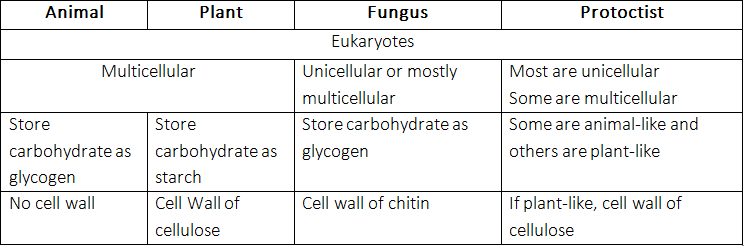
All organisms are categorized into 5 Kingdoms:
Fungi:
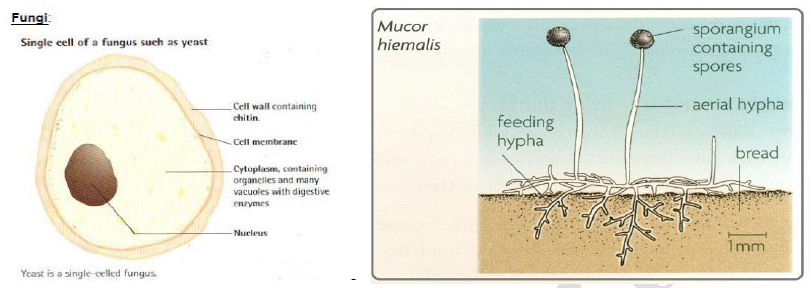
Structure: cells are joined together to form hyphae. Hyphae are thin threads that are joined together to make to make the body of the fungi. A network of hyphae is called mycelium.
Some are harmful, some cause diseases like ringworm and athlete’s foot.
Yeast is used to make ethanol and bread. Antibiotics are obtained from different fungi.
How do fungi reproduce: A multicellular fungus reproduce asexually by spores produced inside the sporangium by mitosis, which is present at the tip of aerial reproductive hyphae. Spores are carried by wind, when the sporangium bursts. The spores grow, longer to form more feeding hyphae and form mycelium. The mycelium then spreads.
How do fungi obtain nutrients: The feeding hyphae grow over the food/substrate and branch to increase the surface area and release enzymes on it and undergo extracellular digestion .It absorb the digested products like glucose.
Prokaryote:
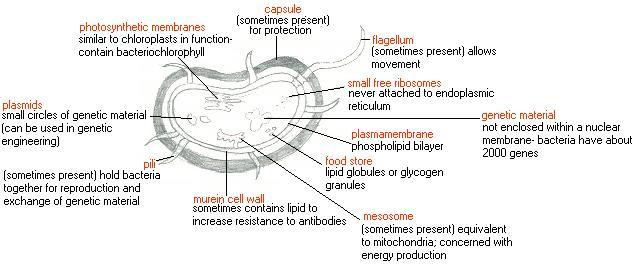
Unicellular with no nucleus but a small piece of circular DNA called plasmids
Cell wall made of murein or peptidoglycan
No membrane bound organelles – have slime capsule and one or more flagella
Have droplets of food stores called glycogen granules
Some bacteria are photosynthetic, but most are saprophytic (feed on dead organisms by excreting digestive enzymes onto food and absorbing the digested products)
Virus:
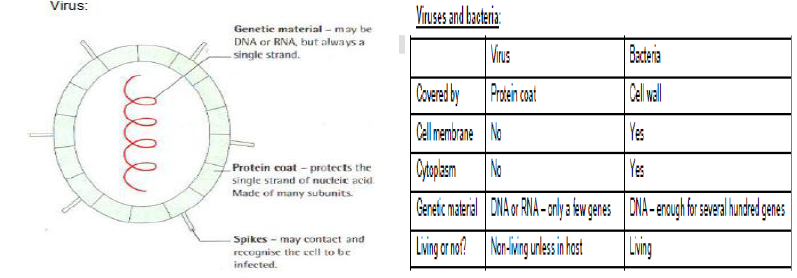
Made of protein coat and genetic material and sometimes has spikes
Has a strand of DNA or RNA surrounded by capsid (protein coat) that gives it structure
The DNA or RNA that are protected by capsid contain the code for building new viruses
Not living b/c they only show reproduction from the 7 characteristics
How a virus multiplies - Virus ejects its DNA or RNA into the cell. The genetic material multiplies. New viruses are formed inside the cell and then burst out of the cell. They take over the cell’s machinery to make multiple copies of themselves. These new viruses burst out of the cell and invade other cells, where the process is repeated. The host cell is usually killed when this happens. They cause diseases such as cold, influenza, AIDs. Eg. The influenza virus
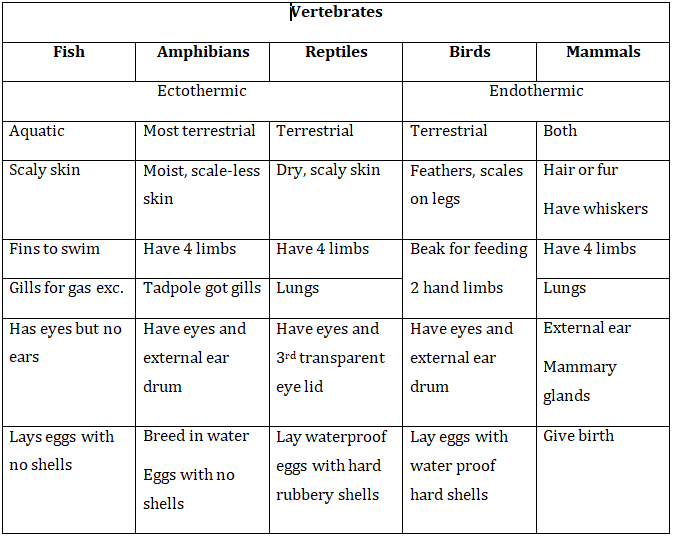
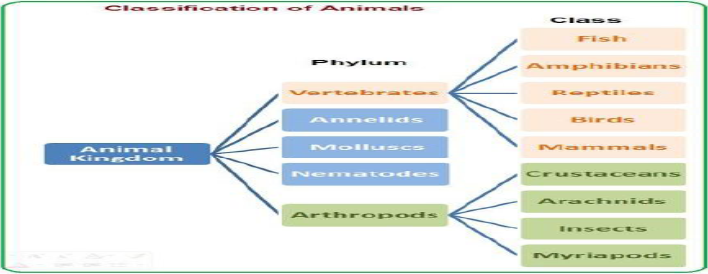
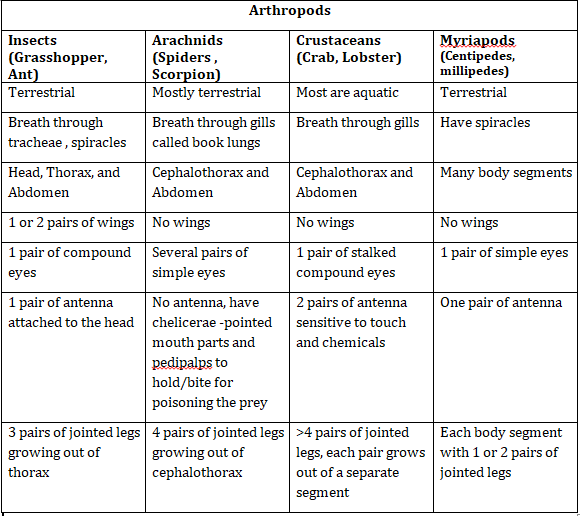
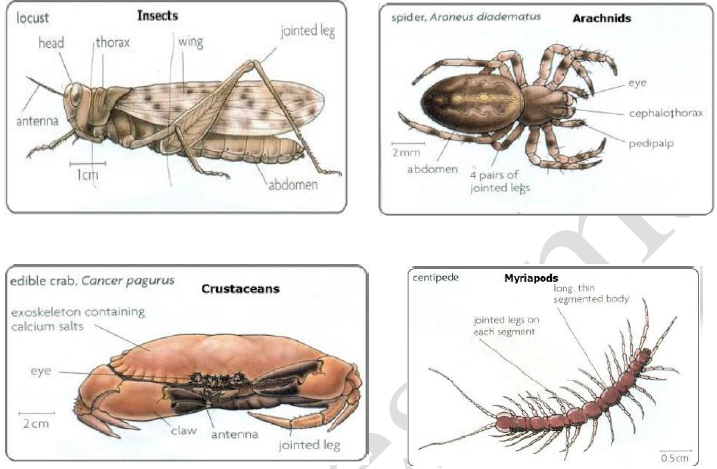
Invertebrates also include:
Nematodes: tiny, thin worms without segments. Some cause diseases. Eg: body worms
Molluscs usually have a broad muscular foot and may also have a shell. Eg: snails, squids and octopuses.
Annelids: segmented worms with soft bodies. Most of the worm’s body consists of identical segments, giving it a ‘ringed’ appearance. Eg: earthworms
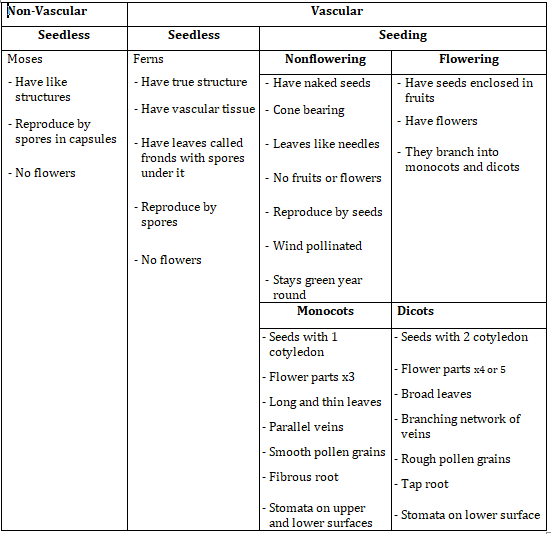
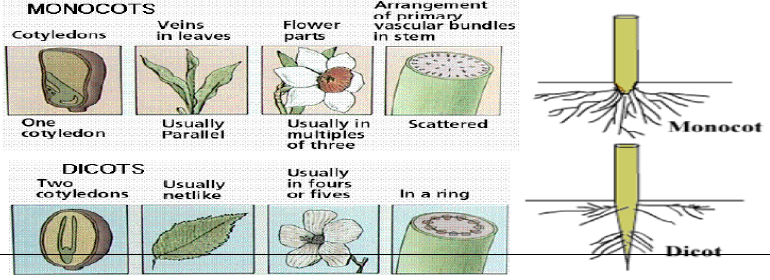
Plant Kingdom: Grouped into ferns and flowering plants (dicotyledons , monocotyledons)
Página 4
Información
- Descripción
- Notes on Unit 1 - IGCSE Biology
- Creado por
- Alisar Younes
- Visitas
- 424
- Valoración