
Apuntes
part 3
Contenido del apunte (2)
Página 1
Week 11
Perfect Competition
identical product, many small buyers and sellers, equal access to full information and low transaction, no or low barriers to entry or exit
ex: west side market produce building, STOCK MARKET
Monopolistic Competition
basically the same as perfectly competitive, but slightly different products
ex: fast food restaurant
Oligopoly
high barriers to entry, few firms control a lot of the market
ex: oil producer, cereal manufacturer)
Monoply
one seller with very high market share
ex: cable, electric companies)
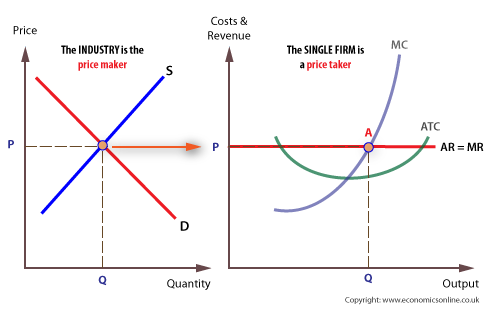
SHORT TERM Perfectly competitive firms are price takers, they cannot influence the market, no matter how much they sell, MR=D=AR=P
MC=MR --> Profit maximizing
the demand curve for individual firms faces in PC is perfectly elastic : cannot sell for more than the price (many sellers). Wouldn't want to sell for less than the price (many buyers, you don't need to convince)
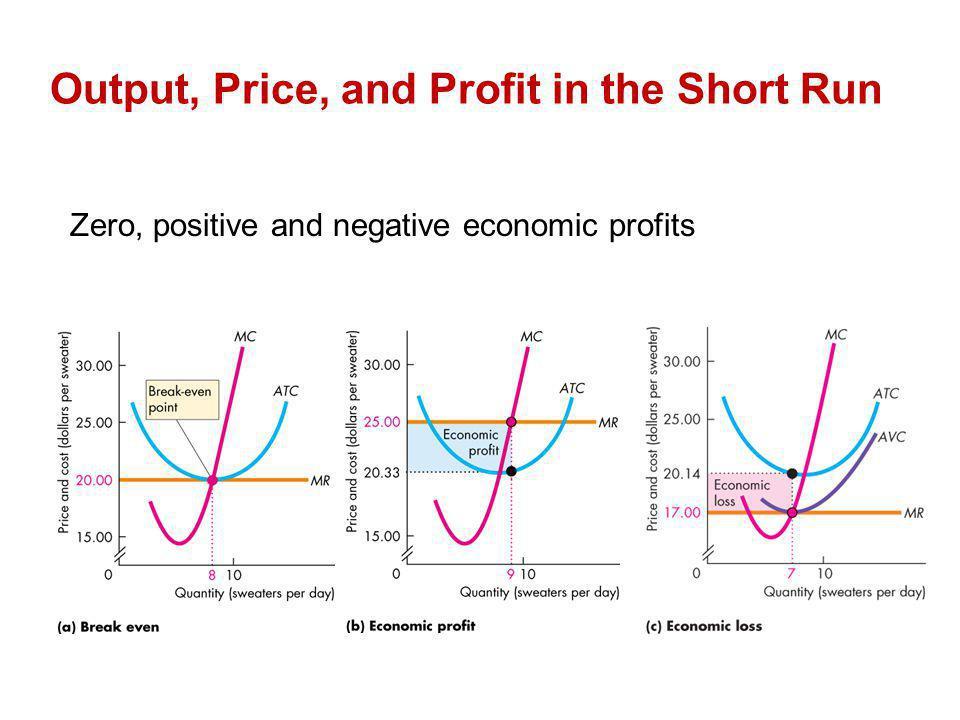
individual firm : go up Q*, (MC-ATC)Q=profit
profit = TR-TC
Pi= P*q-TC
profit per unit = price - average total cost
(Pi/q) = P*q/q - TC/q ----> (pi/q) = P - ATC
set MR=MC, for PC, MR= P so P=MC
IN THE SHORT RUN, FIRMS SHOULD SHUT DOWN WHEN P<AVC
this means that they arent able to cover variable cost
if P>AVC, they cover VC and contributing to their fixed cost, so they should produce at MR=MC (aka P=MC)
Thursday 11.9.2017
LONG TERM perfectly competitive
how much OUTPUT to produce in the long-run
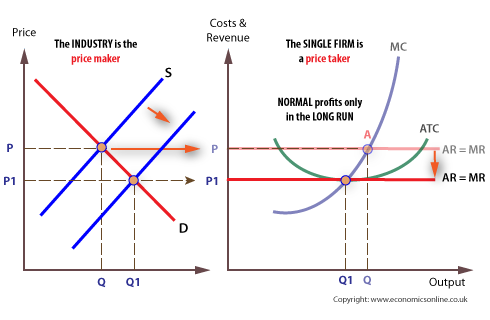
earning profits in the short run, more firms will enter which means more supply and price will be driven down
earning a loss in the long run, some firms will exit
firms will enter/exit until economic profit is driven to zero PROFIT^LR = 0
P=ATC
Economic vs Accounting profit
economic profit: includes opportunity costs in profit calculation
profit even above your next best alternative
Accounting profit: normal profit as usually calculated
doesn't include value of lost opportunity
firms may make zero econ profit but hey may ad usually make positive accounting profit. firms dont have incentives to enter or exit markets when economic profit is zero
Zero economic profit
P=min(ATC)
min(ATC) is where MC=ATC
so in long run perfect competition P=MC=ATC
P=MC bc of PC and P=ATC bc long run equilibrium profit=0
negative SR profit = firms exit until economic profit is back to zero
negative profit is incentive to exit market
Página 2
Week 12
Tuesday notes
Monopoly
One seller, unique product, limited information or high transition cost, no substitute, high barriers to entry and exit
price makers (price searchers
they choose their price by determining how many units to sell
because they are the only seller, to sell one more unit, they need to lower their price
Why we have monopolies
Firms want to be a monopoly because they would make more money
Sometimes a monopoly makes the most sense
sometimes a monopoly is a reward for innovation
TYPES
Natural: Production efficiency from barriers utility companies
arises due to high fixed costs or high setup costs
Geographic: no close competitors (high shopping costs) - last gas station for 40 miles
arisies from high cost of finding another seller
Technological: unique, not full info - new discovery, secret formula
arises from a unique product or hidden information
Government: granted by the government - patents (granted), US Postal Service
arises through government action
US awards the longest patent (20 years)
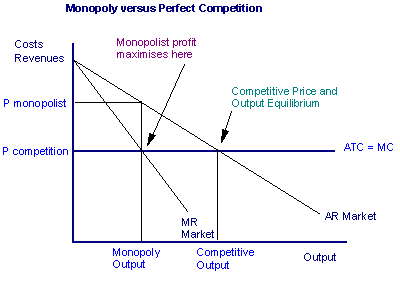
Price is not equal to marginal revenue
still use MR=MC but Price is demand curve
monopolists produces less output and charges higher price (than PC)
from consumer's POV, it's bad
LR profit
because of barriers to entry, monopolists can hold on to long run economic profit
profit>0
Why we dont like monopoly
worse for consumers and market overall
sell fewer units at a higher price
CSm<CSpc
some beneficial trades arent made
TSm<TSpc
firms make more profit
creates deadweight loss
Thursday notes
Price Discrimination
Different prices to different consumers for the same product
ex. Black friday, happy hour, coupon
really goof=d for firms, bc they make more money
conditions
1) seller must be price maker
2) Seller must be able to distinguish among buyers who are willing to pay different prices
3) reselling the good to other buyers must be impossible or too costly
Arbitrage: buying low, reselling high
Types
First degree discrimination : involves charging customers the maximum price they're willing to pay, no consumer surplus. (Perfect price discrimination)
Second Degree: charging different prices depending on the quantity consumed
Third Degree: charging different prices to different groups (when flight tickets are bought, student discounts, senior discounts, in-state vs out-of-state tuition)
Fourth Degree: charging same price to everyone even though firm incurs different costs (same price for disabled even if firm incurs more costs)
Premium pricing: NOT PRICE DISCRIMINATION, firms charge different prices for slightly different variations of the good (first class vs economy class flight)
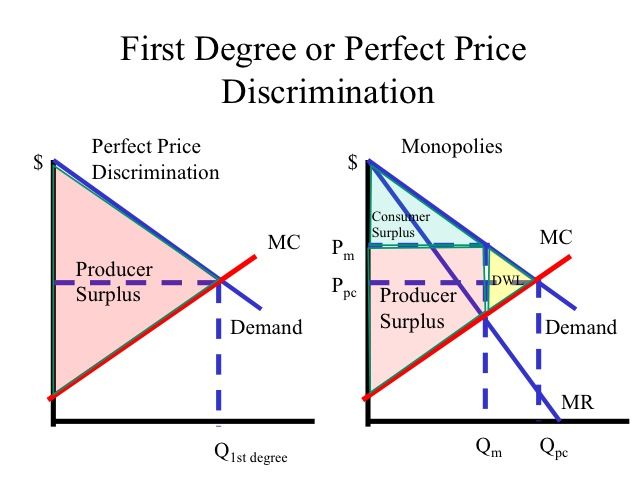
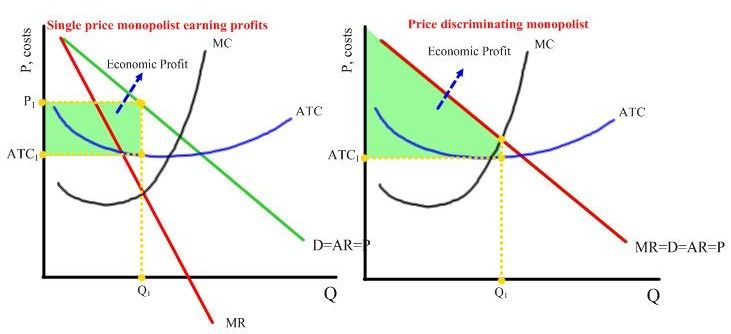
Perfect price discrimination : Demand and MR is the same, NO Deadweight Loss, Same output as perfect competition, profit when atc is below price
OTHER RESOURCES
https://courses.byui.edu/econ_150/econ_150_old_site/lesson_08.htm
Información
- Descripción
- Business/Economics Apunte sobre part 3, creado por Haruna Heima el 07/11/2017.
- Creado por
- Haruna Heima
- Visitas
- 2
- Valoración