
Apuntes
Chem Notes
Contenido del apunte (1)
Página 1
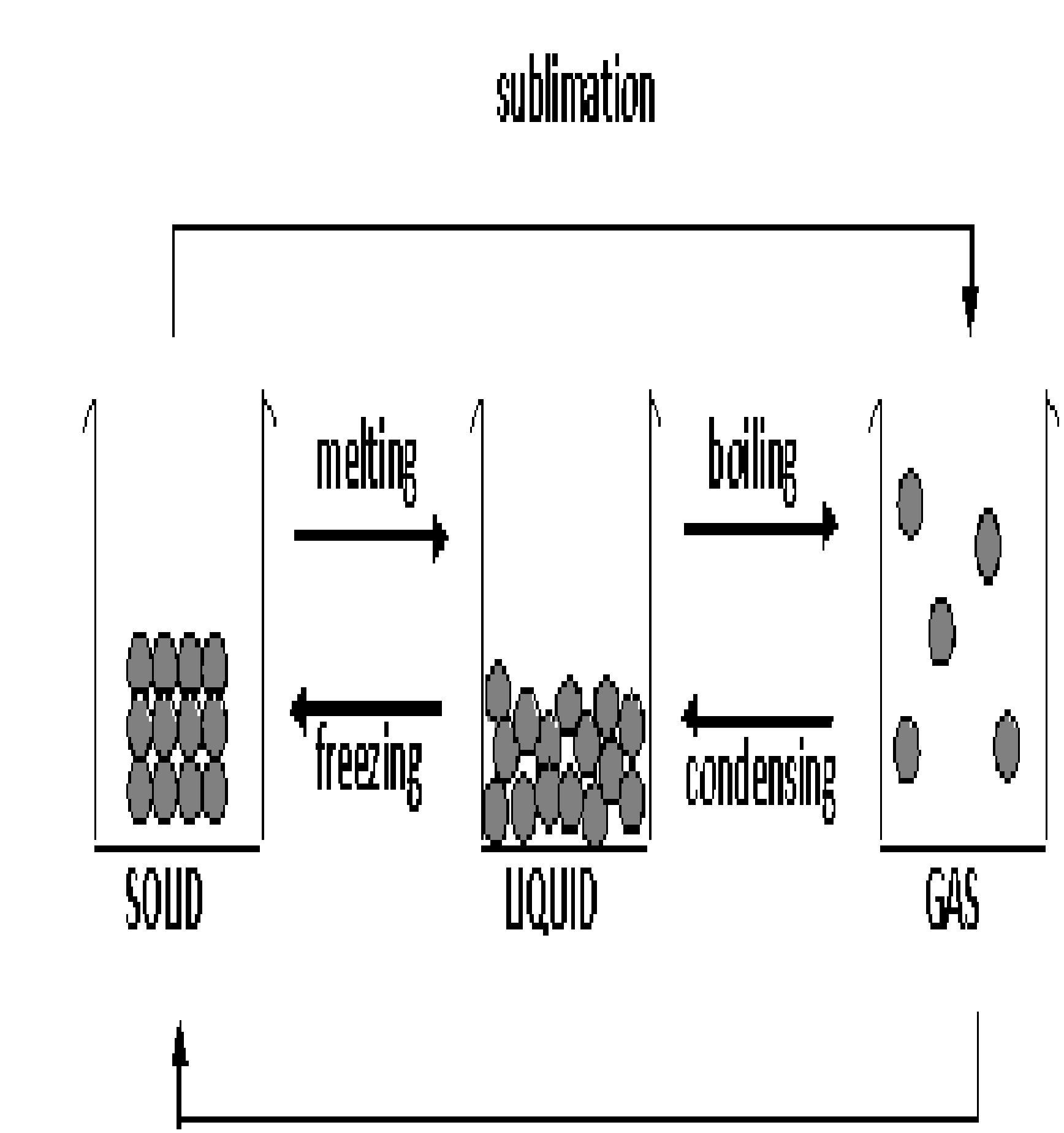
Reverse sublimation
Elements and atomic structure
·
An element is a pure substance made up of only one type
of atom.
·
An atom is the smallest particle of an element that can
exist.
·
An
atom contains the sub-atomic particles protons, neutrons and electrons
sub-atomic
particle
relative
charge
relative
mass
location
proton
+1
1
nucleus
neutron
0
1
nucleus
electron
-1
1/2000
shells around the nucleus
·
Atomic
(proton) number = number of protons
(this is also equal to the number of electrons
for atoms)
·
Mass
number = number of protons + number
of neutrons
·
Therefore
the number of neutrons = mass number – atomic number
·
Isotopes are atoms with the same number of protons
but a different number of neutrons
e.g. chlorine has atoms with mass numbers 35
and 37 in a ratio of 3:1 (75% 35Cl and only 25% 37Cl)
The relative atomic mass of chlorine is
taken as the average of these two types of atom BUT the average must be
weighted to take into account the fact that the isotopes are present in
different proportions i.e. there are more 35Cl atoms than 37Cl.
To calculate the weighted average mass: (75 x 35)
+ (25 x 37) = 35.5
100
·
An
ionic bond is formed when a metal reacts with a non-metal
·
Ionic
substances are always compounds
·
The
metal atom gives up electrons from its outer shell and becomes a positively
charged ion (CATION); the non-metal atom gains these electrons into its outer
shell and becomes a negatively charged ion (ANION)
·
An ion is a charged particle formed by the loss or gain
of electrons from an atom.
·
Ions
are charged because they either have more electrons than protons (this makes
them negatively charged) or fewer electrons than protons (this makes them
positively charged)
·
An
ionic bond is the electrostatic
attraction between oppositely charged ions
·
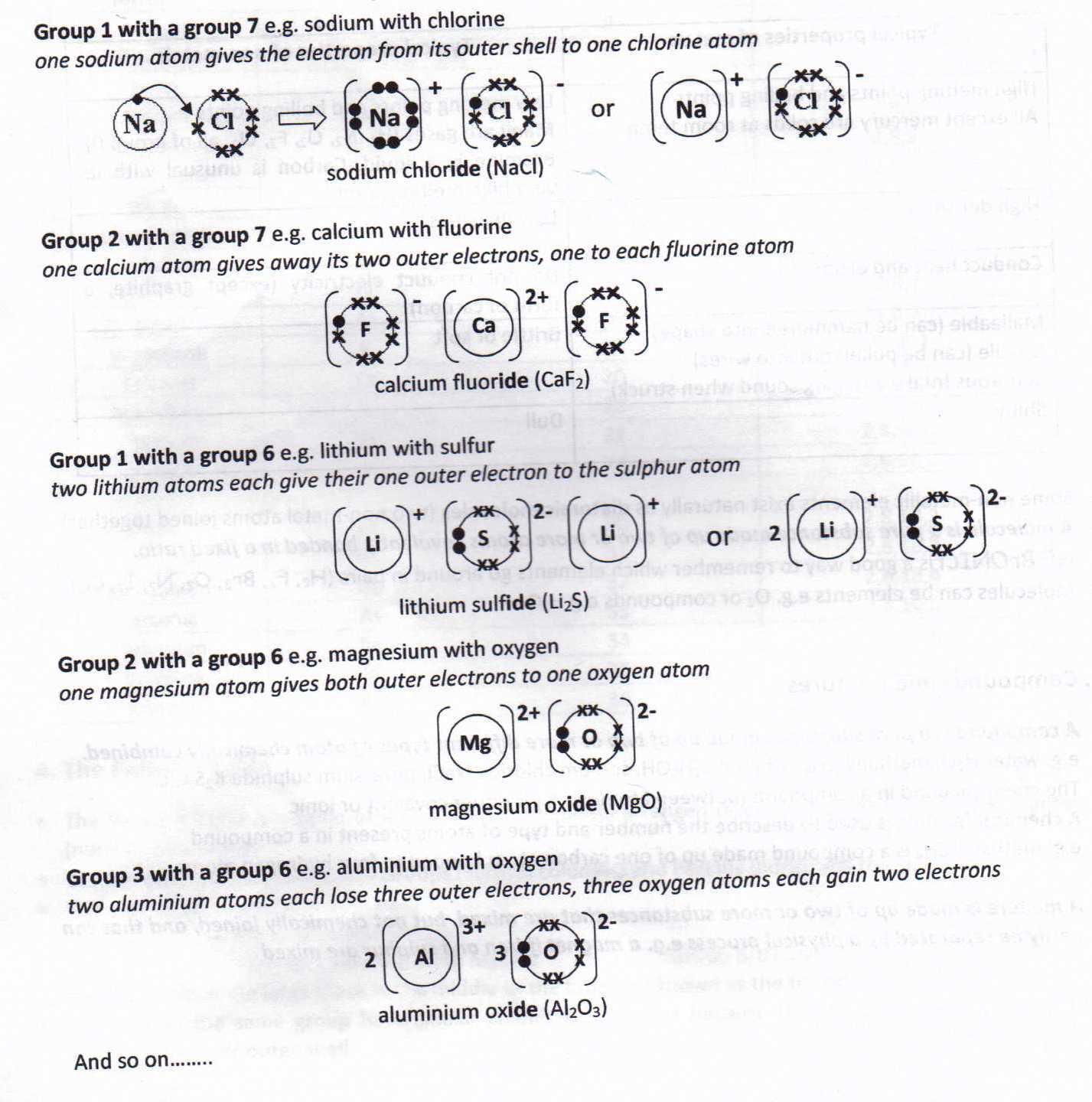
Ionic
bonding can be shown using dot and cross diagrams:
·
Covalent
bonding occurs between two non-metals
·
Both
atoms achieve a full outer shell by SHARING
PAIRS of electrons
·
Each
shared pair of electrons is a single
covalent bond
·
This
type of bonding does not involve the
transfer of electrons and so ions are NOT formed.
·
The
electrostatic attraction is between the nuclei (of both atoms) and the shared pairs
of electrons
·
A
covalent substance could either be an element e.g. H2 or a compound
e.g. H2O
·
Many
covalent substances are simple molecules
·
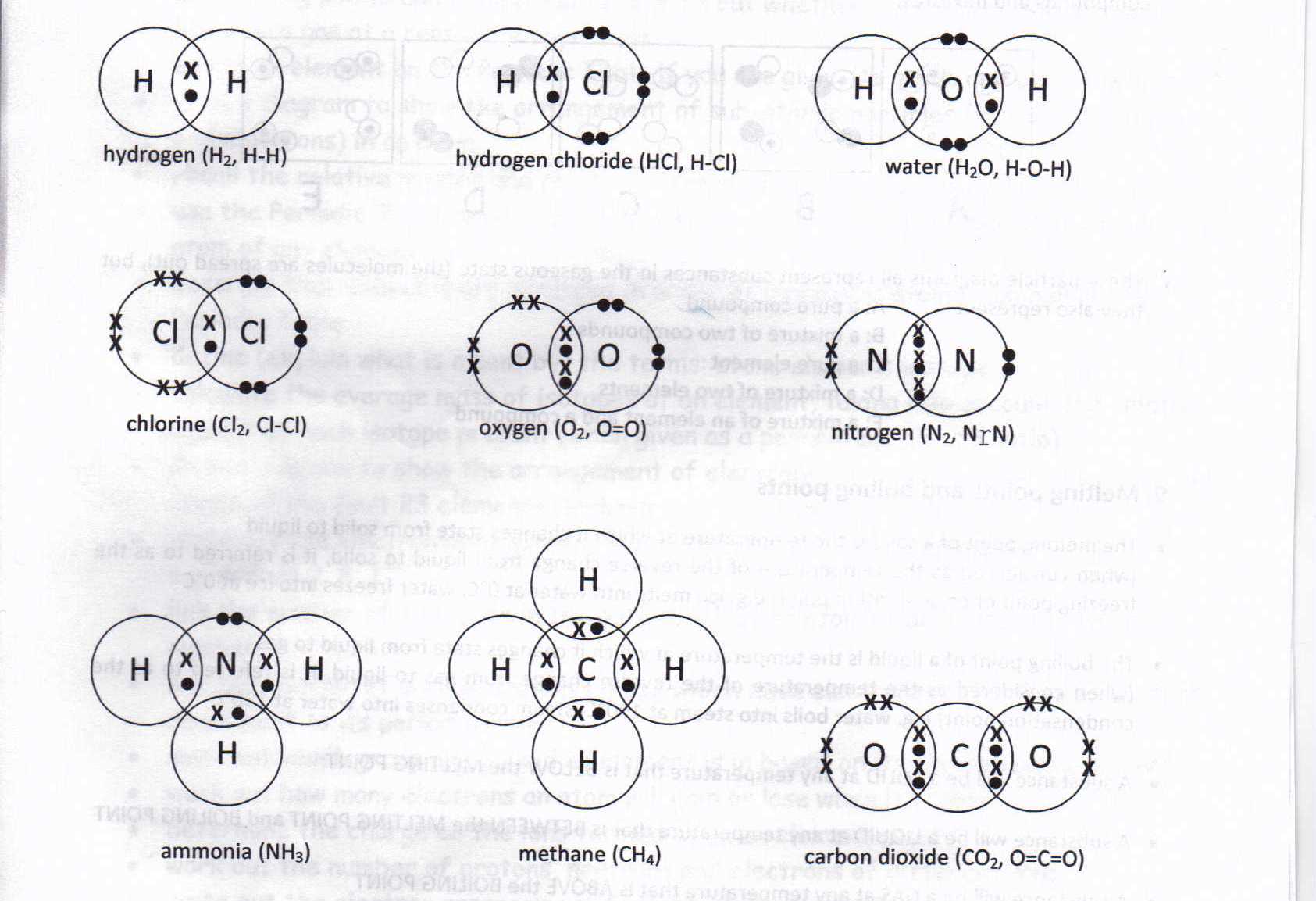
Dot
and cross diagrams can be used to show covalent bonding
Particle Theory
Elements and atomic structure
Ionic Bonding
Covalent Bonding
Información
- Descripción
- Puplic exam Chemistry Apunte sobre Chem Notes, creado por madhubla99.5 el 09/11/2015.
- Creado por
- madhubla99.5 · nov 2015
- Actualizado
- 19 feb 2016
- Visitas
- 5
- Etiquetas
- Historial
-
- Creado por Oliver H · 9 nov 2015
- Copiado por madhubla99.5 · 9 nov 2015
- Valoración