
Apuntes
Scientific Method step 2-hypothesis
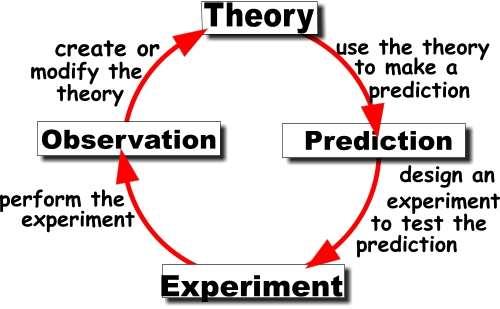
Contenido del apunte (1)
Página 1
The second step of the scientific method is to from a hypothesis based on our observations made in step 1. A hypothesis is a clear principle which will predict a certain outcome or effect and can be used to explain a certain phenomenon or phenomena. A hypothesis is formed using inductive reasoning. Inductive reasoning is when a generalization based on specific details.
An example of a good hypothesis would be "Obesity increases the chances of diabetes". A poor hypothesis could be "some obese people have diabetes."
When a hypothesis involves a cause-and-effect relationship, we state our hypothesis to indicate there is no effect. A hypothesis, which asserts no effect, is called a null hypothesis.
A hypothesis must be able to be proven or proven false by experiment.
A hypothesis should have the following characteristics:• It should be a general principle that holds across space and time
• It should be a tentative idea
• It should agree with available observations
• It should be kept as simple as possible.
• It should be testable and potentially falsifiable. In other words, there should be a way to show the hypothesis is false; a way to disprove the hypothesis.
New Page
Información
- Descripción
- An introduction to the scientific method used in any scientific study
- Creado por
- mia.rigby
- Visitas
- 208
- Etiquetas
- Historial
-
- Creado por eoin.examtime · 10 dic 2013
- Copiado por mia.rigby · 10 dic 2013
- Valoración