
Apuntes
Legislative Branch
Contenido del apunte (7)
Página 1
Congress represents:
The nation as a whole (national interest)
A constituency (state or congressional district)
These two groups usually are in conflict. For example, something such as higher farm prices may benefit a constituency in a farm state, but national consumers will not like the higher prices.p
Also, a congressman's view may be in conflict with his/her constituent's view. For example, many voters in a state may be in support of increased gun control, but the congressman may not if he has had campaign finance contributions from powerful lobbies such as the NRA (pro guns).
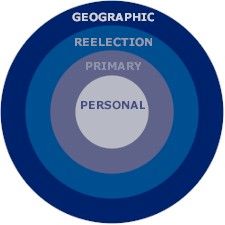
"Members of congress view their constituencies in several different ways" - Richard Fenno. Their decisions depend on the issue at hand and which constituency will be the most affected (whether it be positively or negatively). He claims there are 4 concentric circles that compromise a congressman's constituency (Get Running Primates Please):
Geographic - largest; district as a whole; demographic makeup; includes everyone in the district, even if they didn't vote for the congressman
Reelection - people who voted for the congressman; members of congress are more responsive to those who voted for them
Primary - loyal supporters in the election; congressmen are even more responsive to this group; they campaign and support the congressman financially (ex. interest groups, corporate leaders, politicians)
Personal - close personal ties of the congressman; loyal advisors and aides; people the congressman trusts
Página 2
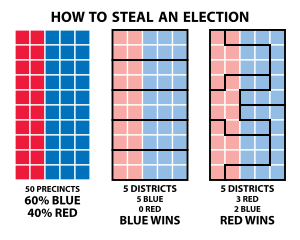
Gerrymandering: organizing districts in such a way that one political party (or certain interests or incumbents) has advantage over another
Has been used to dilute the political power of racial minorities (ruled against in Gomillion v. Lightfoot in 1960)
Article I, Section II: census must be taken every 10 years to determine the reapportionment (reallocation) of seats in the house among states
Adding or subtracting states in the House requires redrawing the boundaries of most, if not all, of the districts in the state.
The state legislature has the power of redistricting. If they cannot agree on a plan, the task is sent to the courts or to an impartial commission.
Wesberry v. Sanders + Reynolds v. Sims: equal protection clause (14th amendment) requires legislative districts be roughly equal in population.
Supreme Court ruled that the matter of redistricting is political and best left to the citizens and their representatives.
Davis v. Bandemer: a partisan gerrymander might violate the equal protection clause, but is not extreme enough for them to take action.
No gerrymander has ever been struck down by the court just because it gives an advantage to one party over another.
Página 3
Members of the House = "Representative" or "Congressman/woman"
They represent geographical areas in states known as constituencies (remember redistricting and stuff).
Reapportionment (every 10 years): divide the 435 members of the house among the 50 states based on population
The Reapportionment Act of 1929 set the permanent size at 435
Redistricting: after reapportionment, district boundary lines are drawn; each district should have approximately equal numbers of constituents
The Senate is a continuous body, meaning their seats are never up for election all at the same time. This eliminates the possibility of having a Senate full of inexperienced "newbies".
Filibuster: tactics aimed at defeating a bill from being passed by preventing a final vote; usually means talking for a very long time about anything.
It is ended by a 3/5 (used to be 2/3) vote for a cloture
Página 4
POWERS
Tax:
Impose duties and taxes to benefit the public or to get out of debt
Borrowing:
Borrow money for the welfare of the US
Commerce:
Regulate interstate and foreign trade
Bankruptcy:
People or businesses who can't pay their debts (insolvent) have their assets distributed among those in which their debt is owed
War:
Power to declare war lol duh
Foreign Policy:
Both President and Congress share powers to make foreign policy
Citizenship:
Naturalization; article I, section VIII, clause IV - power given to Congress
Postal:
Establish post offices and post roads
Patents, Copyrights, Trademarks:
Patent - right to manufacture, use, or sell inventions (20 years)
Copyright - legal right of person to produce, publish, sell stuff (70 years)
Trademark - symbol or word(s) legally established to represent a country
Weights & Measures:
Establish set lengths and weights
Judicial:
Create all courts below Supreme Court
Define federal crimes and punishments
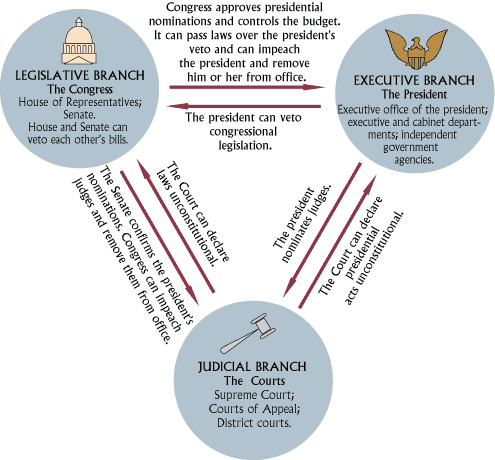
Impeachment/removal of government official
Role in Amendment Process:
Congress can propose an amendment with 2/3 majority in both houses
Appointment
Congress has the power to appoint federal officials; Senate must approve presidential appointments
Treaties
President has power to make treaties with 2/3 approval of the Senate
Oversight
Make sure the executive branch carries out laws faithfully and spends appropriations properly
Página 5
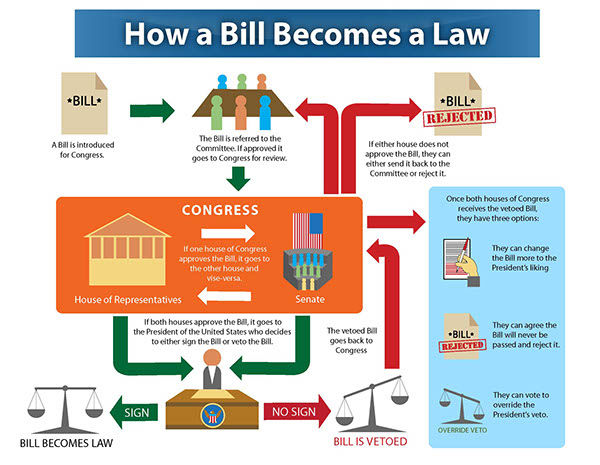
How a Bill Becomes a Law
Bill is introduced for Congress.
Referred to the Committee. If approved, it is sent to Congress for review.
If one house approves it, it goes to the other. If rejected by either house, sent back to step 2 or rejected.
House
Referred to committee or subcommittee
Committee reviews/changes/marks up the bill
Full committee votes
Committee puts bill on House calendar
The House debates the bill, amendments added
The House votes
Senate
Referred to committee or subcomittee
Committee reviews/changes/marks up the bill
Full committee votes
Committee puts on Senate calendar
Senate debate, amendments added
Senate votes
If approved, it is sent to the President who chooses to pass it or veto it. If he vetoes it and it is eventually sent back to both houses, they can either alter the bill, reject it, or vote to override the president's veto. If he passes it, the bill becomes a law. If he doesn't sign it, after 10 days it will become a law.
Whereas a bill has an intent to become a law, an resolutions is essentially meaningless. They may push the public in the right direction, but no laws are actually passed.
Página 6
CONGRESSIONAL LEADERSHIP
President of the Senate (VP Joe Biden)
Presides over daily sessions
Preserves order
States parliamentary motions
Rules on parliamentary questions
Appoints committee and chair members
Refers bills to committee
Signs legislation, writs, warrants
Official spokesman of the Senate
Speaker of the House (Paul Ryan)
Presides over daily sessions
Preserves order
States parliamentary motions
Rules on parliamentary questions
Appoints committee and chair members
Refers bills to committee
Signs legislation, writs, warrants
Official spokesman of the House
President Pro Tempore (Orrin Hatch)
Takes the President of the Senate's position in their absence
Assume other duties assigned by the president
Majority Leader (Mitch McConnell - Senate; Kevin McCarthy - House)
Lead speaker for majority party during debates
Develops calendar
Assists president or speaker with program development, policy formation, policy decisions
Majority Whip (John Comyn - Senate; Steve Scalise - House)
Assist floor leader
Ensure member attendance
Count votes
Communicate majority position
Minority Leader (Harry Reid - Senate; Nancy Pelosi - House)
Develop minority position
Negotiate with majority party
Directly monitor caucus activities
Lead debate for minority
Minority Whip (Dick Durbin - Senate; Steny Hoyer - House)
Assist minority leader
Count votes
Ensure attendance of minority party members
Página 7
COMMITTEES: Where most work of congress happens
power to push bills to their house
power to reject a bill
"Ranking Member": belongs to the majority party, and out of seniority comes 2nd in power behind the committee chairman.
Standing Committee: permanent, meets regularly
Select Committee: small, appointed for special purposes
Joint Committee: both houses
Conference Committee: appointed by both houses to settle disagreements on a bill
Specific Committee: ??
House Rules Committee: in charge of determining under what rules other bills we come to the floor
House Judiciary Committee: has jurisdiction over matters relating to the administration of justice in federal courts, administrative bodies, and law enforcement agencies
Senate Judiciary Committee: hold hearings on policy issues and on specific bill proposals, markup bills, report legislation and recommend changes
House Ways and Means Committee: deals with taxation
Información
- Descripción
- 12th grade (Legislative Branch) Government Apunte sobre Legislative Branch, creado por Cara McConnell el 13/12/2016.
- Creado por
- Cara McConnell
- Visitas
- 7
- Valoración