
Apuntes
Carnivores, Omnivores and Herbivores

Contenido del apunte (1)
Página 1
Digestion In The Mouth
Food is both physically and chemically digested in the mouth
The food is physically digested using the teeth
Starch is chemically digested in the mouth using enzyme amylase which is made in the salivary glands
The pH in the mouth is around neutral (varies from 6.4-7.4), ideal for salivary amylase
Saliva also contains mucin that moistens and softens food making it easier to eat
TEETH
Enamel is the hardest substance in the body and covers the crown of the tooth. It protects the tooth and forms a hard, biting surface. It consists almost entirely of calcium phosphate
Dentine is found just under the enamel and forms the bulk of the tooth. Though tough, it is not as hard as enamel or as resistant to decay. It is penetrated by thread-like extensions of cells in the pulp cavity. They make the dentine sensitive to touch, temperature and acids. Since it contains protein, dentine can be used as food by decay-causing bacteria
Pulp Cavity is in the centre of the tooth and contains blood vessels which bring food & oxygen to the dentine &nerve endings sensitive to pain
Cement covers the root of the tooth and is similiar to bone.
Type of Tooth
Incisors
Canines
Premolars
Molars
Function
This tooth is for biting or cutting food and is sharp and chisel-like
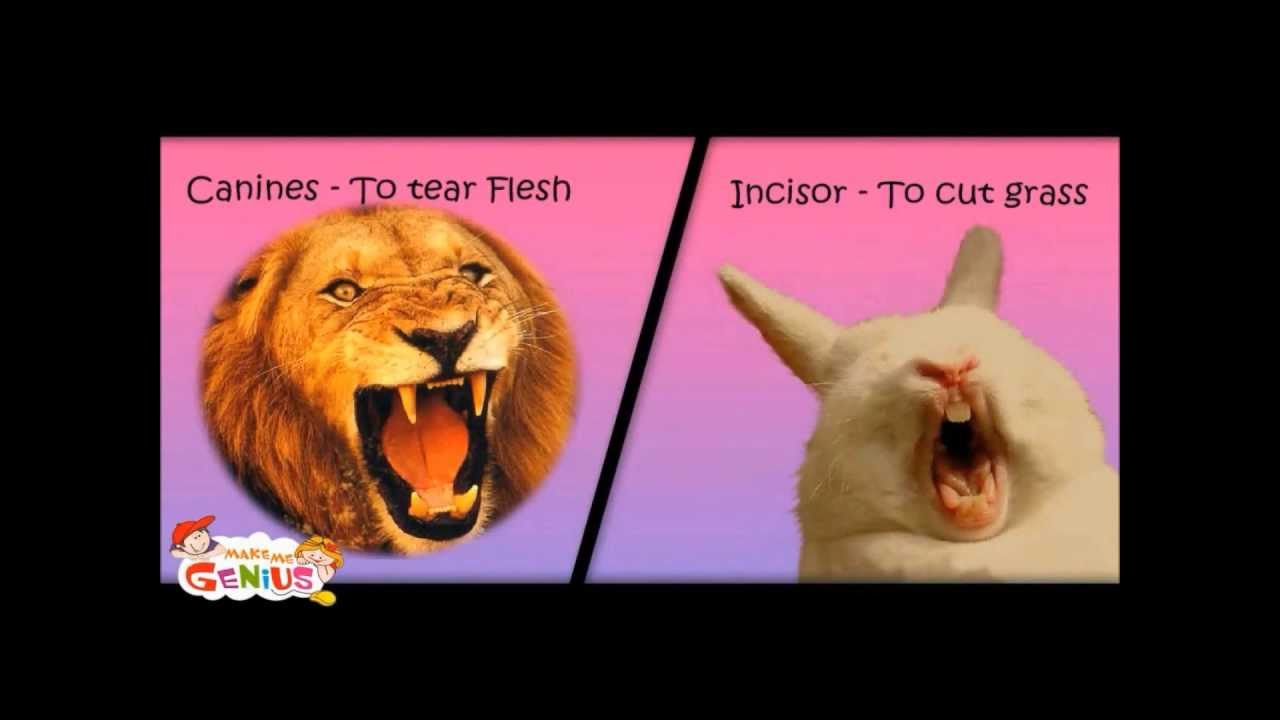
This tooth is for tearing food e.g. meat. They are pointy in shape
This tooth is for crushing or grinding food. It has only 2 cusps and a double root
This tooth is for crushing or grinding food. It has 4 cups and a double or triple root

Skull and teeth of a rabbit
Skull and teeth of a dog
Herbivore
Well developed facial muscles needed for grinding and chewing tough plant material
Side-to-side motion of jaw to help molars chew and cut up food
Extensive long chewing before swallowing as it is hard to break down because of cell walls
Do not need canines as they don't need to tear food like meat
Wide diastema to store food to allow the saliva to attack and break down the food more effectively
Broad flat blade-like shaped incisors to cut the grass and then be ground up by molars
Carnivore
Up and down movement of jaw makes slicing and grinding more effective
Sharp jagged blade-shaped molars to help tear up and slice the meat
No need to chew much as teeth quickly crush food. Easy digestion
Short pointed incisors scrape meat off bone & grips
Long sharp curved canines kill prey by penetrating vital organs
Small gap between canines and premolars so large canines can slide into place, no need to store food
The Problem With Cellulose
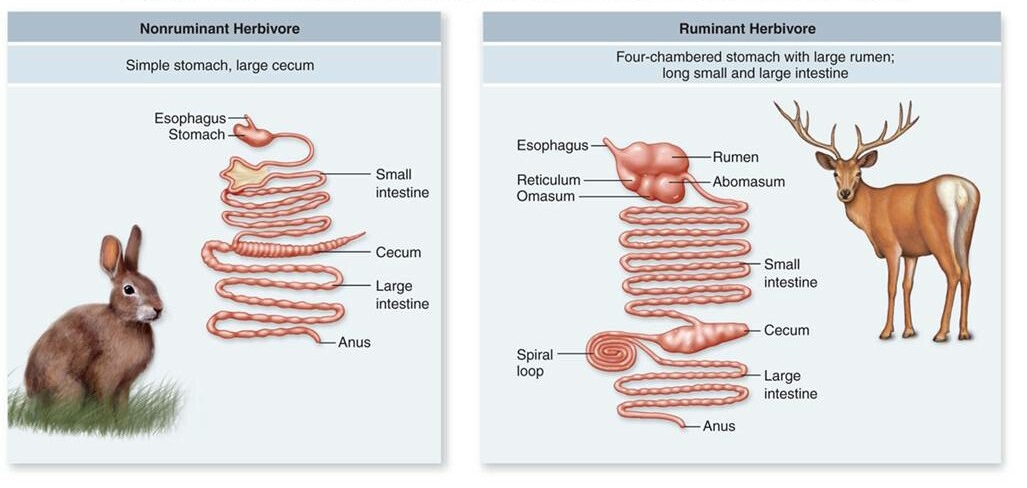
Digestive system of herbivores have adaptations as they eat cellulose
Plants are difficult to digest as they have cell walls to cellulose
Animals that eat cellulose can't digest it and must have bacteria inside them to break it down into substances herbivores can use
Foregut digesters (cattle, sheep, deer & goats are ruminants)
Have a stomach divided into a series of large chambers including a rumen which contains the bacteria that digests plant material
The chambers means that the passage of food is slowed, therefore time for micro-organisms to act on the cellulose
Hindgut digesters (rabbits)
They have a caecum
Appendix is found at the end of the caecum
Caecum houses the bacteria
Digestable matter passes into the caecum where anaerobic bacteria ferment the material and more absorption takes place
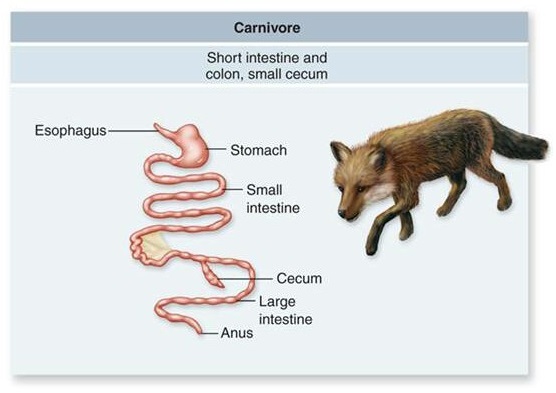
Carnivores have a relatively small stomach because of the high nutrient density of their diet. They have a shorter digestive system as they can more easily obtain energy from the food/meat that they eat, as the protein is more easily digested in the stomach by enzymes before it gets to the large intestine.
They have a shorter large intestine because most of the digestion of meat / protein occurs in the stomach so most of the digested molecules have already been absorbed in the small intestines and only the remaining molecules and water need to be absorbed
They do not need a large caecum as they are able to produce all the enzymes that they need to digest their food, such as pepsin and lipase. Carnivores still have a caecum; however, it is very much diminished and does not contain bacteria needed for digestion.
Digestion In The Mouth
Foregut & Hindgut Digesters
Información
- Descripción
- 1 (AS90929 Mammals As Consumers) Biology Apunte sobre Carnivores, Omnivores and Herbivores, creado por mckenziedev el 13/09/2013.
- Creado por
- mckenziedev
- Visitas
- 590
- Etiquetas
- Valoración