
VOICES of the Twentieth Century
Diapositivas del conjunto (26)
-
-
-
Focusing on Communication skills
-
VOICES OF THE TWENTIETH CENTURY
-
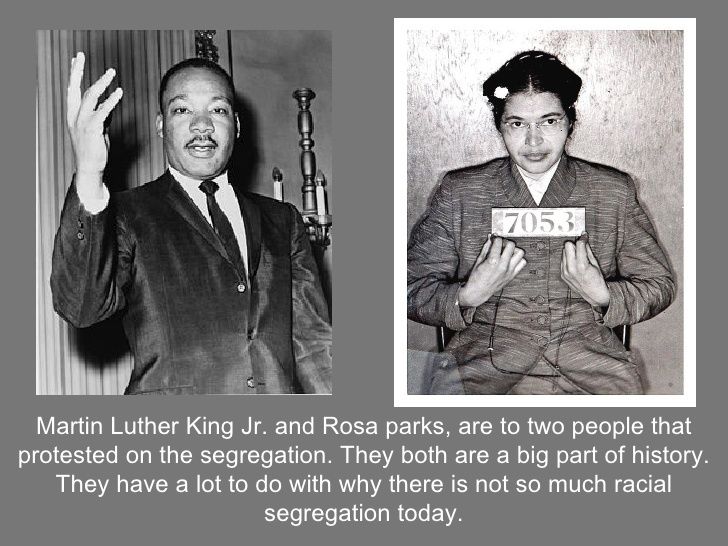
- - was born in Atlanta, Georgia, on January 15, 1929
- -used the tactics of nonviolence and civil disobedience based on his Christian beliefs
- - was inspired by the nonviolent activism of Mahatma Gandhi
- - became the most visible spokesperson and leader in the Civil Rights Movement from 1954 through 1968
- - led the 1955 Montgomery bus boycott
- - helped to organize the 1963 March on Washington
- - delivered a famous speech, called "I Have a Dream"
- - received the Nobel Peace Prize for fighting racial inequality through non violent resistance in 1964
- - was killed in Memphis, Tennessee, on April 4, 1968
-
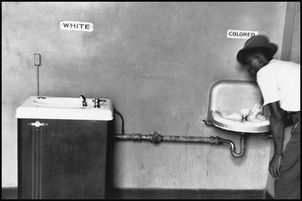
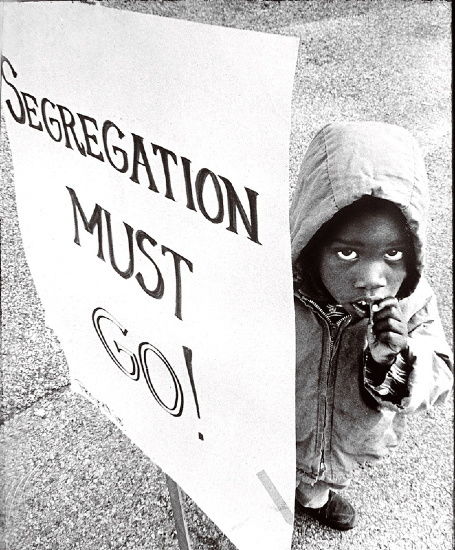
- Segregation involves spatial separation of the races, and mandatory use of different institutions, such as SCHOOLS and HOSPITALS by people of different races.
- After the abolition of slavery, racial discrimination became regulated by the so-called Jim Crow Laws (1877), which mandated strict segregation of the races.
-
- The legislation that mandated segregation lasted at least until Brown v. Board of Education (1954) in which the Court declared state laws establishing separate Public schools for black and white students to be unconstitutional.
- By 1968 all forms of segregation had been declared unconstitutional by the Supreme Court, and by 1970 support for formal legal segregation had dissolved.
-
Main Rhetorical Figures and Quotations
- Kelly Clarkson Sings 'My Country, 'Tis of Thee' at Inauguration Day 2013 (Enclavar)
- ANAPHORA: the same word or phrase is repeated at the beginning of a series of phrases (I have a dream, With this faith, Let Freedom Ring)
- CONVERSIO: the same word or phrase is repeated at the end of a series of phrases (together)
- METAPHOR: an implied comparison, in which a characteristic of one object is transferred to another, the purpose being to suggest a similarity between the two
- VOICE MERGING: a common technique used amongst African American preachers which combines the voices of previous preachers and excerpts from scriptures/songs along with their own unique thoughts to create a unique voice. King quotes the Declaration of Independence (1776), The Bible (isaiah 40:4), the American patriotic song "My Country, 'Tis of Thee", the spiritual "Free At Last".
-
Not all of us are natural born orators
-
- -was born to the Thembu royal family in British South Africa
- - studied law before working as a lawyer in Johannesburg
- - was a South African political leader
- - served as President of the African National Congress (ANC) party from 1991 to 1997
- - was repeatedly arrested for seditious activities
- - was initially committed to non-violent protest
- - co-founded the militant Umkhonto we Sizwe in 1961 and led a sabotage campaign against the government
- - was arrested for conspiring to overthrow the state and sentenced to life imprisonment in the Rivonia Trial (1962)
- - served 27 years in prison
- - was released in 1990. De Klerk negotiated with him an end to apartheid and organised the 1994 multiracial general election
- - was the country's first black head of state and the first elected in a fully representative democratic election
- - served as President of South Africa from 1994 to 1999
- - emphasised reconciliation between the country's racial groups and created the Truth and Reconciliation Commission to investigate past human rights abuses
- - received more than 250 honours, including the Nobel Peace Prize (1993)
- - is often referred to by the name "Madiba", and described as the "Father of the Nation".
-
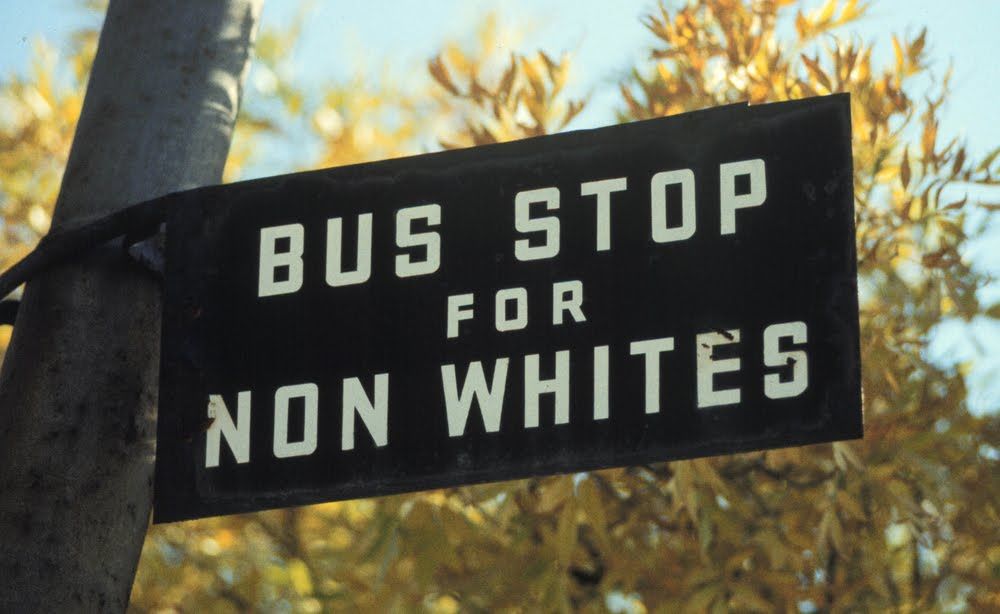
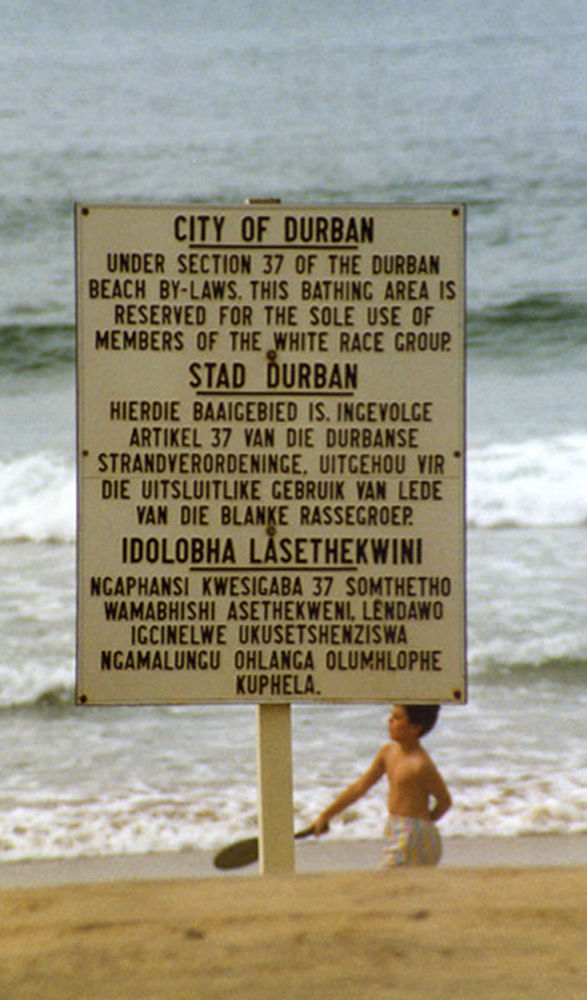
- It was a system of institutionalised racial segregation and discrimination in South Africa between 1948 and 1991.
- Apartheid as a policy was embraced by the South African government shortly after the ascension of the National Party (NP) during the country's 1948 general elections.
-
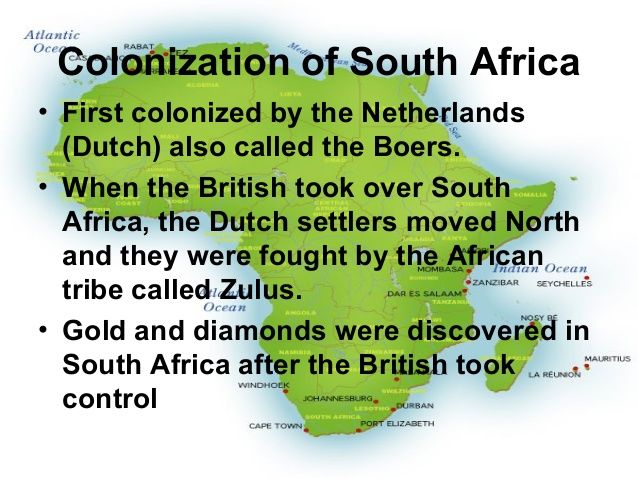
- South Africa was colonised by the Dutch and the English in the 17th century.
- Over the following centuries, the white settlers used force to take control of the land and establish a system of domination over Africans who originally inhabited the region.
- Though defeated by the British in a series of wars, the Boers (descendants from the Dutch) regained the upper hand upon the formation of the Union of South Africa, formed in 1910.
-
The denial of fundamental human rights
- Apartheid allowed a ruling white minority to segregate, exploit and deliberately frighten the vast majority: Africans, mostly, but also Asians and Coloureds - people of mixed race.
- Nelson Mandela 'I Am Prepared to Die' Speech with subtitles transcript (Enclavar)
-
- Trevor Noah: Is the World Getting Better? #GOALKEEPERS17 (Enclavar)
- During the 1970s and 1980s, internal resistance to apartheid became increasingly militant. The National Party administration responded with repressive police state tactics, protracting sectarian violence that left thousands dead or in detention.
-
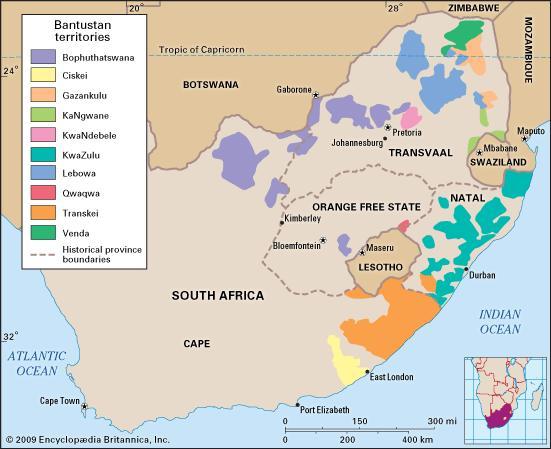
- A Bantustan (also known as black state or simply homeland) was a territory set aside for black inhabitants of South Africa, as part of the policy of apartheid, for the purpose of concentrating the members of designated ethnic groups and creating autonomous nation states for them.
- In 1936 the African and mixed race people lost the right to vote. In 1948, The National Party won the all-white elections.
- In the 1960s, 3.5 million blacks were forced to leave their homes and resettled in designated native "homelands".
-
- Apartheid sparked significant international and domestic opposition, resulting in some of the most influential global social movements of the twentieth century.
- It was the target of frequent condemnation in the United Nations, and brought about an extensive arms and trade embargo on South Africa.
-
- Between 1987 and 1993 the National Party entered into bilateral negotiations with the African National Congress, the leading anti-apartheid political movement, for ending segregation and introducing majority rule.
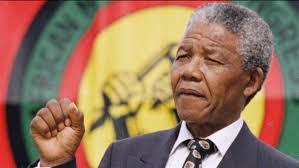
- In 1990, prominent ANC leaders such as Nelson Mandela were released from detention.
- Apartheid legislation was abolished in mid-1991, pending multiracial elections set for April 1994.
-
- How great leaders inspire action | Simon Sinek (Enclavar)
- "In the summer of 1963, 250,000 people showed up on the mall in Washington to hear Dr King speak. They sent no invitations, and there was no website to check the date. Dr King wasn't the only man in America who was a great orator, who sufferend in pre-civil rights America. He had a gift. He didn't go round telling people what needed to change in America, he went around and told people what he believed.
- People who believed what he believed took his cause and they made it their own, and they told people.
- No one showed up for him. They showed up for themselves."
-
- "Dr King believed that there are two types of laws in this world. Those that are made by a higher authority and those that are made by man. And not until all the laws that are made by man are consistent with the laws made by the higher auhority will we live in a just world.
- He gave the "I have a dream" speech and not the "I have a plan" speech.
- There are leaders and there are those who lead.
- Leaders hold a position of power or authority.
- Those who lead inspire us.
- We follow those who lead not because we have to, but because we want to.
- We follow them for ourselves.
- Those who start with WHY have the ability to inspire those around them or find others who inspire them." (Simon Sinek)



Información
- Descripción
- high school English Diapositivas sobre VOICES of the Twentieth Century, creado por Laura Rossi el 24/01/2018.
- Creado por
- Laura Rossi · ene 2018
- Actualizado
- 27 oct 2018
- Visitas
- 574
- Etiquetas
- Historial
-
- Creado por Laura Rossi · 1 nov 2017
- Copiado por Laura Rossi · 24 ene 2018
- Valoración