
Test
Exam 1
Crea una cuenta gratis para terminar este test
Guarda tu progreso y consulta tu resultado final.
¿Ya tienes cuenta? Inicia sesión
Preguntas del test (50)
1The compounds above is a(n)
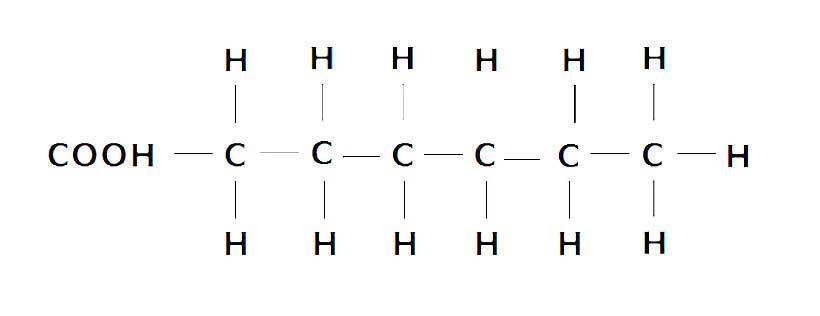
- APhospholipid
- Bsaturated fatty acid
- Cunsaturated fatty acid
- Dtriglyceride
2Phosphorus (P) has an atomic number of 15. How many unpaired electrons are in its outer shell?
- A1
- B2
- C3
- D4
- E5
3Which of the following is a polysaccharide found in plants used for storing energy?
- Aamylose
- Bamylopectin
- Ccellulose
- Damylose and amylopectin
- Eall three
4A covalent bond involves:
- Aa pair of electrons exchanged between atoms
- Ban electrostatic attraction between atoms
- Cthe sharing of one or more protons between atoms
- Dthe sharing of one or more pairs of electrons between atoms
- Ethe exchange of one or more electrons between atoms
5Unsaturated fatty acids are more likely to
- Abe liquid at room temperature
- Bbe synthesized by animal cells
- Cbe solid at room temperature
- Dcontain more energy than saturated fatty acids
6Which of the following functional groups tend to allow an organic compound to dissolve in water?
- Ahydroxyl
- Bmethyl
- Ccarbonyl
- Dhydroxyl and carbonyl
- Eall three
7The number of protons in the nucleus of an atom is referred to as
- Aatomic mass
- Bmolecular weight
- Catomic weight
- Datomic number
8Water is a polar molecule because
- Ait readily forms ionic bonds with many different types of compounds
- Bits oxygen atom is electronegative, while the hydrogens are electropositive
- Cits two hydrogen bonds are equally attached to an oxygen
- Dit has a +2 negative charge
9Methyl groups (CH3-R) are generally
- Ahydrophilic
- Bamphipathic
- Cpolar
- Dhydrophobic
- Echarged
10The breakdown of glycogen into glucose occurs by which of the following
- Adehydration reactions
- Bhydrolytic reactions
- Cisomerization
- Ddehydration and isomerization
- Eall three
11Which of the following are functions of lipids?
- Agenetic information
- Benergy storage
- Cmajor component of biological membranes
- Denergy storage and major component
- Eall three
12A solution with a pH of 8 is more ________ than a solution with a pH of 5.
- Aacidic
- Bconcentrated
- Chydrophobic
- Ddense
- Ebasic
13A pH of 4 has a _____-fold greater hydrogen ion concentration than a pH of 6.
- A2
- B10
- C100
- D1000
- E10000
14Using the periodic table of elements, which element is most likely to have properties similar to carbon?
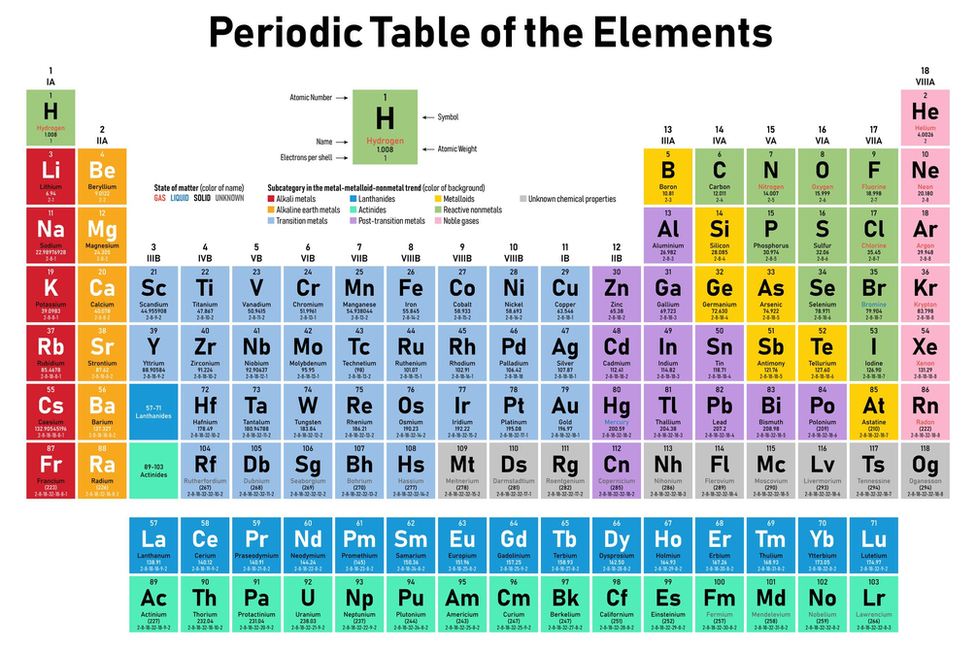
- Aaluminum (Al)
- Bboron (B)
- Cphosphorus (P)
- Dsilicon (Si)
- Enitrogen (N)
15In a polar covalent bond
- Aanions and cations are attracted to each other
- Belectrons are transferred between atoms
- Cwhen water becomes frozen
- Dthere is an unequal sharing of electrons between atoms
- Ewater molecules attract each other
16The energy of light can be temporarily stored in which component of an atom?
- Aprotons
- Bphotons
- Cneutrons
- Delectrons
- Eintrons
17The two nucleic acid strands of DNA are held together by
- Aglycosidic linkages
- Bcovalent bonding between nitrogenous bases
- Chydrogen bonding between sugar-phosphate residues
- Dhydrogen bonding between nitrogenous bases
- Ecovalent binding between nucelotides
18An acid added to water will
- Adecrease the hydrogen ion concentration
- Bdecrease the hydroxide ion concentration
- Cincrease the hydroxide concentration
- Dincrease pH
19Which bond contributes to the tertiary structure of a protein?
- Aionic
- Bhydrogen
- Cglycosidic
- Dionic and hydrogen
- Eall three
20Water is pulled up into a tree due to
- Ahydrogen bonding between water molecules
- Bthe cohesive and adhesive properties of water
- Cthe fluidity of water at room temperature
- Dionic bonding between water molecules
21Which type of bond maintains the secondary structure of a protein
- Adisulfide bridges
- Bpeptide bonds between two peptide subunits
- Chydrogen bonding between two phospholipid subunits
- Dhydrogen bonding between an amino group of an amino acid and a carboxyl group of another amino acid
22Amino acids within a peptide are covalently linked by peptide bonds between
- Aacidic and basic side chains
- Bcarbonyl and amino groups
- Ccarboxyl and amino groups
- Dpolar and non-polar side chains
- Epolar side chains
23Insulin protein is soluble in water. A good explanation for this property is
- Athat it does not have any secondary structure
- Bit contains disulfide bridges
- Cmany of its amino acids have polar or charged side chains
- Dmost of its amino acids are hydrophobic
24Hydrogen bonds form between
- Aelectropositive hydrogen atoms and an electronegative atom
- Bhydrogen atoms
- Chydrogen atoms and any other atom
- Dhydrogen atoms that share a pair of electrons with another atom
25Of the molecules listed below, which contains the most phosphorus?
- Acarbohydrates
- Bproteins
- Cfatty acids
- Dnucleic acids
26Although cellulose is a polymer of glucose molecules, humans cannot use it as a source of energy. Why?
- Acellulose is covered by a waxy coating protecting it from digestion
- Bcellulose is hydrophobic
- Chumans don't like the taste of cellulose
- Dthe molecule is too large to be broken down by hydrolytic enzymes
- Ehumans do not express specific enzymes to digest cellulose
27All inert gases, such as neon (atomic number = 10) have which of the following in common?
- Athey have the same number of protons
- Bthey have the same number of valence electrons
- Ctheir outer electron shell is completely filled
- Dthey are all highly reactive
28The ionic bond of NaCl arises from
- Aattraction of a hydrogen atom and an electronegative atom
- Btransfer of an electron to the nucleus of another atom
- Csharing of a pair of electrons
- Dthe attraction between two anions
- Ean electrostatic attraction between two ions of opposite charge
29The properties of an atom are determined by its
- Aionic number
- Batomic mass
- Chalf-life
- Dmass number
- Eatomic number
30When NaCl dissolves in water
- Athe entire molecule becomes surrounded by water
- Beach ion becomes surrounded by water
- Cthe covalent bonds between sodium and chlorine atoms are broken
- Dentire molecule surrounded by water and each ion surrounded by water
- Eall three
31Which of the functional groups above is a carboxyl?
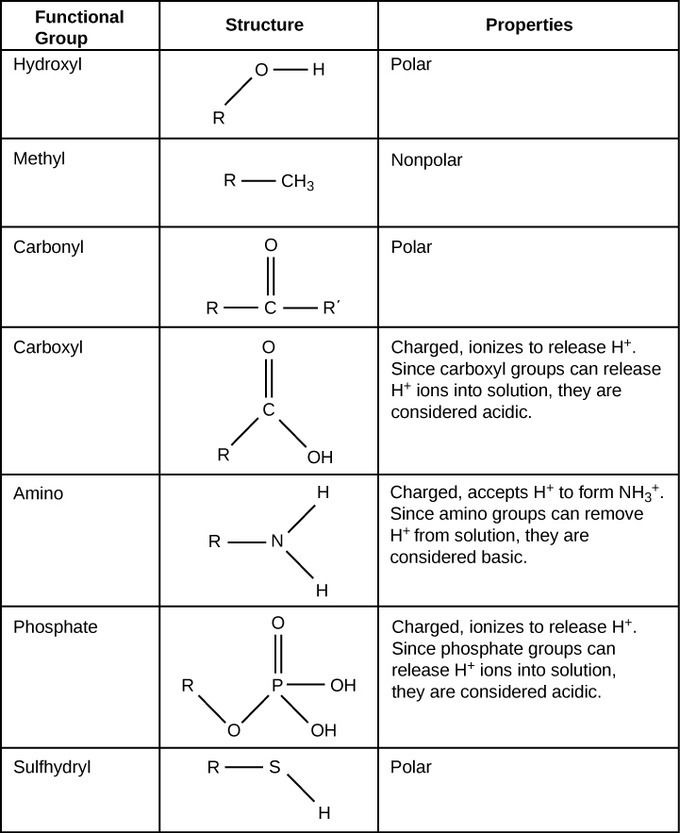
- A1
- B2
- C3
- D4
- E5
32Two compounds that are structural isomers
- Ahave the same total mass
- Bhave the same shape
- Chave the same names
- Dhave the same properties
33The tertiary structure of a protein is maintained by
- Ahydrogen bonding
- Bdisulfide bridges
- Cionic bonds
- Dhydrogen bonding and disulfide bridging
- Eall three
34Why does ice float?
- ANon-uniform spacing of dissolved ions
- Bbubbles formed during freezing makes ice more buoyant
- Chydrogen bonds forming between water molecules in ice creates crystal lattice structure that keeping the water molecules farther apart
- Dliquid water is translucent and ice is opaque
- Eice contains impurities that keep water molecules away from each other and therefor less dense
35Which of the following molecules is a major component of biological membranes?
- Acarbohydrates
- Bphospholipids
- Cfatty acids
- Dtriglycerides
36Phospholipids contain
- Aa hydrophobic head group
- Btwo hydrophobic tails
- Ca ribose sugar
- Dhydrophobic head and tails
- Eall three
37If a sample of DNA is composed of 20% guanine, what is the percentage of thymine?
- A10%
- B20%
- C30%
- D60%
- E80%
38The side-chain of the amino acid shown above is
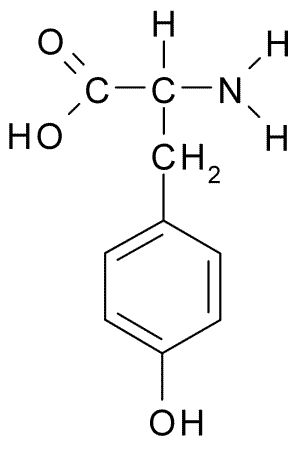
- Anon-polar, charged
- Bnon-polar
- Cpolar, uncharged
- Dpolar, charged
39Water acts as a solvent because
- Ait can dissolve any compound
- Bit can be surrounded by both non-polar molecules and ionic compounds
- Cit is liquid at room temperature
- Dit is a polar molecule
- Eit forms hydrogen bonds with itself
40What kind of reaction is required to synthesize a polymer?
- Aanxiolytic
- Bhydrophobic
- Cdehydration
- Dhydrolytic
- Eanabolic
41A cation
- Ais a positively charged atom
- Bis produced by a covalent bond
- Cis a negatively charged atom
- Dcontains more neutrons than protons
42A mutation that affects the primary structure of a protein, in turn, may affect
- Athe secondary structure of the protein
- Bthe tertiary structure of a protein
- Cthe quaternary structure of the protein
- Dsecondary and tertiary
- Eall three
43Which of the following molecules is a carbohydrate?
- AC18H9O18
- BC10H12O10
- CC4H8O4
- DC24H2O24
- EC1H3O6
44Which of the following is not true regarding isomers?
- Aisomers have different shapes
- Bthey have the same number of atoms
- Cthey have the same chemical properties
- Dthey may differ in how atoms are arranged across double bonds
- Ethey have different properties
45Carbon Dioxide (CO2) consists of a carbon atom with double covalent bonds to each oxygen. How many electron pairs are shared between a carbon and oxygen atom?
- A1
- B2
- C3
- D4
- E8
46Which atoms, when covalently bonded to hydrogen, are generally electronegative?
- Aoxygen
- Bnitrogen
- Csodium
- Doxygen and nitrogen
- Eall three
47An atom with an atomic number of 12 has how many electrons in its most outer shell?
- A0
- B1
- C2
- D8
- E12
48Glycogen in animals and amylose in plants
- Aare disaccharides
- Bare polymers that store glucose
- Ccannot both be digested by humans
- Dare long chains of amino acids
- Eare hydrophobic compounds
49Of the atoms in the first two rows of the periodic table, carbon atoms are unique because they
- Ahave four valence electrons
- Breadily form polar covalent bonds with oxygen atoms
- Care molecularly stable
- Dfour valence electrons and molecularly stable
- Eall three
50Which of the following are components of a nucleotide?
- Apolar and non-polar amino acids
- Bnitrogenous base and phosphate group and sugar
- Cglycerol and three fatty acids
- Dglycerol and two fatty acids and phosphate group
Información
- Descripción
- Chapters 2 and 3
- Autor
- Deana Heitkamp
- Idioma
- English
- Visitas
- 63
- Etiquetas
- Valoración
- Aún sin valoraciones Valora este test