
Test
The big AP Exercise therapy quiz: UK Physio
Este test tiene tipos de pregunta que se abren en el reproductor de siempre.
Preguntas del test (41)
1What is multi-morbidity?
- ADying but not knowing which condition caused it
- BHaving three or more health conditions
- CHaving one condition but with multiple symptoms
2According to research by Ekelund (2015) a brisk walk of how long is enough to reduce an individual's risk of early death?
- A5 minutes
- B10 minutes
- C20 minutes
- D30 minutes
- E50 minutes
- F120 minutes
3Which of the following are risk factors for CV disease and stroke in hypertension?
- AStystolic BP over 120
- BSystolic BP Over 140
- CDiastolic BP Over 80
- DDiastolic BP over 90
4[blank_start]Type 1 Diabetes[blank_end]: A condition from birth where the body produces insufficient insulin. Lifestyle can play a part in management, but is not causative.
[blank_start]Type 2 Diabetes[blank_end]: A condition that has lifestyle factors in it's development, as well as it's management when present. Over time insulin sensitivity becomes reduced and blood sugar becomes less able diffuse out of blood vessels.- AType 1 Diabetes
- BType 2 Diabetes
5For the majority of people, normal blood sugar ranges between [blank_start]4.0[blank_end] to [blank_start]6.0[blank_end] mmol/L ([blank_start]72[blank_end] to [blank_start]108[blank_end] mg/dl) when fasting, and up to [blank_start]7.8[blank_end] mmol/L ([blank_start]140[blank_end]mg/dl) 2 hours after eating.
- A4.0
- B6.0
- C72
- D108
- E7.8
- F140
6An individual without Diabetes Mellitus will co-ordinate hormonal and metabolic events to ensure the maintenance of [blank_start]glucose homeostasis[blank_end].
In Diabetes, [blank_start]Insulin[blank_end] and other hormonal responses do not respond in the normal manner so the balance between [blank_start]peripheral[blank_end] glucose utilisation and [blank_start]hepatic[blank_end] glucose production may be disturbed.
There are many factors that will affect this response during a single bout of exercise.- Aglucose homeostasis
- Buninterrupted insulin production
- CInsulin
- Dperipheral
- Ecentral
- Faortic
- Ghepatic
- Hrenal
- Ithyroid
7Which of the following are evidence based components/considerations of Type 2 diabetes management:
- ASustained fasting
- BShorter durations of exercise to manage glucose levels
- CTiming of exercise sessions around food intake/glucose levels
- DExtraneous insulin (when indicated)
- ENutritional management/planning
- FExercising for 2 or more hours to shunt glucose levels down quickly
- GRegular exercise
- HVasodilatory drugs to allow for increased glucose clearance
- IOral agents such as metformin
8Beneficial effects of a single bout of exercise on type 2 diabetes include:
- AIncreased insulin sensitivity
- BGreater glucose uptake by muscle cells
- CLower blood sugar levels
- DSustained reduced blood glucose for 24 hours
- EDecreased insulin sensitivity
9Long term beneficial effects of exercise on Type 2 diabetes include
- AImproved sustained glycaemic control
- BReduction of the blood lipids that can result in reduced glucose transport
- CReduction in body fat % which is a risk factor in diabetic symptoms
- DPrevention of the development of type 2 diabetes for certain people
- EIncreased sugar secretion in urine
- FImproved amylaze activity in glucose metabolism
10Possible risks in exercising with type 2 diabetes include:
Systemic:
[blank_start]Retinal[blank_end] Haemorrhage
[blank_start]Increased[blank_end] proteinurea
Accelaration of [blank_start]microvascular lesions[blank_end]
Cardiovascular:
Cardiac [blank_start]arrythmias[blank_end]
Ischaemic [blank_start]heart disease[blank_end]
[blank_start]Raised[blank_end] blood pressure
Post exercise orthostatic [blank_start]hypertension[blank_end]
Metabolic:
[blank_start]Hyper[blank_end]glycaemia
Ketosis
Musculoskeletal:
[blank_start]Foot[blank_end] ulcers
Injury related to [blank_start]neuropathy[blank_end]
Degenerative [blank_start]joint[blank_end] disease- ARetinal
- BCarotid
- CCerebrovascular
- DIncreased
- EDecreased
- Fmicrovascular lesions
- Goxidative stress in the kidneys
- Hbreakdown of lipids
- Iarrythmias
- Jfailure
- Kheart disease
- Lpain
- MRaised
- NLowered
- Ohypertension
- Phypotension
- QHyper
- Rhypo
- SFoot
- TMouth
- UAbdominal
- Vneuropathy
- WOsteopenia
- Xjoint
- Ymuscle
11What are the signs/symptoms of a hypoglycaemic episode?
- AFrank haemoptysis
- BPalpitations/tachycardia
- CPalpitations/bradycardia
- DBlurred vision
- ESweating
- FVocal tics
- GBeing hungry
- HLoss of appetite
- IHeadache
- JLoss of concentration
12Treating a hypoglycaemic episode should be done immediately. You can do this by eating or drinking [blank_start]15[blank_end] to [blank_start]20[blank_end] grams of a fast acting carbohydrate, this could include
[blank_start]3[blank_end] glucose or dextrose tablets
[blank_start]5[blank_end] jelly babies
a [blank_start]small[blank_end] glass of a sugary (non-diet) drink
a small carton of pure fruit juice
a tube of [blank_start]glucose[blank_end] gel- A15
- B30
- C20
- D60
- E3
- F2
- G1
- H5
- I4
- J6
- K8
- L10
- Msmall
- Nlarge
- Oglucose
- Pketone
13Which of the following are CONTRAINDICATIONS to exercise in type 2 diabetes?
- ARetinal haemorrhage
- BIllness or infection
- CBlood glucose >13.8 mmol/L and ketones present
- DBlood glucose < 3.9 mmol/L
- EBlood glucose < 4.5mmol/L
- FBlood glucose >12mmol/L with no ketones present
- GFoot pain
- HThe usage of an insulin pump
14What are PRECAUTIONS in exercise prescription for Type 2 diabetes?
- AWhether there is a readily available source of carbohydrate
- BConsumption of adequate fluids before, during, and after exercise
- CGood foot care
- DCarry medical identification
- ERetinal haemorrhage
- FIllness or infection
15[blank_start]Chronic fatigue syndrome[blank_end] (CFS) is characterised by [blank_start]persistent[blank_end], medically unexplained fatigue, as well as symptoms such as musculoskeletal [blank_start]pain[blank_end], sleep disturbance, headaches and impaired [blank_start]concentration[blank_end] and [blank_start]short[blank_end] term memory. CFS presents as a common, debilitating and serious health problem
- AChronic fatigue syndrome
- BCystic fibrosis
- CCerebral Failure Syndrome
- Dpersistent
- Eintermittent
- Fpain
- Gweakness
- Hdystrophy
- Iconcentration
- Jvision
- Kfluid intake
- Lshort
- Mlong
16Graded exercise therapy is a staged approach to exercise for people with ME/CFS.
Exercise is based on the person's [blank_start]current[blank_end] level of activities (ADLs, relapses, goals) and should include [blank_start]sleep[blank_end] and relaxation strategies to manage recovery and acute exercise malaise.
Goals should be [blank_start]long term[blank_end], and the physiological context of exercise should be explained, including the potential to [blank_start]increase[blank_end] symptoms in the short term.
Start with [blank_start]low intensity[blank_end] exercise sustainable independent of fluctuations. Frequency should be progressed first, then duration.
There are [blank_start]no known[blank_end] pharmaceutical treatments to manage ME, and evidence for pacing strategies is [blank_start]insufficient[blank_end]: The ME association currently recommends pacing as the preferred approach to activity management.
Strategies that should be avoided include unsupervised [blank_start]vigorous[blank_end] exercise, encouraging of exercising substantially [blank_start]less[blank_end] than full capacity to reserve energy (envelope theory), encouraging [blank_start]complete rest[blank_end] during a relapse, or having exercise guided by inexperienced practitioners.- Acurrent
- Bdesired
- Csleep
- Dlong term
- Eshort term
- Fincrease
- Gdecrease
- Hlow intensity
- Ihigh intensity
- Jhigh volume
- Kpower
- Lno known
- Mseveral
- Ninsufficient
- Osignificant
- Pvigorous
- Qlight
- Rless
- Smore
- Tcomplete rest
- Umanageable activity
17Which of these is NOT an absolute contraindication to exercise?
- AUnstable Angina
- BResting systolic >180mmhg
- CResting diastolic >1000mmhg
- Duncontrolled tachycardia >100bpm
- Eunstable or acute heart failure
- Ffebrile illness
- Guncontrolled conditions
- Hblood glucose <4.5mmol/L
18[blank_start]Deconditioning[blank_end] is associated with changes in muscle (sarcopenia) and bone, cardiovascular, respiratory, and metabolic changes.
Simply reducing normal activity levels results in elements of this problem: reductions in weekly weight bearing exercise result in a loss of bone mass in both men and women.- ADeconditioning
19What does FITT stand for?
F = [blank_start]Frequency[blank_end]
I = [blank_start]Intensity[blank_end]
T = [blank_start]Time[blank_end]
T = [blank_start]Type[blank_end]- AFrequency
- BIntensity
- CTime
- DType
20When performing exercise with patients that are on multiple drugs, all exercise is contra-indicated due to the possibility of adverse reactions to combined drugs.
- AVerdadero
- BFalso
21Which of the following are psychosocial factors that may influence exercise adherence?
- AThoughts, beliefs, and attitudes
- BKnowledge and understanding
- CLocus of control
- DPrevious exercise experience
- ESelf efficacy
- FFear avoidance
- GCompliance
- HCulture
- IEnvironment
22The most frequently cited reason for dropping out of an exercise programme is lack of [blank_start]time[blank_end]
- Atime
23[blank_start]Motivational interviewing[blank_end] (MI) is a counselling technique that can be modified based on target group to change [blank_start]maladaptive[blank_end] behaviours, elicit ambivalences, and [blank_start]enhance[blank_end] self-efficacy for making changes.
MI is a collaborative, [blank_start]person[blank_end]-centred form of guiding to elicit and strengthen motivation for [blank_start]change[blank_end]. It is delivered over an [blank_start]extended[blank_end] period of time. It is particularly useful for helping those who are [blank_start]less[blank_end] ready to change, and has been found effective in promoting change (at least in the [blank_start]short[blank_end] term) with a wide range of health behaviours, including [blank_start]diet[blank_end] and physical activity. All health professionals can be trained in it's use.
The principles of MI are illustrated by the acronym RULE.
R: [blank_start]Resist the righting reflex[blank_end]. Practitioners should [blank_start]avoid trying[blank_end] to "put right" patient's behaviours.
U: [blank_start]Understand[blank_end] and explore the patient's own motivations
L: [blank_start]Listen with[blank_end] empathy
E: [blank_start]Empower[blank_end] the patient, encouraging hope and optimism.- AMotivational interviewing
- BMyocardial Infarction
- CMultiple Interventions
- Dmaladaptive
- Eenhance
- Finhibit
- Gperson
- Htherapist
- Ichange
- Jexercise
- Kextended
- Lextremely brief
- Mless
- Nmore
- Odiet
- Pshort
- Qlong
- RResist the righting reflex
- SRetrain the wrong behaviours
- Tavoid trying
- Uattempt as early as possible
- VUnderstand
- WUnwrap
- XListen with
- YLack
- ZLinger upon
- AAEmpower
- ABEndure
24Which of the following are examples of CHANGE TALK and not SUSTAIN TALK
- AUnable to commit to change
- BExpresses commitment to change
- CExpressing a desire for the status quo
- DExpressing the ability to make the change
- ESees the need for change
- FReduced confidence in being able to make the change
- GExpressing a wish to change
25Preparing to change may contain the following components
D = [blank_start]Desire[blank_end] to change - I would like to
A= [blank_start]Ability[blank_end] - I would be able to
R = [blank_start]Reason[blank_end] = It would enable me
N = [blank_start]Need[blank_end] - I must/I cannot go on like this- ADesire
- BAbility
- CReason
- DNeed
26Mobilising change involves
C = [blank_start]Commitment[blank_end] to change - Likelihood of change "I will"
A = [blank_start]Activation[blank_end] ready for change - "I am ready to"
T = [blank_start]Taking[blank_end] steps - "I went to the exercise class"- ACommitment
- BActivation
- CTaking
27Which of the following are "Evocative questions/discussions" for change:
- AAsking for elaboration
- BAsking why they fail at exercise so frequently
- CQuery extremes
- DLooking backward
- ELooking forward
- FEvoke shame
- GUse change rulers
- HAsk for examples
- ICome alongside
- JOARS
28Weighing up benefits and costs of changing a behaviour is demotivating and should never be used in clinical practice
- AVerdadero
- BFalso
29Evidence supports the notion that one specific behavioural model should be used to elicit behavioural change. It is ineffective to focus on generic competencies and skills.
- AVerdadero
- BFalso
30Label each of the stages in the stages of change model
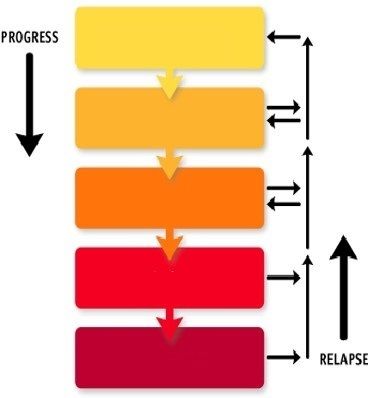
- APrecontemplation
- BContemplation
- CPreparation
- DAction
- EMaintenance
31What is the condition in the picture?
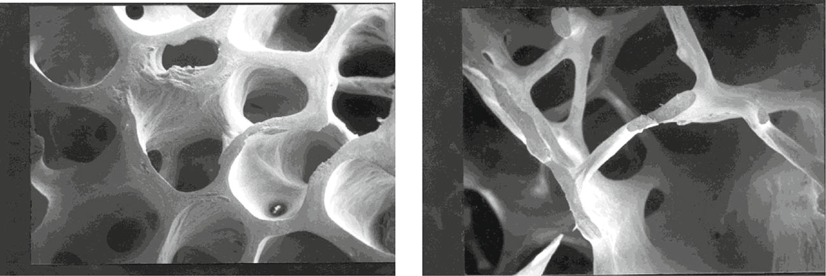
- AOsteoporosis
- BBovine Spongiform Encephalopathy
- CAsthma
- DOsteochondritis Dessicans
32[blank_start]Osteoporosis[blank_end] is a common bone disease characterised by reduced bone mass which is associated with an increased risk of low trauma fractures. Fractures are an important cause of morbidity and patients who suffer hip and vertebral fractures have a decreased life expectancy.
- AOsteoporosis
33Bone mineral density as measured at the hip (femoral neck) by Dual energy xray absorptiometry (DEXA) is used to diagnose osteopenia and osteoporosis. Measurements are in bone mass density (BMD). Fill in the blank numbers used to diagnose each condition.
Osteopenia: BMD between [blank_start]1[blank_end]-[blank_start]2.5[blank_end] SD below that of a young normal adult
Osteoporosis: BMD [blank_start]2.5[blank_end] SD below that of a young normal adult.
Severe osteoporosis (established osteoporosis): osteoporosis in the presence of [blank_start]1[blank_end] or more fragility fractures.- A1
- B2.5
- C2.5
- D1
34Which of the following are lifestyle info/advice you can give to a person with osteoporosis to aid prevention of fragility fractures
- AEncourage walking, especially outdoors, to increase vitamin D production
- BDiscourage outdoor walking due to risk of trips or falls
- CEngage in strength training, such as weight training, of different muscle groups
- DDiscourage weigh training due to risk of spinal compression fractures
- ECombine many exercise types: balance, flexibility, stretching, endurance, and progressive strengthening
- FKeep exercise to aerobic endurance only to reduce risk of injury
- GStop smoking and eat a balanced diet
- HDrink alcohol within recommended limits
- IDrink NO alcohol, even moderated intake is associated with fracture risk
- JRefer to the national osteoporosis society for more information
35People with osteoporosis should be encouraged to minimise exercise, as even though there are some minor benefits to bone mineral density, the risk of deadly hip fractures is far too high. Nutritional interventions should take place for at least six months before regular exercise takes place.
- AVerdadero
- BFalso
36Bisphosphonates such as alendronate acid and risedronate sodium are types of [blank_start]antiresorptive[blank_end] medication used in the treatment of [blank_start]osteoporosis[blank_end] that reduce the risk of vertebral fracture when given with calcium and [blank_start]vitamin D[blank_end] supplements.
- Aantiresorptive
- Bosteoporosis
- Cvitamin D
37Label the BMI classifications (BMI in kg/m2)
Classification
Healthy - [blank_start]18.5[blank_end]-[blank_start]24.9[blank_end]
Overweight - [blank_start]25[blank_end]-[blank_start]29.9[blank_end]
Obese 1 - [blank_start]30[blank_end]-[blank_start]34.9[blank_end]
Obese 2 -[blank_start]35[blank_end]-[blank_start]39.9[blank_end]
Obese 3 - [blank_start]≥ 40[blank_end]- A18.5
- B24.9
- C25
- D29.9
- E30
- F34.9
- G35
- H39.9
- I≥ 40
- J≥ 50
- K25.5
- L32.5
- M33
- N42.5
- O43
- P52.5
- Q53
- R62.5
- S≥ 70
38Label the risk table for BMI/Waist circumference
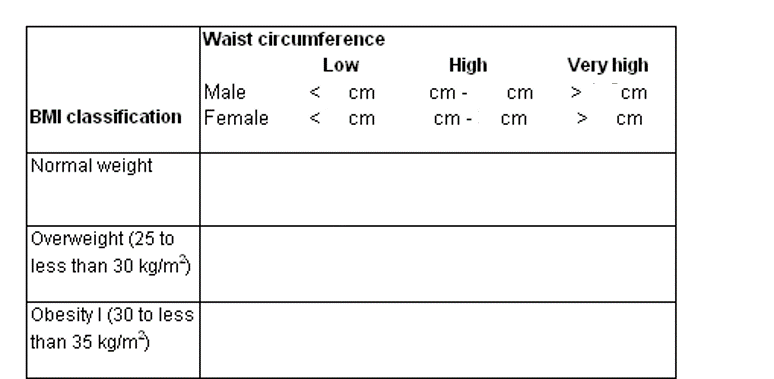
- A74
- B84
- C94
- D104
- E114
- F74
- G84
- H94
- I104
- J114
- K82
- L92
- M102
- N112
- O122
- P82
- Q92
- R102
- S112
- T122
- U80
- V90
- W100
- X110
- Y80
- Z90
- AA100
- AB110
- AC88
- AD94
- AE100
- AF102
- AG115
- AH130
- AI88
- AJ94
- AK100
- AL102
- AM115
- AN130
- AONo increased risk
- APIncreased risk
- AQHigh risk
- ARVery high risk
- ASNo increased risk
- ATIncreased risk
- AUHigh risk
- AVVery high risk
- AWNo increased risk
- AXIncreased risk
- AYHigh risk
- AZVery high risk
- BANo increased risk
- BBIncreased risk
- BCHigh risk
- BDVery high risk
- BENo increased risk
- BFIncreased risk
- BGHigh risk
- BHVery high risk
- BINo increased risk
- BJIncreased risk
- BKHigh risk
- BLVery high risk
- BMNo increased risk
- BNIncreased risk
- BOHigh risk
- BPVery high risk
- BQNo increased risk
- BRIncreased risk
- BSHigh risk
- BTVery high risk
- BUNo increased risk
- BVIncreased risk
- BWHigh risk
- BXVery high risk
39Label this waist-hip ratio table
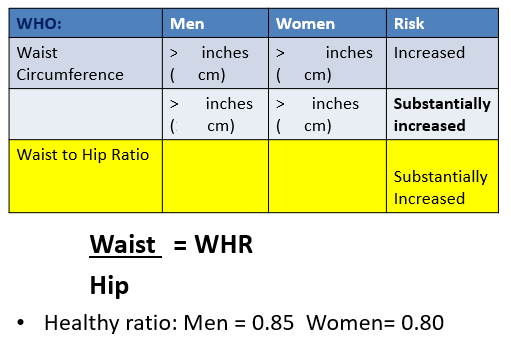
- A37
- B94
- C31.5
- D80
- E40
- F102
- G35
- H88
- I0.90
- J0.85
40The full text in this image has been removed. Complete the sentences below.
The image displays a [blank_start]change ruler[blank_end] which is used to determine how ready a patient is for [blank_start]change[blank_end].
When using you can ask them how realistic or how confident they are about their response, or why 6 rather than 4, and what could help them/what support they need to score higher.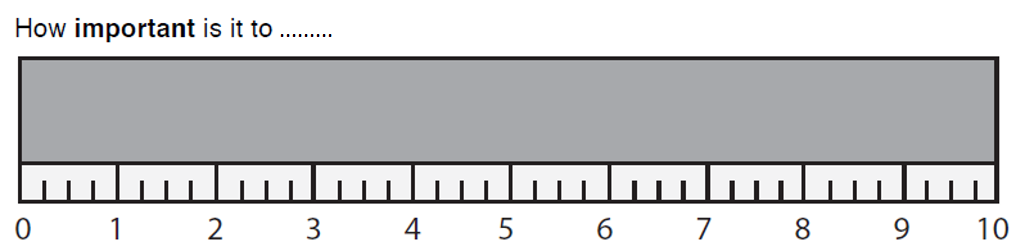
- Achange ruler
- Bchange
41Link the description to the behaviour change theory/model:
[blank_start]Cognitive dissonance theory[blank_end] - A situation involving conflicting attitudes, beliefs or behaviors produces a feeling of mental discomfort leading to an alteration in one of the attitudes, beliefs or behaviors to reduce the discomfort and restore balance.
[blank_start]Diffusion of innovation theory[blank_end] - Explains how, over time, an idea or product gains momentum and spreads through a specific population or social system. The end result of this is that people, as part of a social system, adopt a new idea, behavior, or product. Adoption means that a person does something differently than what they had previously (i.e., purchase or use a new product, acquire and perform a new behavior, etc.). The key to adoption is that the person must perceive the idea, behavior, or product as new or innovative.
[blank_start]Health belief model[blank_end] - Based around the foundation that health related behaviours are predicated upon 1) the desire to avoid illness and/or recover from illness, and 2) the belief that a specific health action will avoid or help recover from said illness. An individual's course of action depends on the person's perceptions of the benefits and barriers of those health behaviours. There are six components of these beliefs and barriers. 1. Perceived susceptibility. 2. Perceived severity. 3. Perceived benefits. 4. Perceived barriers. 5. Cue to action, and 6. Self efficacy.
[blank_start]Motivational interviewing[blank_end] - A person centred counselling style for eliciting behavioural change by helping clients to explore and resolve ambivalence via focused and goal directed discussions. The core foundation is bringing about "change talk" and evoking patient motivation to make positive changes. The approach relies on non-judgement of the patient and accepting them how they are.
[blank_start]Self efficacy[blank_end] - In essence, a person's belief in their own competence and ability to achieve/perform a given goal/task. This can interact with all aspects of a person's life, but has particular relevance when it comes to making changes to health behaviours, where without this, a person will have minimal motivation to change as they will believe it outside the scope of their capabilities.
[blank_start]Social cognitive learning theory[blank_end] - A framework of learning and change based upon the observation of others within the context of social interactions, experiences, and outside media influences. "People do not learn new behaviours solely by trying them and either succeeding or failing, but rather the replication of the actions of others"
[blank_start]Theory of reasoned action[blank_end] - Aims to explain the relationship between attitudes and behaviours in human action. Mainly used to predict how individuals will behave based on their pre-existing attitudes and behavioural intentions. "An individual's decision to engage in a particular behaviour is based on the outcomes the individual expects will come as a result of performing it".
Transtheoretical model/[blank_start]stages of change theory[blank_end] - A framework based on the idea that individuals move through six stages of change: precontemplation, contemplation, preparation, action, maintenance and termination.- ACognitive dissonance theory
- BDiffusion of innovation theory
- CHealth belief model
- DMotivational interviewing
- ESelf efficacy
- FSocial cognitive learning theory
- GTheory of reasoned action
- Hstages of change theory
Información
- Descripción
- Lots of questions to help prepare for the final exercise therapy component of the advancing practice exam.
- Autor
- Tobar MacPhail
- Idioma
- English
- Visitas
- 44
- Etiquetas
- Valoración
- Aún sin valoraciones Valora este test