
Test
Chaperonins
Crea una cuenta gratis para terminar este test
Guarda tu progreso y consulta tu resultado final.
¿Ya tienes cuenta? Inicia sesión
Preguntas del test (33)
1Chaperonins are for nascent proteins that don't fold independently or interact with other cytosolic chaperones
- AVerdadero
- BFalso
2To what is the arrow pointing on the Gro-El monomer?
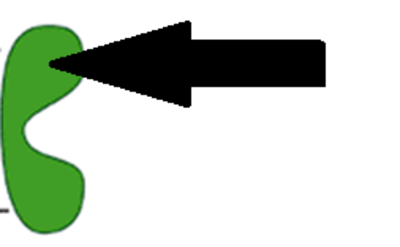
- AApical substrate binding site
- BHinge
- CATP binding site
3How many monomers make up Gro-El?
- A14- 7 in each layer
- B12- 6 in each layer
- C10- 5 in each layer
4Gro-Es is made of 7 monomers
- AVerdadero
- BFalso
5Why does Gro-Es bind to close the cavity?
- ACreates a space away from crowded cytosol for protein binding
- BCreates a highly acidic environment for proteins to fold in
- CAllows protein to fold in highly saline environment
6ATP & Gro-Es bind at separate points in the protein folding cycle
- AVerdadero
- BFalso
7The nascent protein will bind at the monomer level _ side with ADP and Gro-Es bound
- AAt the same
- BOpposite
8Once Gro-Es and ATP are bound, the protein refolds for _ seconds whilst the ATP is hydrolysed
- A10-15
- B15-20
- C20-25
9When the protein has folded properly, what happens?
- AA nascent polypeptide binds to the end opposite the Gro-Es and ADP, causing the cycle to repeat itself at the other end of the protein
- BGro-Es dissociates, releasing the folded protein
- CThe ADP is released and replaced with ATP
10The CCT and Gro-El cycles are basically the same, but Gro-El has flexible extensions that CCT does not
- AVerdadero
- BFalso
11What is bacterial homologue of the Hsp100 family?
- AClp
- BClr
- CCld
12Hsp100 and its bacterial homologue are hexamers
- AVerdadero
- BFalso
13Clp100 and its bacterial homologue do what?
- AUnfold proteins in the presence of ATP
- BFold proteins in the presence of ATP
14What is the difference between Class 1 & Class 2 Hsp100 proteins?
- AClass 1- Protein degredation
Class 2- Protein disaggregation and refolding - BClass 1- Protein disaggregation and refolding
Class 2- Protein degredation
- AClass 1- Protein degredation
15How do you tell apart Class 1 and Class 2
- AClass 1 has 2 ATPase sites, Class 2 has 1
- BClass 1 has 1 ATPase site, Class 2 has 2
16Hsp100's consist of one/two sets of hexamers
- AVerdadero
- BFalso
17The ATP is hydrolysed in Hsp100's/Clp proteins to allow what?
- ATo drive conformational changes in aromatic loops that interact with the substrate
- BTo provide energy to break the peptide bonds in the protein to be unfolded
- CTo provide energy to posh apart poorly stacked peptides
18When ClpA and ClpP interact, what is the role of the supercomplex?
- AUnravel denatured protein
- BRefold it
- CDegrade it
19Hsp90 chaperones are required for what?
- AHigh temperature growth
- BHigh salinity growth
- CHigh pH growth
20Hsp90 are ATP dependent monomers
- AVerdadero
- BFalso
21What is found on the N-terminus of a Hsp90 protein?
- AATP binding site
- BSubstrate binding domain
- CDimerisation domain
22The dimerisation domain of Hsp90 occurs at the C terminus
- AVerdadero
- BFalso
23ATPase inhibitors of Hsp90 target which part of the protein?
- AN terminus
- BC terminus
- CMiddle
24The binding of ATP causes the ATP 'lid' to close and the dimer to split
- AVerdadero
- BFalso
25Name the conformational changes that occur after ATP binds
- AN-terminals undergo Beta strand exchange
- BN-terminals undergo Alpha helix exchange
- CRotation of N domain (relative to middle) to allow meeting of dimerisation domains
- DRotation of C domain (relative to middle) to allow meeting of dimerisation domains
26What is the role of the core domain of Hsp90 (with regards to the ATPase)
- AIt's flexible enough that it completes the dimerisation site and allows ATP hydrolysis to occur
- BIt's flexible enough that it completes the ATPase site and allows ATP hydrolysis to occur
- CInteracting with the gamma phosphate of ATP
27The conformational changes of Hsp90 are thought to be brought about by client proteins
- AVerdadero
- BFalso
28cd37/p50 inhibit Hsp90 by what process?
- ABinding it to Hsp70
- BPreventing N-terminal dimerisation
- CPhosphorylation of Hsp90
29Sti/HOP bind to the N-terminal of Hsp90 & Hsp70, binding them together as a potent inhibitor
- AVerdadero
- BFalso
30Aha activates Hsp90 how?
- AActivates ATPase activity by promoting open state of of catalytic loop
- BCausing N-terminal alignment for dimerisation
- CPhysically holding the active site open
31Spa1 both inhibits and stimulates ATPase activity, leading to an overall slowing of ATPase in Hsp90
- AVerdadero
- BFalso
32How does Sba activate ATPase activity?
- AInteracts with the middle domain of Hsp90 and modulates the catalytic loop of this domain
- BIncreases the affinity of the dimerisation sites for each other, completing the ATPase sites more stably
- CIncreases the affinity for the binding site for ATP
33Hsp90 can be used to activate steroid receptors and kinases
- AVerdadero
- BFalso
Información
- Descripción
- (Protein Folding) Structural Basis for Biological Function Test sobre Chaperonins, creado por gina_evans0312 el 20/12/2013.
- Autor
- gina_evans0312
- Idioma
- English
- Visitas
- 1.331
- Historial
- Creado el 20 dic 2013 · actualizado el 15 dic 2016
- Etiquetas
- Valoración
- Aún sin valoraciones Valora este test