
Test
Unit 2 Bio 20
Este test tiene tipos de pregunta que se abren en el reproductor de siempre.
Preguntas del test (39)
1Cardiac Muscles are
- AVoluntary muscle found only in the heart
- Binvoluntary muscle found only in the heart
- CThe involuntary muscle found in the lining of many organs
- Dthe voluntary muscle that makes bones of the skeleton move
2Smooth Muscles are
- AThe involuntary muscle found in the lining of many organs
- Bthe voluntary muscle that makes bones of the skeleton move
- CThe voluntary muscle found in the lining of many organs
- DThe voluntary muscle found only in the heart
3Skeletal muscle is
- Ainvoluntary muscle found only in the heart
- BThe involuntary muscle found in the lining of many organs
- Cthe involuntary muscle that makes bones of the skeleton move
- Dthe voluntary muscle that makes bones of the skeleton move
4Tendons are
- Aa band of connective tissue that connect bone to bone
- Borganized in antagonistic muscle pairs
- Ca band of connective tissue that joins muscle to bones.
- Da band of connective tissue that connects muscle to muscle
5Skeletal muscles are organized in antagonistic muscle pairs because:
- AMuscles contracts to bend a joint.
- BMuscles contract to strengthen a joint.
- Cwhen one muscle moves a joint the other muscles can return the joint to its original resting position
- DMuscles use ATP for energy in order to contract and relax.
6A flexor is a muscle that contract to strengthen a joint
- AVerdadero
- BFalso
7Which of the following statements are true?
- AYour Biceps are an example of a flexor
- BYour Biceps are an example of an extensor
- CYour Triceps are examples of flexors
- Dnone of the above
8 Rigor mortis sets in shortly after death because the lack of ATP energy prevents muscles to remain contracted.
- AVerdadero
- BFalso
9Creatine Phosphate is:
- AAn enzymer reaction between calcium and creatine which provides energy for muscle relaxation
- BAn enzyme interaction between phosphate and creatine which provides energy for muscle relaxation
- CAn enzyme reaction between calcium and creatine which provides energy for muscle contraction
- Dan enzyme interaction between phosphate and creatine which provides energy for muscle contraction.
10 Creatine has a property that causes muscle cells to inflate making a more muscle heavy appearance.
- AVerdadero
- BFalso
11Tetanus is
- AInflammation of a muscle or joint
- BState of constant muscle contraction caused by sustained nerve impulses
- CA collapsed lung causing an air pocket within the wall of the chest cavity
- DA punctured Diaphragm resulting in fluid build up in the lung and inadequate breathing
12Arthroscopic surgery is a procedure on a muscle that improves prognosis for torn cartilage or ligaments
- AVerdadero
- BFalso
13Check all that are correct
- ACartilaginous rings allow neck to move, yet it still protects the windpipe.
- BCartilaginous rings keeps the windpipe from collapsing from pressure change
- CThe Larynx is a meeting place for food and air to decide whether or not to go down the esophagus or the to the lungs
- DThe cilla are hairs in the trachea that regulate CO2 levels
- EThe epiglottis and the diaphram are involved in the breathing process
- FThe frontal lobe monitors the CO2 levels in the blood stream
14If a person had a punctured Diaphragm how would this affect their ability to breathe?
Air would be sucked into the hole of the diaphragm as well as the lungs creating an air pocket in the chest and a fluid build up in the lung.- AVerdadero
- BFalso
15If the the rubber membrane represents the diaphragm when the rubber is pulled down what happens to the air pressure?
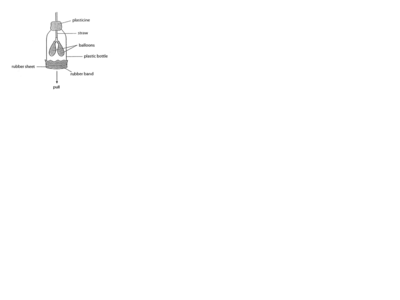
- AThe pressure drops pulling in air
- BThe pressure rises pulling in air
- CThe pressure drops expelling the air
- DThe pressure rises expelling the air
16What is the order of air flow?
- ANasal cavity, Larynx, Epiglottis, Pharynx, Trachea, Bronchi, Bronchioles, Alveoli
- BNasal cavity, Phyranx, Larynx, Epiglottis, Trachea, Bronchi, Bronchioles, Alveoli
- CNasal cavity, Pharynx, Epiglottis, Larynx, Trachea, Bronchi, Bronchioles, Alveoli
- DNasal cavity, Larynx, Pharynx, Epiglottis, Trachea, Bronchioles, Bronchi, Alveoli
17The Job Of the Kidneys are
- ARemove waste from the blood
- BBalance blood PH
- Cbalance co2 levels
- DMaintain osmosis balance
- EMaintain water balance
18The liver helps break down toxins such as alcohol and heavy metals. It makes them into soluble compounds so they can be eliminated in the urine by the kidneys.
- AVerdadero
- BFalso
19Deamination occurs when proteins are getting converted into lipids
- AVerdadero
- BFalso
20Proteins release what that is harmful to the body
- Anitrogen
- Bcalcium
- Csodium
- Doxygen
21Deamination is the removal of the hydrogen groups from the proteins
- AVerdadero
- BFalso
22 the body combines ammonia and carbon dioxide to create a toxin that is less harmful called:
- AUrine
- BUrea
- CUreter
- DUrethra
23Regarding the diagram which is true?
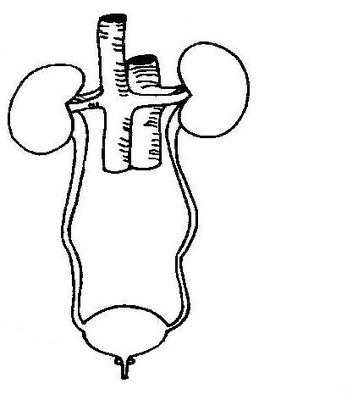
- AWaste to be filter enters through the arteries and flow through the efferent vein which allow exchange of wastes then leave through the capillaries
- BBlood to be filter enters through the veins and flow through the capillaries which allow exchange of wastes then leave through the arteries
- CBlood to be filter enters through the arteries and flow through the capillaries which allow exchange of wastes then leave through the veins
24Reagrding the diagram which statement are true
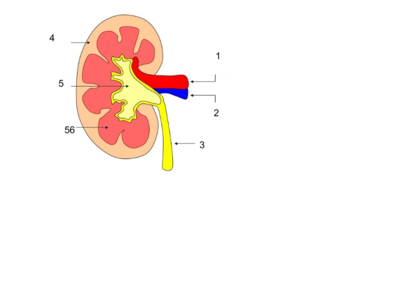
- A1. is the renal vein
- B1. is the renal artery
- C2 is the renal vein
- D2 is the renal artery
- E3 is the ureter
- F3 is the uterus
- G4 is the cortex
- H6 is the medulla where nephrons are anchored
- I5 is the renal pelvis where the filtered waste falls
25Filtration is when most water is reabsorbed in the proximal tubule and the descending loop of Henle. It also can be removed from the distal tubule in special circumstances
- AVerdadero
- BFalso
26Filtration:
- AHappens in the Glomerulus which is a high pressure capillary network that forces both water and smaller wastes out of the blood and fall through the pores in the capillary membrane
The filtrate is caught by the Bowman's Capsule - BMost water is reabsorbed in the proximal tubule and the descending loop of Henle. It also can be removed from the distal tubule in special circumstances
- CSome large waste matter can not make it through the capillary pores so it is sent directly into the urine through the glomerulus so the body uses active transport to get it out.
- DWhen the body is dehydrated, the hormone called anterior pituitary hormone (AOH). this hormone targets the kidney tubules and makes the distale tubule permeable to water which causes more water to be reabsorbed
- AHappens in the Glomerulus which is a high pressure capillary network that forces both water and smaller wastes out of the blood and fall through the pores in the capillary membrane
27 When some large waste matter can not make it through the capillary pores so it is sent directly into the urine through the glomerulus so the body uses active transport to get it out is called?
- Areabsorption
- BUrination
- CSecretion
- DFiltration
28Which of the following are correct
- AAOH: When the body is dehydrated, the hormone called anterior pituitary hormone (AOH). this hormone targets the kidney tubules and makes the distale tubule permeable to water which causes more water to be reabsorbed
- BAldosterone: This hormone can be reabsorbed by the distal tubule permeable to the reabsorption is necessary. Due to osmosis when salt reabsorption increases, water also follows.
- CAOH: This hormone can be reabsorbed by the distal tubule permeable to the reabsorption is necessary. Due to osmosis when salt reabsorption increases, water also follows.
- DAldosterone: When the body is dehydrated, the hormone called anterior pituitary hormone (AOH). this hormone targets the kidney tubules and makes the distale tubule permeable to water which causes more water to be reabsorbed
29Regarding the diagram which are true?
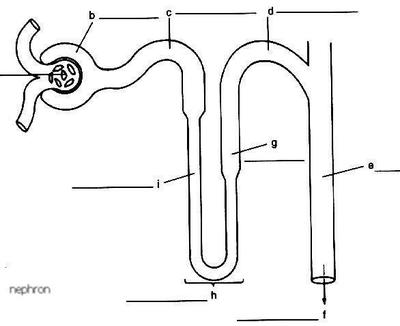
- AA is the bowmans capsule
- BC is the proximal tubule
- Ch is the glomurlus
- De is the collecting tubule
- Ed is the distal tubule
30Who am I?
Purpose:
To pick up oxygen from the lungs and deliver it to tissues elsewhere
To pick up carbon dioxide from other tissues and unload it in the lungs- AKiller T
- BErythrocytes
- CPlatelets
- DLeukocytes
31Red Blood cells are made of [blank_start]Hemoglobin[blank_end] which is iron coloring the blood red when in contact with [blank_start]oxygen[blank_end]. They are also [blank_start]biconcave[blank_end] to increases greater surface area for gas exchange and [blank_start]Enucleated[blank_end] in order to accommodate maximum space for hemoglobin.
- AHemoglobin
- BPlatelets
- CCarbon dioxide
- DCarbon monoxide
- EOxygen
- FDihyrdogen Monoxide
- Gbiconcave
- Hconcave
- Iround
- Jlarge
- Ksmall
- Lenucleated
- Mflexable
32
B cells [blank_start]Produce antibodies[blank_end]
Helper T cells [blank_start]Bind fragments to antigens[blank_end]
Macrophages Locate foreign bodies and [blank_start]use endocytosis to eat them[blank_end]
[blank_start]Killer T cells[blank_end] A t cell that destroys the invader by puncturing a hole in the cell wall
[blank_start]Suppressor T cells[blank_end] A t cell that turns off the immune system
[blank_start]Memory B cells[blank_end] Provide the system with memory.- AProduce antibodies
- Bbind fragments to antigens
- Cuse endocytosis to eat them
- DKiller T cells
- ESuppressor T cells
- FMemory B cells
33[blank_start]Albumins[blank_end]c Osmotic balance
[blank_start]globulins[blank_end] Antibodies and immunity
[blank_start]Fibrinogens[blank_end] Blood clotting
[blank_start]Platelets:[blank_end] a component of blood responsible for initiating blood clotting.
[blank_start]Antigens[blank_end]: stimulate the formation of an antibody
[blank_start]Antibodies[blank_end]: mark invaders and attach to them.
[blank_start]Thrombus[blank_end]- Blood clot that forms within a blood vessel and blocks it
[blank_start]Embolus[blank_end]- Blood clot that dislodges and is carried by the circulatory system to another part of the body.
[blank_start]Cilla[blank_end] sweeping motion hair like things sweep out mucus
[blank_start]Mucus[blank_end]- traps bacteria- AAlbumins
- Bglobulins
- CFibrinogens
- DPlatelets
- EAntigens
- FAntibodies
- GThrombus
- HEmbolus
- ICilla
- JMucus
34Label the antibodies
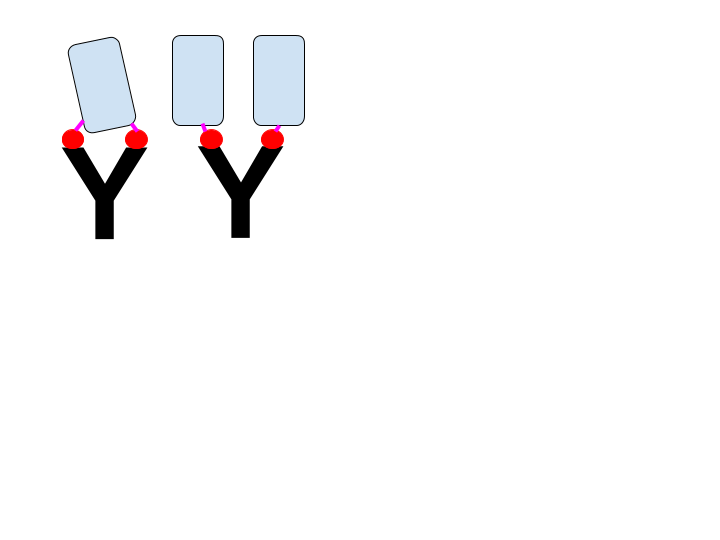
- AType 1
- Btype 2
35label the nephron
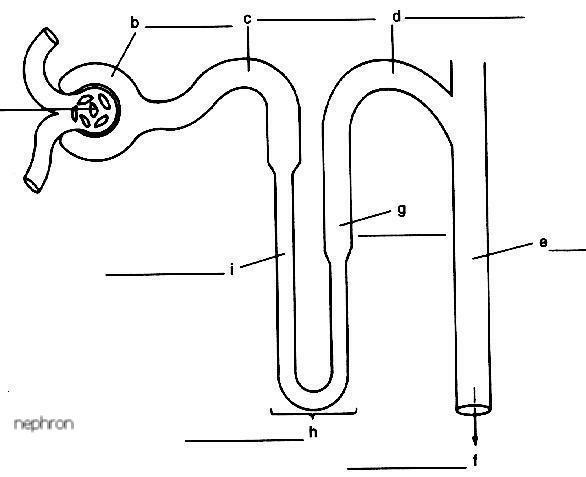
- ABowman's Capsule
- BProximal Tubule
- CLoop of Henle
- DDistal Tubule
- Ecollective tubule
36label
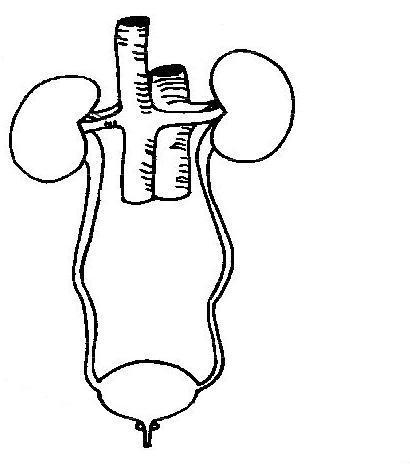
- Akidney
- Bureter
- Cbladder
- DUretha
37label
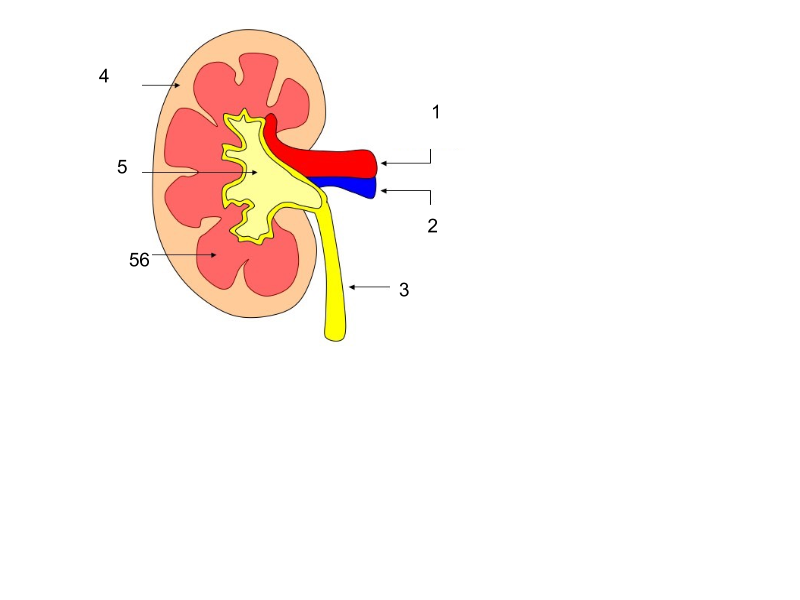
- Aafferent artery
- Befferent vein
- Cureter
- Dcortex
- Emedulla
- Frenal pelvis
38FINISH do positibe A B or O first then negatives then state if needed RH
A- A+ B+ B-AB+ AB- O+ O-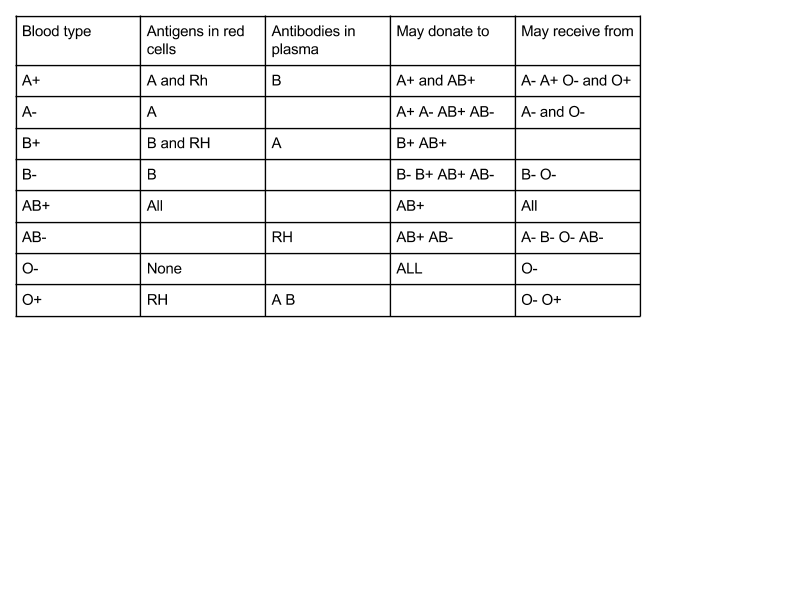
- AB RH
- BA+ B+ B- RH
- CB+ B- O+ O-
- DA+ A- B+ RH
- Enone
- FAll
- GA+ B+ AB+ O+
39[blank_start]agglutination[blank_end] is when blood clumps due to the response to a specific antibody.
[blank_start]Anemia[blank_end] is when the blood has low oxygen or hemoglobin levels- AAgglutination
- Bcystic fibrosis
- Clupus
- Dautoimmunity
- EAnemia
Información
- Descripción
- Grade 11 Biology Test sobre Unit 2 Bio 20, creado por Abigale Cadieux el 10/11/2016.
- Autor
- Abigale Cadieux
- Idioma
- English
- Visitas
- 53
- Etiquetas
- Valoración
- Aún sin valoraciones Valora este test