
Cell Structure
Diapositivas del conjunto (5)
-
- You must be able to:
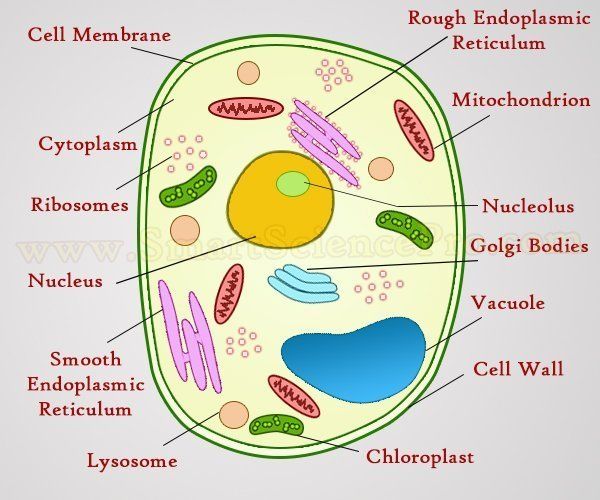
- Describe the structure of a typical animal cell
- Describe how a plant cell differs from an animal cell
- Recall the main differences between prokaryotic and eukaryotic cells
- Describe the structure of a typical bacterial cell
-
- All cells have structures inside of them - these are called sub - cellular structures
- In an animal cell, the sub - cellular structures include:
- a nucleus, which controls the activities of the cell and contains the genetic material
- cytoplasm, in which most of the chemical reactions take place
- a cell membrane, which controls the passage of substances into and out of the cell
- mitochondria, where aerobic respiration takes place
- ribosomes, where proteins are synthesised (made)
- Pie de imagen: Animal Cell
-
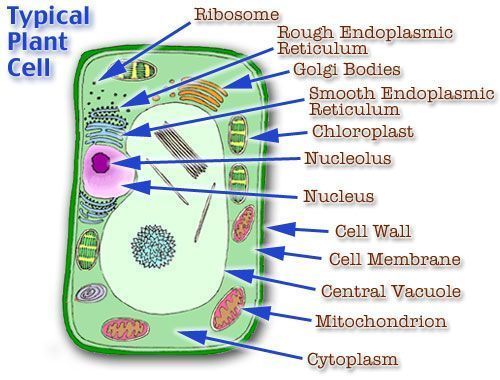
- Pie de imagen: Plant Cell
- Plant cells and algal cells contain all the sub - cellular structures found in animal cells
- They also have:
- a cell wall made of cellulose, which strengthens the cell
- a permanent vacuole filled with cell sap, which supports the plant
- Plants need to make their own food, so some of their cells contain chloroplasts
- Chloroplasts absorb light to make food (glucose) by photosynthesis
-
Prokaryotic and Eukaryotic Cells
- There are two main types of cell:
- prokaryotic
- eukaryotic
- Plant, animal and fungal cells are all eukaryotic
- Bacterial cells are prokaryotic
- Prokaryotic cells are much smaller in size and:
- the genetic material is not enclosed in the nucleus
- the genetic material is a single DNA loop and there may be one or more small rings of DNA, called plasmids
- they do not contain mitochondria or chloroplasts
- Key Point:
- Prokaryotic cells are much simpler in structure then eukaryotic cells. That id why scientists think that they developed before eukaryotic cells
- Key Point:
- Plasmids have become very useful to scientists. They allow genes to be inserted into bacteria in genetic engineering.
-
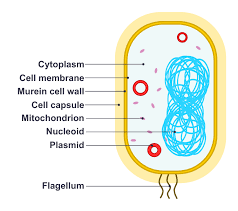
- Bacteria cells have many different shapes - some are round, some are rod-shaped and some are spiral - but they are all prokaryotic cells.
- In bacterial cells, the roles of mitochondria and chloroplasts are taken over by the cytoplasm.
- There may be one or more flagella, which are tail-like structures that move the bacterium,
- Plasmids are present, which are loops of DNA that can be transferred from one cell to another.
- Plasmids allow bacterial cells to move genes from one cell to another.
- Pie de imagen: A Typical Bacterial Cell
Información
- Descripción
- GCSE Biology Diapositivas sobre Cell Structure, creado por Gabriella Vine el 15/11/2018.
- Creado por
- Gabriella Vine
- Visitas
- 1.333
- Etiquetas
- Valoración