
Flashcards
CONSUMER BEHAVIOUR EXAM
Cards in this deck (12)
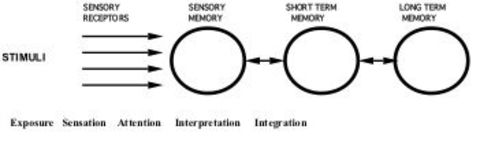
- 1Describe the way in which consumers store knowledge, and what factors aid storage/recall and draw the 3-register model
- 2What are the two paradigms of learning?BEHAVIOURAL
AND
COGNITIVE - 3GIVE TWO EXAMPLES OF BEHAVIOURAL LEARNING THEORIES AND EXPLAIN EACH1) CLASSICAL CONDITIONING - is where an individual has been conditioned to respond to a stimulus in a certain way. Eg. 'dog, doorbell, salivation'
2) OPERANT CONDITIONING - occurs when an individual learns to perform behaviours that produce rewards or avoid negative outcomes - 4What are the 3 types of reinforcement that can occur in operant conditioning? Explain each:1) Positive - eg toothpaste = sweeter breath
2) Negative - eg toothpaste = prevents decay
3) Punishment - threat of punishment for not conforming to prescribed behaviour - 5What is an example of cognitive theory?MODELLING = observational learning
- 6What is episodic memory?Is information associated with specific personally relevant events that are experienced at a particular point in time - especially vivid associations are termed flashbulb memories
- 7What is semantic memory?Logical and categorised knowledge that provides meaning for symbolic associations
- 8What are the two forms that we store knowledge in?DECLARATIVE KNOWLEDGE: Meaning that individuals attach when interpreting stimuli - beliefs
PROCEDURAL KNOWLEDGE: Links the concepts of objects and events to behaviour (e.g. driving a car) - 9What is an associated network?An individual's cognitive system combines beliefs about objects, events and behaviour into associative networks that are linked together in memory and may be retrieved when required by the cognitive system (e.g. Mazda MX5)
- 10What is a means end chain?A means end chain is a simple associative network of knowledge that links, in a hierarchical fashion, the relatively less abstract meanings associated with attributes to higher order meanings associated with consequences and values.
- 11Draw a means end chain diagramATTRIBUTES - CONSEQUENCES - VALUES
- 12WHAT ARE THE 5 STAGES OF INDIVIDUAL DECISION MAKING PROCESS?1) PROBLEM RECOGNITION
2) INFORMATION SEARCH
3) EVALUATION OF ALTERNATIVES
4) PRODUCT CHOICE
5) OUTCOMES
Information
- Description
- Flashcards on CONSUMER BEHAVIOUR EXAM, created by james_allbeury8 on 18/06/2014.
- Created by
- james_allbeury8
- Views
- 15
- Rating