
Flashcards
LING 3603 CHAPTER 3 & 4
Cards in this deck (65)
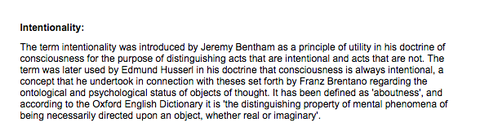
- 1Intentionality
- 2Distinctive featureA phonetic feature such as voicing that creates a phonemic distinction between two sounds
- 3PhoneA speech sound such as [p] and [b] used by any language
- 4Allophoneacoustically different speech sounds (phones) that are not functionaly different that is are the same phoneme in a particular language for example [p] and [pH] are allophone of the phoneme /p/
- 5Voicinga feature of sound production in which the vocal cord vibrate as air is released in the production of a consonant. For example consonants [b] and [g] are voiced: [p] and [k] are voiceless
- 6vegetative soundssounds that accompany biological functions such as breathing sucking and burping
- 7Voice onset time (VOT)the time lag in the production of a consonant between the release of air and the beginning of vocal cord vibration. consonants with a VOT greater than 25 milliseconds are perceived as voiceless and VOTS less than 25 milliseconds are perceived as voice ex [b]
- 8Place of articulationthe location where the airflow is obstructed as a consonant is produced
- 9Phonetic featuresa characteristic of the way speech sounds are produced that is used to describe differences and similarities among speech sounds. for example b and p differ in the feature of voicing
- 10Expansion stagea stage of pre speech phonological development immediately prior to the emergence of babbling. Infants at this stage typically between 16 and 30 weeks produce variety of speech sound but no true syllabic babbling
- 11Marginal babblingthe long series of sound that infants produce just before they begin to produce canonical babbling. this kind of sound production is typical around 5 and 6 month of age
- 12Canonical babblinga reduplicated series of the same consonant vowel combination in clear syllables
- 13cooingvowel like sound that babies produce when they appear to be happy and content
- 14Reduplicated babblingbabbling that consists of repeating the same syllabe over and over such as da da da da. This characteristic of infant sound production around 8-10 month of age aka Canonical babbling
- 15Variegated babblingstrings of nonreduplicated syllables
- 16Prosodythe intonation contour of speech including pauses and changes in stress and pitch
- 17Head turn techniquean experimental procedure used to test when infant perceive two sounds as different the technique relies on conditioning the infants to produce a head turn when a repeatedly presented sound changed. typically use with infant 5 months or older
- 18high amplitude suckingan experimental procedure used to test when infant perceive two sound as different. the technique relies on the infants first habituating to one sound and then showing dishabituatuing when a new sound is presented typically used with infants under 5 months
- 19Babbling driftthe notion that sounds in infants babbling are influenced by the ambient language. their babbling drifts in the direction of the speech the infant hears (brown)
- 20categorical perceptionthe perception of stimuli that vary along a physical continuum as belonging to discrete categories
- 21Habituationapparent loss of interest in a repeatedly presented stimuli
- 22Jargonsequences of variegated babbling that have the intonation contour sentence
- 23Canonical forma whole word sound pattern that young children sometimes use as a basis for pronouncing new words
- 24Protowordan idiosyncratic sound sequence that children use with consistent meaning but which is not clearly derived from a word in the target langauge
- 25Connectionist modela type of modal of how a phenomenon such as some aspect of language acquisition could be accomplished by a deice that consists of a network of interconnected nodes. Typically such models are implemented as computer programs and he ability of the computer program to mimic human language development is taken as evidence of the plausibility of a connectionist account of language acquisition
- 26Categorical perceptionthe perception of stimuli that vary along a physical continuum as being to discrete categories
- 27Pholological idioma word that childen pronounce in a very adult like manner while still incorrectly producing other words that use the same sounds
- 28Pragmatic bootstrappingthe hypothesis that when children start speaking they produce utterances in order to accomplish goals. the pragmatically based system gets children started in using language and is later replaced by a system with word meanings and grammatical structure
- 29Phonological bootstrapping hypothesisthe hypothesis that language learning children find and use clues to the syntactic structure of language in phonological properties of the speech they hear
- 30Phoneme boundarythe location on a continuum of change in some acoustic property of a sound where the listeners perception of the sound change from one phoneme to another
- 31Phoneme boundary effectthe phenomenon in which the same acoustic differences (such as a 20 milisecond difference in voice onset time is perceptible if the two stimuli are on opposite sides of of a phoneme boundary but is imperceptible if the two stimuli are within the range of variation perceived as on phoneme
- 32Prosodic bootstrapping hypothesisthe hypothesis that language learning children find and use clues to syntactic structure of language in the prosodic characteristics of the speech they hear
- 33Phonological processesrules that maps sounds in a target language to sounds in young children limited production repertoires. Phonological processes that are common to many children give young children's speech typical features such as pronouncing
- 34Phonological awarnessconscious awareness of the phonological properties of language such as the ability to count the number of syllables in a word and idenitfy rhymes
- 35Stage #1 of pre speech0-6 weeks: Reflexive vocalizations
These earliest vocalizations include crying and vegetative sounds such as breathing, sucking or sneezing. For these vegetative sounds, infants’ vocal cords vibrate and air passes through their vocal apparatus, thus familiarizing infants with processes involved in later speech production. - 36Stage#2 of pre speech development6-16 weeks: Cooing and laughter
Infants produce cooing sounds when they are content. Cooing is often triggered by social interaction with caregivers and resembles the production of vowels. - 37Stage #316-30 weeks: Vocal play
Infants produce a variety of vowel- and consonant-like sounds that they combine into increasingly longer sequences. The production of vowel sounds (already in the first 2 months) precedes the production of consonants, with the first back consonants (e.g., [g], [k]) being produced around 2–3 months, and front consonants (e.g., [m], [n], [p]) starting to appear around 6 months of age. - 38Stage 4 of pre speech development6-10 months: Reduplicated babbling (or canonical babbling
Reduplicated babbling contains consonant-vowel (CV) syllables that are repeated in reduplicated series of the same consonant and vowel (e.g., [bababa]). At this stage, infants’ productions resemble speech much more closely in timing and vocal behaviors than at earlier stages. Starting around 6 months babies also show an influence of the ambient language in their babbling, i.e., babies’ babbling sounds different depending on which languages they hear. - 39Stage#5 of pre speech development10-14 months: Nonreduplicated babbling (or variegated babbling)
Infants now combine different vowels and consonants into syllable strings. At this stage, infants also produce various stress and intonation patterns. During this transitional period from babbling to the first word children also produce “protowords”, i.e., invented words that are used consistently to express specific meanings, but that are not real words in the children’s target language - 40Whorfian hypothesisThe hypothesis that language influences thought and therefore that differences among languages might cause differences in the cognition of speakers of those language
- 41Mental lexiconthe knowledge of words that speakers of a language posses the dictionary in the head
- 42Under extensionusing words with a range of meanings narrower than the meaning of the word in the target language such as using car to refer to only to car seen from a window
- 43Context bound word useword use that is tied to a particular contexts
- 44dishabituationrenewed interest in a stimulus
- 45over extensiona type of error in childrens early word usage that seems to reflect an overly inclusive meaning in the mind of the child
such as referring to all four legged animal as dog - 46nominala word that labels thing a common noun
- 47natural partitions hypothesisthe notion that the world makes obvious the things that take nouns as labels that is the meanings that nouns encode are natural chunks of meaning. that makes the task of learning nouns one in which the child must simply find the label the meaning is provided outside of language
- 48relational relativity hypothesisthe notion that verb meaning do not naturally emerge from the structure of the world. this leaves open the possibility that verb meanings will vary from language to language and thus children will have to out verb meaning from hearing the verb in use
- 49Phonological memorythe function of short term memory responsible for the temporary storage of the sound of a stimulus
- 50referencethe notion of words as symbols that stand for their referents
- 51word sprutthe increase in the rate of which children acquire new words it occurs sometimes around the achievement of 50 words or about 18 months
- 52speech segmentationthe mental process of separating the speech stream into separate words
- 53mapping probelmthe logical problem of learning word meanings that arises because an infinite number of hypotheses about word meaning may be consistent with information in the nonlinguistic context of use
- 54fast mappingthe process children engage in when they hypothesize a meaning for a newly heard word on the basis of hearing the word once or at most a few times
- 55lexical principlesassumptions about how the lexicon works that are attributed to the child in order to explain how word learning is so successful and rapid. lexical principles guide the chidden mapping new words to meaning by constraining the possible interpretation of new words that children must consider. the whole object assumption and mutual exclusivity are two examples
- 56whole object assumptiona word learning constraint according to which children assume that a new word refers to a whole object not a to a part or property of an object
- 57Pragmatic knowledgethe knowledge that enables speakers to use language for communicative purposes in ways that are socially appropriate in their community
- 58principles of constrasta pragmatic principle that by hypothesis leads children to assume different words have different meanings
- 59Principle of conventionalitya pragmatic principle that by hypothesis leads children to assume that words are used by all speakers to express the same meaning that is that word meaning is a convention
- 60syntactic bootstrappingthe hypothesis that children find and use clues to the meaning of new words in the syntactic structure of the sentence in which new words are encountered
- 61sociopragmatic cuea cue to the meaning of a new word that children find in the way words are used in social interactions for example,
children take a speakers eye gaze as a cue to what the speaker is referring to - 62Taxonomic assumptionthe child assumption that words label categories of thing of the same kind (taxonomic categories). This assumption is proposed as one word learning constraint that helps children learn the meaning of new words
- 63semantic organzationthe organization of meaning expressed in a language. as distinct from cognitive organization
- 64lexical organizationthe way in which the mental lexicon represents the relation between words and meaning
- 65concepta mental category that includes individual exemplars of that concept. For example, the concept "dog" includes all examples of things that are dogs. words with different meanings encode different concepts
Information
- Description
- Flashcards on LING 3603 CHAPTER 3 & 4, created by umalkhayrahmed on 10/12/2014.
- Created by
- umalkhayrahmed
- Views
- 8
- Rating