
First Language Acquisition
70 resources created by 58 users
This First Language Acquisition page on GoConqr gathers community-made mind maps, quizzes, flashcards and notes, from theories such as Chomsky's nativism and behaviourism to phonology, child-directed speech and children's writing. It's built for university students and professional candidates, school students, and teachers after ready-made material. There are over 700 resources here, including more than 20 quizzes and over 600 mind maps, made by over 500 contributors. Open a mind map to get your bearings, then test yourself with a quiz.
Top First Language Acquisition resources
-
50 questionsApplied linguistics (2007) 01. Babbling is
-
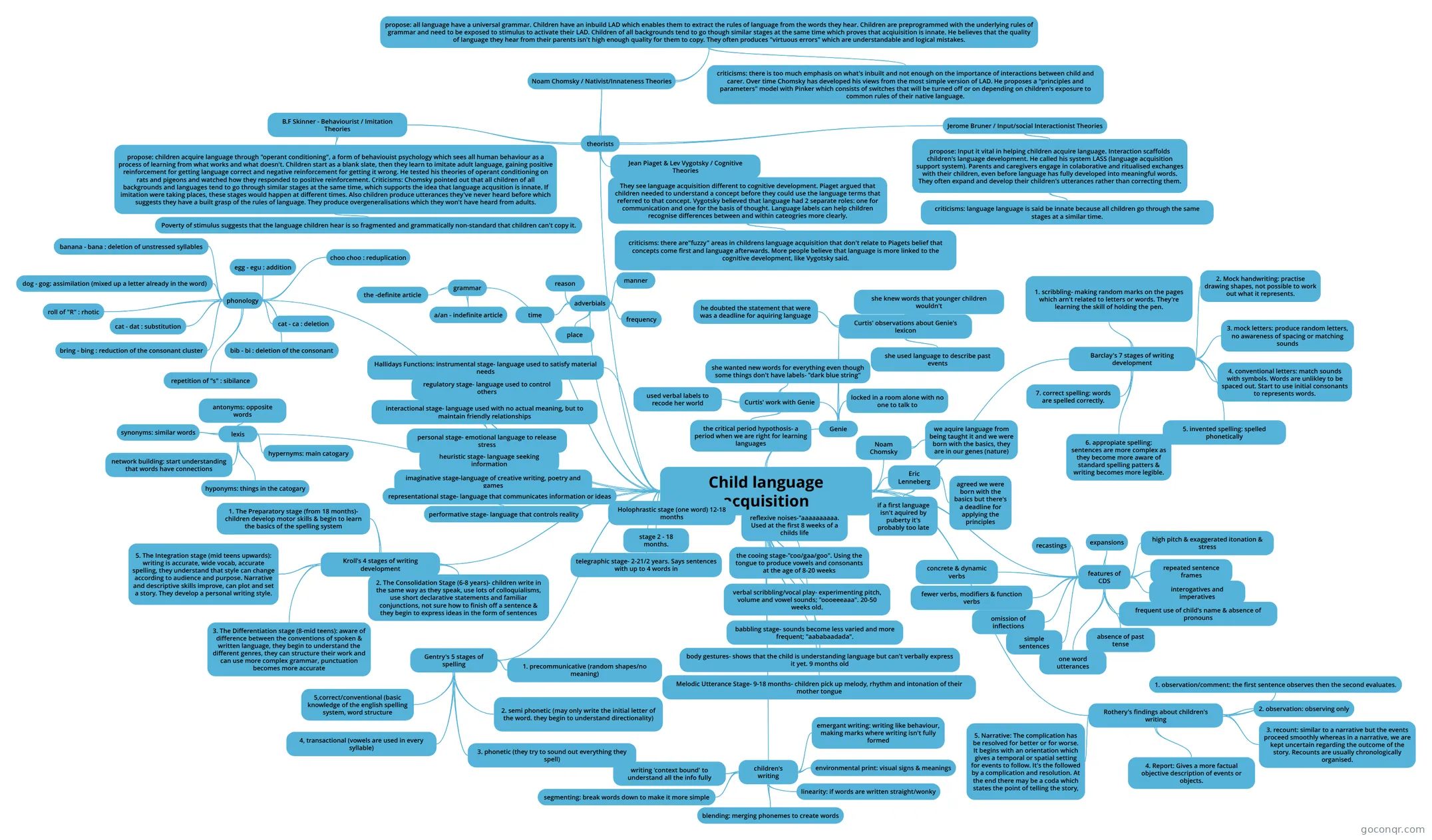 Mind map Child language acquisition
-
41 questionsLanguage Acquisition and Learning_ Exam 1 Behavoiurism implications on language teaching. The intended target behavior needs to be as specific as pos...
-
42 questionsAQA A2 English Language (B)- Child language acquisition and language change In the stages of phonological development, which of the stages are at 12-18 months approximately?
-
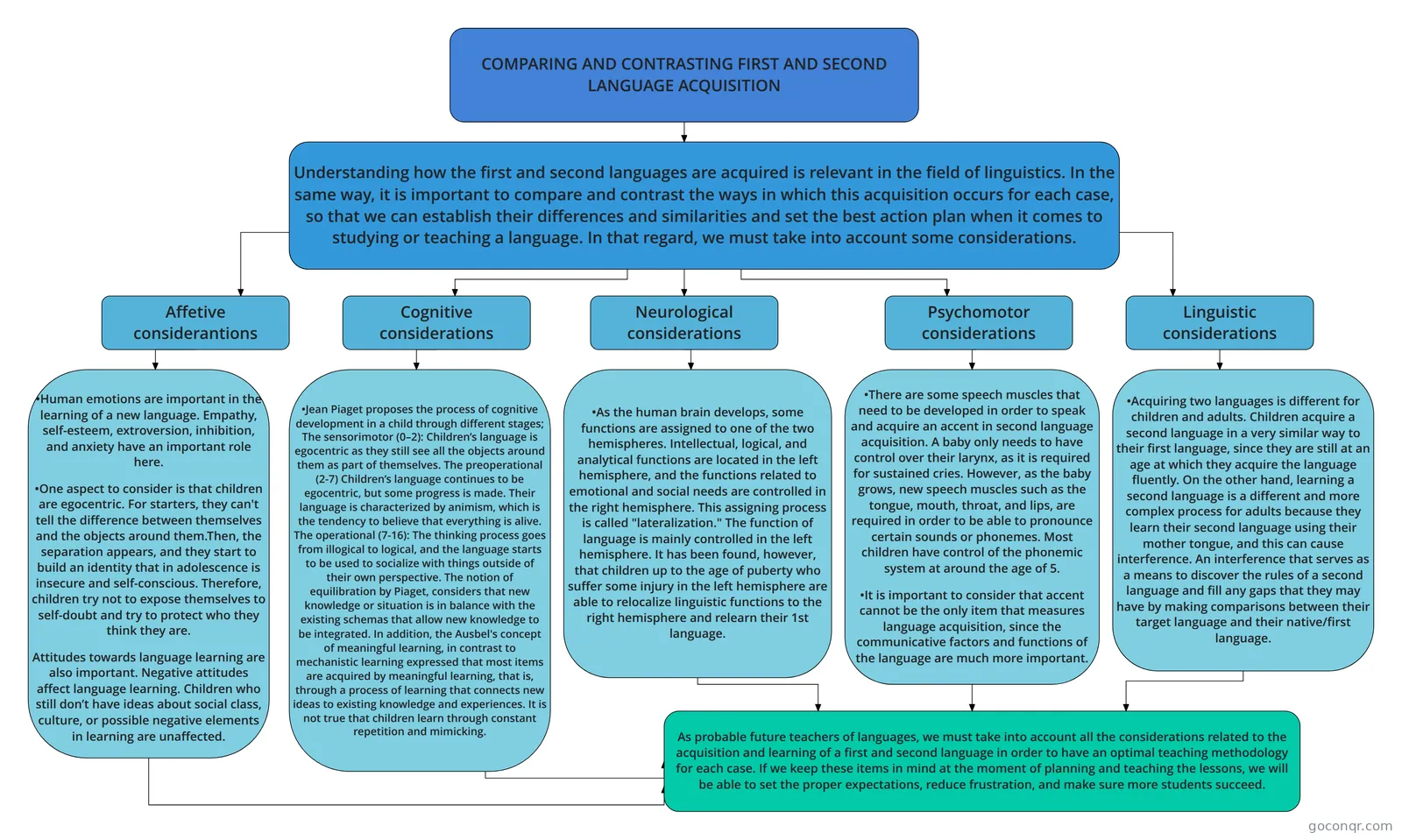 Flowchart Comparing and contrasting first and second language acquisition
-
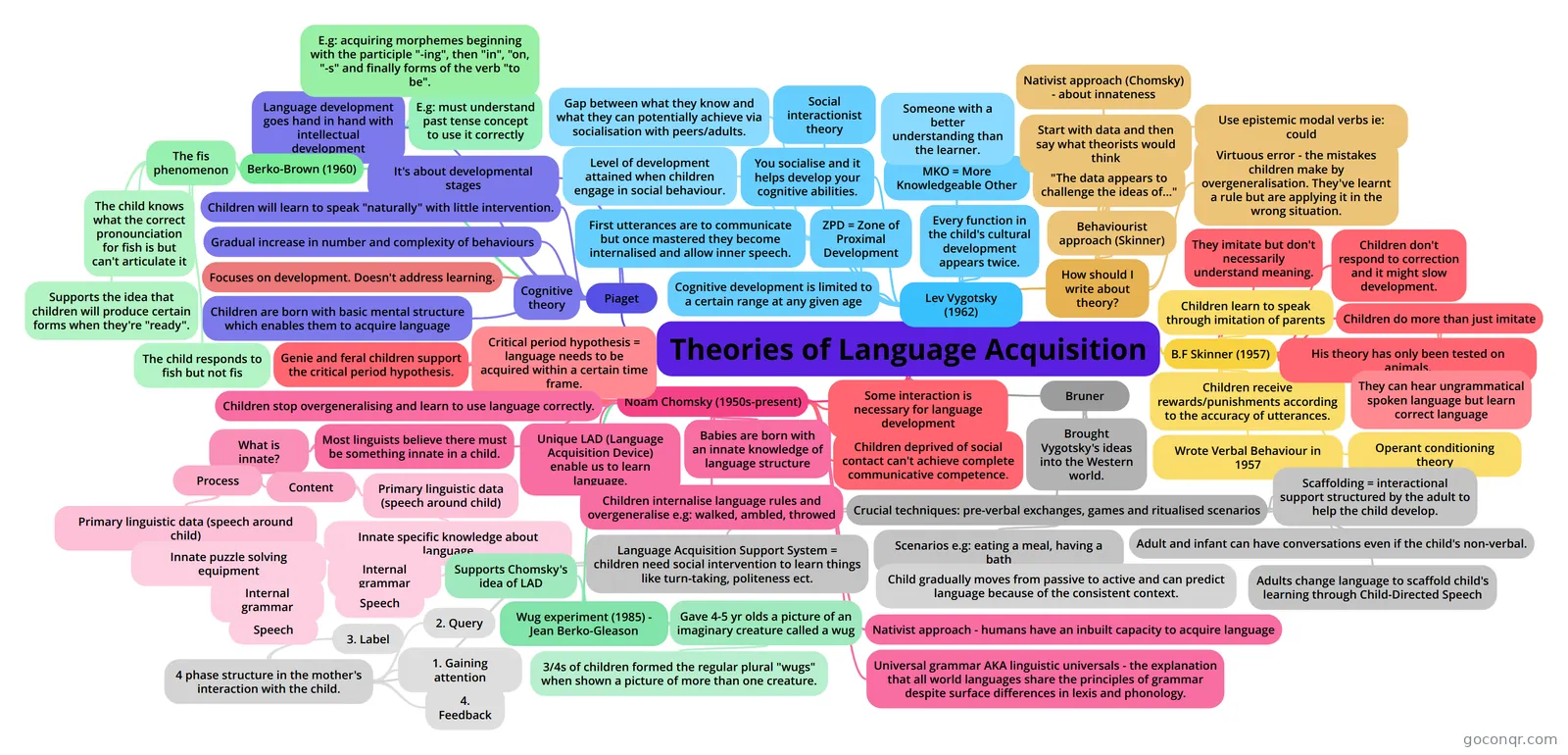 Mind map Theories of Language Acquisition
-
21 cardsTheories, Theorists and Tests
-
Mind map CLA Theories A mind map on the theories/theorists for A-Level child language acquisition
Quizzes
-
50 questionsApplied linguistics (2007) 01. Babbling is
-
41 questionsLanguage Acquisition and Learning_ Exam 1 Behavoiurism implications on language teaching. The intended target behavior needs to be as specific as pos...
-
42 questionsAQA A2 English Language (B)- Child language acquisition and language change In the stages of phonological development, which of the stages are at 12-18 months approximately?
-
3 questionsFirst Language Acquisition Put a check next to the things children need to acquire language
-
20 questionsFLA Midterm What is the nativist approach to first language acquisition?
-
6 questionsChild Language Acquisition - Key Dates At what age does the Cooing stage occur?
-
5 questionssatages of child language language begins at..?
Mind maps
See all 45 mind maps-
Child language acquisition
-
Theories of Language Acquisition
-
CLA Theories A mind map on the theories/theorists for A-Level child language acquisition
-
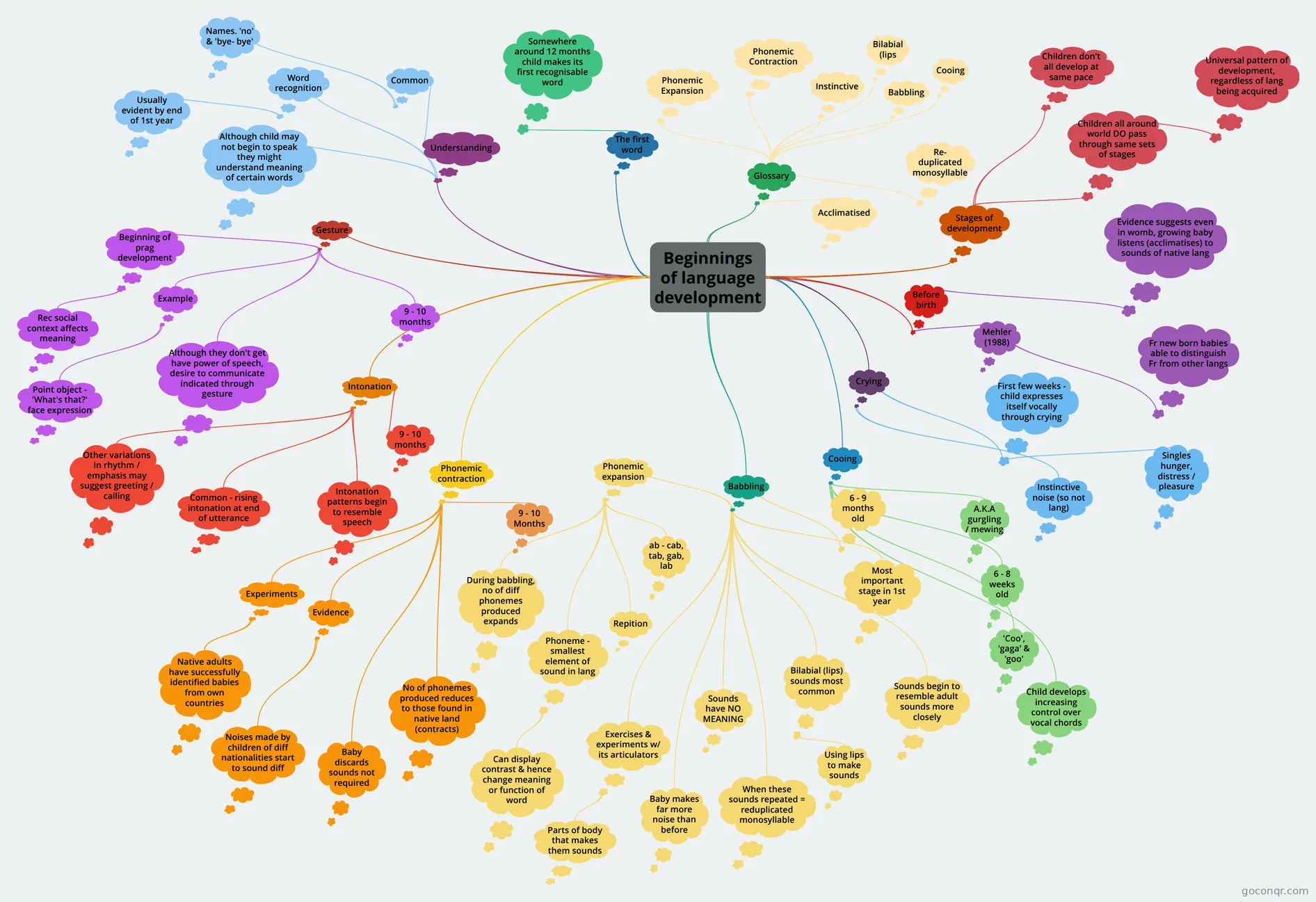 Beginnings of language development Child Language Acquisition Mind Map
-
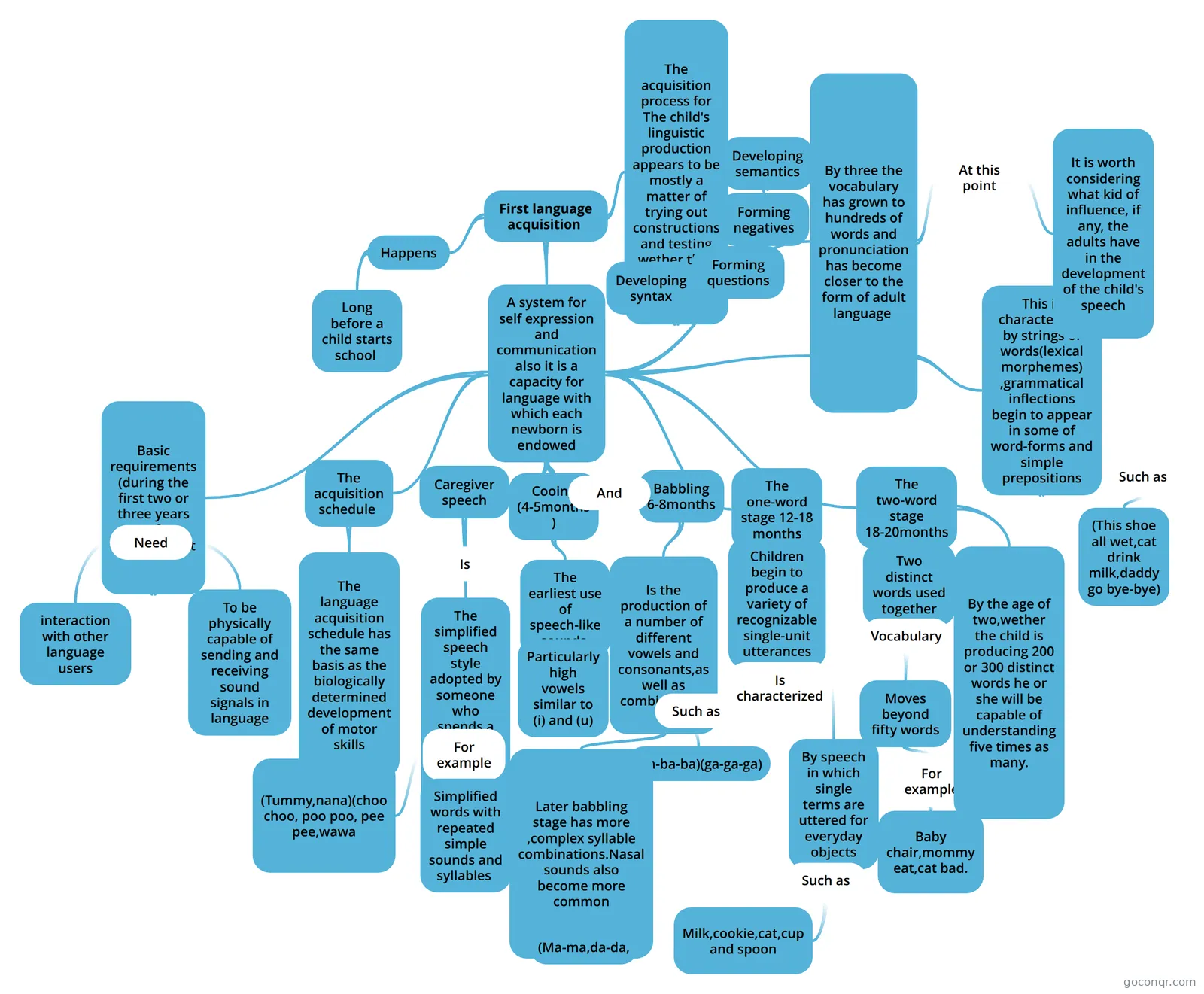 First language acquisition Mind Map on Untitled, created by ELIPHELET RIVERA on 30/01/2017.
-
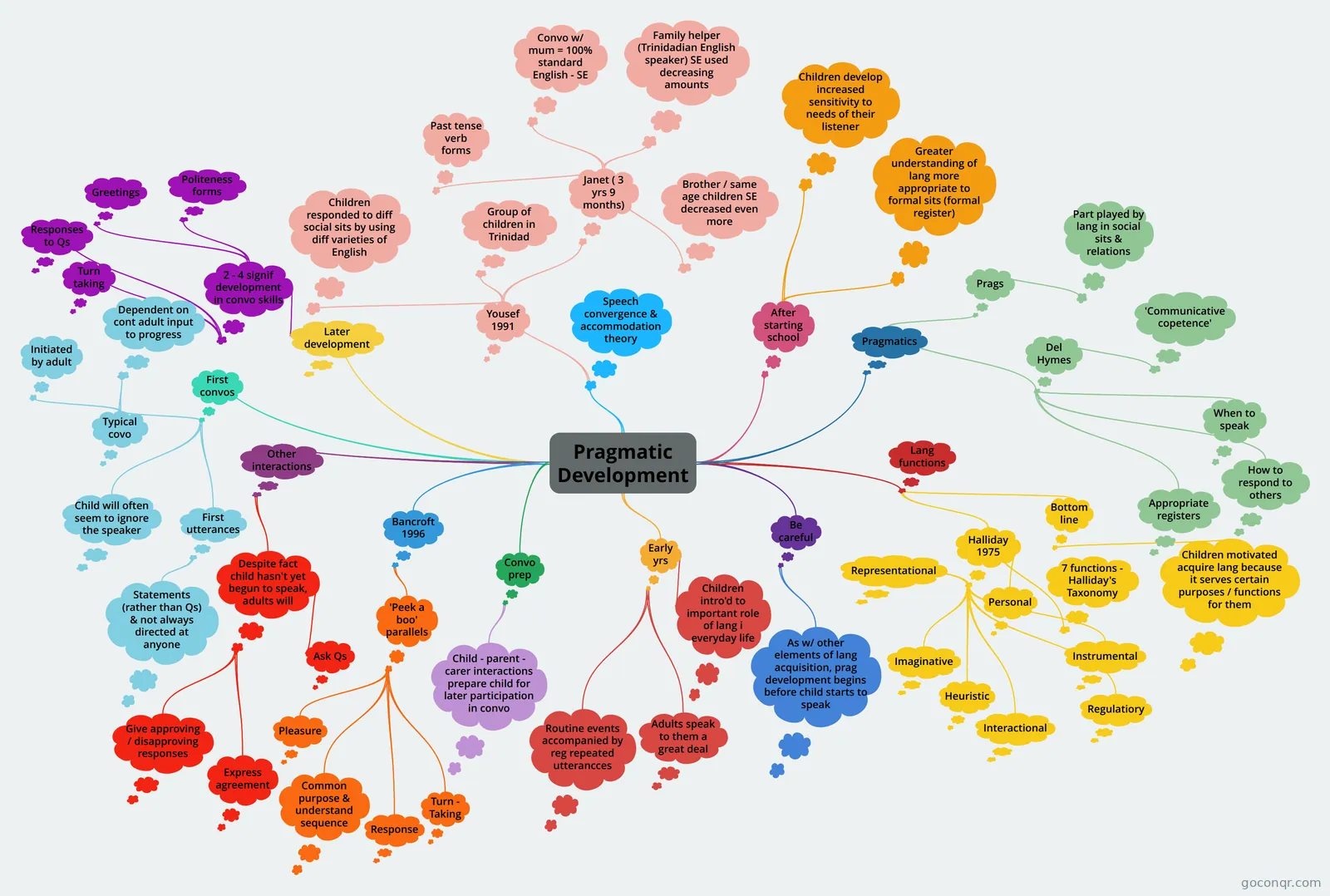 Pragmatic Development Child language acquisition mind map on the early developments of language
-
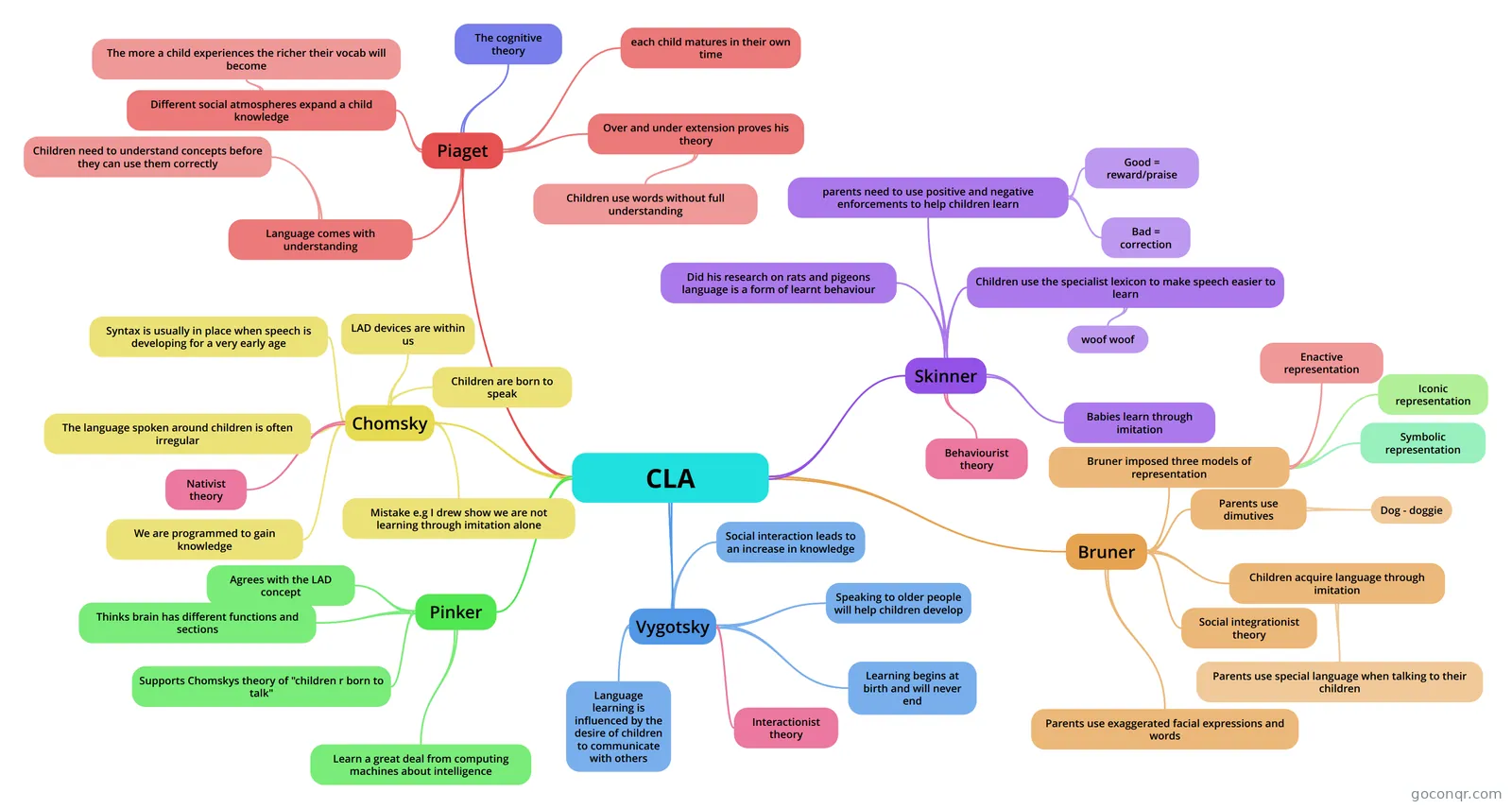 CLA
-
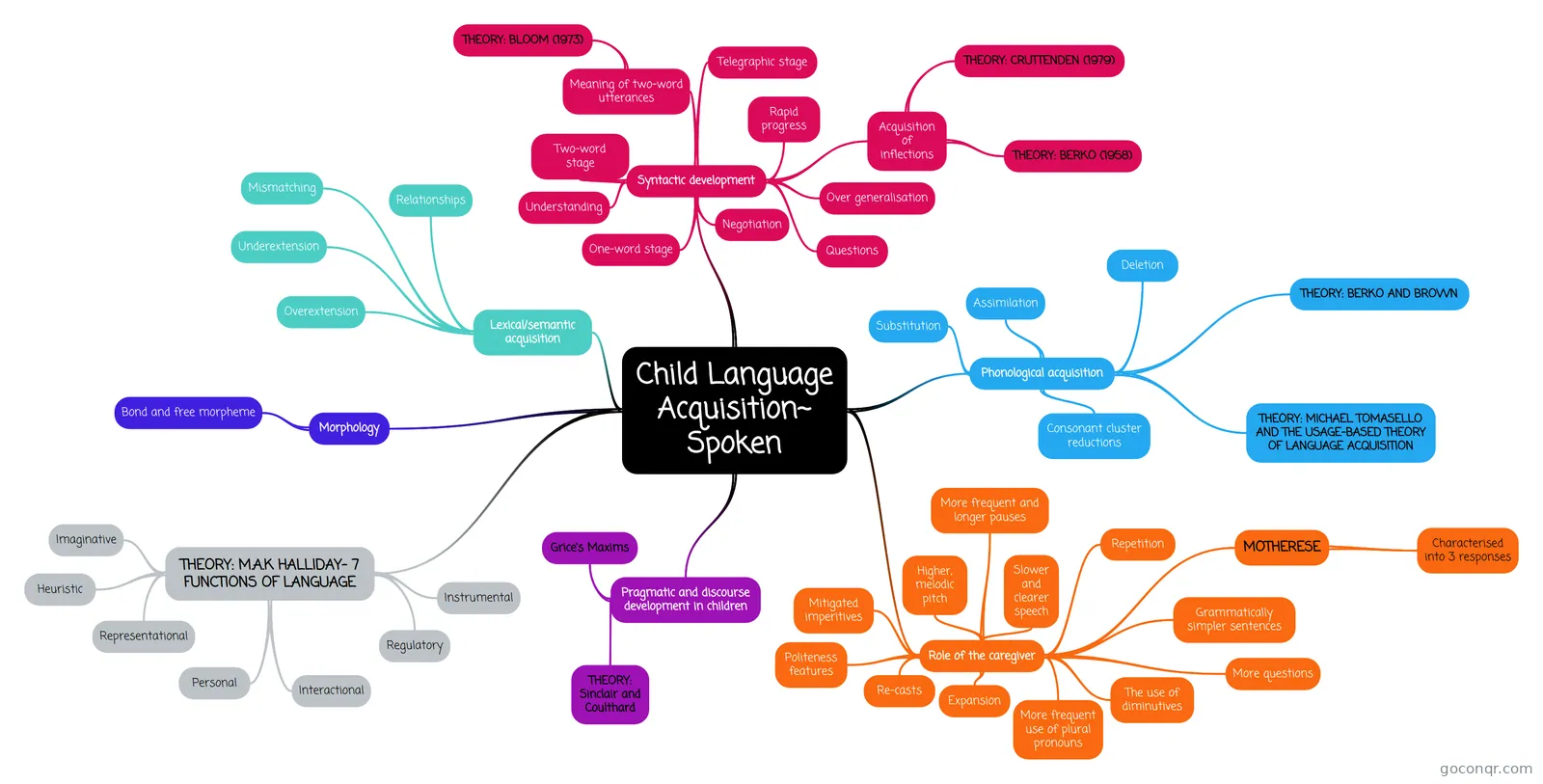 Child Language Acquisition~ Spoken A mind map on general terminology and theories for A-Level child language acquisition
Flashcards
See all 12 flashcards-
21 cardsTheories, Theorists and Tests
-
3 cardsWritten Language Acquisition - Key theorists Barry Kroll - 1981
-
35 cardsSpoken Language - Acquistion Theorists
-
33 cardsSpoken Language Acquisition Terms Universal grammar or linguistic universals
-
12 cardsMain theories of Language Acquisition Main theories of Language Acquisition
-
11 cardsDeveloping Grammar Syntactical advances allow children to...
-
16 cardsDeveloping Phonology Early Phonological Mistakes
-
7 cardsLanguage speaking acquisition (parent/career) Exaggerating/ Prosodic cues
Flowcharts
Notes
-
Language Acquisition Write Up Language Acquisition Write Up: Exam Year Unknown What Was Written: Throughout the transcripts Joe displays linguistic skills from a range of different developmental stages, ranging from holophrastic utterances to tele...
-
Language Acquisition AO1 Holophrastic - 1 word utterances; 12-18 monthsTwo-words - 2 word combinations; 18-24 monthsTelegraphic - 3 or more words combined; 24-36 monthsPose-telegraphic - Grammatically more complex; 36+ months Stages of phonol...
-
Language Acquisition AO2 Nativists - Humans have inbuilt capacity to acquire language; Chomsky, Eric Lenneburg Behaviourists - language is acquired through imitation and reinforcement; B.F. Skinner Social internationalists - those who believe...
-
Chapter 1: First Language Acquisition - created from Mind Map Insights from Developmental Psychology:Focus on the Child. "Do children learn language in the same way they learn other things,such as how to tie their shoes or how to build with blocks,or do children have a special c...
More Linguistics and philology topics
About First Language Acquisition
GoConqr OriginalWhat the resources cover
The unit follows how children come to speak and write. The theory material is the most visible: the CLA Theories mind map sets out Skinner, Chomsky, Piaget, Bruner and Trevarthen, while separate maps cover nativism, behaviourist and innatist views. Other maps look at stages of development, including holophrastic, two-word, telegraphic and post-telegraphic speech.
Where to start
Begin with the mind map Child language acquisition. It uses the case of Genie and the nature-versus-nurture debate to frame the topic. Next, open Theories of Language Acquisition to compare Chomsky, Skinner and Vygotsky side by side. Then move to the topic maps on phonology, lexical and semantic development, pragmatic development and child-directed speech.
Using quizzes and maps together
Read a map first, then try a quiz on the same topic. The AQA A2 English Language (B) quiz asks which phonological stages fall at 12 to 18 months, so it suits a check after the phonology maps. Language Acquisition and Learning_ Exam 1 tests wider theories of where language comes from. Note the questions you miss, then return to the matching map.
- Flashcards: the deck on key theorists in written language acquisition lists Kroll's four stages of children's writing.
- Notes: Language Acquisition AO1 sets out the stages by age, and Language Acquisition AO2 gives you a second angle for A-level English Language style answers.
Where it sits
First Language Acquisition belongs to the Language, Mind and Acquisition strand of Linguistics and philology. Some resources compare first and second language acquisition, which helps if you are moving between the two topics.
Next step
Choose one map that matches what you are studying today, work through it, and see how a quiz feels afterwards.
Frequently asked questions
Which resource should I open first?
Start with the mind map Child language acquisition. It introduces the nature and nurture debate through Genie and Chomsky. After that, the CLA Theories map gives a wider view of the main theorists, and you can then pick a topic map such as phonology or child-directed speech.
What do the mind maps cover?
They cover the theories, including nativism, behaviourism and innatism, plus the stages of speech, phonology, lexical and semantic development, pragmatics, child-directed speech, play and the caregiver's role. There are over 600 mind maps, so you can usually find one for your topic.
Are the resources free to use?
Yes. Every resource listed here is free to open, study and take, with no account needed. They were made by GoConqr users rather than by GoConqr itself, so it is worth checking them against your own course materials.
Which levels and exams do these suit?
Most of the material is aimed at university students and professional candidates, with a smaller share for school students. Some resources mention A-level English Language, such as the AQA A2 English Language (B) quiz on child language acquisition and language change.
Is there anything on children's writing?
Yes. There is a flashcard deck on key theorists in written language acquisition, another on handwriting and orthography, and a slide set called Child Writing. Together they cover how children's writing develops and who has described its stages.
What if I can't find my topic?
Try the neighbouring resources first, for example a theory map if you wanted a theorist, or a glossary deck for terms. A free account lets you save quiz scores and make your own maps, flashcards and notes to fill any gap.