
Flashcards
10. Creative Planning and Implementation
Cards in this deck (32)
- 1Is marketing an art or a science?Is marketing an art or a science?
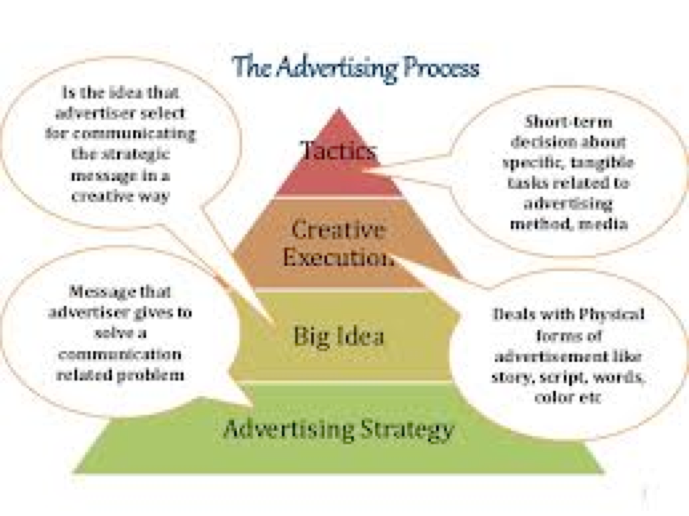
- 2Explain: Creative strategy• A creative strategy defines the important strategic choices required to develop a marketing message. The creative strategy (often called a copy or advertising strategy) defines what you will say about your product or service. It explains how you want consumers to think about your brand.
• The creative strategy is where the art and science of advertising come together. A big idea must be both creative and strategic
• The creative strategy explains what the advertisements says (i.e. the message strategy) and the creative execution (i.e. how it is said). - 3Explain: The use of creative strategiesCreative strategies…
… transform products through:
- Branding
- Image advertising, which is used to create a representation in the customer’s mind
- Associations
… drives action through:
- A signature that serves to identify the company or brand
- Serving as a call to action if it gives direction to the consumer about how to respond - 4Describe: Two components of advertising creativity• Creative strategy: Determining WHAT the advertising message will say or communicate
• Creative tactics: Determining HOW the message strategy will be executed - 5Describe: How to stimulate creative impactDetermine the advertising objectives --> Make creative decisions / make media decisions --> Evaluate the campaign
- 6Explain: The advertising process - agency or inbound marketing
- 7Explain: Why advertisers develop adsAdvertisers develop ads to meet specific objectives within marketing strategy, target a certain audience or speak to that audience’s most important concerns. Thus, they should appear in media that will reach the audience most effectively.
- 8The creative agency team should ask the following questions...
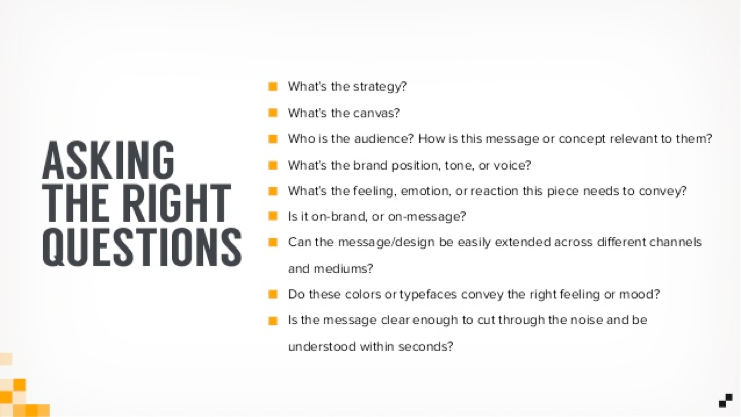
- 9Explain: The strategic relevance of advertisementsAn ad may be entertaining but if it isn’t relevant to the advertising strategy, it will fail.
- 10State: The copy platform process1) Basic problem or issue the advertising must address
2) Advertising and communications objectives
3) Target audience
4) Major selling idea or key benefits to communicate
5) Creative strategy statement (campaign theme, appeal and execution technique)
6) Supporting information and requirements - 11State: Creative framework considerations1) What is the story of my business?
2) What are my primary objectives?
3) Who is my target audience?
4) What are my customers looking for?
5) What calls to action will I utilise?
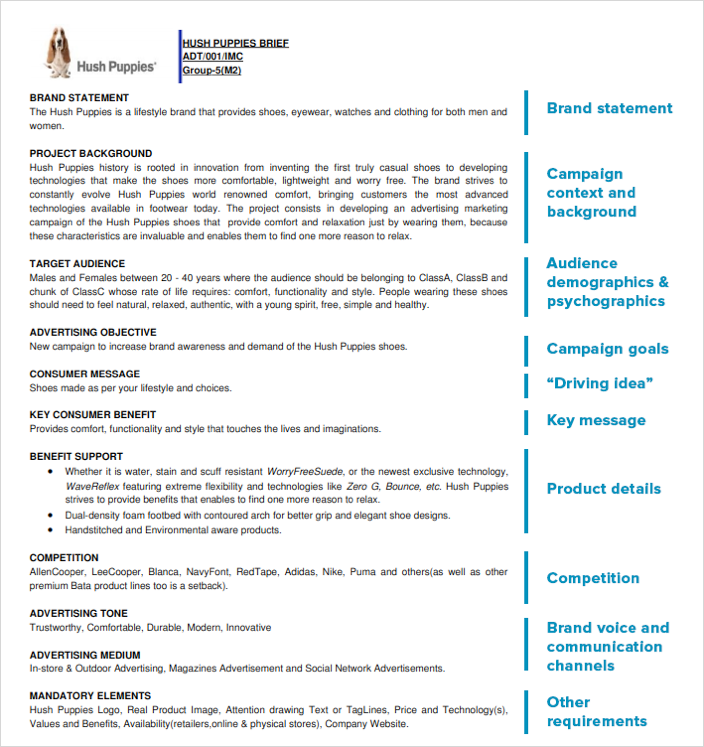
6) What is the offering – what’s in it for the consumer? - 12Describe: How to write a creative brief
- 13Describe: Three characteristics of the USP1) Each advertisement makes a proposition to the customer
2) It must be one the competition cannot or does not offer
3) It must be strong enough to pull over new customers to the brand - 14Define: The USPa feature or characteristic of a product, service, etc. that distinguishes it from others of a similar nature and makes it more appealing.
- 15Explain: Approaches to the major selling ideaApproaches to the major selling idea – inherent drama and positioning
• Inherent drama: Focus on consumer benefit with an emphasis on the dramatic element in expressing them
- Messages are generally presented in a warm, emotional way (e.g. Hallmark, Maytag, Kellogg)
• Positioning: Establish a particular place in the customer’s mind for the product or service
- Based on product attributes / benefits, price / quality, use or application, type of user or problem solved - 16Explain: Word-of-mouth and online mediaWord of mouth is one of the oldest ways of conveying information (Dellarocas, 2003) and it has been defined in many ways. One of the earlier definitions was put forward by Katz and Lazarsfeld (1966): “The exchanging of marketing information between consumers in such a way that it plays a fundamental role in shaping their behaviour and in changing attitudes toward product and services”
• Consumers increasingly use online tools (e.g. social media, blogs, etc.) to share their opinions about the products and services they consume (Gupta and Harris, 2010) and to research the companies that sell them. These tools are significantly changing everyday life and the relationship between customers and businesses (Lee et al., 2011).
• The rapid growth of online communication through social media, websites, blogs, etc. has increased academic interest in word of mouth and electronic word of mouth (Yang, 2017). - 17Evaluate: Word-of-mouth and online media• Interpersonal exchanges provide access to information related to the consumption of that product or service over and above formal advertising, i.e. that goes beyond the messages provided by the companies and involuntarily influences the individual’s decision-making (Brown et al., 2007).
- Word of mouth is widely regarded as one of the most influential factors affecting consumer behaviour (Daugherty & Hoffman, 2014)
- This influence is especially important with intangible products that are difficult to evaluate prior to consumption, such as tourism or hospitality. Consequently, word of mouth is considered the most important information source in consumers’ buying decisions (Litvin et al., 2008) - 18Discuss: Electronic word of mouth• Electronic word of mouth (eWOM) form of communication has taken on special importance with the emergence of online platforms (Yang, 2017), which have made it one of the most influential information sources on the web (Abubakar & Ilkan, 2016)
- eWOM provides companies with an advantage over traditional WOM, with a viral message
- We need to understand that factors motivate consumers to post their opinions online and gauge the impact of those comments on other people (Cantallops & Salvi, 2014)
- However, consumers’ use of technology to share their opinions about products or services (eWOM) can be a liability for companies as it can become a factor they do not control (Yang, 2017)
- To counteract this, businesses are seeking to gain greater control of customers’ online reviews by creating virtual spaces on their own websites, where consumers can leave comments and share their opinions about the business’ products and services (Vallejo et al., 2015) - 19Describe: The network eWOM model
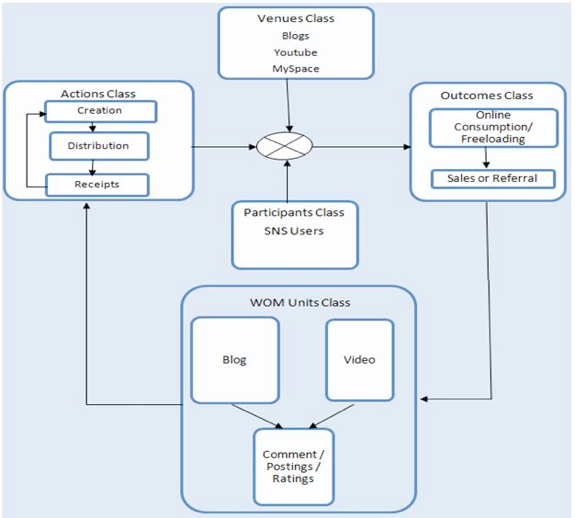
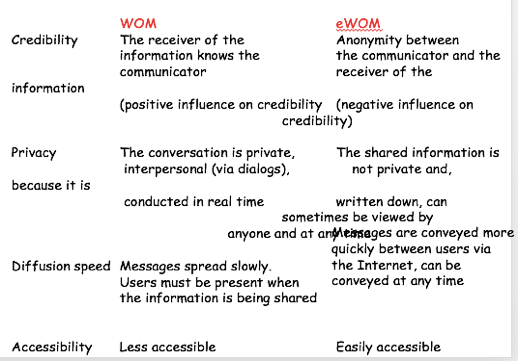
- 20Describe: Key differences between WOM and eWOM
- 21Explain: What is meant by an omni-channel approachAdoption of digital media requires a strategy to achieve results.
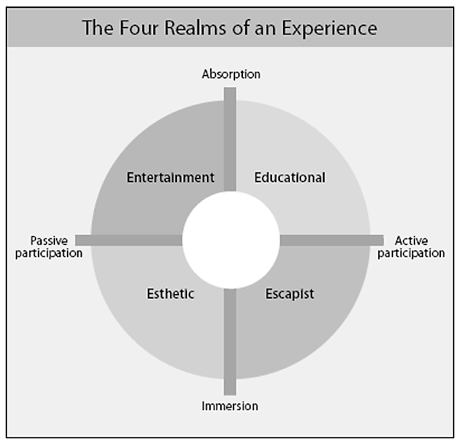
• Digital technologies include a desktop, laptop, tablet, mobile, social media, virtual reality, augmented reality and artificial intelligence - 22Describe: The four realms of an experienceShifting to the experience economy
- 23Example: Customer engagement and smartphone usersIn 2018, the number of smartphone users worldwide is projected to reach 2.52 billion, with 61.2% of the world’s population accessing the web from their mobile devices
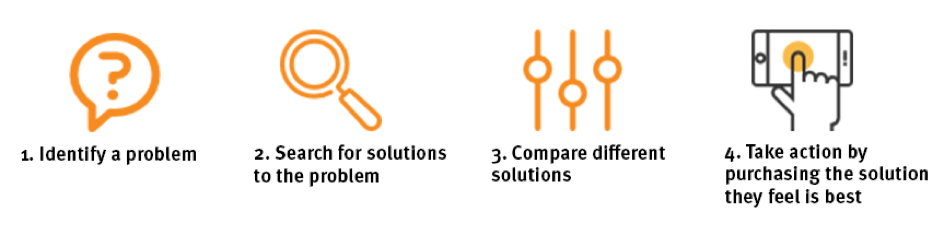
- 24Explain: how to develop an effective digital customer engagement strategyThe relationship between brands and their customers develops over time based on interactions and the perceptions and behaviours that follow.
• Brands interact with customers in order to:
1) Capture awareness for their product or service
2) Motivate them to purchase their product or service
3) Introduce repurchase of their product or service and have them recommend it to their friends
• Customers interact with brands throughout their buyer journey - 25Explain: the shift in customer expectationCustomer expectations have shifted. The customer expects a personal (personalised) relationship that offers value whenever and wherever they are ready to engage. As a result, marketers must shift away from singular campaigns and a ‘bottom-line first’ mind set in order to stay relevant and competitive.
- 26Explain: What components marketers need to consider - i.e. wha makes great brand storytelling(Jeff Bullas)
1) Clarity in thought and action
2) Being conversational with your audience
3) Audience impact
4) Choosing a voice and tone correctly
5) Establishing a human connection
6) Avoiding vague and abstract ways of describing your brand story
7) Identifying what customers perceive your brand as and creating content accordingly
8) Being specific and targeted towards your audience and not anyone else
9) Positive reinforcement - 27Define: Social media storytellingSocial storytelling can be described as taking information that is not that exciting and making it feel important, impassioned and relevant.
• Thus, it is important to resonate with your audience and identify their needs.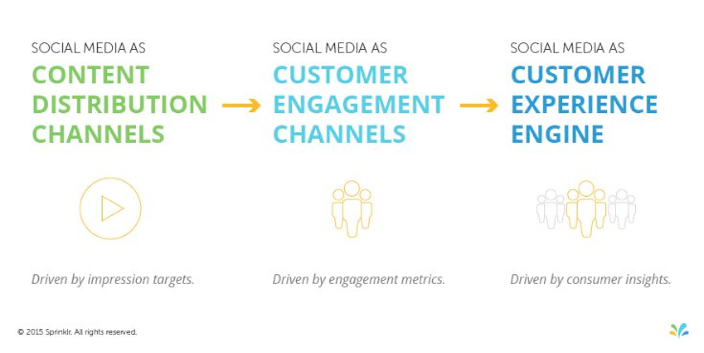
- 28Example: Spotify and the use of internal data through content marketing and AI• Spotify collects continuous data about what songs, playlist and artists its 30 million users select.
- The music streaming service combines this information with listeners’ location data and demographics, using it to create original content for its Spotify Insights blog.
- In May 2017, one post looked at ‘How Students Listen 2017’ using data to create an interactive microsite looking at how different colleges and universities in the U.S. listen to music
- The site revealed insights such as where the most listening took place, the diversity of the music listened to and the most popular genres, with findings including the fact that Penn State had the highest percentage of ‘party playlists’ in the U.S.
- Using internal data in this way helps brands like Spotify create original stories based on insights that only they can access, helping them to differentiate their USP from competitors - 29Explain customer experience and customer engagement• Customer experience is the perception or impression of those interactions.
- Customer engagement is the interaction / behaviour by the brand or customer and the means by which their relationship is created.
- It is about more than managing experience at points of touch – it includes motivation to build a relationship through to lifetime value
• Brands engaging with customer experience: Harness the power of user generated content to turn your brand into a successful one. GoPro removed the pre-conceived notion that user-generated shaky videos would not be good for sharing on social media. Video cameras affixed to the helmets of skydivers and jumpers have now become extremely popular on media platforms. - 30Describe: The optimal customer experience

- 31Describe: The transformation of customer engagement in the digital age

- 32Example: Purchasing decisions during BrexitDespite Brexit shoppers are still shopping
• Consumers purchase goods as an emotional response even in recessionary times in order to boost our moods
Information
- Description
- Marketing Communications Flashcards on 10. Creative Planning and Implementation, created by Nina Olsson on 25/04/2019.
- Created by
- Nina Olsson
- Views
- 2
- Rating