
Flashcards
Psychology: Attachment

Cards in this deck (61)
- 1What is attachment?A close emotional response between two people, characterised by mutual affection and a desire to maintain close proximity
- 2Schaffer & Emerson (1964) - Procedure60 babies from a working-class area of Glasgow. Observed and mothers were interviewed asked about when and where the infants showed separation distress and whom they were directed at.
- 3Schaffer & Emerson (1964) (Findings)The onset of attachment occurred at around 6-9 months
Intensely attached infants had mothers who responded quickly
- 4Schaffer & Emerson (1964) (Conclusion)An infants emotional dependence on a caregiver does not depend upon filling physiological needs
- 5Schaffer & Emerson (1964) (Criticisms)Result reliant upon self-reports by mothers, they could have been inaccurate
Natural surroundings may have increased
Natural surroundings may have increased ecological validity
- 6Schaffer & Emerson (1964) (Proves/Disproves...)Disproves the Learning Theory
- 7Schaffer & Emerson (1964) - Stages of Attachment: Stage 1Asocial Stage:
0-6 weeks
Emotional responses not really directed at anyone in particular
- 8Schaffer & Emerson (1964) Stages of Attachment: Stage 2Indiscriminate Stage
6weeks- 7months
Attention sought from different individuals
- 9Schaffer & Emerson (1964) Stages of Attachment: Stage 3Specific Attachments ~ Separation protest and separation anxiety
7 - 11 months
Strong attachments to one individual, followed by other attachments - 10Learning Theory Classical ConditioningAssociation:
All behaviour has been learnt
Stimulus has been made into conditioned stimulus which can be associated with something else.. E.g. Food produces a sense of pleasure, person providing food becomes associated with pleasure. Mother becomes source of pleasure whether food is supplied or not
- 11Learning Theory: Operant ConditioningConsequences:
Get positive reinforcement for desired behaviour and negative reinforcement for bad behaviour. Learn correct behaviour. Baby cries and mother comes. Baby cries when wants attention.
- 12Dollard & Miller (1949)Attachment is a set of learnt behaviours
Primary Reinforcer - stimulus that satisfies primary hunger drives which reinforces the feeling of pleasure
Secondary Reinforcer - associated with primary reinforce providing food or water leads to infant becoming attached to caregiver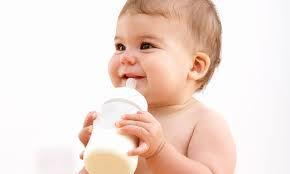
- 13Dollard & Miller (1949) Main predictions- The child will form attachments on the basis of primary care provision
- Attachment behaviours should increase steadily from him
- The strongest attachment will be with those who provide the most primary care - 14Concept of Mind (definition)People have different views and so don't think exactly the same. Putting yourself in other people's shoes to see their opinion

- 15Hey & Vespo (1988) Why does attachment occur?Attachments occur because parents deliberately teach their children to understand human relationships
- 16Learning TheoryLearning takes place directly with no intervening mental process - direct associations between stimulus and response
- 17Social Learning Theory (What theory does it criticise and what roles does it introduce?)Criticised behavioural theories for rejecting the concept of mind. Introduced a role for cognition and influence of social factors
- 18Social Learning Theory (Bandura)Children learn through imitation
Two groups of children, one group saw an adult playing nicely with a Bobo doll, other group saw adult playing violently with doll. When left in room with doll, copied the way the adult they saw had played with the doll - 19Social Learning Theory (How do we learn?)- Argue that we also learn in an indirect way
- Observational learning
Vicarious reinforcement: learn new behaviour by witnessing it and being rewarded for displaying it - 20Social Learning Theory Hey & Vespo (1988) (Modelling)Modelling
Observing and imitating models behaviour - 21Social Learning Theory Hay & Vespo (Direct Instruction)Direct Instruction
Rewards for appropriate behaviour - 22Social Learning Theory Hay & Vespo (1988) Social FacillitationEmphasises positive relationship with other people to increase understanding
- 23Social Learning Theory Evaluation (Positives)Experimental support (Hay & Vespo 1988)
Detailed consideration of interactional procession between parents and children
Observational learning does occur
Practical application of research - positive role model
- 24Social Learning Theory Evaluation (negatives)Harlow (1959) - Security and comfort are key factors in attachment
Schaffer & Emerson (1964) attached to caregivers regardless of feeding
Reductionist
Doesn't really explain the emotional intensity of many child and parent relationships
- 25Cupboard Love Psychoanalytic ApproachInfants become attached to their caregivers due to the caregivers ability to satisfy the infants instinctual needs
- 26Cupboard Love Psychoanalytic Approach FreudBelieves that healthy attachments are formed when feeding practices satisfy the infants needs security, food and oral gratification.
Unhealthy attachments occur when the infants are deprived of food and oral pleasure or are overindulged - 27Cupboard Love Behaviourist ApproachInfants become attached to those who satisfy their need for nourishment and tend to their physiological needs. Infants associate their caregivers with gratification
The caregivers are therefore, conditioned reinforces - 28Condition Reinforcers (definition)The infant learns to approach them to have their needs satisfied
Eventually, this generalises into a feeling of security whenever the caregiver is present - 29Harlow (1959) Aim & HypothesisTo test cupboard love approaches to attachment
Comfort and security rather than food are the crucial factors in attachment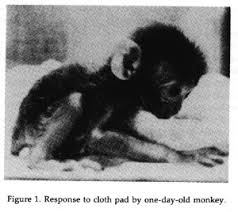
- 30Harlow (1959) Procedure8 Monkeys: 2 Groups Isolated at birth
2 surrogate mothers, 1 wire and 1 cloth. Each group received milk from a different monkey. Cloth mother provides comfort. Both groups drank the same amount and put on the same amount of weight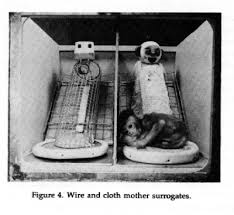
- 31Harlow (1959) Finding/ResultsThose fed by wire mother visited her only to feed
Both groups spent most of their time with cloth mother
When frightened - went to cloth mother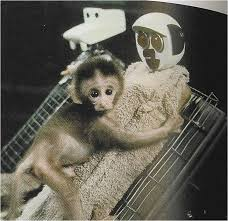
- 32Harlow (1959) ConclusionComfort and security are the basis for attachment, not food
Monkeys did not fit in with the colony when re-introduced and if found a mate, were neglectful of their own children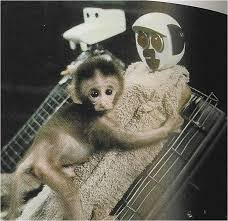
- 33Harlow (1959) Evaluation (negative)- Ethical Issues
- Hard to generalise to humans as it was a small sample of monkeys
- 34Harlow (1959) Evaluation (positive)- Challenged previous views of psychoanalysis and social learning theory that linked attachment with food
- It showed monkeys raise din isolation suffered fom problems of insecurity, aggression and an inability to form relationships
- 35Harlow (1959) Disproves what study?Learning Theory
- 36Evolutionary Perspective Bowlby What is attachment?Believed that attachment is an innate (natural) and adaptive process for both infant and parent. Attachment behaviour endures because it promotes survival in three ways:
- Safety
_ Emotional Relationships
- A secure basis for exploration
- 37Innate Behaviour/Adaptive Behaviour (definitions) BowlbyWe are naturally programmed to become attached
- 38Social Releasers (definition) BowlbyCertain behaviours illict a responese from a person, e.g. smiling or crying
This ensures that interaction occures - 39Bowlby Critical PeriodClaimed that development has to occure during a set period, otherwise it won't happen - imprinting - form of attachment
. Occurs during a short critical period otherwise an attachment isn't formed
. Irreversible
. Lasting consequences - 40Klaus & Kennell (1976) ResearchFound mothers formed closer bonds to their babies them more time they spent with them after birth.
In the past, babies were taken away after birth to give the mother time to recover.
- 41Klaus & Kennell (1976) Affect on societyThis changed the birthing process forever
Found that skin-to-skin contact leads to much stonger attachments
- 42Bowlby MonotrophyHierarchy of attachments
Infants are programmed to attach to whomever responds to their releasing stimulus
They select one special attachment figure (monotrophy) who issues as a safe place for exploring the world
The primary attachment is the template for future social relationships - 43Bowlby Internal working model/Continuity hypothesisFirst relationship a baby formes is a template for their future relationships
Used Harlow's ideas relating to the importance of the mother providing comfort - he called it the safe base - 44Hazen & Shaver (1987) The Love QuizPublished in a local paper to test impact of attachment on romantic love
Respondants identified as being characterised by previous attachment - 45Ainsworth & Bell (1970) Strange situation procedure8 Stages, each lasts about 3 minutes
1 - Mother and baby enter room
2 - Mother sits quietly in chair but responds if the baby seeks attention
3 - A stranger enters, talks to the mother, the mother then leaves
4 - Stranger tries to interest baby in toys, if they become distressed stage is ended
5 - Mother enters, stranger leaves, when baby is settled mother leaves
6 - Baby is alone
7 - Stranger comes back (stage 3)
8 - Mother returns, stranger goes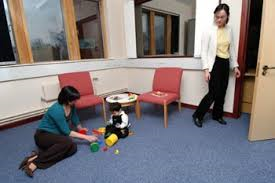
- 46Secure Attachment & Strange situationShows some protest when their caregiver leaves but is fairly easily soothed. Greets caregivers return with enthusiasm. Play independently, using their caregiver as a safe base for exploration and returning regularly for reassurance.
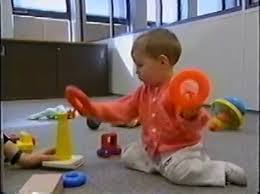
- 47Insecure-avoidant attachmentShows apparent indifference when the caregiver leaves and does not display stranger anxiety. At reunion the infant avoids contact with the caregiver. The caregiver tends to be insensitive and may ignore the infant during play. These children play independently.
- 48Insecure-resistant (or ambivalent) attachmentThe infant is very distressed when the caregiver goes and although they rush to the caregiver on their return, they are not easily consoled. The infant may resist contact with caregiver or may seek comfort and reject it at the same time. These children explore less than other children.

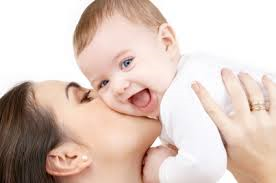
- 49Secure attachment (definition)Strong emotional bond. Mother is responsive to child. This attachment develops as a result of sensitive responding by the caregiver to the infants needs.
- 50Insecure attachmentsDevelops as a result of the caregivers lack of sensitivity in responding to the infants needs. It may be associated with poor cognitive and emotional development.
Result of a weaker emotional response is an anxious and insecure relationship.
- 51What causes insecure attachments?- Lack of maternal sensitivity
- Temperament of the child (personality)
- Abuse or neglect - 52Ijzandoorn & Krooonenberg (1988)Found that the majority of infants in eight different countries (UK, US, West Germany, Sweden, Netherlands, Japan, Israel, China) have a secure attachment

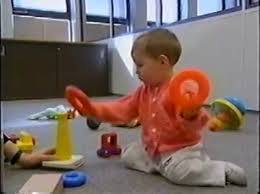
- 53Separation (Definition)Absence of caregiver (short-term)
- 54Deprivation (definition)Loss of an existing attachment due to the separation of an infant and its attachment figure (long-term)

- 55Privation (definition)A lack of attachment due to the failure to form one. in early life

- 56Curtiss (1989) GenieBeaten if she made any sound, locked away, didn't have the chance to play with toys or with other children (no attachment)
- Discovered when she was 13. Physically underdeveloped and couldn't speak.
- She learnt some language but her social skills and intellectual skills never fully developed - she wasn't able to re-join society. - 57Koluchova (1976) The Czech Twins- Stepmother treated them cruelly, often kept in cellar, no toys, often beaten.
- Found when 7, had rickets and very little social or intellectual development.
- Later adopted into loving home, made much progress. In adulthood have above average intelligence and normal social relationships (married). - 58Institutionalisation (definition)Substantial period of time living in orphanage or children's home.
- 59Rutter et al (2007)Longitudinal study of adopted Romanian orphans. 58 babies adopted before 6months
(group 1). 48 children between 2-4years.
Compared them with UK babies adopted before 6moths old. He was looking for insecure attachments
- 60Rutter et al ResultsAll three (58 before 6months, 48 between 2-4 years and UK babies) had about the same percentage in each category (secure, mild, marked insecure).
- 61Rutter et al ConclusionsLong-term consequences of institutionalisation may be less severe than imagined, particularly if children have the chance to form an attachment.
Serious consequences can occur if they have no opportunity to form an attachment
Information
- Description
- Flashcards on Psychology: Attachment, created by partone on 18/03/2015.
- Created by
- partone
- Views
- 6
- Rating