
Flashcards
Untitled
Cards in this deck (36)
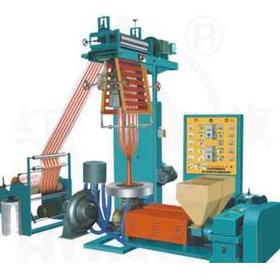
- 1Suitable process to manufacture a plastic bin bagLDPE, compounded with additives, colors =added + UV inhibitors. Resins=mixed+blended(homogeneous material) then placed in hoppers. Heated barrel=melt material. Plastic heated=180-240 degrees C, compressed+forced through circular die= high pressure.Air=added through the center of the die=bubble=film several hundred meters tall,min thick 37 microns.cool air on outside=material to cool. baloon=
collapsed at top and put onto rolls and chopped into desired length. - 2Plant to manufacture a bag.
- 3Plastic bottle manufacutrePET pellets mixed with recycled PET pellets(no more than 10%). PET drops from mixer to plastic injection machine, to 300 degrees C. Dry material melts, machine injects it into mould, cast plastic preforms. Harden due to cooling mould. thread is already on preform. Preforms go to a reheat, blow mould. Heat, rod in to stretch pre form, then high pressure, expands to the bottle shape mould. Cold water circulates to cool plastic.
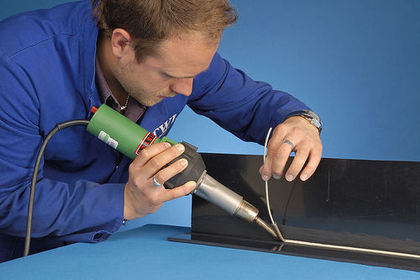
- 4Hot gas welding, polymeric componentsStream of hot gas used used to heat and melt the work piece and the welding rod, use a pendulum technique to ensure even heating. Substrate and rod fuse to to produce a weld. Nitrogen used for oxygen sensitive plastics such as PE. Slow process.
- 5Hot gas welding
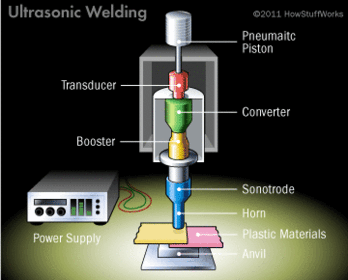
- 6Ultrasonic weldingCan be used to join to plastic work pieces. Parts held together under pressure between oscillating horn and immobile anvil. Ultrasonic vibrations(10-70 KHz) at right angles(osculations amplitudes, -20-80 microns. Stresses generate heat at joint to produce a weld. expensive process
- 7Ultrasonic Welding
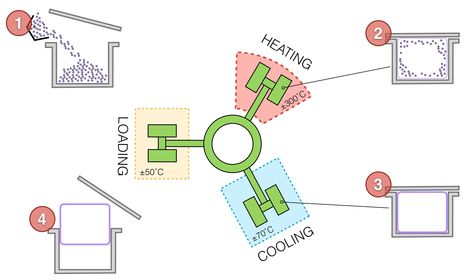
- 8Rotational Mouldingused to produce hollow plastic parts. Plastic powder into hollow metal mould. Mould is heated and rotated, then cooled. Part solidifies, then mould is opened, gives you a finalized part. more than 80% of the material used if from the polyethylene family. , i.e. LDPE, LLDPE, HDPE
- 9Rotational moulding
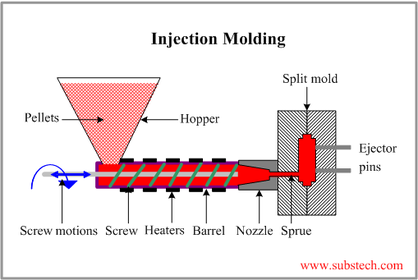
- 10Injection Mouldingplastic powder, in hopper, down sprue into reciprocating drive screw, melts, forced into metal die. cools and solidifies, mould opens then is ejected. Typical materials, ABS, Nylon Pa, Poly carbonate, Polypropylene
- 11Injection Moulding
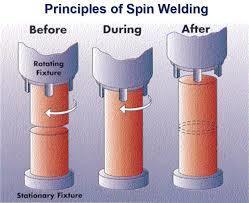
- 12spin/rotational weldingone part fixed, one part rotated at a controlled angular velocity. Reaches speed, parts pressed together, frictional heat causes parts to melt, pressure is also applied, rotation stops, weld complete. Only suitable if one of the components is circular.
- 13spin welding
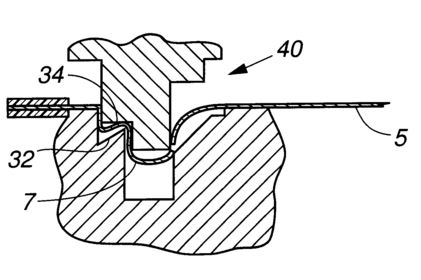
- 14Resistive implant weldingResistive implant welding = trapping an electrically conducting insert between the two parts to be joined, resistively heating insert, passing an electric current through it. made of metal wire in braid or mesh form and the electric current D.C. or low frequency A.C. As the implant heats due to resistive losses, the surrounding thermoplastic softens and melts and, with the aid of an applied pressure, forms a weld.
- 15resistance implant welding
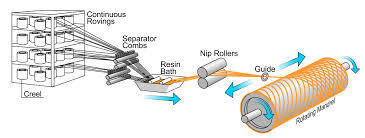
- 16filament windinggroups of fibres, rovings, few from spools, passed through a resin bath, onto a rotatinf mandrel. Position and orientation of fibres is determined by a carrige. fibres can be wound in hoop direction of at angles. Releteive speed of carriage and mandrel determins the angle at which the fibers are placed on the mandrel. After winding, mandrel is taken off the winding machine, and composite is cured in the oven/autoclave
- 17filament winding
- 18filament winding advantagesvery fast-economic way of laying down material
Structural properties=Very good, straight fibers can be laid down in a complex pattern (match applied loads) - 19filament winding disadvantageslimited to convex shaped components
fibers cant easily be placed along length of component.
Mandrel costs are large
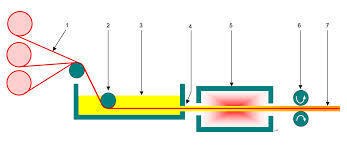
external surface of component is un-moulded - 20Pultrusionfibers=pulled through bath of resin, into a preforming fixture, section is partially pre shaped any excess resin is removed. Passes through a heat die, determines sectional geometry and surface finish of final product. Composite sections with high fiber contents can be achieved by pull trusion
- 21Pultrusion advantages/disadvantagesAdvantages
Automated process(high vol production)
High quality/strength components produced
High fiber content achievable
disadvantage
high tooling costs
unidirectional fibres - 22Pultrusion
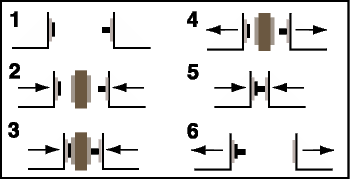
- 23Hot plate weldingParts placed in jig, pressed onto opposite sides of a hot plate for a predetermined period. Melts plastic faces, jig lifts, hot plate moved. melted faces pressed together=forms a weld
temps between 180-230 degrees C. Can be used to weld dissimilar metals - 24Hot plate welding
- 25vibration weldingalso called linear friction welding. similar to spin welding but process is linear rather than rotational. Parts rubbed together, under pressure at a suitable frequency and amplitude, generates heat, polymer melts. Vibration stopped, parts are aligned and molten polymer solidifies creating the weld.
- 26vibration weldingrapid process-100-240 Hz, 1-5mm
can weld large complex joints
high product rate
simple tooling, suitable for almost all thermoplastic.
used in automotive and domestic industry
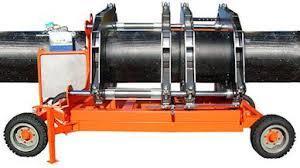
-development is orbital welding - 27Butt-fusion WeldingButt-fusion welding is a process used to weld two polyethylene pipes of a large diameter together
pipes are clamped, pipe ends are trimmed then cleaned, then a hot plate is put between the pipes, melts the pipe, hot plate is removed, then the pipes are pressed together. - 28butt fusion welding
- 29Method to join large-components of a large-two part bumperimplant welding
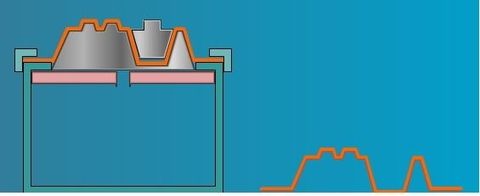
- 30Thermoforiming/vacuum formingPlastic sheet=heated to a pliable forming temperature, then moved over a die, vacuum is created causing the pliable near melt temp plastic to take the shape of the mould. Product is then trimed to make a usable product.
materials like, PP, PE, acrylic and PCV can be used. - 31Vacuum forming/thermoforming
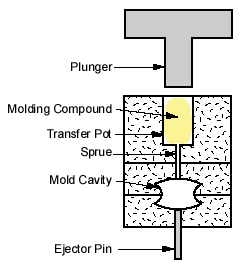
- 32Transfer mouldingamount of moulding material is measured (already known) then placed into the pot stage of the mould. Molding maerial is pre heated then loaded into a chamber put. Plunger is then used to force the material from the pot into the sprues then into the mould/
- 33Transfer mouldingProduct consistency better than compression molding
Fast setup time and lower setup costs than injection molding
Lower maintenance costs than injection molding
Ideal for plastic parts with metal inserts
Cons
high waste.
Production speed lower than injection molding - 34Transfer molding
- 35Hot plate welding is also know as butt welding. What process can you use to join to halves of a plastic fuel tankcan use hot plate welding, it can be used for, large plastic pipes, vacuum cleaner housing, fuel tanks and battery cases.
- 36Resin Transfer Mouldingmould is gel coated, then reinforcement laid onto the gel coat. Mould is the closed and resin is forced into the mould at pressure.
Water heating system is used to ensure even temperature heating. After the part has cured the mould is seperated and the part is taken out.
Information
- Description
- Flashcards on Untitled, created by Tom Piggott on 11/05/2015.
- Created by
- Tom Piggott
- Views
- 2
- Rating