
Flashcards
Module 3 - birds
Cards in this deck (144)
- 1how many bird species exist in Australia?900 species (including recently introduced, vagrant and extinct)
- 8.3% of the world's species
- 45% endemic species - 2vagrant speciesindividual animals/species that appear outside of their normal range
- 3key features of birds- endotherms
- feathers made of keratin
- toothless beaked jaws
- hard-shelled eggs
- high metabolic rate
- 4-chambered heart
- lightweight skeleton
wings as forelimbs - 4what class are birds?Aves
- 5how old are birds?- many birds still have dino characteristics
- modern clocks estimate 75-160myo
- fossils estimate 62-66myo - 6why are bird fossils rare?birds have hollow skeletons and keratinised beaks which are quite susceptible to degradation, making them harder to preserve as fossils
- 7the first birdarchaeopteryx
- 8reptilian features of archaeopteryx- 3 free digits
- long tail
- teeth
- pubic bone not parallel to ischium
- cartilaginous sternum with no keel (in birds the flight muscles attach to a keel here) - 9avian features of archaeopteryx- feathers
- hindlimbs with free digits
- claws on hindlimb - 10where are birds distributed in the world?- exist everywhere around the world including Antarctica
- their diversity in specific areas differ
- geographic barriers aren't much of a barrier for birds since they can fly (however it does not mean that they suit any environment, hence their differing diversity in specific areas) - 11PaleonatesPaleognathae (primitive birds)
- 12neonatesGalloansaerae and neonaves (more native and modern birds)
- 13infraclass: Paleognathae- more primitive/reptilian birds
- small brains
- mostly restricted to southern hemisphere
- e.g. emu and cassowary - 14order: Casuariidae- Southern cassowary
- have a keratinised casque on head
- 1.5-1.8m tall
- eat fallen fruit and fungi
- specialised digestive system to safely digest some toxic foods
- - 15infraclassin between class and order in Linnaean classification
- 16possible reasons for the cassowary casque- head dissipation
- protecting their head as they run through dense forest
- for hearing (soft tissue inside it may help to amplify sound)
- maybe for sexual selection (casques may differ between cassowaries) - 17superorder: Galloanserae- a.k.a fowls
- 2 extant orders (Galliformes = land fowls and Anseriformes = water fowl)
- 5-10 eggs per clutch
- social
- polygamous (breed with multiple partners per season)
- young develop quickly and become independent soon
e.g. ducks (water fowl) and chickens (land fowl) - 18order: Galliformes2 families: Megapodiidae and Phasianidae
- 19superprecocialvery mature when hatched (become independent very soon after hatching)
- 20family: Megapodiidae- massive nest mounts to regulate head while the eggs develop
- Superprecocial young
- browsers
- solitary
- e.g. Aussie brush turkey - 21family: Phasianidae- 3 Australian native species
- many introduced species
- sexually dimorphic (size, plumage, facial ornaments)
- short wings
- strong legs (many have a spur on their legs)
- e.g. King quail - 22order: Anseriformes2 families: Anseranatidae and Anatidae
- 23family: Anseranatidae- Magpie goose is the only living species
- used to be widespread in SA
- disappeared due to drainage of wetlands used for breeding
- high cultural significance led to habitat protection - 24family: Anatidae- ducks, geese and swans
- occur on all continents
- annual migrations
- 28 species in Australia
- herbivorous
- sexually dimorphic
- monogamous - 25Neoave clades- Aequornithes
- Columbaves
- Gruimorphe
- Strisores
- Inopinaves - 26Clade: Aequornithes- core water birds
- 9 Australian orders, 29 families and 285 species
- order: Pelecaniformes - pelicans, ibises, spoonbills
- order: Sphenisciformes - penguins
- order: Charadriiformes - plovers, lapwings, oystercatchers and plains wanderer (this one is mainly terrestrial but aquatic ancestor) - 27clade: Columbaves- pigeons, doves, bustards and cuckoos
- order: Columbiformes - pigeons and doves
- order: Otidiformes - bustards - 28clade: Gruimorphe- crane-like
- 1 Australian order
- order: Gruiformes - cranes, rails, crakes and coots - 29clade: Strisores- owlet-nightjars, swifts, nightjars and frogmouths
- 4 Australian orders
- order: Podargiformes - frogmouths
- order: Apodiformes - swifts - 30clade: Inopinaves- core land birds
- 7 Australian orders
- order: Acciptriformes - hawks, kites and eagles
- order: Falconiformes - falcons
- order: Strigiformes - owls
- order: Coraciiformes - kingfishers and rollers
- order: Passeriformes - songbirds (currawongs, magpies, honeyeaters and lyrebirds, etc.)
- order: Psittaciformes - parrots and allies - 31characteristics of bird skeleton- centralisation
- reduction and fusion of bones
- lightness
- sternum with keel - 32centralisationbirds have adapted to move their centre of gravity below the wings to balance them during flight. Distal body parts are small and light and birds with long necks can retract them to balance
- 33reduction and fusion of bones- bone are light while also providing structural support
- seen in the thoracic region, forelimbs and hindlimbs - 34reduction and fusion in the thoracic region- uncinate processes stiffen the rib cage and prevent the flight muscles from compacting on the rib cage during flight
- fused pelvic bones
- fused caudal vertebrae (pygostyle) - 35reduction and fusion in the forelimbs- carpals (wrist) are reduced
- metacarpals (palm) are reduced and fished
- phalanges (digits) reduced and fused
- all of these centralise and strengthen attachments between flight muscles and feathers to enable flight - 36reduction and fusion in the hindlimb- fused tibia (shinbone) and tarsals (ankle) = Tibiotarsus
- fused tarsals and metatarsals = Tarsometatarsus
- these strengthen the skeleton to ease the ability to fly - 37Lightness of bones- pneumatic bones allow for many pockets of air, increasing oxygen while being lightweight
- honey-comb like pattern increases strength
- flightless birds like penguins have heavier bones to help stabilise them under high water pressures - 38sternum with keel- sit of attachment of large flight muscles
- larger sternum = more surface area for attachment of flight muscles
- larger in flight birds
- relatively flat in flightless birds (e.g. emu)
- size of sternum and keel relates to how well the bird can fly - 39respiratory system (gas exhange)- supply oxygen to the body
- removes CO2 produced during metabolism
- air enters through trachea --> passes through air sacs - 40respiratory system (structure)- intercostal muscle between ribs instead of a diaphragm
- trachea for entry of air
- 2 small and rigid lungs
- 9 air sacs surrounding the lungs
- posterior = at the back of the bird - 41air sacs in the respiratory system- anterior and posterior air sacs
- act as a bellow to store extra air
- deliver air in and out of lungs (main purpose)
- removal of CO2
- no gas exchange
- dissipate heat through air - 42respiratory system (efficiency)- meets energetic demands of sustained flight by using a one-way air flow system (less energy intensive)
- 43respiratory cycle1. fresh air enters through trachea and to the posterior air sacs
2. moves to the lungs where gas exchange occurs with the air capillaries in the parabronchi
3. air gets pulled from lungs to the anterior air sacs
4. air flows back and exists the bird through the trachea - 44circulatory system (transport)- moves nutrient around the body
- excretion of liquid wastes
- transports O2 and CO2
- transports hormones around the body - 45circulatory system (structure)- similar to mammals
- relatively large hearts (meet high metabolic demands of flight)
- 4-chambered heart (2 atria,2 ventricles)
- oxygenated and deoxygenated blood kept separate
- double circuit (pulmonary and systemic) - 46pulmonary circuitblood moves from heart to lungs for gas exchange and brings oxygenated blood back to heart (transports deoxygenated and returns oxygenated)
- 47systemic circuitblood moves from the heart to the rest of the body and returns deoxygenated blood (CO2 in it) back to the heart (transports oxygenated and returns deoxygenated blood)
- 48digestive system- high metabolic rates require large amounts of fuel (some birds eat 80% of body weight a day)
- needs to be as light as possible and very efficient (so that it does not inhibit flying but is still efficient)
- food is broken down into simpler chemical substances and absorbed as nutrients to be used by the body - 49digestive system (structure)- oesophagus
- crop
- proventriculus
- gizzard/ventriculus
- small intestine
- large intestine
- caeca
- cloaca - 50oesophagus- propel foods down digestive tract
- larger and wider in birds that swallow prey whole and don't chew (e.g. herons, cormorants and some raptors) - for these, all digestion takes place in the digestive tract - 51crop- expanded portion of oesophagus
- stores and softens food
- regulates flow of food through digestive tract
- produces crop in Columbiformes - 52proventriculus- chemical stomach
- chemical breakdown of food
- secretes HCl and digestive enzymes (e.g. pepsinogen)
- aids in digestion of bones - 53gizzrd/ventriculus- muscular stomach
- mechanical breakdown of food
- food that is difficult to break down chemically is broken down mechanically - 54small intestine- cellulose digestion and nutrient absorption
- 55large intestine- relatively short in birds (since it is last resort for absorption)
- water and electrolyte absorption (ones that have not already been absorbed) - 56caeca- 2 blind pouches
- fermentation of coarse material
- water absorption - 57cloaca- where digestive, urinary and reproductive systems meet
- some water absorption
- holding and excreting area for wastes - 58diet vs digestive system- oesophagus is larger in birds that swallow prey whole
- crop is larger in granivores and crop milk producers (soft food can pass easier through oesaphagus)
- proventriculus is well-developed in granivores, carnivores and those that swallow whole (harder to break down grains, bone etc.)
- gizzard well-developed in birds that eat soft food like frugivores (proventriculus digests most soft food already)
- well-developed in herbivores and omnivores (since they have cellulose in diet)
- caeca larger in herbivores and omnivores - 59crop milk- Columbiformes
- milk produced in the crop and is regurgitated by the bird to feed to young - 60urogenital system (function)- removes liquid waste from body
- female and male reproductive systems - 61urogenital system (general functions)- 2 kidneys (filter water, reabsorb essential substances)
- pairs ureters (transport urine to cloaca)
- no urinary bladder (too heavy for flight)
- cloaca (reabsorbs water and excretes liquid wastes and uric acid) - 62female reproductive system- only left ovary and oviduct developed sp 1 egg produced at a time (less energy intensive and lighter)
- infundibulum (fertilisation occurs here)
- magnum (albumen coating)
- isthmus (shell membrane for eggs)
- uterus (holds calcareous shell and pigment)
- vagina and cloaca (for laying the egg) - 63male reproductive system- paired testes for sperm production (deflate during non-breeding season to conserve energy)
- deferent duct (sperm travel to cloaca)
- copulate with female by a "cloacal kiss"
- no phallus (penis) in most birds - sperm is shot into female via cloaca - 64deferent duct in males- enlarged during breeding season
- takes 1-4 days for sperm to travel from testes to end of duct (cloaca)
- sperm undergo maturation in male reproductive tract - 65absence of phallus (penis) in males- absent in 97% of birds (some have very tiny pp)
- harder to ensure that sperm gets through to female without pp
- not a shared trait with reptiles
- Bmp4 gene on = directs cells at the tip to die faster rate than they grown = no pp development
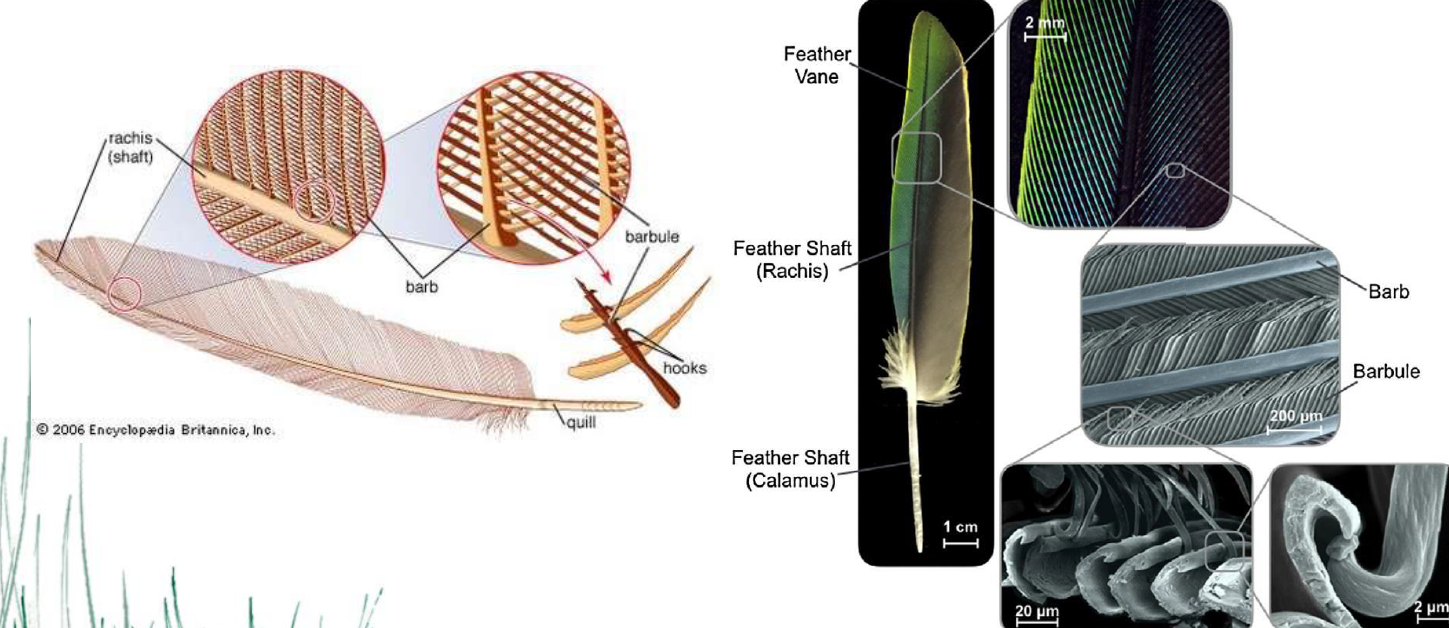
- maybe because it would be too heavy? Ensures same-species mating? Female choice? - 66feathers (structure)
- 67barbules- barbules covered in tiny hook-like structures
- keep the feathers streamlined and minimise ruffling
- waterproofing
- extend outwards from the barbs - 68feathers (type)- wing
- down
- tail
- contour
- semiplume
- bristle
- filoplume - 69feathers (function)- tail: balance and steering
- wing: flight
- contour: protection, colour, provides shape to the bird
- camouflage
- ornament and display - 70down feathers- no rachis
- trap body heat for insulation
- no barbules - 71semiplume feathers- halfway between contour and down
- insulation
- no barbules
- provide shape of the bird - 72filoplume feathers- tiny hair-like feathers with small barbs at the tip
- sensory purposes - 73bristle feathers- oldest feathers!!
- stiff and hair-like
- protection and sensory function
- central rachis has no vanes - 74hair-like contour feathers- protection
- insulation - 75serrated edges on feathers- owls
- silent flight - 76wings (shape trade-offs)- speed
- energy use
- maneouvrability - 77flight feathers- primaries
- secondaries - 78primary flight feathers- longest
- con be controlled like rigid fingers
- provide forward thrust - 79secondary flight feathers- not as controlled as primary
- provide and airfoil (for lift) - 80wings (important parameters)- aspect ratio (wingpan:chord)
- wing loading (weight:wing area) --> the weight of the bird over a larger/smaller surface area of the wing - 81wings (types)- elliptical (high energy cost)
- high-speed (high energy cost)
- slotted high-lift (low energy cost)
- high-aspect-ratio (low energy cost) - 82elliptical wings- large wing slots (allow them to change direction quickly)
- high manoeuvrability
- short and rounded
- low aspect ratio
- for short busts of high speed
- e.g. brush turkey - 83high-speed wings- slender tip
- no wing slots (minimises drag)
- long, pointy, convex (minimises drag)
- for high speed flight
- e.g. ducks - 84slotted high-lift wings- passive soaring wings
- long primary feathers are spread out
- long, broad wings (for high lift)
- ride thermal winds --> orographic lift
- soaring
- e.g. sea eagle - 85high-aspect ratio wings- active soaring wings
- very long and narrow
- high aspect ratio
- ride wind currents (often over ocean)
- dynamic soaring (soar with minimal flapping but actively try to change directions by riding wind currents - 86bills/beaks- bony core covered by a keratinised epidermis
- bill shapes are different to fulfil different niches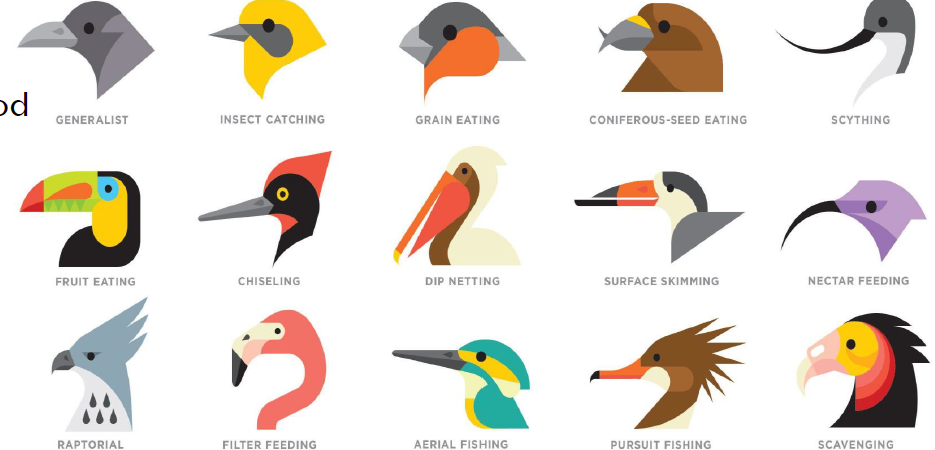
- 87bills/beaks (functions)- capture and manipulating food
- preening
- defence
- communication
- nest building - 88raptorial beaks- hooked beak (for tearing meat)
- e.g. eagles, hawks, owls, falcons - 89nectar-feeding beak- slender, curved downward
- e.g. honey eaters, miners and sunbirds - 90seed-eating beaks- stout, conical (for crushing seeds)
- short
- e.g. finches - 91probing beaks- long, thin (probe into mud/soft ground)
- e.g. ibises and spoonbills - 92tubular nose beaks- tube-shaped nostrils (filter and excrete excess salt while diving)
- downward hook (for holding prey tight while swimming underwater)
- e.g. albatrosses - 93feet (toe arrangment)- position of toes (usually 4)
- 1 = hallux ("thumb")
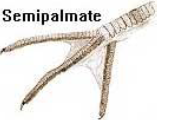
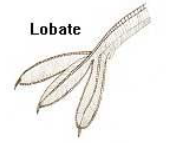
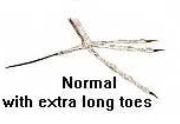
- 2 = inner toe - 94feet (types)- anisodactyl
- isodactyl (heterodactyl and zygodactyl)
- syndactyl
- pamprodactyl
- palmate
- totipalmate
- semipalmate
- lobate
- raptorial
- normal with extra long toes
- 2-toed
- 3-toed - 95anisodactyl feet- most common arrangement
- good for perching
- tendons in back of leg to toes causes foot to curl and stiffen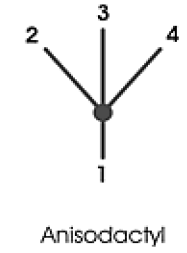
- 96zygodactyl feet- heterodactyl doesn't exist in Aussie species
- 2nd most common
- e.g. powerful owl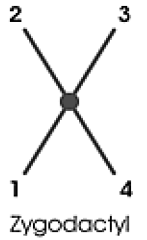
- 97syndactyl feet- not very common
- fusion of 3rd and 4th toes
- e.g. kingfishers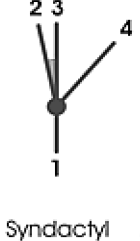
- 98pamprodactyl feet- 1st and 4th toes can pivot forwards and backwards
- e.g. some swifts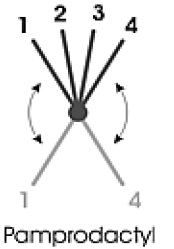
- 99palmate feet
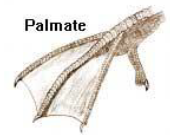
- 100totipalmate feet
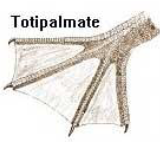
- 101semipalmate feet
- 102lobate feet
- 103normal (anisodactyl) feet with extra long toes
- 104two-toed feet- none in Australia
- ostrich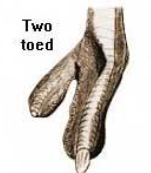
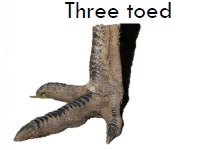
- 105tree-toed feet- emu and cassowary
- 106mating systems- monogamy
- polygyny
- polyandry
- polygynandry - 107monogamy- pair bond (short/long term)
90% of birds
- sometimes the male moves on after eggs hatch
- no sexual dimorphism usually
- joint parental care (finding food, incubation) - increased survival of young
- mating rituals to strengthen bonds between mates
- e.g. powerful owl - 108polygyny- 2% of birds
- mainly female parental care
- sexual dimorphism
- resource defence (males compete for resources that attract females)
- common in patchy environments (low/unpredictable resources)
- e.g. bowerbirds - 109poyandry- < 1% of birds
- one female, multiple males (many options increases reproductive success)
- resource defence
- reverse sexual dimorphism (e.g. larger and more colourful females than males)
- cooperative polyandry (all males copulate with same female and participating in brood provisioning
- disguises offspring paternity (males think its theirs so they help)
- e.g. Australian painted-snipe - 110polygynandry- 3-8% of birds
- promiscuity, extra-pair copulation and cooperative breeding - 111polygamy- extra-pair copulation and cooperative breeding
- in monogamous, polygynous and polyandrous species
- related "helpers" provide parental care for young
- little reproductive success for young birds
- adaptive in temporally viable environments
- e.g. superb fairy wren - 112mate selection types- phenotypic
- behavioural
- traits possessed by males that attract the females and influence their breeding choice - 113phenotypic selection- auditory
- visual
- chemical - 114behavioural selection- energy invested in courtship
- pair bonding - 115DIRECT biological benefits of mate selection- apply to the "chooser"
- parental care
- territory quality
- increased fecundity/more offspring
- protection - 116INDIRECT biological benefits of mate selection- apply to the offspring
- more attractive (help them to find mates in the future)
- high quality genes
- higher immune fitness and genetic compatibilty - 117birds and ecosystem services- seed dispersers
- pollinators
- nutrient depositors
- grazers
- insectivores
- raptors
- scavengers
- ecosystem engineers - 118seed dispersers- spread distribution of plants over a wider range
- help in the regeneration and growth of plants
- e.g. Passeriformes - 119pollinators- increase chances of reproduction between plants
- some plants have evolved to rely on birds as pollinators
- e.g. Passeriformes - 120nutrient depositors- bird faeces can be plant food and fertiliser
- deposit nutrients to areas that don't readily receive certain nutrients
- nutrient cycling
- e.g. Suliformes - 121grazers- help turn oxygen in the soil
- control overgrowth of plants
- e.g. Anseriformes - 122insectivores- pest control
- e.g. Passeriformes - 123raptors- controls populations of animal pests
- control prey populations
- e.g. Acciptriformes - 124scavengers- "clean up crew"
- stop spread of disease by eating decomposing plant/animal materials
- nutrient recycling
- e.g. Pelecaniformes like the Ibis - 125ecosystem engineers- toss leaf litter and help to clear areas for plants
- turn soil (reduce fire fuel)
- help with decomposition
- e.g. Passeriformes like lyrebird - 126Black kite adaptation- learnt to pick up insects, small reptiles and mammals that are fleeing from fire
- learnt that fire creates this movement of animals and used this to create fires in new locations (pick up wood with small embers and toss them)
- keeps animals fleeing into open environments to they can catch more - 127crows and currawongs adaptation- learnt that cane toad toxins are located on its back so they flip the toad over and eat if from the belly to avoid toxins
- 128today's Australiamany modified lands have given birds and extreme environment to have to learn and adapt to
- 129threats- climate change
- coastal development
- disturbance of breeding birds (they need tree hollows to build nests and trees take years to develop these)
- fire and burning regimes
- habitat clearance and fragmentation
- invasive species
- cattle grazing - 130scale of threats to birdsdepends on:
- habitat
- behaviour
- diet
- breeding (some may leave nests when startled)
- generalist birds are the most urban-tolerant birds - 131potential extinctions- 1 in 8 bird species are threatened with extinction
- 2% critically endangered
- Australia will lose half of its terrestrial bird species in the next century - 132Regent Honeyeater- endemic to mainland south-east Australia
- patchy distribution
- highly mobile between and within areas
- feed on nectar
- tend to inhabit dry sclerophyll forests and box-ironbark eucalypt woodlands - 133Regent Honeyeater status- critically endangered
- less than 400 left in the wild
- up to 85% of habitat destroyed from clearing, degradation and fragmentation - 134recovery of Regent Honeyeater- improve extent and quality of habitat
- Bolster the population with captive-bred birds
- further understand the wild population
- increase community involvement in the recovery program - 135recovery team for the Regent Honeyeater- Birdlife Australia
- Taronga Zoo
- NSW, VIC and Australia government
- independent researchers and community groups - 136breeding program (getting started)- 10 unrelated chicks from the 2 remaining populations taken into captivity and successfully hand raised (founders of breeding program)
- extensive record keeping and research - 137breeding program (housing)- sufficient flight area
- natural environment
- barrier between aviaries housing breeding pairs
- flexible to facilitate flocking behaviour
- barriers between breeding pairs installed during breeding season as the males are territorial - 138breeding program (social planning)- feed and perch 2/3 of day
- breakfast is nectar
- afternoon tea found by foraging insects
- chase each other around, fly and splash in water dish - 1/3 of day - 139breeding program (matchmaking)- studbooks (records of each birds pedigree and relation to the others)
- pairings to minimise inbreeding
- 4 clutches per year max
- pair with birds in their own aviary - 140breeding program (reproduction facts)- breeding season: Aug --> Jan
- 2-3 eggs per clutch
- 14 days incubation (female)
- co-parenting when feeding
- nest located in high fork with bard and soft material, bound with cobwebs
- sexual maturity for females = 2 yrs and males = 3 yrs - 141breeding program (release)- multi-species aviaries
- health check (must be disease free!!)
- transported in boxes (short trip to minimise stress too)
- replicate aviaries at release site for 48+ hrs to familiarise them
- have band on legs (identified using colour coding)
- post-release monitoring - 10 weeks on transmitter and ongoing via observations - 142breeding program (success)- 314 birds released since 2008
- re-sighting rate of approx. 11%
- ongoing research to improve outcomes
- expansion of zoo-based breeding program
- fledged nests in the wild post-release - 143breeding program (improving)- quality-quantity trade-offs for the success of young
- parental age matters (older mothers x younger fathers is better)
- related birds may associate post release!!!
- song tutoring is important for increased survival post release since they can recognise each other and danger etc. - 144Regent Honeyeaters: importance of song- 27 % singing songs are different from the regional cultural norm (they are either singing other species' songs or their own in a different "accent")
- songs of captive-bred birds differ from wild birds
- atypical song production = reduced fitness, less likely to pair or nest
- complexity of songs has decreased in recent decades
Information
- Description
- Undergrad Wildlife Biology Flashcards on Module 3 - birds , created by Epiphany Livisianos on 15/09/2021.
- Created by
- Epiphany Livisianos
- Views
- 0
- Rating