
Flashcards
Anaphy 4
Cards in this deck (72)
- 1is stratified squamous epithelium.Epidermis
- 2resists abrasion on the skin’s surface and reduces water loss through the skin.Epidermis
- 3-produce a protein mixture called keratin which makes the cells more durable - give the epidermis its ability to resist abrasion and reduce water loss.Keratinocytes
- 4- contribute to skin colorMelanocytes
- 5- part of the immune systemLangerhans Cells
- 6- are specialized epidermal cells associated with the nerve endings responsible for detecting light touch and superficial pressureMerkel Cells
- 7a single layer of cuboidal or columnar cellsStratum basale
- 8“stratum germinativum”Stratum basale
- 9The deepest portion of the epidermisStratum basale
- 10For proliferation and for attachment of the epidermis into the dermisStratum basale
- 11Superficial to the stratum basaleStratum spinosum
- 12Consisting of 8–10 layers of many-sided cellsStratum spinosum
- 13cells in this stratum are pushed to the surface, they flattenStratum spinosum
- 14consists of two to five layers of somewhat flattened, diamond-shaped cells.Stratum granulosum
- 15long axes of these cells are oriented parallel to the surface of the skin.Stratum granulosum
- 16This stratum derives its name from the presence of protein granules of keratohyalinStratum granulosum
- 17a thin, clear zone above the stratum granulosumStratum lucidum
- 18is present in only a few areas of the bodyStratum lucidum
- 19last, and most superficial, stratum of the epidermisStratum corneum
- 20composed of 25 or more layers of dead, overlapping squamous cells joined by desmosomes.Stratum corneum
- 21consists of cornified cells, which are dead cells, with a hard protein envelope, filled with the protein keratin.Stratum corneum
- 22found in the skin.Soft Keratin
- 23Found in nails and the external parts of hairHard Keratin
- 24has all five epithelial strataThick Skin
- 25found in areas subject to pressure or friction, such as the palms of the hands, the soles of the feet, and the fingertipsThick Skin
- 26stratum lucidum is generally absent.Thin Skin
- 27Hair is found onlyin Thin Skin
- 28group of pigments primarily responsible for skin, hair, and eye colorMelanin
- 29also provides protection against ultraviolet light from the sun.Melanin
- 30Produced by melanocytesMelanin
- 31production is determined by genetic factors, exposure to light, and hormones.Melanin
- 32Cells of the dermis includeo Fibroblasts
o Adipocytes
o Macrophages - 33contains nerve endings, hair follicles, smooth muscles, glands, and lymphatic vesselsDermis
- 34For light touchHair Follicle
- 35For deep pressurePacinian Corpuscles
- 36For detecting simultaneous stimulation at two points on the skinMeissner Corpuscles
- 37For sensing continuous touch or pressureRuffini End Organs
- 38responsible for fingerprintsPapillary Layer
- 39Also referred to as HypodermisSubcutaneous Tissue
- 40attaches the skin to underlying boneSubcutaneous Tissue
- 41consists of loose connective tissue with collagen and elastic fibers.Subcutaneous Tissue
- 42Accessory Skin StructuresHair, Glands, and Nail
- 43- tubelike invagination of the epidermis that extends into the dermis from which hair develops - consists of a dermal root sheath and an epithelial root sheath.Hair Follicle
- 44portion of the dermis that surrounds the epithelial root sheath.Dermal Root Sheath
- 45divided into external and internal parts Epithelial Root Sheath
- 46has raised edges that mesh closely with the raised edges of the hair cuticle and hold the hair in place Internal Root Sheath
- 47is an expanded knob at the base of the hair rootHair Bulb
- 48produces the hair and the internal epithelial root sheath.Matrix
- 49Located in the dermisSebaceous Glands
- 50= “Merocrine Sweat Glands” = They are simple, coiled, tubular glands that open directly onto the surface of the skin through sweat poresEccrine Sweat Glands
- 51simple, coiled, tubular glands that usually open into hair follicles superficial to the opening of the sebaceous glandsApocrine Sweat Glands
- 52Other Glands1. Ceruminous Glands
2. Mammary Glands - 53Hair Growth StagesAnagen, Catagen, Telogen
- 54is injury to a tissue caused by heat, cold, friction, chemicals, electricity, or radiationBurns
- 55used to quickly assess how much body surface area (BSA) has been burned on a patient.Rule of Nines
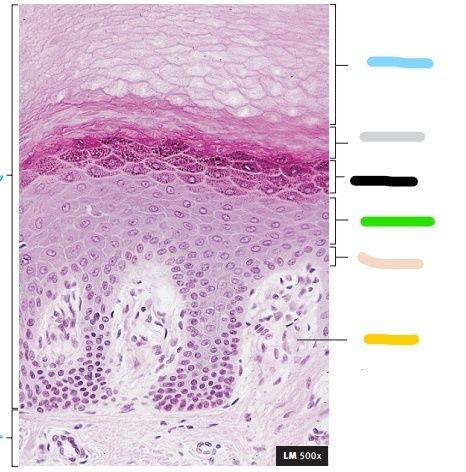
- 56—Blue: Stratum Corneum
Grey: Stratum Lucidum
Black: Stratum Granulosum
Green: Stratum Spinosum
Pink: Stratum Basale
Yellow: Dermal Papilla Extending into the Epidermis - 57—Free Edge

- 58—Nail Body

- 59—Nail Groove

- 60—Nail Fold

- 61—Lunula

- 62—Eponychium/Cuticle

- 63—Nail root

- 64—Eponychium
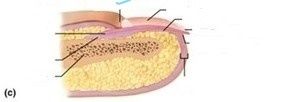
- 65—Nail Body
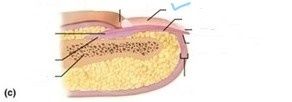
- 66—Nail Bed
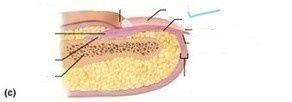
- 67—Free Edge
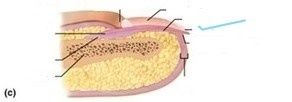
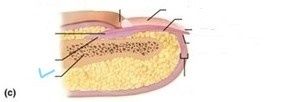
- 68—Hyponychium
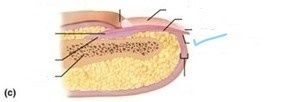
- 69—Epidermis
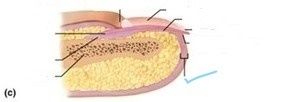
- 70—Nail root (under the skin)
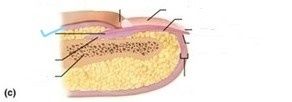
- 71—Nail Matrix
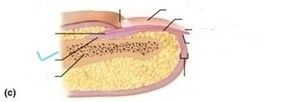
- 72—Bone
Information
- Description
- f Anaphy Flashcards on Anaphy 4, created by Angelo Cabauatan on 03/04/2022.
- Created by
- Angelo Cabauatan
- Views
- 4
- Rating