
Flashcards
Syllabus Objectives
Cards in this deck (37)
- 1Define Normal ForceThe force acting along an imaginary line drawn perpendicular to the surface
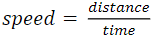
- 2Define Average speedThe rate of change of distance calculated by the formula:
- 3Define PeriodThe amount of time one cycle or one event takes to occur; the length of time taken for one wavelength to pass a given point; in circular motion, period refers to the time taken to complete one revolution (symbol, T; SI unit, s)
- 4Define Centripetal accelerationthe acceleration experienced by any object moving in a circular path directed towards the centre of motion (symbol, ac; SI unit is m/s^2)
- 5Define Centripetal forceThe force acting on an object travelling in a circle that constantly either pulls or pushes the object in towards the centre of motion (symbol, Fnet; SI unit is N)
- 6Define Gravitational fieldThe region of space surrounding a body in which another body experiences a force of gravitational attraction
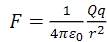
- 7Define Coulomb’s LawA law stating that like electric charges repel and opposite electric charges attract, with a force proportional to the product of the electric charges and inversely proportional to the square of the distance between them, expressed by the formula:
- 8Define Electric fieldsRegions around an electrically charged particle or object within which a force would be exerted on other electrically charged particles or objects
- 9Define Electric field strengthThe intensity of an electric field at a particular location
- 10Define Electric potential energyThe capacity of electric charge carriers to do work due to their position in an electric circuit
- 11Define Magnetic FieldA region of space near a magnet, electric current or moving electrically charged particle in which a magnetic force acts on any other magnet, electric current or moving electrically charged particle
- 12Define Magnetic fluxA measurement of the total magnetic field that passes through a given area; a measure of the number of magnetic field lines passing through the given area (symbol, φ; SI unit, Wb)
- 13Define Magnetic flux densityThe strength of a magnetic field or the number of magnetic field lines per unit area (symbol, B; SI unit, Wb/m^2 or T)
- 14Define Electromagnetic inductionThe production of an electromotive force (EMF) or voltage across an electrical conductor due to its dynamic interaction with a magnetic field
- 15Define Electromotive force (EMF)A difference in potential that tends to give rise to an electric current, also written as emf
- 16Define Faraday’s LawA law stating that when the magnetic flux linking a circuit changes, an electromotive force (emf) is induced in the circuit proportional to the rate of change of the flux linkage
- 17Define Lenz’s LawStates that the direction of an induced electric current always opposes the change in the circuit or the magnetic field that produces it
- 18Define Electromagnetic radiationRadiant energy consisting of synchronised oscillations of electric and magnetic fields, or electromagnetic waves, propagated at the speed of light in a vacuum
- 19Define Frame of referenceThe abstract coordinate system that defines location of the observer
- 20Define Inertial frame of referenceAny frame of reference with respect to which the acceleration of the object of observation remains zero
- 21Define Time dilationThe difference of elapsed time between two events as measured by observers moving relative to each other
- 22Define Proper time intervalThe time interval measured in the frame of reference in which the object is at rest
- 23Define Relativistic time intervalThe time interval measured in the frame of reference in which the object is in motion (symbol, t; SI unit, s)
- 24Define Length contractionAn observer at rest relative to a moving object would observe the moving object to be shorter along the dimension of motion
- 25Define Proper lengthThe length measured in the frame of reference in which the object is at rest
- 26Define Relativistic lengthThe length measured in the frame of reference in which the object is in motion (symbol, L; SI unit, m)
- 27Define Rest massThe mass of an object when measured in the same reference frame as the observer
- 28Define Relativistic momentumThe momentum of an object when measured in the frame of reference in which the object is in motion (symbol, pv; SI unit, Ns)
- 29Define Threshold frequencyThe minimum frequency of a photon that can eject an electron from a surface
- 30Define Planck’s constantA fundamental constant used in quantum mechanics (symbol, h; SI unit, Js)
- 31Define Work functionThe minimum energy required to remove an electron from a solid (symbol, W; SI unit, J)
- 32Define Elementary particleA particle whose substructure is unknown
- 33Define AntiparticleA particle with the same mass and opposite charge and/or spin to a corresponding particle, for example positron and electron
- 34Define BaryonComposite subatomic particles made up of three quarks
- 35Define MesonSubatomic particles composed of one quark and one antiquark
- 36Define Lepton number

- 37Define Baryon number

Information
- Description
- Flashcards on Syllabus Objectives, created by Jonas Newcombe on 23/09/2022.
- Created by
- Jonas Newcombe
- Views
- 0
- Rating