
3793582


| Question | Answer |
| 14th Amendments | one of the civil war amendments; defined US citizenship and guarantees "equal protection under the laws" |
| De jure segregation | segregation established by law. |
| De facto segregation | Segregation that occurred NOT by law but as a result of tradition |
| Jim Crow Laws | segregation laws in the South |
| Original juristiction | authority of a court to hear a case APPEALED from a lower court |
| Appellate jurisdiction | the authority of a court to hear a case for the FIRST time |
| Legal brief | a written document explaining the position of one side or the other in a case |
| Majority opinion | a statement that presents the views of the majority of the Supreme Court justices regarding a case |
| Dissenting opinion | a statement written by a Supreme Court justice who disagrees with the majority opinion, presenting his or her own opinion |
| "Stare decisis" | principle followed by judges and the Supreme Court |
| Precedent | a ruling that is used as the basis for a judicial decision in a later, similar case |
| Due process of laws | means fair and equal treatment in a court of law |
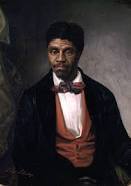
| Dred Scott vs. Sanford | (1857) case of a slave named Dred Scott. The Supreme Court ruled that enslaved African Americans were property not citizens, and had no rights under the constitution |
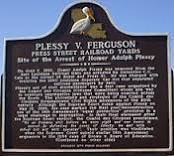
| Plessy vs. Ferguson | (1896) case about Homer Plessy, a black man, who purchased a ticket to ride in the whites only railroad car in Louisiana |
| Brown vs. Board of Education | banned segregation in 1954 |
| Briggs vs. Elliot | case that challenged segregated schools in Clarendon, South Carolina |
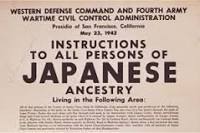
| Korematsu vs. United States | During WWII Japanese American citizens living on the West Coast were moved to internment camps |
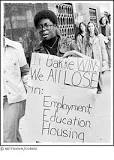
| University of California vs. Bakke | Supreme Court case on affirmative action |
| Reverend J. A. Delaine | in the Briggs v. Elliott case was posthumously awarded Congressional gold medals in 2004 for his courage |
| Harry Briggs Jr. | discusses the court case brought by his parents Harry Briggs, Sr. and Eliza Briggs against the school board in Clarendon County |
| Thurgood Marshall | Marshall was the Court's 96th justice and its first African-American justice. |
| John W. Davis | served as a United States Representative from West Virginia from 1911 to 1913 |
| Earl Warren | an American jurist and politician, who served as the 30th Governor of California and later the 14th Chief Justice of the United States |
| Chief Justice Eric Warren | Against segregated public schools |

Want to create your own Flashcards for free with GoConqr? Learn more.