Flashcards
Physics: Sound (Speakers)
Cards in this deck (13)
- 1Physics: Mechanical Waves Sound You will need: for the project: * two cups per child * a craft roll (at least 8 cm) * wide masking tape (at least 1 per group) * stickers/gems to decorate for the demo * one bowl/cup per child * a cellophane or equivalent, tightly wrapped on the mouth of the cup/bowl * rice * tuning fork * bowl/graduated jug 90% full with waterStep One: welcome your students back and select an assistant dearest with the swap and stop method
Step two: introduce today's topic: we have talked about EM waves.
What does EM stand for? (A: electro magnetic waves) - 2Can you remember which EM wave is visible to the naked eye? (A: white/visible light) Ask them to name another kind of EM wave (A: radio wave, micro waves, infrared waves, ultra violet waves, X-Rays and Gamma Rays)Can you tell me what was so special with these waves? (A: they do not need a medium. They can travel and carry energy unaided)
Today we are going to learn about MECHANICAL WAVES: they need a solid, liquid or gas to carry energy. No medium= no mechanical wave - 3Step three: Sound, sea waves, earthquake waves are examples of mechanical waves. Note: Make sure they understand that although mechanical waves require a medium to transfer energy, it is just the energy that travels. The matter itself does not.For example, it may look as if an ocean wave carries water to the shore but, actually, the water moves around in a circle without changing its actual location. Imagine a ball floating on the water. It isn't carried to shore by the waves, but rides in circles on top of the waves just like the water beneath it.
- 4Step four: Mechanical waves are produced when the energy from some sort of force vibrates or disturbs matter, making it move. Air, water, land, and other mediums can be disturbed by vibrations, wind, breaking rock.As the energy from the disturbance travels, mechanical waves, such as sound waves, water waves, and earthquake waves, are created
- 5Step Five: Yes: sound waves are mechanical waves: When the vibrating air particles hit our eardrums, their vibrations are transferred to the brain, which decodes them and transforms them into what our brain recognizes as sound.The volume and pitch of sounds are directly related to how many particles move and how quickly they oscillate.
Without particles to vibrate (like outer space), there is nothing to carry sound energy. Outer space is very quiet. - 6SO: When energy is applied to matter or a medium, the particles within it move causing the transfer of energy. Here are some key terms: Propagation: the travelling of the wave AWAY from its energy source. Oscillations: wave cycles. The pattern of the movement of the particles within a medium transfers this energy in predictable wave cycles called oscillations.Wave frequency: the number of cycles or oscillations passing a point each second
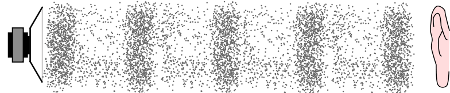
- 7There are thee types of mechanical waves which are: Longitudinal waves Transverse waves Surface wavesLongitudinal waves are mechanical waves in which particles within the medium oscillate
back and forth in a direction parallel to that of the wave propagation.
These back and forth oscillations create wave cycles consisting of compressions, which are areas where particles in the medium are close together, and rarefactions, where particles are farther apart.
examples: sound or P-earthquake waves - 8In transverse mechanical waves, the movement of particles in the medium is perpendicular to the direction the energy of the wave travels. Examples: S-earthquake waves; our old friends: EM waves Mexican Waves (in a stadium, for example), vibration in a guitar stringSurface waves: a combination of both longitudinal and transverse waves.
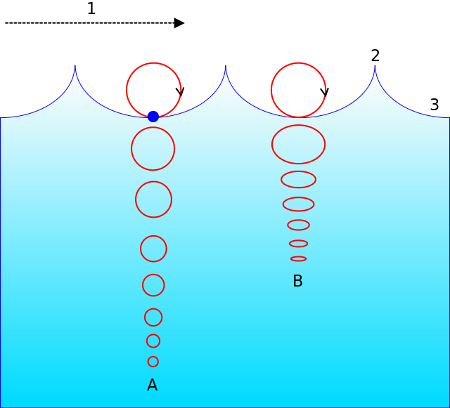
Surface waves, like the name suggests, travel across the surface of a medium or at boundaries between them.
The movement of the medium is both
1) parallel and
2) perpendicular
to the direction of the wave propagation, which creates a circular oscillation of the particles at or near the surface.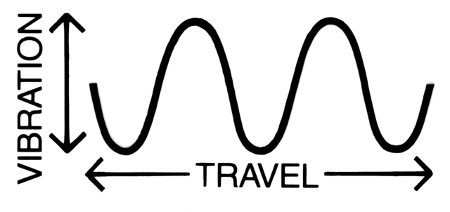
- 9Step Six: now watch this video https://youtu.be/ivSS0Q8J5LY?si=SdVP_E9HVB0rvB2j you will find there: 1) eardrum simulation (rise 'dancing' on plastic when hit by tuning fork) 2) see sound: water disturbed by oscillation made by a hit tuning forkNow assemble the speaker
in junior classes, have the slit/opening in the craft roll already cut
senior classes can do it all from scratch.
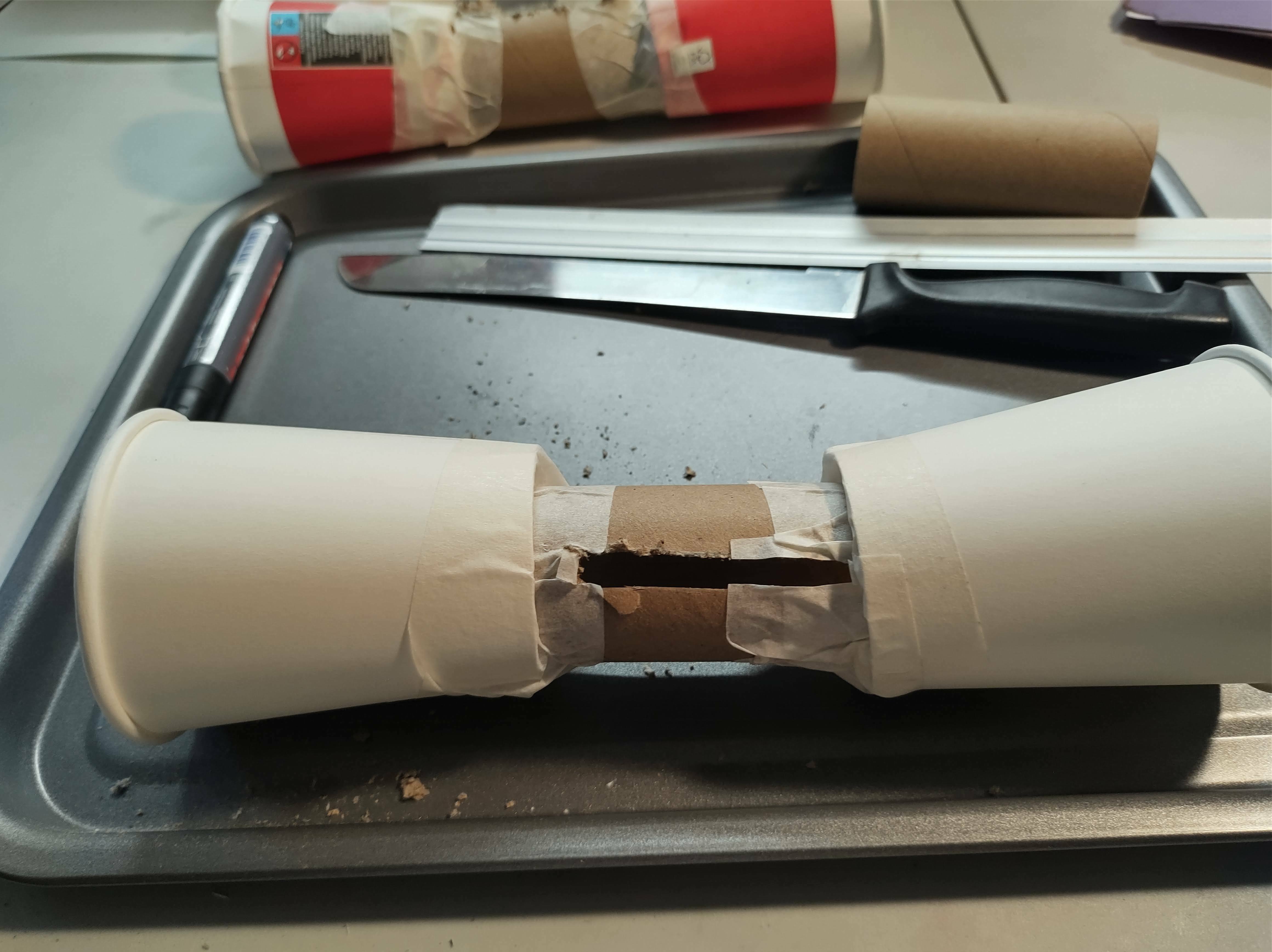
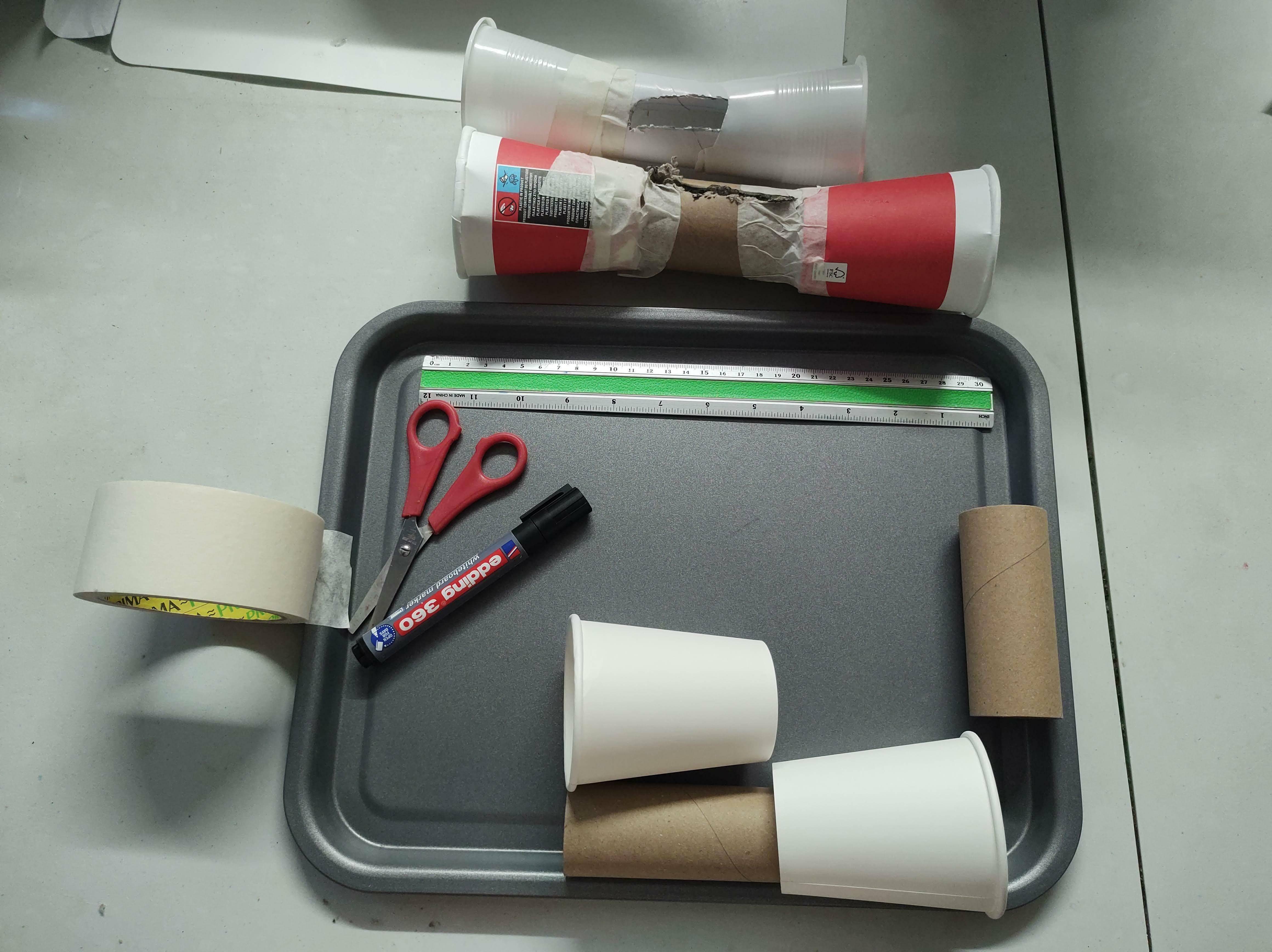
See step by step prep below - 10step by step guide to the speakers part 1: this is what you needpart 2: ask your pupils to wear goggles then ask them to cut off the bottom of both cups
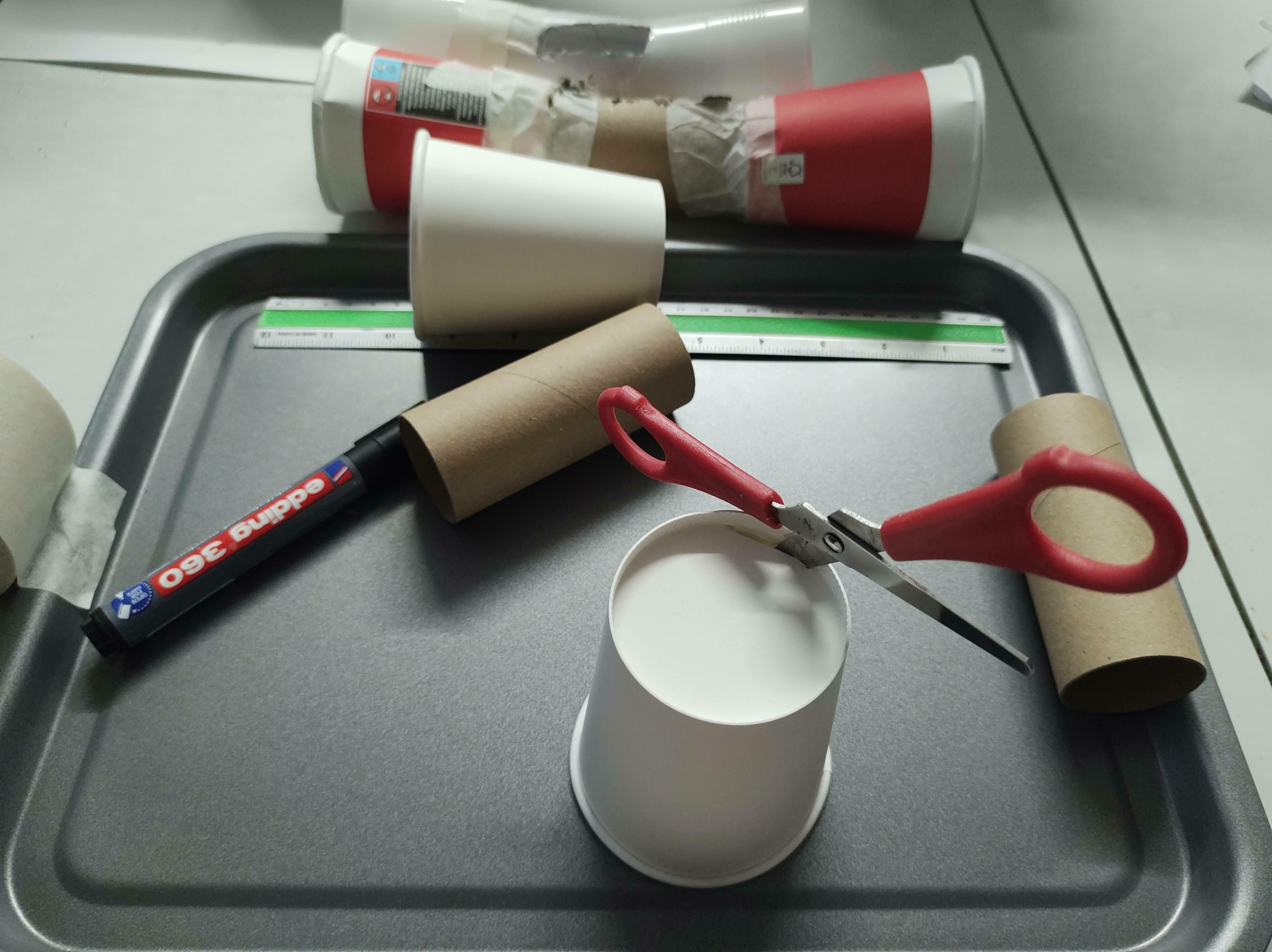
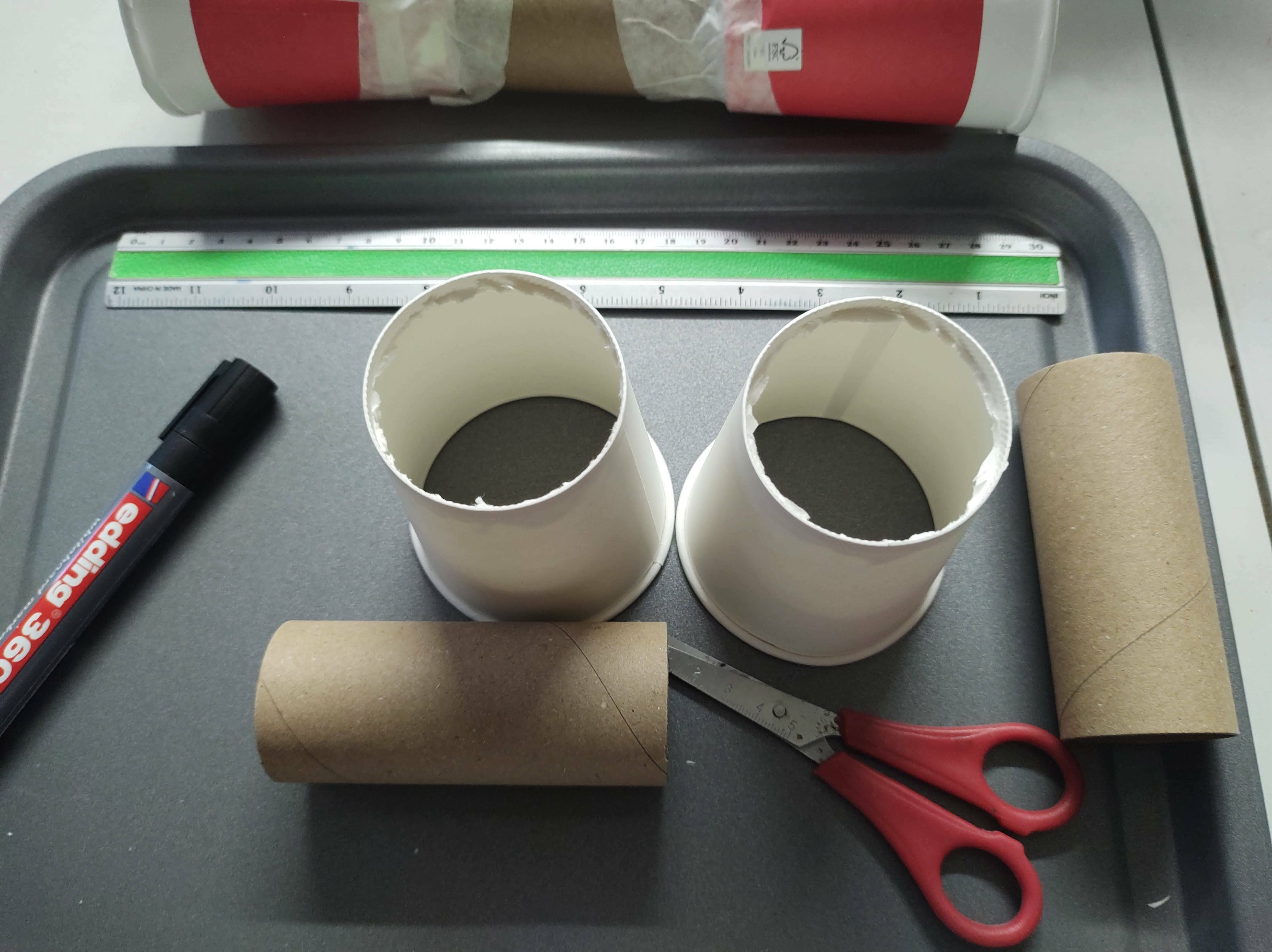
- 11like sopart 3: draw a mark on the craft roll measuring at least 7cm (ideally 10 cm)
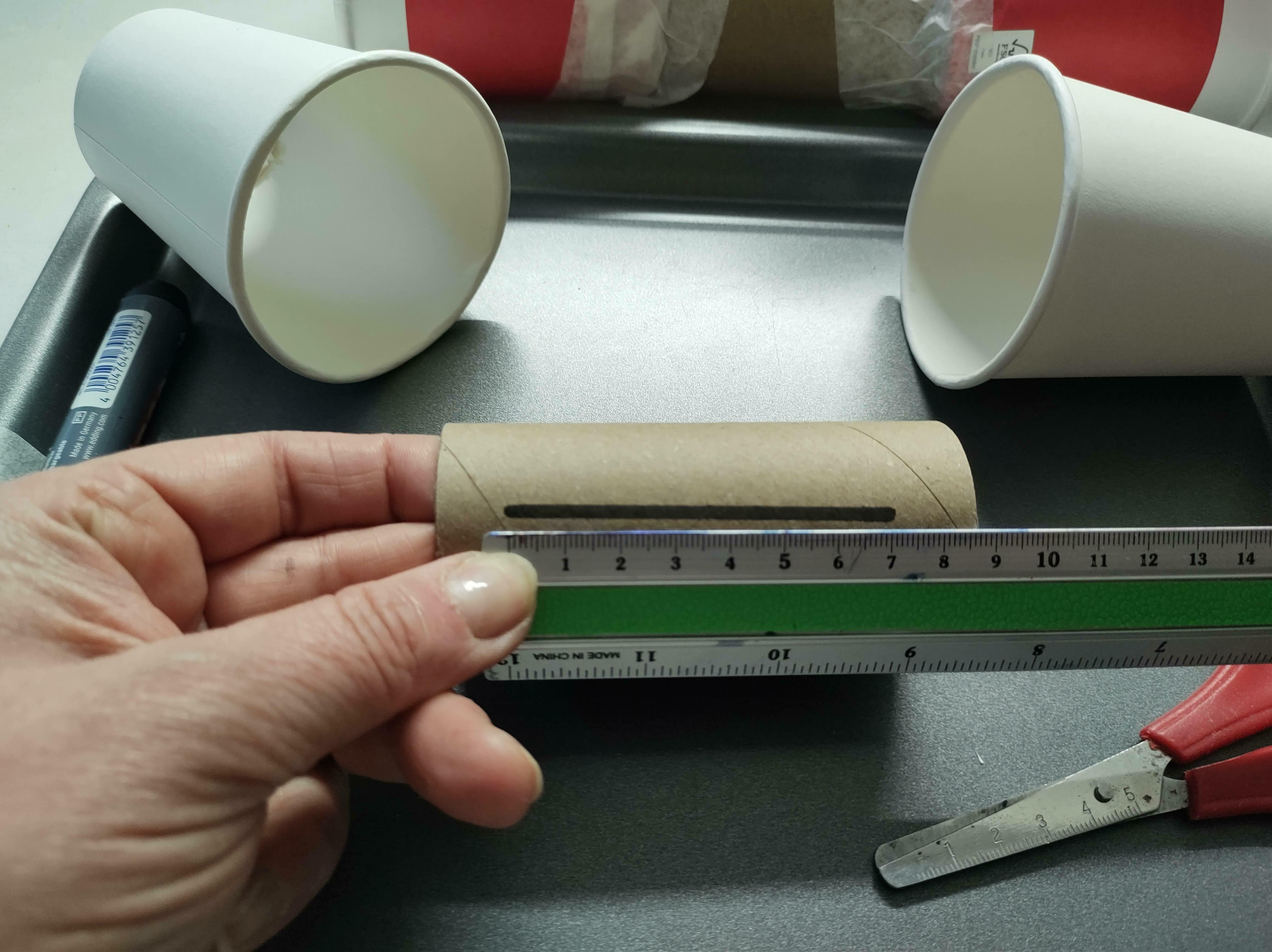
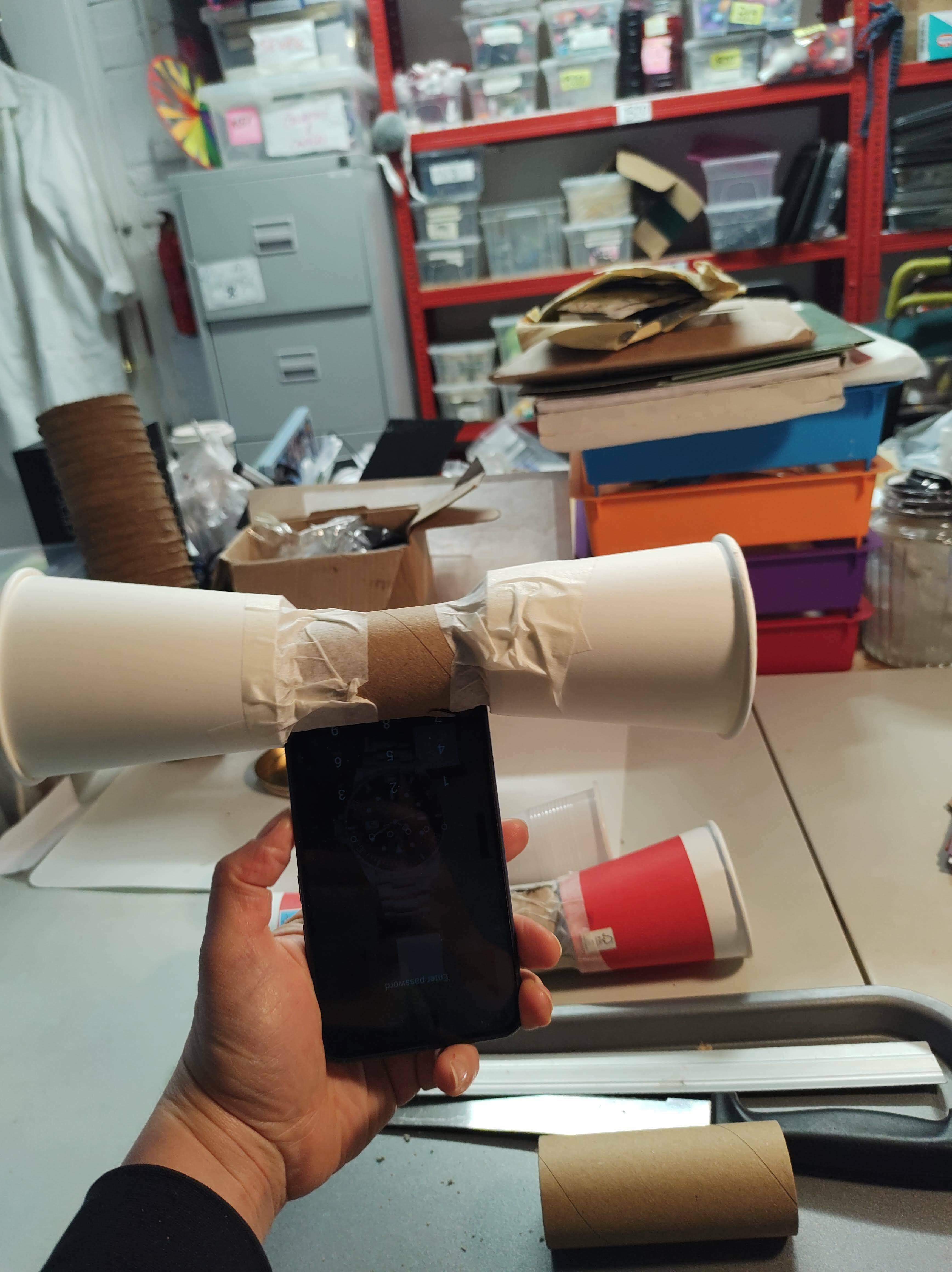
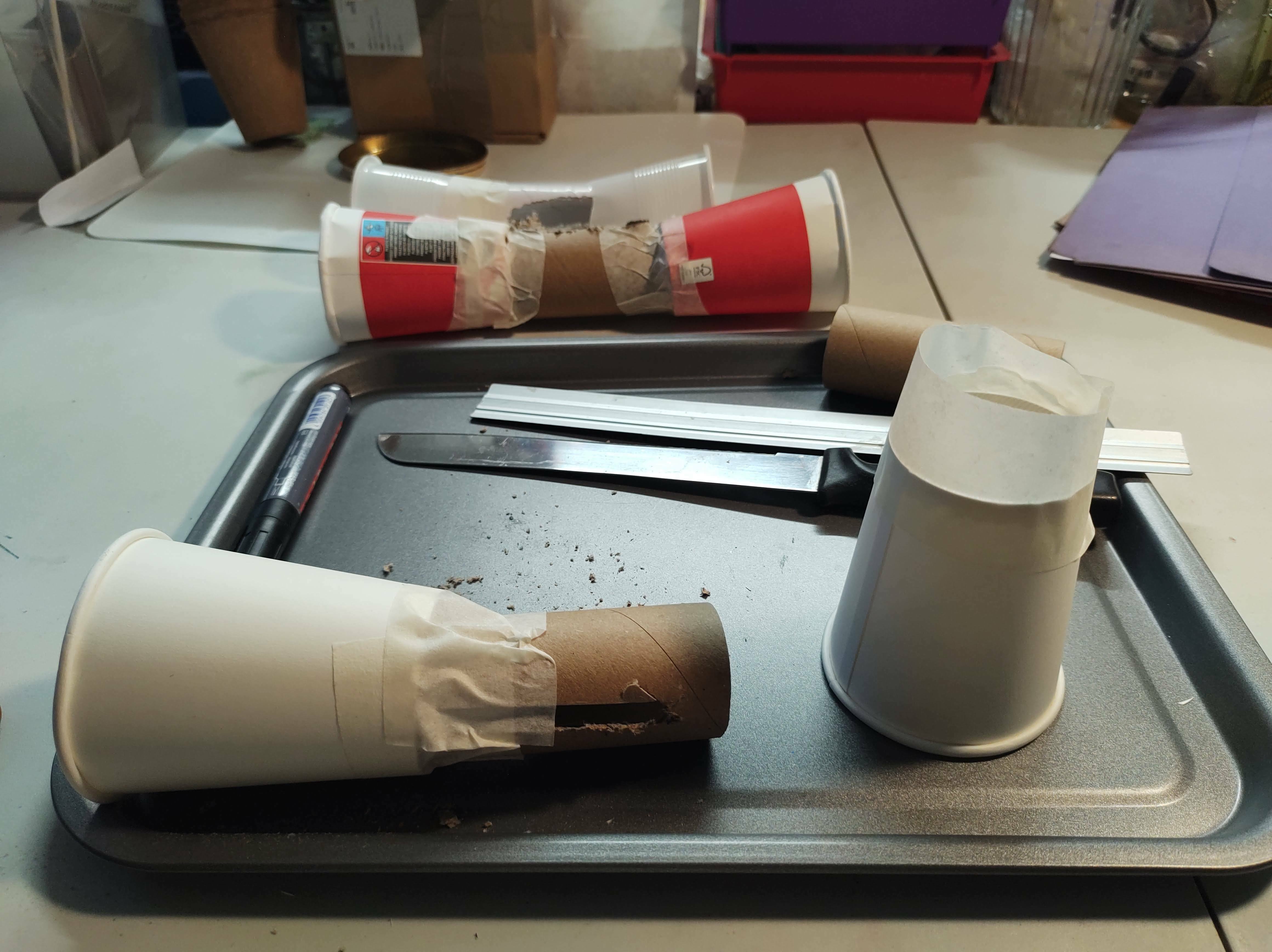
- 12pert 4: noy cut an opening big enough to fit a mobile, then wrap the outer edges of the cups (the sides without bottom) and attach then to the craft rolllike so. If the tape has covered the openings, cut off the tape
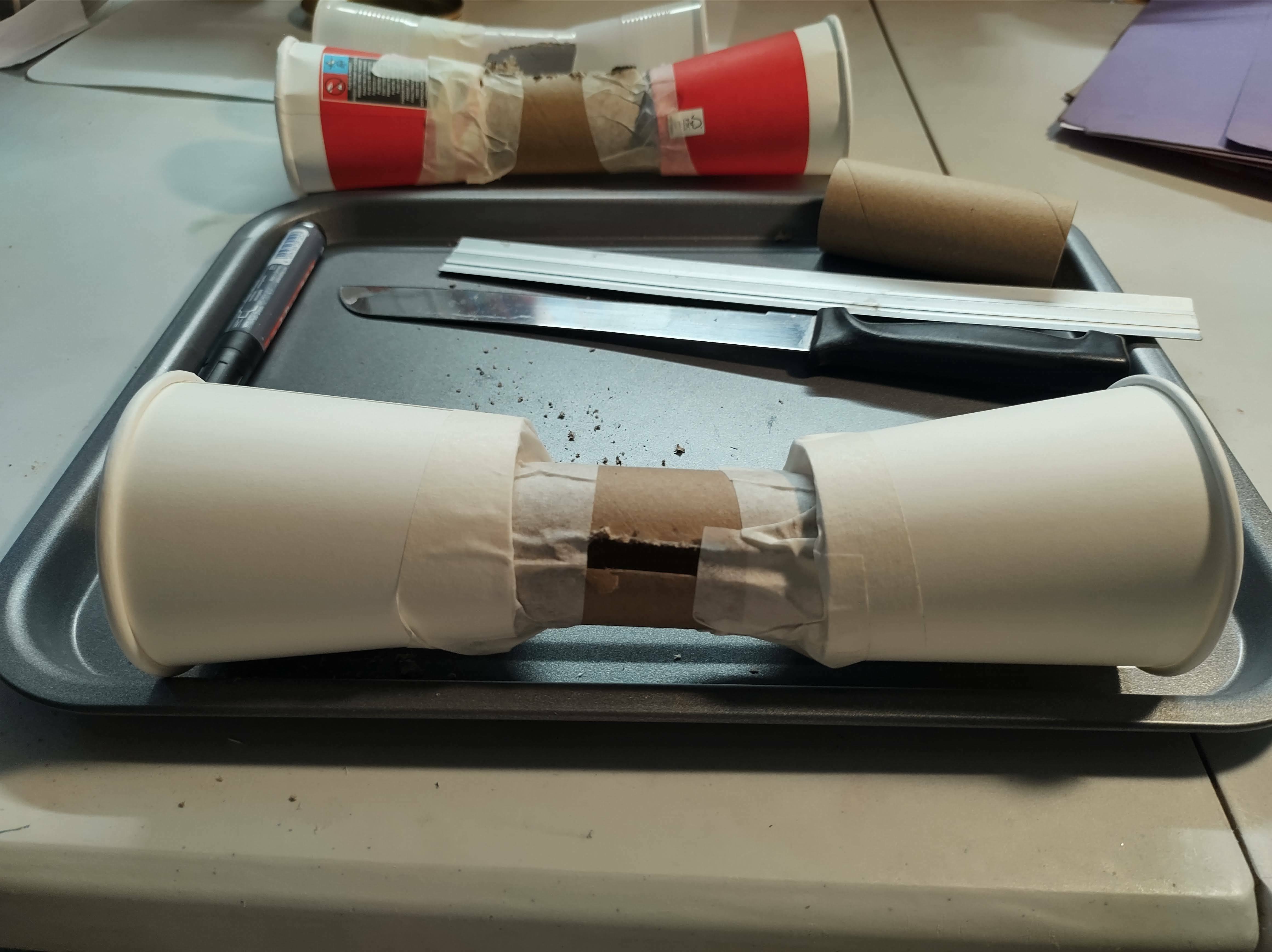
- 13like soand now enjoy your very own sound system