
Flashcards
Computational Thinking 2023 - 1st Partial

Cards in this deck (39)
- 1—
- 2What is Computational Thinking?Formulating problems in a way that enables us to use a computer and other tools to help solve them
- 3Which are the pillars of Computational Thinking?
- 4First pillar of Computational Thinking that must be applied to solve a problemDecomposition to break a complex problem into smaller subproblems
- 5Identify three situations where computers apply pattern recognitionComputers apply pattern recognition for:
1. Face detection
2. Fingerprint recognition
3. Analysis of numerical data to make predictions - 6Provide three examples of abstractionAbstraction refers to simplified representations of reality like:
1. A math formula
2. A map of our campus
3. Your school timetable - 7What is an algorithm?

- 8Which are the properties of algorithms?

- 9Three examples of algorithms are:

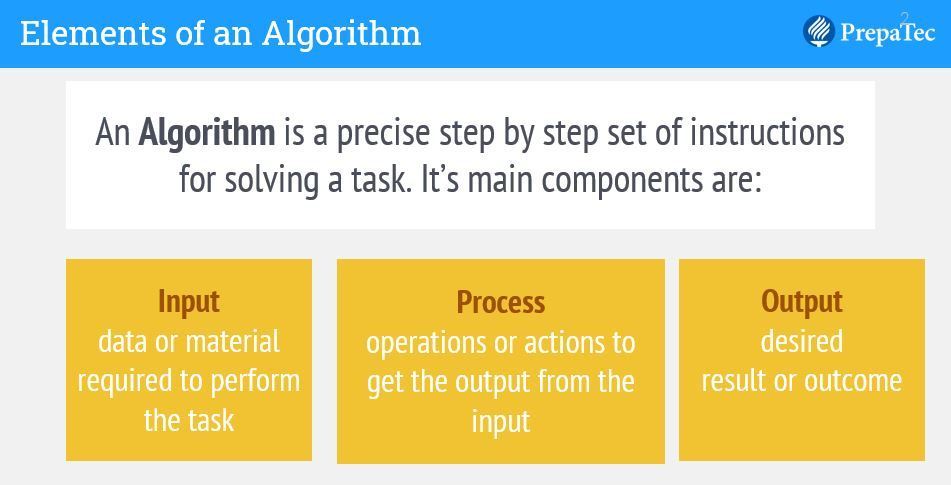
- 10What are the main components of an algorithm?
- 11What is the Page Rank?It's the algorithm of Google to assign the level of importance of a webpage, analyzing the quantity and quality of the links that point to it. It is used to produce a list of most important websites when a user performs a search.
- 12What is the input, process and output of an algorithm to calculate the new price of an item given its original price and discount’s percentage?Input (data received): original price and discount %
Process (formulas or steps to convert input to output): new price = original price - (original price * discount /100)
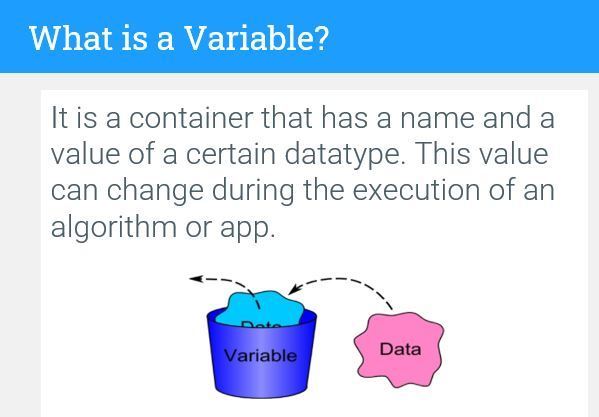
Output (final result): new price - 13What is a Variable?
- 14—Variables are used to save every data entered by the user as well as the results calculated.
In the given algorithm variables are:
base, height and area
- 15—The variables are:
Age, height, weight and result
*Remember all data that the user should fill as well as the results to calculate require a variable.
- 16Which are the rules to name a variable?

- 17What is camelCase?
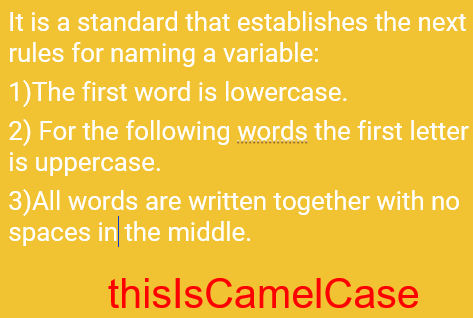
- 18Select all valid variable names to save the grade of 1st partial: a) 1stGrade b) firstGrade c) studentGrade1 d) FIRSTGRADEValid variable names:
b) firstGrade
c) studentGrade1 - 19Select the only valid variable name : a) street.name b) #product c) 3rd semester d) appNameThe only valid name is:
d) appName
Variable names should not have special characters, spaces and must start with a letter - 20What is a constant?

- 21What is Data type?Data Type is the attribute that determines the type of information that a variable can store, as well as the operations or actions that can be done with that data.
- 22What are the main data types used by computers?

- 23Name the Thunkable components you have used
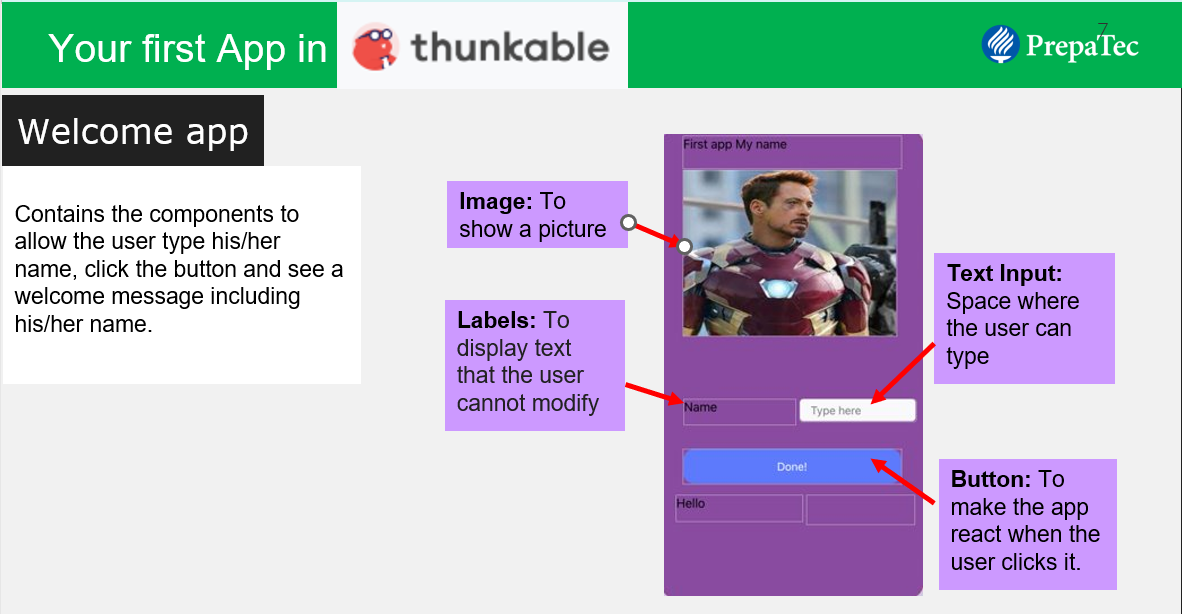
- 24Which are the prefixes to name each Thunkable component?
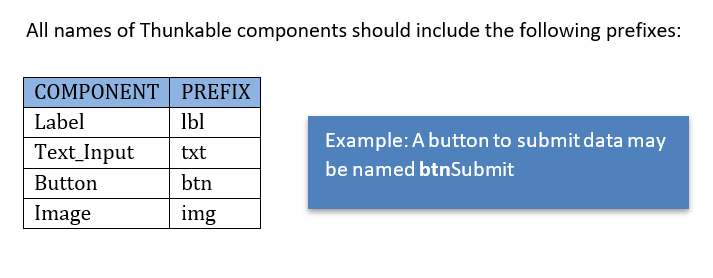
- 25Mention at least 5 properties of Thunkable's componentsName, text, font-size, background color, border
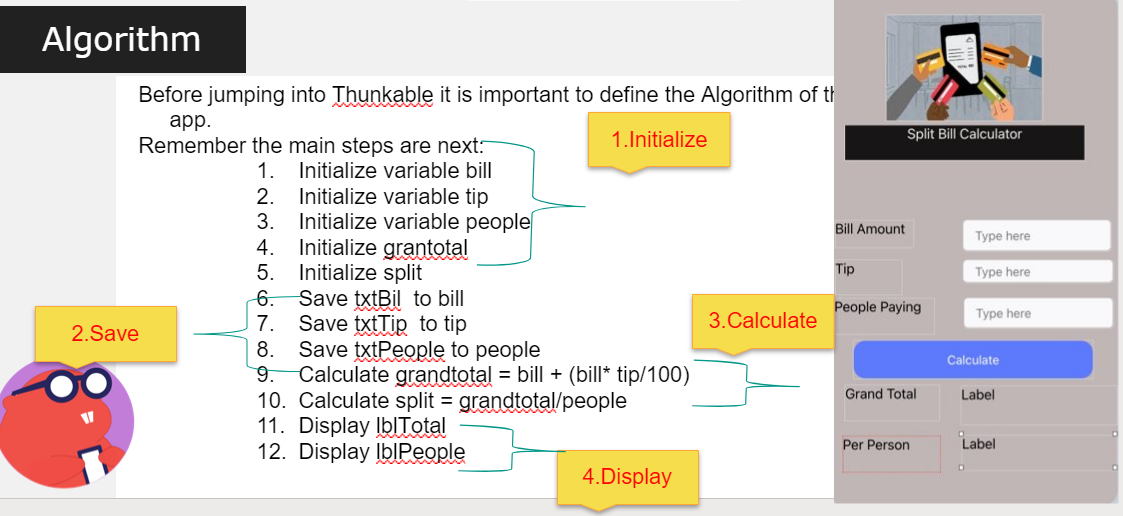
- 26—Input: bill, tip and people
Process:
calculate grandTotal = bill + (bill* tip/100)
calculate split = grandTotal / people
Output: grandTotal and split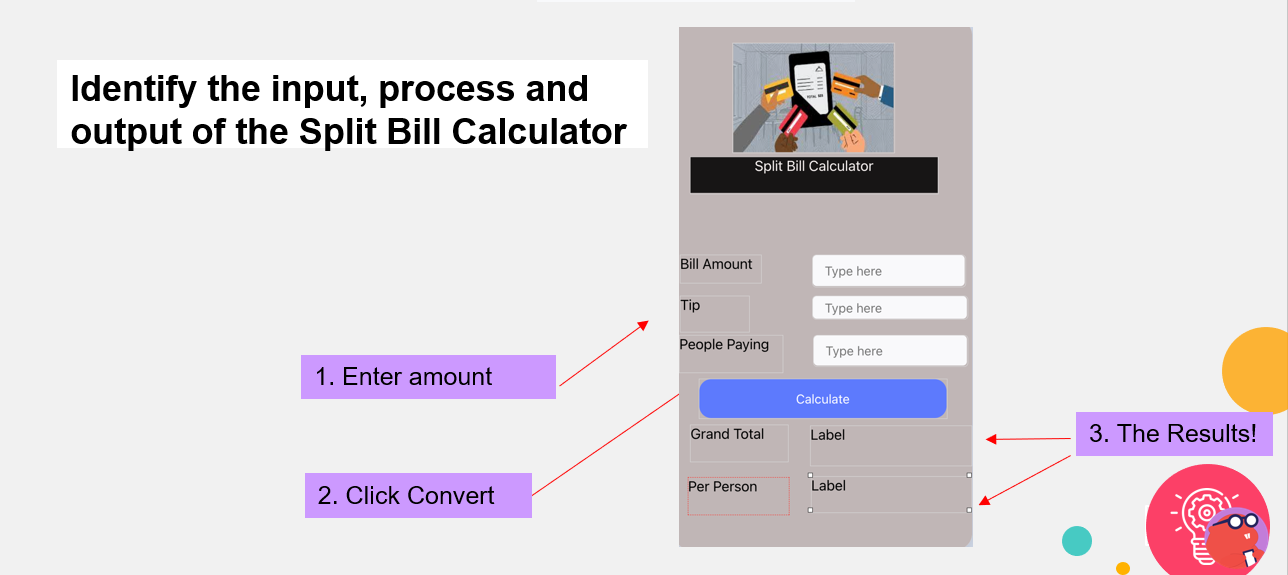
- 27What is the algorithm of the split bill calculator?
- 28—Initialize block allows to create a variable and assign it an initial value.
As the variable name is of text type it must be initialized with "", age and result are numeric so their initial value must be zero.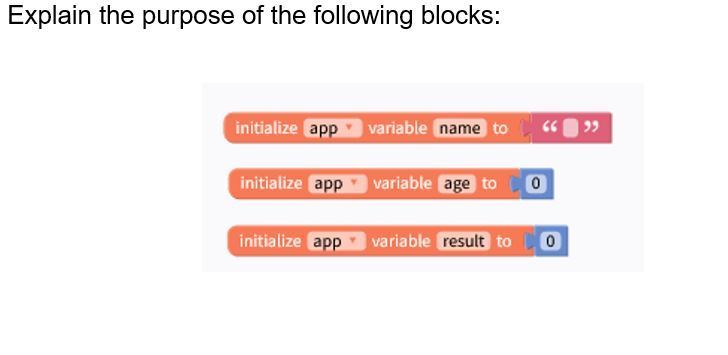
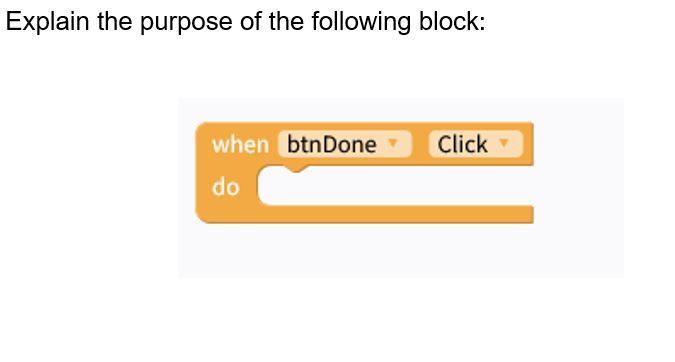
- 29—It includes the actions to perform when the user clicks the button named btnDone
- 30What is the difference between a label and a text input?Labels only display text that
the user can read.
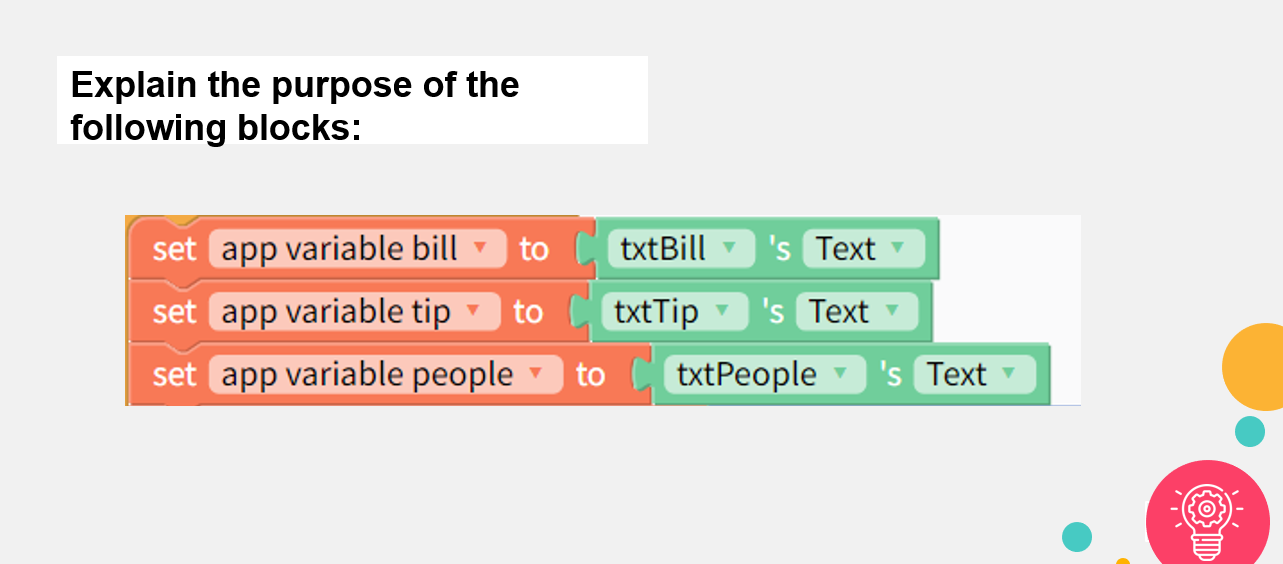
In text inputs the user can enter information - 31—
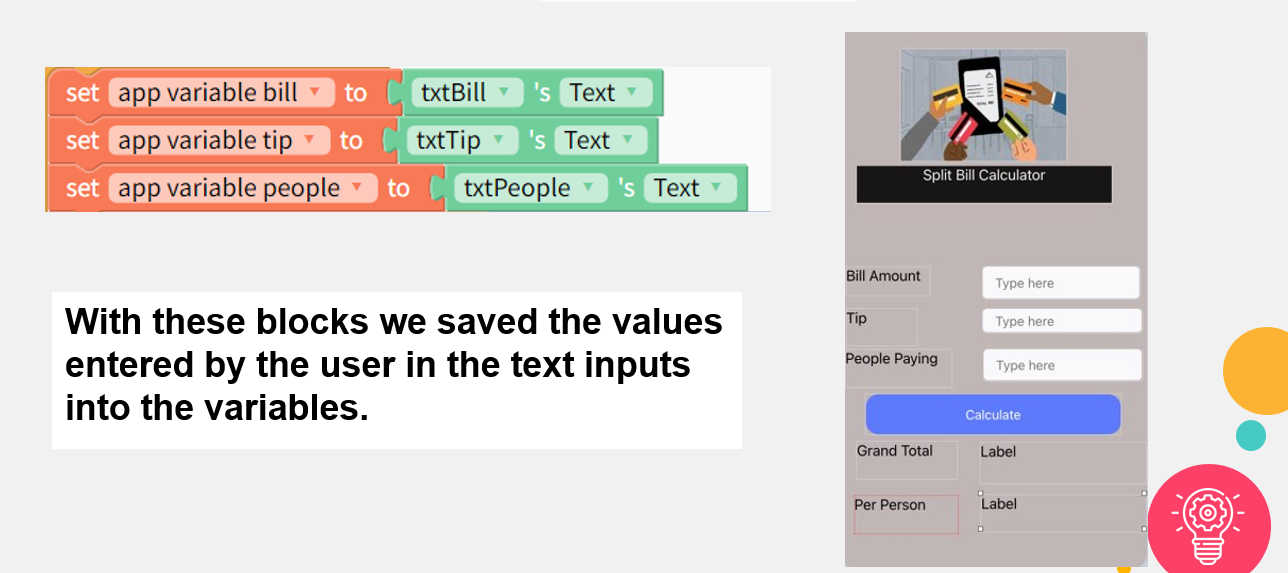
- 32Assign a proper name for each component of the Split Bill calculator (using the prefix that corresponds)
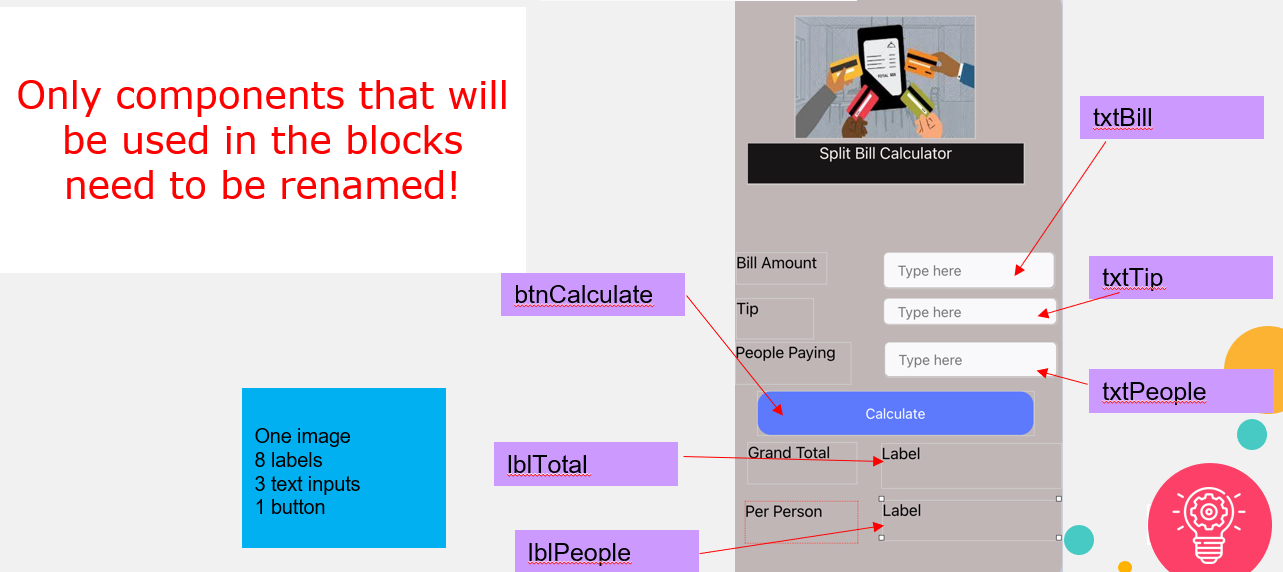
- 33Which are the relational operators in Thunkable and what is their result?

- 34—
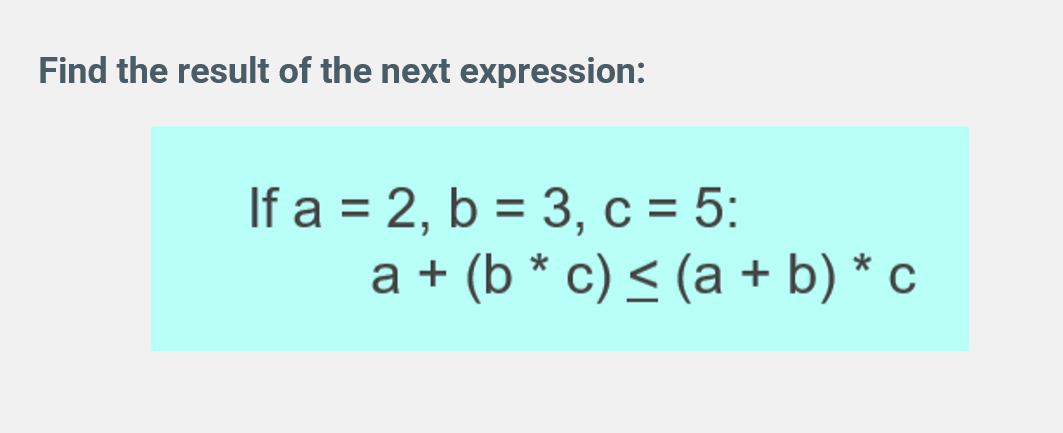
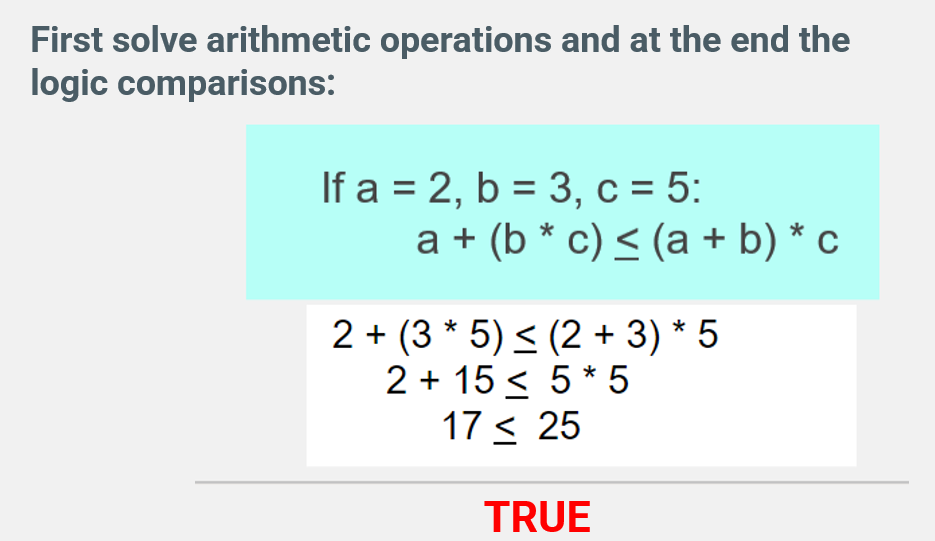
- 35What is the block that allows to establish a simple condition in Thunkable?

- 36—


- 37—
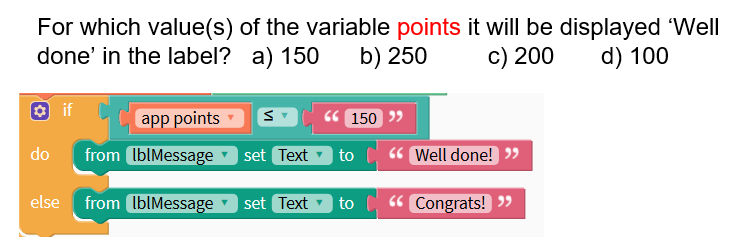
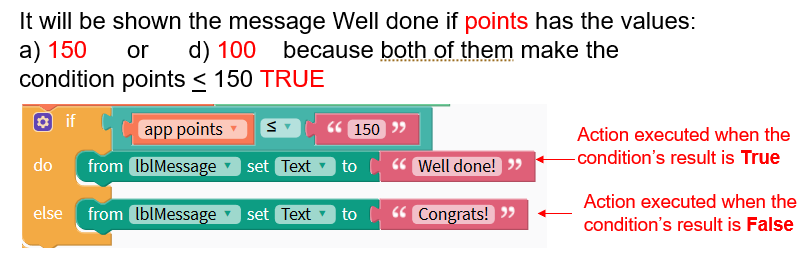
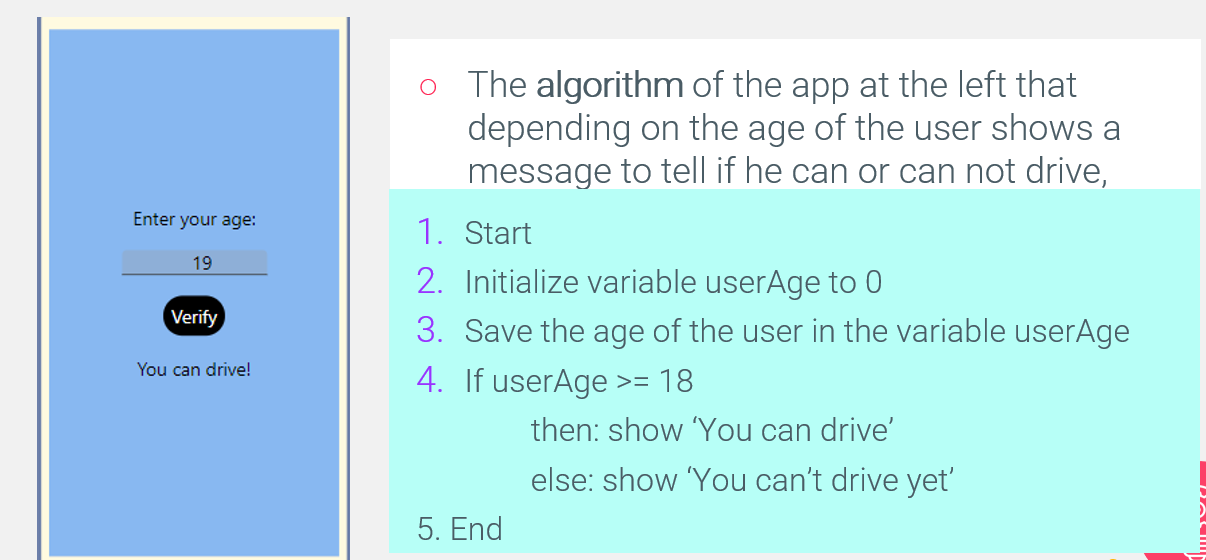
- 38Write the algorithm of an app that based on the user's age displays that he can drive having at least 18 years otherwise show he can not drive yet.
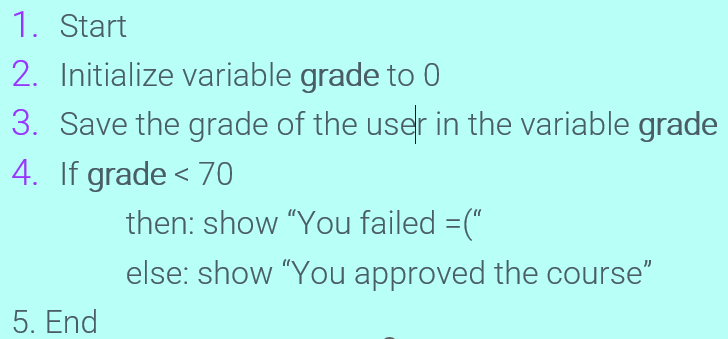
- 39Write the algorithm of an app that based on the final grade of a student tells if he passed or failed the course.
Information
- Description
- Segundo Informática Flashcards on Computational Thinking 2023 - 1st Partial, created by Rosa Luz Estevané Rodríguez on 01/09/2024.
- Created by
- Rosa Luz Estevané Rodríguez
- Views
- 0
- History
-
- Created by Rosa Luz Estevané Rodríguez · Sep 8, 2020
- Copied by Rosa Luz Estevané Rodríguez · Aug 31, 2022
- Copied by Rosa Luz Estevané Rodríguez · Sep 1, 2024
- Rating