
Flashcards
Physical/chemical properties/changes, Atomic Structure
Cards in this deck (82)
- 1Physical ChangeProperties that can be observed without chemically changing matter.
- 2Chemical ChangeProperties describe how a substance interacts with other Substances.
- 3SolidsHave definite shapes and definite volumes.
- 4LiquidsHave indefinite shapes and definite volumes.
- 5GasesHave indefinite shapes and indefinite volumes.
- 6Freezing PointIs the point in temperature at which a liquid turns to a solid.
- 7Melting PointIs the temperature at which a solid turns to a liquid.
- 8Boiling PointIs the temperature at which a liquid turns to a gas.
- 9Condensation PointIs the temperature at which a gas turns to a liquid .
- 10SublimationOccasionally a solid turns directly into a gas without turning into a liquid first.
- 11CombustibilityChemical Properties
- 12MalleabilityPhysical Properties
- 13WeightPhysical Properties
- 14Failure to reactChemical Properties
- 15DuctilityPhysical Properties
- 16TexturePhysical Properties
- 17DensityPhysical Properties
- 18Tendency to corrodeChemical Properties
- 19VolumePhysical Properties
- 20Melting pointPhysical Properties
- 21OdorPhysical Properties
- 22FlammabilityChemical Properties
- 23Digestion of foodChemical Change
- 24Getting a haircutPhysical Change
- 25EvaporationPhysical Change
- 26Ice cube meltingPhysical
- 27Crushing rocksPhysical change
- 28ExplosionsChemical Change
- 29Light a candleChemical Change
- 30Tarnishing silverchemical Change
- 31Formation of acid rainChemical Change
- 32Dissolving salt in waterPhysical Change
- 33DemocritusMade a mental model of the atom; Greek philosopher.
- 34DaltonFormed the atomic theory model of the atom; English school teacher
- 35ThomsonProposed the "Plum Pudding" model of the atom; discovered the electron
- 36ChadwickDiscovered the neutron
- 37RutherfordDiscovered the nucleus using his gold foil experiment
- 38ProtonThe positive particle in the nucleus of an atom
- 39AtomThe smallest particle of an element that has the properties of that element
- 40BohrDeveloped the model of the atom in which electrons orbit the nucleus in energy levels
- 41Wave ModelCurrent model of the model; proposed by Schrodinger
- 42NucleusThe tiny positive core of an atom; contains protons and neutrons
- 43Alpha ParticleUsed by Rutherford in his experiments; made of two protons and two neutrons
- 44ElectronThe negative particle that circles the nucleus
- 45ModelUsed by scientists to explain something that we can't see o understand
- 46Energy LevelsThe paths in which electrons circle nucleus according to the Bohr Model
- 47Electron CloudCurrent explanation of where electrons might be found in the atom
- 48TheoryIs an explanation of observable facts and phenomena
- 49AristotleDisagrees with Democritus and says that everything can be broken down into 4 elements-earth-fire-air-water-
- 50Atoms are neutral because the number of positively charged protons are the number of negatively charged electrons.
- 51Particles that make up the nucleus of an atom are called nucleons and are compromised of protons and neutrons..
- 52When a atom loses an electron, it becomes a cations with a positive charge..
- 53When an atom gains an electron is becomes an anion with negative charge..
- 54In a polar covalent bond the electrons are shared equally..
- 55In a nonpolar covalent bond the electrons are shared equally..
- 56Electrons are transferred in a ionic bond., shared in a covalent bond, and delocalized in a metallic bond..
- 57A Polytomic ion is a covalently bonded group of atoms with a charge such as (PO4-3)..
- 58When two atoms share two pairs of electrons a Double bond is formed..
- 59Ionic (1.7 or higher) Polar(0.4 to 1.7) Nonpolar(0 to 0.4).
- 60Electrons are sharedCovalent
- 61Electrons delocalizedMetallic
- 62Electrons are transferredIonic
- 63Crystal LatticeIonic
- 64LusterMetallic
- 65Nonconductors in the solid,molten and dissolved stateCovalent
- 66Malleable and ductileMetallic
- 67High melting point and boiling pointsIonic
- 68Volatile liquids and gasesCovalent
- 69Weaker forces between atomsCovalent
- 70Hard difficult to crushIonic
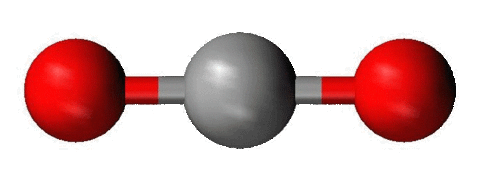
- 71Any molecule containing only 2 atoms has a linear shape.Linear shape (180)
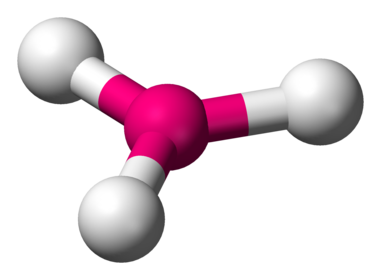
- 72A molecule with 3 atoms bonded to the central atom with 0 unshared pairs of electrons has a trigonal planar shape.Trigonal Planar(120)
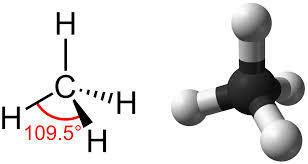
- 73A molecule with 4 atoms bonded to the central atom with 0 unshared pairs of electrons has a tetrahedral shape.Tetrahedral Shape
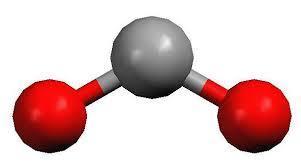
- 74A molecule with 2 atoms bonded to the central atom with 2 unshared pairs of electrons has a bent shape.Bent Shape
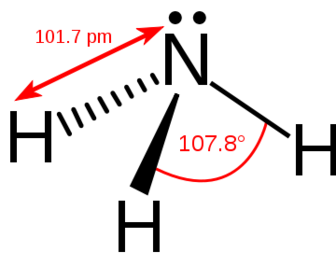
- 75A molecule with 3 atoms bonded to the central atom with 1 unshared pair of electrons has a trigonal pyramidal.Trigonal pyramidal
- 76IntermolecularAre the forces of attraction BETWEEN molecules.
- 77London DispersionThe force present in all molecules that result from the movement of electrons.
- 78Dipole-dipole ForcesThe force of attraction between the positive end of one molecule and the negative end of another molecule.
- 79Hydrogen BondsThe special type of this force involving hydrogen. This occurs when hydrogen is bonded to H-F, H-O, H-N.
- 80Heat capacity is how much heat it takes to heat up a substance. Some substances take less to heat up because their heat capacity is low and some take longer to heat up because they have a bigger heat capacity..
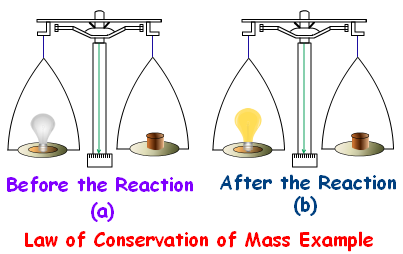
- 81The Law of Conservation of Mass states that matter can be changed from one form into another, mixtures can be separated or made, and pure substances can be decomposed, but the total amount of mass remains constant
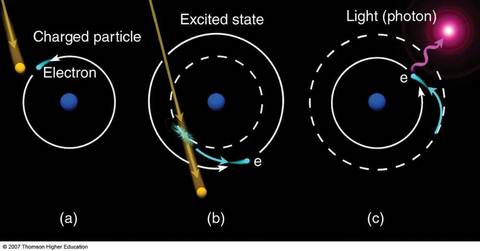
- 82In the ground state of the atom the electrons are in the lowest energy level possible. When an atom absorbs energy its in the excited state which is unstable. The atom soon will emit the same amount of energy absorbed which may be seen as visible light.
Information
- Description
- Flashcards on Physical/chemical properties/changes, Atomic Structure , created by Imelda Razo Berm on 21/12/2015.
- Created by
- Imelda Razo Berm
- Views
- 11
- Tags
- Rating